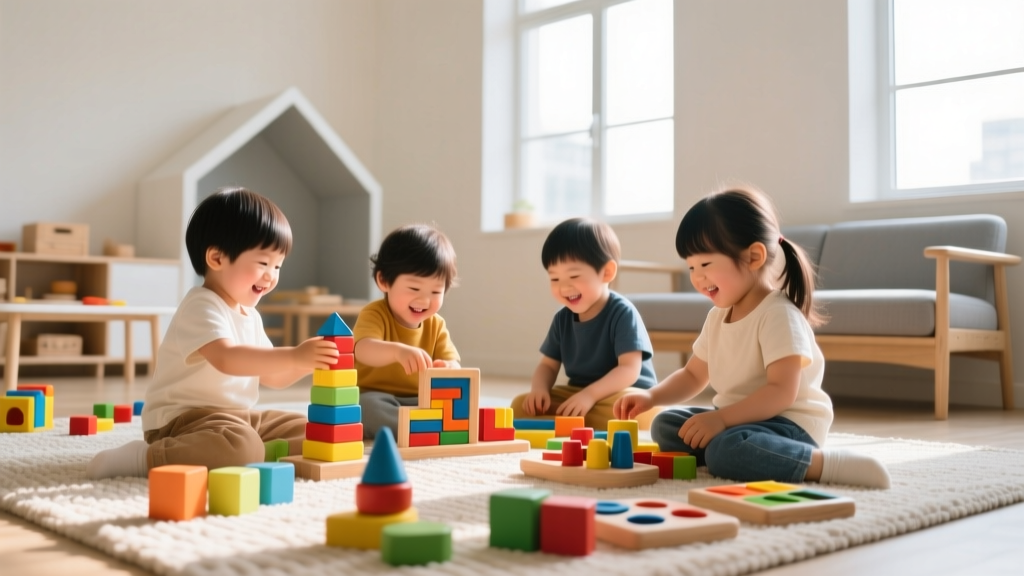
Best Sensory-Friendly STEM Toys for Autistic Kids (2026)
Why Sensory-Friendly STEM Matters for Autistic Children
For many autistic children, traditional STEM toys—brightly flashing, loud, or unpredictably tactile—can trigger sensory overload, anxiety, or shutdowns. But STEM learning doesn’t have to mean compromise. In fact, when aligned with neurodivergent processing styles, hands-on science, technology, engineering, and math activities can foster deep focus, pattern recognition, logical reasoning, and joyful mastery. The key is intentionality: choosing tools that honor sensory preferences (e.g., predictable textures, adjustable input, visual clarity) while delivering authentic STEM value—not just ‘quiet’ versions of mainstream kits.
What Makes a Toy Truly Sensory-Friendly *and* STEM-Rich?
It’s not enough for a toy to be ‘calm’ or ‘soft.’ True sensory-friendly STEM integrates three non-negotiable pillars:
- Sensory Safety: No unexpected sounds, flickering LEDs, or abrasive textures; clear visual boundaries; optional or removable sensory elements (e.g., detachable vibration modules).
- Neurodivergent Accessibility: Predictable cause-and-effect, low verbal demand, multiple entry points (e.g., build-first, code-later), and tolerance for repetition without penalty.
- Authentic STEM Rigor: Real engineering principles (gears, levers, circuits), computational thinking (sequencing, debugging), or scientific inquiry (hypothesis testing, data recording)—not just themed play.
Expert Insight: Occupational Therapist Perspective
"I recommend toys where the child controls the sensory input—not the toy controlling them," says Dr. Lena Cho, pediatric occupational therapist and co-author of Neurodiverse Play in Practice (2026). "For example, a gear set with smooth, weighted plastic pieces allows tactile grounding *while* teaching mechanical advantage. That dual benefit—regulation + learning—is what builds sustained engagement."
Top 5 Sensory-Friendly STEM Toys (2026 Vetted Picks)
1. Osmo Little Coders (No-Screen Edition)
This award-winning system replaces digital screens with physical, silicone-tactile coding tiles (soft matte finish, no sharp edges) and a silent, reflective camera base. Children arrange tangible blocks to guide an on-screen avatar through logic puzzles—no audio feedback unless manually enabled via a mute toggle. Each tile has subtle embossed icons and consistent weight, supporting proprioceptive input. Unlike screen-based coding apps, it eliminates visual fatigue and auditory surprise—yet teaches sequencing, loops, and conditional logic at age-appropriate depth.
2. Tegu Magnetic Wooden Blocks (Magnetized Maple Set)
Tegu’s sustainably harvested maple blocks feature embedded neodymium magnets with precisely calibrated pull strength—strong enough for stable structures, gentle enough to separate without frustration. The wood grain offers natural texture variation, and the muted earth-tone palette (no neon dyes) reduces visual clutter. Crucially, Tegu provides free downloadable STEM challenge cards—like “Build a bridge that holds 3 marbles” or “Create a symmetrical tower”—that embed physics concepts (balance, load distribution) without verbal overload.
3. Circuit Cubes Starter Kit (Tactile-First Edition)
Developed in partnership with the Autism Science Foundation, this kit replaces standard snap-circuit plastic with soft-touch silicone connectors and chunky, color-coded magnetic cubes (red = power, blue = sensor, green = output). All components are battery-free—powered by safe, low-voltage USB-C rechargeables—and emit zero sound or light unless intentionally activated. Includes a laminated visual wiring guide with step-by-step photos (no text-heavy manuals) and open-ended prompts like “Make a fan spin only when you press the button twice.” Teaches real circuitry fundamentals: series vs. parallel, conductivity, and input/output relationships.
4. KiwiCo Eureka Crate: Simple Machines (Sensory-Adapted Version)
KiwiCo’s 2026 Eureka Crate includes custom modifications: all laser-cut wood parts pre-sanded to 220-grit smoothness, rubberized grip pads on tool handles, and optional noise-dampening foam inserts for gear mechanisms. Projects include building a lever-powered marble launcher and a pulley-driven drawbridge—with clear, icon-led assembly guides and optional QR-linked video demos (audio-off by default). Each project explicitly names the underlying physics principle (e.g., “This lever multiplies your force—try lifting the same weight with longer/shorter arms!”), making abstract concepts physically tangible.
5. Magna-Tiles Clear Colors (Sensory-Safe Line)
Unlike standard Magna-Tiles, this 2026 release uses optical-grade acrylic (not brittle plastic) with rounded, polished edges and zero chemical odor. Tiles are 30% thicker for enhanced proprioceptive feedback and come in translucent pastels (no fluorescent pigments) that diffuse light softly. Includes a free downloadable ‘STEM Challenge Journal’ with guided prompts like “Stack 5 tiles—how tall before it wobbles? Why?”—introducing stability, center of gravity, and material properties through observation, not instruction.
How to Introduce Sensory-Friendly STEM Without Pressure
Even the best-designed toy falls flat if introduced with expectation. Use these evidence-informed strategies:
- Follow the 3-Minute Rule: Start with just 3 minutes of unstructured exploration—no goals, no questions. Let your child discover weight, temperature, magnetism, or sound (if present) at their pace.
- Co-Regulate First: Sit beside—not over—your child. Narrate your own calm actions (“I’m feeling how smooth this gear is”) without directing theirs.
- Use Visual Schedules: Create a simple 3-step picture card: 1) Choose toy → 2) Explore → 3) Return to shelf. This builds predictability and supports transitions.
- Track Micro-Wins: Note non-verbal indicators of engagement: sustained eye contact with materials, voluntary repetition, or relaxed posture—not just ‘completing’ a build.
When to Adapt Further (Red Flags & Solutions)
If your child consistently avoids a toy despite sensory safety features, consider these common mismatches—and fixes:
- Avoidance during assembly? → Swap step-by-step instructions for ‘parts-only’ play. Let them sort magnets by shape or test which surfaces conduct electricity—no build required.
- Repetitive spinning or stacking without variation? → Gently introduce one new variable: “What happens if we add this blue cube *here* instead?” Use neutral tone and wait 15 seconds before repeating.
- Strong resistance to touch? → Offer tools: tweezers for picking up small parts, silicone-tipped tongs for circuit connections, or a textured glove for handling smooth surfaces.
Building Confidence, Not Just Circuits
Sensory-friendly STEM isn’t about lowering expectations—it’s about removing barriers so autistic children’s innate strengths shine: attention to detail, systematic thinking, deep curiosity about how things work, and remarkable persistence. When a child independently adjusts a gear ratio to make a robot move slower—or notices that doubling magnet layers doubles holding power—they’re not just ‘playing.’ They’re exercising executive function, self-advocacy, and scientific identity.
As Dr. Cho reminds us: “The goal isn’t to make a child ‘fit’ STEM. It’s to make STEM fit *them*. And in 2026, that fit is more intentional, inclusive, and joyful than ever before.”
More Articles
 Best Science Kits for Curious Kids: 2026 Review (2026)
 Tron Ares Robotics Kit for Kids: Expert Review (2026)
 Teach Kids to Build Digital Products (2026)
 Unplugged Coding Activities For Kids No Screens (2026)
 Hands-On STEM Crafts for Foundational Learning
 Fun Engineering Challenges with Household Items
 Best Coding Games for 7-Year-Olds (2026)
 Introducing Circuit Boards to Kids: Fun & Safe STEM Start
Popsicle Stick Bridge Engineering Challenge
 Coding Games for Kids Ages 6-10