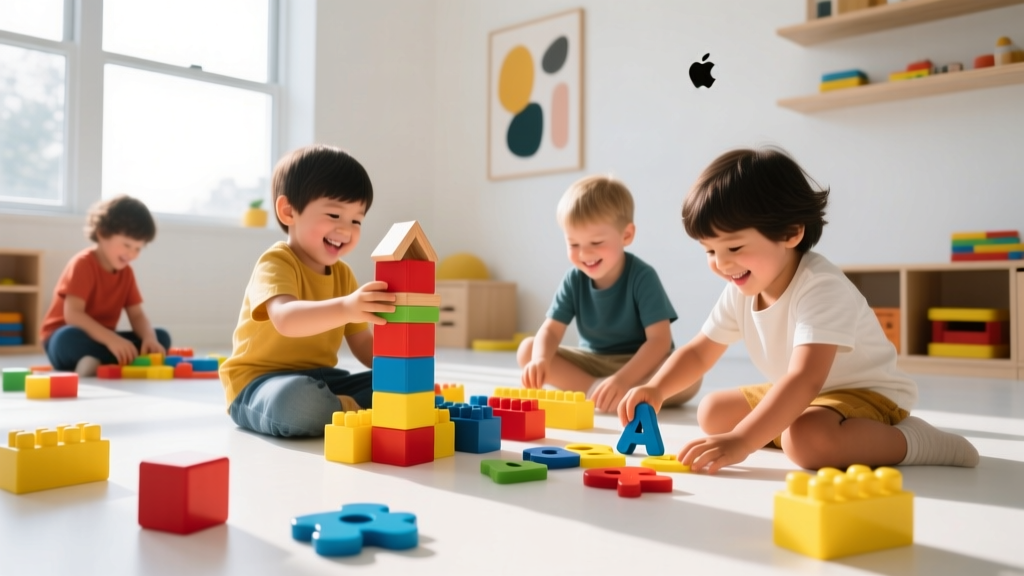
Fun Engineering Challenges with Household Items
Engineering isn’t just for labs and universities—it’s a joyful, hands-on way for children to explore how things work, solve real problems, and build confidence through trial and error. In 2026, parents are increasingly seeking meaningful, low-cost, screen-free activities that nurture curiosity, spatial reasoning, and resilience. The best part? You don’t need a workshop or special kits—just common household items and a little guided encouragement. Below are age-appropriate, tested engineering challenges designed for elementary-aged kids (2–12), complete with setup tips, learning takeaways, and trusted material recommendations.
Why Engineering Play Matters
Early engineering experiences strengthen foundational STEM skills—including prediction, measurement, iteration, and collaborative problem-solving. According to the National Science Teaching Association (NSTA), open-ended design challenges improve executive function and persistence more effectively than structured worksheets. And because these activities invite mess, mistakes, and “aha!” moments, they also support emotional development and growth mindset.
5 Simple Engineering Challenges Using Household Items
1. Cardboard Bridge Challenge (Ages 4–10)
Goal: Build a bridge from cardboard scraps and tape that spans 12 inches and holds at least three toy cars—or one apple!
- What you’ll need: Cereal boxes or shipping cardboard, masking tape (we recommend Scotch Magic Tape—it’s strong yet easy for small hands to tear), plastic cups (for testing weight), and toy vehicles or coins for load testing.
- Try this twist: Add a “budget” rule—e.g., only six pieces of tape and two cardboard rectangles—to introduce constraints like real engineers face.
- Learning focus: Structural integrity, compression vs. tension, and iterative redesign (kids often rebuild 2–3 times!).
2. Straw Tower Stability Test (Ages 5–12)
Goal: Construct the tallest freestanding tower using only plastic drinking straws and paper clips—and then test its resistance to wind (a gentle fan or hairdryer on cool) and weight.
- What you’ll need: Standard bendy straws (avoid paper or biodegradable ones—they soften too quickly), metal paper clips (not plastic), and a ruler or measuring tape.
- Pro tip: Encourage kids to sketch a plan first—even a quick doodle helps activate planning skills. For younger kids (ages 5–7), start with a “triangle base” demo—it’s naturally stable.
- Why it works: Triangles distribute force evenly—a concept used in real-world structures like the Eiffel Tower and suspension bridges.
3. Aluminum Foil Boat Float Test (Ages 3–9)
Goal: Shape one 12″ x 12″ sheet of aluminum foil into a boat that holds the most pennies without sinking.
- What you’ll need: Heavy-duty foil (we recommend Reynolds Wrap Heavy Duty—it resists tearing better than standard foil), a shallow bin or bathtub, water, and 50+ pennies (or washers for older kids).
- Scaffolding for success: Ask guiding questions: “What shape holds air best?” “Where does water enter first?” “How could you widen the base?”
- Science tie-in: Introduces buoyancy and surface area concepts aligned with NGSS standards for grades K–5.
4. Cotton Ball Catapult (Ages 6–12)
Goal: Launch a cotton ball at least 3 feet using only craft sticks (popsicle sticks), rubber bands, and a bottle cap.
- What you’ll need: Wooden craft sticks (Darice 4.5-inch Craft Sticks—smooth, splinter-free), #64 rubber bands, and plastic bottle caps (clean, no sharp edges).
- Safety note: Always launch away from faces and windows. Use cotton balls—not marbles or rocks—for safe, low-velocity testing.
- Extension idea: Measure distance with a tape measure, then graph results across 3 trials. Which design launched farthest? Why?
5. Marshmallow & Toothpick Dome (Ages 4–11)
Goal: Build the strongest dome possible using only mini marshmallows and toothpicks—then test stability by gently pressing down or adding books.
- What you’ll need: Mini marshmallows (store-brand works fine), round wooden toothpicks (Swan Premium Toothpicks—smooth, no splinters), and a flat tray or plate.
- Age adaptation: Toddlers (2–4) can focus on making triangles; ages 5–7 aim for a pyramid; ages 8+ tackle geodesic domes using online free templates from Exploratorium’s 2026 STEM Activity Hub.
- Real-world link: This mimics architectural principles used in the U.S. Pavilion at Expo 67 and modern sports arenas.
How to Support Without Taking Over
It’s tempting to “fix” wobbly towers or suggest “the right way.” But engineering is about process—not perfection. Here’s how to guide with warmth and wisdom:
- Ask open-ended questions: “What do you notice when it falls?” “What would happen if you added another support here?”
- Normalize failure: Say, “Engineers fail 90% of the time before something works. Let’s learn from this version.”
- Keep it joyful: Set a 15-minute timer for younger kids; offer a “design journal” (a spiral notebook with prompts like “My idea,” “What worked,” “Next time I’ll try…”).
- Connect to real life: Point out engineering all around—“That gutter is shaped like a V to direct rainwater—that’s fluid dynamics!”
Materials You Already Own (and What to Buy)
You likely have 80% of what you need already. Here’s a quick inventory checklist:
- ✅ Cardboard boxes (cereal, shipping, or pizza boxes)
- ✅ Plastic straws, toothpicks, rubber bands, tape, foil, and cotton balls
- ✅ Measuring tools (ruler, measuring cup, kitchen scale)
- ✅ Optional but helpful: KidzLabs STEM Lab Kit (2026 Edition), which includes safe, calibrated weights and reusable building connectors—ideal for families wanting repeatable experiments.
Final Thought: Engineering Is Everyday Wonder
When your child spends 20 minutes adjusting the angle of a straw tower’s legs—or beams with pride after their foil boat carries 37 pennies—they’re not just playing. They’re practicing systems thinking, developing patience, and discovering their own capacity to create solutions. These household engineering challenges require no fancy gear, no lesson plans, and no pressure—just presence, curiosity, and permission to tinker. In 2026, that kind of grounded, joyful learning is more valuable than ever. So grab those cereal boxes, clear off the kitchen table, and let the next great engineer in your home get started—today.
More Articles
 How Do Plants Grow for Kids: Simple Science & Activities
 Best Coding Robots for Kids Ages 8-12
 Frenzy and Rumble Sound Waves Kids: STEM Truth Revealed
 Coding for Kids: 7 Unplugged Activities
 Build a Weather Station with Kids: DIY Science
 Simple Circuit Projects for Kids
 What Is a Star for Kids? Science-Backed Guide (2026)
 Weather Science Projects for Kids
 STEM Learning Essentials for Educators
 Magnet Science: Experiments for Elementary Kids