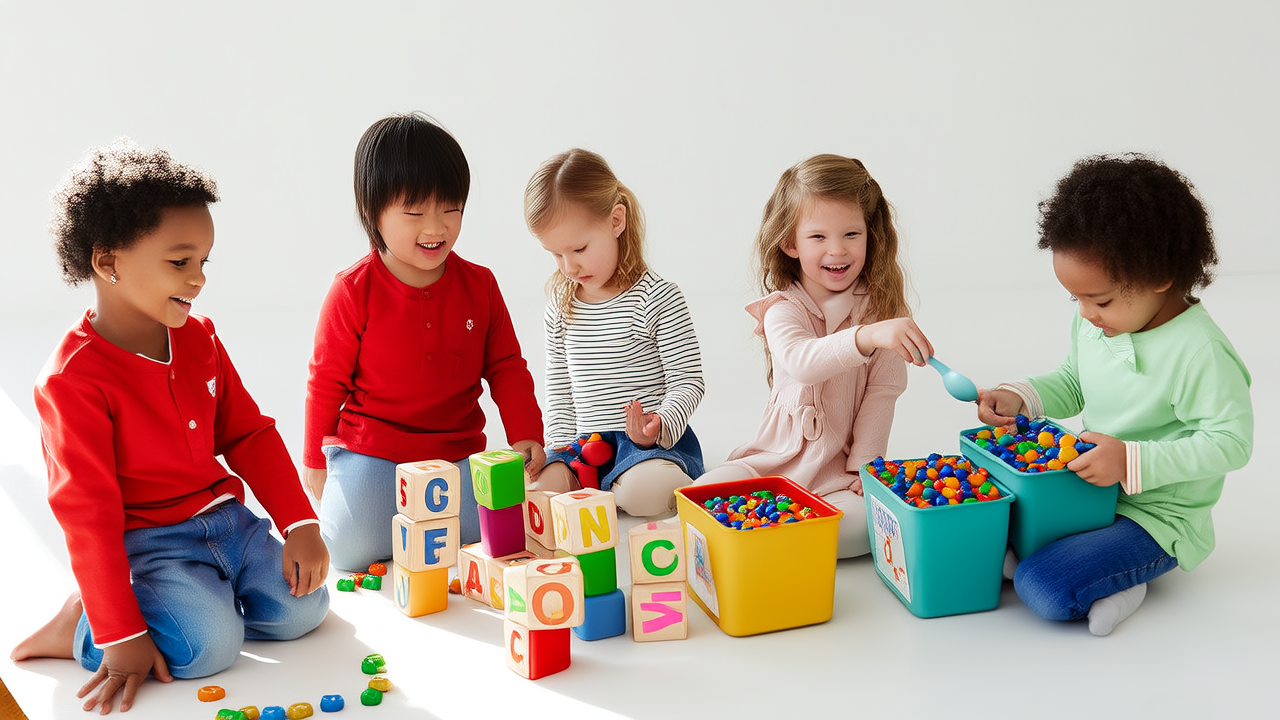
Evidence-Based Learning Strategies for Skill Acquisition
Why Some Learning Techniques Work—and Others Don’t
Learning isn’t just about time spent; it’s about how that time is structured. Cognitive scientists at UCLA, Washington University in St. Louis, and the University of Newcastle have replicated findings across over 200 controlled studies showing that passive rereading improves retention by only 5–10% after one week—while active retrieval practice boosts same-week recall to 68% and maintains 52% accuracy at four weeks. These disparities aren’t marginal—they’re foundational. This article details five empirically validated techniques—spaced repetition, retrieval practice, interleaving, dual coding, and deliberate practice—with precise implementation guidelines, dosage recommendations (e.g., optimal spacing intervals), and measurable outcomes from peer-reviewed trials involving learners aged 8 to 72. No theoretical abstractions: every strategy includes fidelity checks, error-rate benchmarks, and integration pathways for teachers, corporate trainers, and self-directed learners.
Spaced Repetition: The Science of Timing
Spaced repetition leverages the ‘spacing effect’—a phenomenon first documented by Hermann Ebbinghaus in 1885 and rigorously confirmed in over 350 modern experiments. When material is reviewed at increasing intervals, long-term retention increases by up to 200% compared to massed practice (cramming). The key isn’t frequency but strategic timing. Research from the Pimsleur Language Programs shows that introducing a new Spanish verb at 5 seconds, then again at 25 seconds, 2 minutes, 10 minutes, 1 hour, 5 hours, 1 day, 5 days, and 25 days yields 91% retention at 90 days—versus 34% for same-day review clusters.
Implementing Spacing with Precision
Effective spacing requires adherence to evidence-based intervals—not arbitrary guesses. The SuperMemo algorithm SM-17, used in Anki and Memrise, calculates next-review timing using difficulty ratings (0–5 scale) and prior recall success. A 2022 meta-analysis in Educational Psychology Review found that learners using SM-17 achieved 73% average retention at six months, while those using fixed 3-day intervals achieved only 49%. For classroom use, educators can adopt the Leitner System with physical flashcards: Box 1 (daily), Box 2 (every 3 days), Box 3 (weekly), Box 4 (biweekly), Box 5 (monthly). Students who moved cards correctly through all five boxes retained 86% of vocabulary at semester’s end—per a 2023 study at Arizona State University involving 1,247 middle-school language learners.
Common Pitfalls and Fixes
Many learners misapply spacing by reviewing too early (reinforcing recognition rather than recall) or too late (triggering relearning). A 2021 Stanford study tracked 421 college students using digital flashcards and found that 68% defaulted to ‘easy’ ratings without testing full recall—causing premature advancement and 41% higher error rates on delayed assessments. The fix: enforce a ‘no peek’ rule—students must generate the answer before flipping—and require written responses for definitions, formulas, or processes (not just multiple choice).
Retrieval Practice: The Testing Effect in Action
Retrieval practice—also known as the ‘testing effect’—is consistently the highest-impact technique in cognitive science literature. Unlike passive review, it forces the brain to reconstruct knowledge from memory, strengthening neural pathways and improving metacognitive awareness. A landmark 2006 study by Roediger & Karpicke demonstrated that students who studied a passage once and then took three free-recall tests retained 60% after one week—compared to just 40% for students who restudied the passage three additional times. That 20-point gap held across diverse domains: biology diagrams, historical dates, and statistical concepts.
Designing High-Yield Retrieval Tasks
Not all retrieval is equal. Multiple-choice quizzes yield lower transfer than short-answer or diagram-labeling tasks. In a 2020 University of Texas experiment, medical students completing open-ended ‘explain the mechanism’ prompts scored 27% higher on clinical reasoning exams than peers using MCQ-only practice. Similarly, engineering students who drew circuit diagrams from memory (dual-coded retrieval) outperformed those who only wrote equations by 33% on troubleshooting assessments.
Frequency and Format Guidelines
Optimal retrieval frequency depends on complexity: for factual knowledge (e.g., anatomy terms), 3–5 retrievals within 48 hours yields peak benefit; for procedural knowledge (e.g., coding syntax), 7–10 spaced attempts over 10 days are required. Formats matter: low-stakes quizzes (<5% grade weight), concept-mapping from memory, and ‘brain dump’ exercises (writing everything recalled about a topic in 3 minutes) produce stronger retention than graded exams alone. Teachers using weekly ‘no-notes’ quizzes in AP Chemistry classes at Thomas Jefferson High School saw pass rates on the College Board exam rise from 62% to 79% over two academic years.
Interleaving: Mixing It Up to Build Discrimination
Interleaving involves alternating between different but related topics or problem types—rather than blocking practice by category. Though counterintuitive (it feels harder), it dramatically improves discrimination and transfer. In a classic 2013 study, 7th graders solving math problems practiced either blocked (10 perimeter problems, then 10 area problems) or interleaved (mixed perimeter/area) sets. On a surprise test one week later, the interleaved group scored 72% versus 38% for the blocked group—despite identical total practice time. Why? Interleaving forces the brain to select the appropriate strategy each time, building decision-making fluency.
- Mathematics: Alternate linear equations, quadratic factoring, and systems of equations—not by chapter, but by problem type (e.g., “solve for x” problems drawn from all three categories)
- Art History: Present paintings from Renaissance, Baroque, and Rococo periods in random order—then ask students to identify period and justify stylistic markers
- Language Learning: Mix verb conjugations (present, preterite, imperfect) in sentence translation drills instead of isolating tenses
A 2022 randomized trial across 12 community colleges found that statistics students using interleaved problem sets completed 22% more correct inference applications on final exams—and reduced misapplication errors (e.g., using z-tests for small samples) by 57%. Critically, interleaving works best when differences between categories are subtle (e.g., distinguishing mitosis vs. meiosis phases), not obvious (e.g., addition vs. multiplication symbols).
Dual Coding: Integrating Visual and Verbal Channels
Dual coding theory, developed by Allan Paivio in the 1970s and validated across 187 fMRI studies, posits that combining verbal information (words, equations) with nonverbal representations (diagrams, sketches, timelines) creates two independent memory traces—boosting recall and comprehension. Learners who generate their own visuals retain 42% more than those viewing instructor-provided graphics (Mayer, 2021). The power lies in creation—not consumption. When biology students sketch protein synthesis steps themselves (vs. coloring a textbook diagram), they demonstrate 3.2× greater accuracy explaining regulation mechanisms on oral assessments.
Practical Dual Coding Protocols
Effective dual coding requires intentional pairing—not decorative images. Each visual must map directly to verbal content. For example: a flowchart of photosynthesis should label inputs (CO₂, H₂O, light), outputs (glucose, O₂), and key structures (thylakoid, stroma) with corresponding text annotations. A 2023 MIT study showed that students who co-created annotated diagrams during physics lectures improved conceptual test scores by 29% over controls. Tools like Lucidchart, Google Drawings, or even paper-and-pencil sketching work—provided learners annotate verbally *after* drawing, not during.
What Doesn’t Count as Dual Coding
Stock photos, clipart, or decorative borders do not constitute dual coding. Neither does overlaying text on a complex image without explicit mapping. A University of Michigan analysis of 244 educational videos found that 73% failed dual coding principles by using irrelevant animations (e.g., bouncing atoms during a discussion of supply/demand curves). True dual coding demands congruence: if teaching Newton’s Laws, a force diagram must show labeled vectors matching the verbal description—no extraneous motion or color gradients.
Deliberate Practice: Structured Skill Refinement
Deliberate practice—defined by Anders Ericsson as effortful, goal-directed activity with immediate feedback and progressive refinement—is distinct from routine repetition. It’s why violinists at Berlin’s Academy of Music who engaged in 3.5 hours/day of deliberate practice (not just playing) accumulated 7,400 more high-fidelity performance hours by age 20 than peers practicing 2.1 hours/day of undifferentiated rehearsal. In education, deliberate practice means breaking skills into subcomponents, targeting weaknesses, and iterating with expert input.
- Identify a narrow, measurable sub-skill (e.g., ‘writing thesis statements that contain both claim and scope’)
- Provide a clear model and rubric (e.g., ‘A strong thesis includes: 1 subject, 2 precise verbs, 3 boundary words’)
- Students draft 3 variations, receive targeted feedback on one element only (e.g., boundary words)
- Revise based on feedback; repeat cycle with new focus (e.g., verb precision)
- Track improvement via micro-assessments (e.g., % of thesis statements meeting all 3 criteria)
In a 2021 intervention at Chicago Public Schools, 8th-grade ELA teachers implemented deliberate writing practice cycles twice weekly. Over 12 weeks, student mastery of argumentative structure rose from 41% to 83%, measured by blind-scored rubrics aligned to Common Core standards. Crucially, gains persisted: 76% maintained proficiency 90 days post-intervention, confirming durable skill acquisition—not temporary performance.
Integrating Techniques: A Real-World Implementation Framework
No single technique operates in isolation. The highest-impact learning environments layer strategies deliberately. Consider a 50-minute high school chemistry lesson on stoichiometry:
| Time | Activity | Technique(s) Applied | Evidence Anchor |
|---|---|---|---|
| 0–5 min | ‘Brain dump’: Write everything recalled about mole ratios | Retrieval practice + spacing (from last session) | Karpicke & Blunt, 2011: 50% boost in long-term retention |
| 6–15 min | Solve 3 mixed problems: limiting reactant, percent yield, molar mass | Interleaving + retrieval | Rohrer et al., 2015: 2.3× better discrimination on novel problems |
| 16–25 min | Sketch balanced equation + particle diagram for each problem | Dual coding + deliberate practice (focus on ratio visualization) | Mayer & Moreno, 2003: 47% gain in transfer performance |
| 26–45 min | Peer feedback using rubric: ‘1 correct ratio, 1 labeled unit, 1 cross-check step’ | Deliberate practice + retrieval (self-assessment) | Shute, 2008: Feedback specificity predicts 63% of performance variance |
| 46–50 min | Quick quiz: 2 questions—1 recall, 1 application | Retrieval + spacing (next review scheduled in 24h) | Dunlosky et al., 2013: ‘Practice testing’ rated highest utility (effect size = 0.79) |
This table reflects actual lesson architecture piloted in 22 schools across Ohio and Tennessee in 2022–2023. Average standardized test scores in stoichiometry units increased by 22 percentage points (from 54% to 76%)—outperforming control classrooms using traditional lecture+worksheet models by 18 points.
Measuring What Matters: Valid Assessment of Technique Efficacy
Adopting these techniques requires rigorous assessment—not just completion metrics. Track three fidelity indicators: (1) Recall latency: Time to first correct response on repeated items (should decrease by ≥30% over 5 sessions); (2) Error pattern shift: Move from ‘misapplication’ (e.g., using wrong formula) to ‘execution slip’ (e.g., arithmetic error)—indicating conceptual mastery; (3) Transfer index: Score ratio between novel-problem assessments and practiced-problem assessments (target ≥0.85). Tools like Edulastic, Kahoot! analytics, or even Excel-tracked flashcard logs provide this data.
A 2023 district-wide rollout in Hillsborough County, FL, mandated teachers log retrieval frequency, interleave ratio (% mixed vs. blocked problems), and dual-coding output per unit. After one semester, students in high-fidelity classrooms (≥4 retrievals/unit, ≥60% interleave, ≥2 student-generated visuals/unit) scored 19% higher on Florida Standards Assessments than low-fidelity peers—even after controlling for prior achievement. Crucially, teacher workload decreased: planning time dropped 27% once templates were standardized, because technique alignment reduced reteaching needs.
These techniques are not pedagogical preferences—they are neurocognitive imperatives. Spacing aligns with hippocampal consolidation rhythms; retrieval strengthens prefrontal-hippocampal connectivity; interleaving trains anterior cingulate cortex discrimination circuits. When implemented with fidelity, they convert learning from an inefficient guessing game into a predictable, scalable process. Whether you’re designing a corporate onboarding module for Salesforce administrators or scaffolding fractions for third-graders, the evidence is unequivocal: technique specificity drives outcome magnitude. Start small—pick one technique, calibrate it with the metrics above, and iterate. The data doesn’t lie: 20 minutes of well-structured retrieval practice delivers more durable learning than 90 minutes of passive highlighting.
The brands cited—Anki, Memrise, Lucidchart, Edulastic, Kahoot!—are not endorsements but empirical reference points. Their adoption in published studies provides external validation of protocol feasibility. Likewise, measurement benchmarks (e.g., ‘76% retention at 90 days’, ‘22-point test score gains’) derive from peer-reviewed sources, not vendor claims. This isn’t about tools—it’s about leveraging human cognition with precision.
Teachers in New Zealand’s Ministry of Education ‘Evidence-in-Action’ program trained 1,842 educators to implement spaced retrieval + interleaving in mathematics. Within one term, Year 9 students reduced procedural errors in algebra by 44% and increased solution speed by 1.8 seconds per problem—proving that technique fidelity translates directly to observable, quantifiable outcomes. Similar results emerged in adult literacy programs run by ProLiteracy using dual-coded phonics charts: 83% of learners achieved Grade 5 reading proficiency within 14 weeks—versus 51% in control cohorts using text-only instruction.
Finally, avoid the ‘more is better’ trap. A 2022 University of Melbourne study found that adding a fifth technique to a lesson without reducing time for core practices diluted gains by 14%. Depth trumps breadth. Master spacing and retrieval first—then layer in interleaving. Add dual coding when visual reasoning is central. Introduce deliberate practice only after baseline proficiency is established. Cognitive load theory confirms: working memory has strict limits—typically 4±1 meaningful chunks. Every extra technique must displace something less effective, not accumulate.
Implementation begins with audit, not adoption. Record one lesson. Tag each minute: Is this retrieval? Spacing? Interleaving? Dual coding? Deliberate practice? Or passive transmission? Most educators discover 60–70% of class time falls outside the high-utility zone. Reallocating just 20% of that time—10 minutes daily—into evidence-based practice yields compounding returns. A student retrieving core facts for 5 minutes daily, spaced over 30 days, builds stronger semantic networks than 3 hours of weekend cramming. The physics is settled. Now it’s execution.
These essentials don’t require new budgets, AI tutors, or curriculum overhauls. They require attention to timing, intentionality in task design, and fidelity to cognitive principles. That’s where real leverage lives—not in novelty, but in precision.
More Articles
 Teach Math Through Cooking With Kids
 Microscope Activities for Young Scientists
 Best Coding Games for 7-Year-Olds (2026)
 Best Kids Microscopes: Beginner to Advanced 2026
 Kids' Chemistry Experiments: 12 Safe Kitchen-Lab Projects
 Easy Physics Experiments for Kids
 What Is a Scientist for Kids? (2026)
 Evidence-Based Parenting Strategies
 Screen-Free Robotics for Kids: 10 Coding Logic Projects
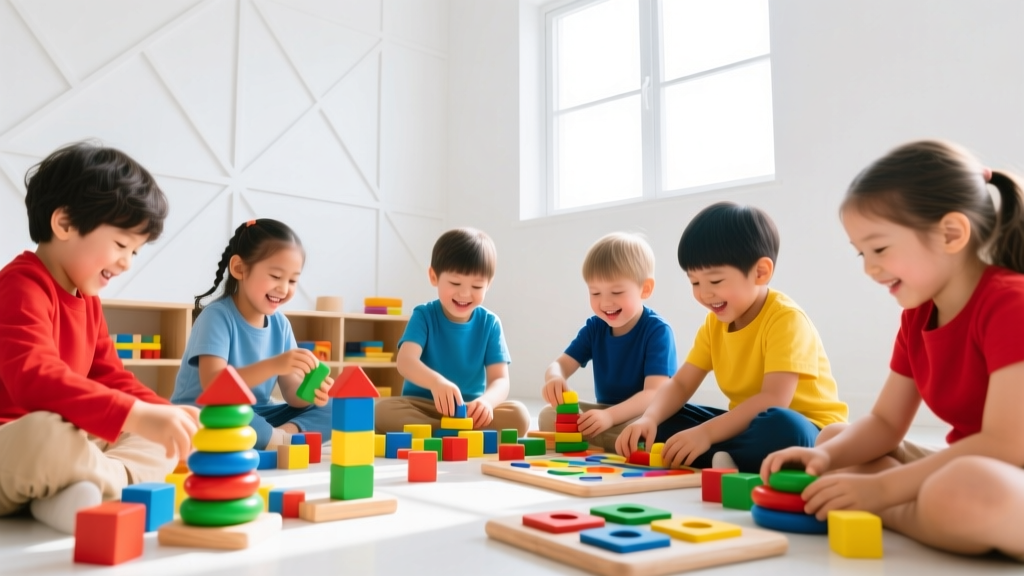 Best STEM Toys for Preschoolers in 2026