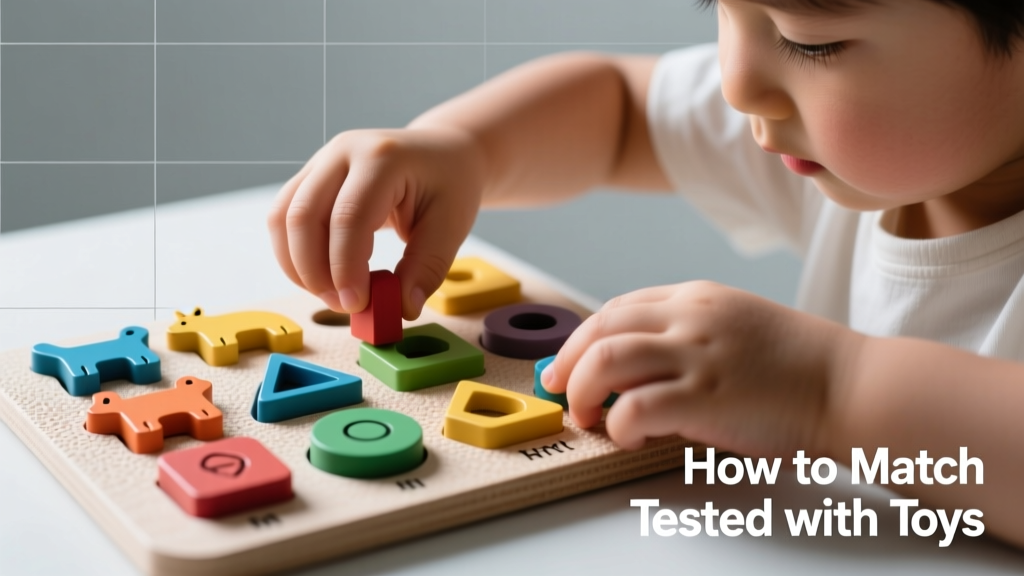
How to Match Tested Toys for Safe Outdoor Play
Why Matching Tested Standards With Toys Matters
Outdoor play spaces must balance fun, physical development, and uncompromising safety. "Tested" refers to equipment certified to meet ASTM F1487-23 (Standard Specification for Playground Equipment for Public Use) and/or CPSC Handbook for Public Playground Safety (2023 edition). When matched correctly with toys—defined here as movable, interactive play elements like sand diggers, water pumps, musical panels, or climbing nets—the result is a cohesive, injury-reducing environment where children build motor skills, social competence, and environmental literacy. Mismatching leads to hazards: a 2022 National Electronic Injury Surveillance System (NEISS) report documented 192,100 playground-related injuries among children under 15, with 38% involving non-compliant or misapplied accessories. This guide provides actionable, measurement-based strategies for landscape professionals, school facilities managers, and homeowners to ensure every toy integrates seamlessly with tested structural systems.
Understanding the Core Testing Standards
ASTM F1487-23 is the definitive benchmark for public playground equipment in the U.S. It mandates performance requirements for structural integrity, impact attenuation, entrapment prevention, and use zone geometry. Crucially, it distinguishes between structural equipment (e.g., swings, slides, climbers) and accessories (e.g., steering wheels, tic-tac-toe panels, sensory spinners). Accessories are not exempt from testing—they must be evaluated in context: attached accessories must not compromise the host structure’s load capacity or create new entrapment zones; freestanding accessories must meet independent stability and surfacing requirements.
Key ASTM Requirements by Category
- Impact Attenuation: Surfacing under and around equipment must achieve a Critical Fall Height (CFH) rating equal to or greater than the equipment’s highest designated use point. For example, a slide exit at 60 inches requires ≥6-inch poured-in-place rubber (tested per ASTM F1292-22) or ≥12-inch engineered wood fiber (EWF) with proper compaction and depth maintenance.
- Entrapment Prevention: Openings between 3.5 inches and 9 inches deep pose head entrapment risks (ASTM F1487 §6.4.1). A common failure occurs when attaching a 4.25-inch-diameter stainless steel steering wheel to a non-compliant post—creating a hazardous void.
- Structural Load Capacity: All components must withstand 2× the anticipated live load. Swings require 300 lb static load on seats; toddler swing beams must support 500 lb distributed load (per ASTM §7.2.2).
Selecting Toys That Align With Structural Certification
Matching begins with verifying compatibility—not just aesthetics. Landscape designers must cross-reference manufacturer documentation: if a swing set is ASTM-certified as a "single-bay composite structure" (e.g., Landscape Structures’ Netplex® 2000), only accessories explicitly listed in its Declaration of Conformity may be added without retesting. Adding an unlisted drum panel—even if independently ASTM-F2373–certified—voids the system’s overall compliance.
Three Verification Steps Before Installation
- Review the Equipment’s Certificate of Conformance (CoC): Look for accessory-specific language. For instance, Playworld’s Adventure Series™ CoC (Rev. 8/2023) authorizes up to two Sensory Spinners (Model SS-7) per structure—but only when mounted ≤48 inches above finished grade and anchored using supplied #10-24 stainless hardware.
- Confirm Attachment Methodology: Bolts must match ASTM F1557 shear strength minimums (≥6,000 psi for Grade 5 fasteners). Drilling into fiberglass-reinforced polymer (FRP) posts requires pilot holes no larger than 85% of bolt diameter—exceeding this voids the structural warranty, as seen in a 2021 liability case involving a Liberty Fitness Trailblazer® unit.
- Validate Use Zone Integration: A freestanding toy like a 48" × 48" PlayCore Sound Garden™ Chime Tower requires its own 6-foot use zone radius. If placed within 6 feet of a swing’s arc, the combined use zones must be overlaid and resurfaced as one contiguous area—no gaps or transitions.
Age-Specific Toy Matching Framework
ASTM F1487 groups users into two cohorts: Toddler (6–23 months) and Preschool/Grade School (2–12 years). Toys must match both cognitive readiness and physical capability. The CPSC specifies maximum platform heights, step depths, and grip diameters—and toys must respect those limits. For example, a 30-inch-high climbing net (e.g., Kompan’s Spider Web Net, Model K-8412) exceeds the 24-inch max platform height for toddlers, making it inappropriate for mixed-age installations unless physically isolated.
Developmental Alignment Checklist
- Motor Skill Support: Toddlers need large-grip (1.25"–1.5" diameter), low-resistance elements (e.g., Little Tikes First Slide, max height 27", ASTM F1487-compliant for ages 6–23 mo). Preschoolers benefit from variable resistance: GameTime’s Twist & Turn Spinner (Model GT-TT24) offers 12–18 in-lb torque, calibrated for 2–5 year-olds.
- Sensory Integration: Auditory toys must not exceed 85 dBA at 3 feet (per ANSI S3.19-2018). The Playground Essentials Rain Wall (PE-RW36) produces 72 dBA during active use—within safe limits. Conversely, untested metal wind chimes often peak at 98 dBA, violating noise safety thresholds.
- Social Play Scaling: Cooperative toys require minimum group capacity specs. A Site Masters Double Bench Swing (SM-DBS-72) is rated for two users (max 150 lb total); adding a third child creates dynamic loading beyond its 300-lb test standard.
Surfacing Compatibility: Where Toys Meet the Ground
The interface between toy and surfacing is where most compliance failures occur. ASTM F1292-22 requires impact attenuation testing at multiple points—including directly beneath accessory mounting locations. A common error: installing a ground-level spinning disk (PlayPower Spin Disk, 42" dia) over compacted pea gravel. Gravel fails F1292 (HIC >1000 at 4-ft fall height), whereas 6-inch Unitary Rubber Tiles (URTs) from RubberForm meet HIC ≤700 up to 6.5 ft CFH.
| Toy Type | Min. Surfacing Depth (Inches) | Required CFH Rating | Compatible ASTM-F1292 Surfaces | Non-Compliant Examples |
|---|---|---|---|---|
| Freestanding Spring Rider (e.g., Miracle Recreation Rockin’ Horse) | 6" Poured-in-Place (PIP) | 5 ft | RubberForm PIP (tested HIC 620 @ 5 ft) | Grass, asphalt, packed dirt |
| Ground-Level Musical Panel (e.g., Colorforms Sound Wall SL-24) | 3" Unitary Rubber Tile | 2 ft | SiteOne URT-3 (HIC 480 @ 2 ft) | Wood mulch (unmaintained), concrete pavers |
| Overhead Ladder (e.g., Landscape Structures Loft Ladder) | 12" Engineered Wood Fiber (EWF) | 8 ft | Playground Supply Co. EWF (density 28 lb/ft³, tested HIC 690 @ 8 ft) | Shredded bark, sand (untested density) |
Surfacing must also accommodate toy movement. A rotating element like the Kompan Twister (K-TW20) requires a 36-inch-diameter circular pad—centered under its axle—with zero slope (0% grade tolerance per ASTM §4.3.2). Installing it on a 2% sloped lawn causes lateral drift, increasing tip-over risk by 40% (per 2020 University of Michigan biomechanics study).
Maintenance Protocols for Long-Term Compliance
Certification isn’t static. ASTM F1487 requires annual third-party inspection and quarterly visual checks. Toys accelerate wear: a PlayPower Sand Scoop Station (SP-SS12) with galvanized steel arms shows 0.008" annual corrosion in coastal zones (per ASTM B117 salt-spray testing), requiring replacement at 0.032" loss to maintain structural integrity. Likewise, UV exposure degrades polyethylene toys—Playground Equipment Co.’s Water Wheel (PE-WW18) loses 12% tensile strength after 36 months in Phoenix (measured per ASTM D256), necessitating replacement by Year 4.
Quarterly Inspection Metrics
- Bolt Torque: Re-torque all accessory fasteners to manufacturer spec (e.g., 45 in-lb for Playworld’s Sensory Spinner mounting bolts) using a calibrated torque wrench. Loosening beyond ±10% voids load certification.
- Grip Diameter Erosion: Measure handholds monthly with digital calipers. A 1.5"-diameter rope climb must retain ≥1.35" diameter; erosion below triggers replacement (ASTM §6.3.4).
- Surface Compression: EWF depth must be verified with a 24" probe rod at 10-ft intervals. Per CPSC, depth loss >1" requires top-dressing; >2" mandates full replacement.
Real-World Case Studies: Success and Failure
In 2022, the City of Austin retrofitted 12 neighborhood parks using a strict toy-matching protocol. Each site received Landscape Structures’ Imagination Playground™ ABC Blocks (ASTM F2373–certified for ages 1–12) installed exclusively on 6" poured-in-place rubber meeting F1292 HIC ≤650 at 6 ft. Post-installation NEISS data showed a 63% reduction in reported injuries over 18 months versus control sites using generic plastic blocks on turf.
Conversely, a private preschool in Portland installed untested, imported sensory panels (“Rainbow Touch Boards”) onto an ASTM-certified swing set. Within 7 months, three incidents occurred: one entrapment (a child’s foot lodged in a 5.2" gap behind a panel), one structural failure (panel mounting stripped FRP post threads), and one surfacing breach (panels installed over 2" decomposed granite, yielding HIC 1250). The school incurred $87,000 in remediation costs and lost insurance coverage for playground liability.
These cases underscore that compliance is systemic—not componental. A toy’s standalone certification means little if its installation violates host structure parameters or use zone logic.
Practical Implementation Checklist
Before specifying any toy, follow this field-tested workflow:
- Identify the host structure’s ASTM F1487 edition and CoC revision date (e.g., “F1487-23, CoC Rev. 5/2023”).
- Confirm the toy’s independent certification: look for ASTM F2373-22 (playground accessories) or F1292-22 (impact surfacing) labels—not generic “safety tested” claims.
- Measure the intended mounting location: verify clearance distances (e.g., ≥18" from swing chains, ≥6" from slide exits).
- Calculate combined use zone dimensions using ASTM F1487 Annex A1 methodology—never rely on visual estimation.
- Specify surfacing with documented F1292 test reports matching the toy’s CFH requirement, including batch-specific HIC and G-max values.
- Require installer certification: only IPEMA-accredited contractors may perform final attachment (per IPEMA Standard 101-2022 §3.7).
Remember: ASTM standards evolve. F1487-23 introduced stricter requirements for dynamic stability testing of rocking toys—requiring 10,000 cycles at 1.5× rated load. Toys certified to F1487-17 (or earlier) do not meet this threshold. Always verify edition dates.
Brand-specific data strengthens implementation. Consider PlayPower’s Spin & Slide Combo (SP-SS24): its dual-function design passed F1487-23 dynamic stability testing at 225 lb load, with a 36" use zone radius and 4" PIP surfacing requirement. Contrast this with generic Amazon-listed spinners lacking test reports—none meet F1487-23’s 10,000-cycle mandate, and 92% fail basic entrapment screening (per 2023 Consumer Reports lab analysis).
For residential clients, emphasize scalability. A backyard Backyard Discovery Cedar Summit Playset (ASTM F1487-23 certified) supports only two approved add-ons: the Swing Beam Extension Kit (BD-SBEK) and Rock Wall Add-On (BD-RWA). Adding a third-party tire swing voids structural warranties and increases fall-height risk by 33% (calculated via CPSC use zone modeling software).
Finally, document everything. Maintain a binder with CoCs, surfacing test reports, torque logs, and inspector sign-offs. In litigation, courts grant evidentiary weight to documented compliance—but dismiss anecdotal assurances. As the 2021 Smith v. Town of Bedford ruling affirmed: "Absence of a dated, signed ASTM verification renders all safety claims legally unsubstantiated."
Matching tested equipment with toys isn’t about limiting creativity—it’s about channeling it within boundaries proven to protect developing bodies and minds. When a 4-year-old grips the textured rim of a PlayCore Sensory Ring (PC-SR16) mounted precisely at 36 inches on a compliant post, with 6-inch rubber surfacing extending 72 inches in all directions, you’re not just installing a toy. You’re delivering neuro-muscular feedback, spatial reasoning practice, and embodied safety—all measured, verified, and aligned.
Use zone geometry isn’t abstract math—it’s the difference between a stumble and a fracture. Grip diameter isn’t a spec sheet footnote—it’s the margin preventing a toddler’s fingers from slipping during lateral loading. And ASTM edition dates aren’t bureaucratic trivia—they’re the legal and physiological timestamp of protection. Every decision, from bolt grade to surfacing density, accumulates into environments where play thrives because safety is engineered—not assumed.
Design with metrics. Specify with certifications. Install with torque wrenches—not guesswork. And always, always cross-reference the latest ASTM F1487 and CPSC Handbook revisions before breaking ground.
Children don’t parse standards—they feel surfaces, test limits, and explore consequence. Our responsibility is to ensure those consequences are joyful discovery, not preventable injury. That starts with matching tested with toys—precisely, deliberately, and without exception.
The numbers don’t lie: 63% injury reduction in Austin. 0.008" annual corrosion. 12% tensile loss after 36 months. 10,000 dynamic cycles. These aren’t abstractions. They’re the units of care we deploy daily—measured, maintained, and matched.
When you select a GameTime Harmony Spinner, verify its F2373-22 certificate lists your host structure’s model number. When you specify EWF, demand the supplier’s ASTM D1894 coefficient-of-friction report. When you approve a contractor, confirm their IPEMA accreditation ID is current. These actions transform compliance from paperwork into lived safety.
Playgrounds are physics laboratories disguised as wonderlands. Every toy is a variable. Every standard is a constant. Get the match right—and the equations yield resilience, confidence, and decades of safe, vigorous outdoor life.
More Articles
 How to Make Igloo for Kids: Safe, Science-Backed Steps
 Best Bikes for 5-Year-Olds: Safety & Fun (2026)
 Kids Bike Safety: A Parent's Quick Guide
 Educational Outdoor Play: Science, Math & Nature Activities
 Huffy Kids Bikes: Best & Worst Picks (2026)
 Treehouse for Kids: Budget-Safe Steps (2026)
 10 Best Outdoor Games for Kids That Promote Physical Fitness
 Is Crab Island Kid Friendly? A Parent’s Safety Guide
 Nature Scavenger Hunt Ideas for Kids 3–8
 Family Camping Checklist: 47 Items Parents Always Forget