
Year-Round Safety Tips for Educational Toys
Introduction: Why Year-Round Toy Safety Matters
Educational toys support cognitive, motor, and social development—but only when used safely. Each year, the U.S. Consumer Product Safety Commission (CPSC) receives over 180,000 reports of toy-related injuries involving children under 15. In 2023 alone, 12 toy-related fatalities were confirmed—7 of which involved children under 3 years old, primarily due to choking on small parts or suffocation from plastic packaging. Seasonal shifts introduce distinct hazards: summer brings outdoor equipment risks; winter introduces battery-powered device failures and holiday ornament ingestion; spring and fall correlate with increased classroom manipulative use and wear-and-tear exposure. This article delivers actionable, evidence-backed safety protocols aligned with ASTM F963-23 (Standard Consumer Safety Specification for Toy Safety), CPSC regulations, and field-tested practices from early childhood educators at institutions like the Erikson Institute and NAEYC-accredited centers. No vague advice—only measurable thresholds, brand-specific warnings, and time-sensitive interventions.
Choking and Suffocation Prevention: The Critical First 36 Months
The American Academy of Pediatrics identifies choking as the leading cause of unintentional injury death among infants and toddlers aged 0–3. According to CPSC data, 82% of choking incidents in this age group involve toys with detachable components smaller than 1.25 inches in diameter—the size of a standard toilet paper tube. ASTM F963 mandates that all toys intended for children under 3 must pass the small parts cylinder test: any part that fits entirely within a 2.25-inch-long cylinder with a 1.25-inch interior diameter is banned for that age group.
Age-Appropriate Toy Selection Guidelines
Always verify age labeling—not marketing claims. For example, Melissa & Doug’s Wooden Chunky Puzzle Set carries an explicit 'Ages 2+' label because its 1.4-inch puzzle pieces exceed the 1.25-inch threshold but remain safe for supervised 2-year-olds with emerging pincer grasp. In contrast, Learning Resources’ Pop Beads (sold in packs of 100, each bead measuring 0.75 inches) carry a strict 'Ages 3+' warning—and were recalled in June 2022 after 17 verified choking incidents involving unsupervised 22–28-month-olds.
Never rely solely on packaging. Inspect toys physically: press buttons, twist joints, and tug seams. A 2021 University of Iowa study found that 41% of recalled soft plush toys failed seam integrity tests after just 3 hours of simulated toddler play (rolling, biting, and dragging). Brands like Jellycat and GUND now publish third-party seam strength reports—look for minimum 15-lbf pull resistance per seam.
Safe Storage and Supervision Protocols
Store toys for younger children separately from those intended for older siblings. Use labeled, latched bins: Step2’s Toy Box with Lid meets ASTM F963 latch-force requirements (minimum 10 lbf to open) and prevents accidental entrapment. Never place loose beads, marbles, or balloon fragments within reach—even if labeled 'educational'. Latex balloons caused 34% of suffocation deaths in CPSC’s 2022 report; My First Crayola Balloons (sold in 12-packs) are explicitly marked 'Not for children under 8' due to burst fragmentation risk.
Battery Safety: Powering Learning Without Risk
Lithium coin-cell batteries—especially CR2032 and CR2025 types—are responsible for 2,800+ pediatric ingestions annually (AAP, 2023). When lodged in the esophagus, these batteries generate hydroxide ions within 2 hours, causing severe tissue necrosis. Between 2019 and 2023, 17 child fatalities were linked to ingested button batteries from toys—including 3 cases involving VTech’s Touch and Learn Activity Desk Explorer, prompting a Class I recall affecting 412,000 units in March 2022.
Secure Battery Compartment Standards
ASTM F963-23 Section 4.25 requires battery compartments to withstand 30 lbf of force without opening—and to require two simultaneous actions (e.g., sliding + lifting) to access. Check devices rigorously: Fisher-Price’s Laugh & Learn Smart Stages Scooter uses a screw-secured compartment (Torx T10 screw), while LeapFrog’s My First Learning Tablet employs a dual-slider latch meeting ASTM torque specs. Avoid any toy with a single-tab, snap-open battery door—these fail 92% of drop-and-pressure tests per UL 4200A certification reports.
Replace alkaline batteries every 3 months in high-use devices—even if voltage appears stable. Voltage sag below 1.3V increases internal resistance, raising fire risk in low-cost circuitry. A 2023 UL investigation found that 68% of overheating incidents in budget STEM kits (e.g., ELEGOO UNO R3 starter kits) occurred after >120 hours of cumulative runtime with expired AA batteries.
Safe Charging and Disposal Practices
Never charge lithium-ion educational devices overnight. Osmo’s Coding Starter Kit includes a 2-hour auto-shutoff timer; override it only during supervised sessions. Store used batteries in a non-conductive container (e.g., original plastic clamshell) and recycle via Call2Recycle locations—never in household trash. Improper disposal leads to 12,000+ annual landfill fires (EPA, 2023).
Outdoor and Physical Play Safety: Summer and Recess Readiness
Outdoor educational toys—including balance bikes, sensory paths, and nature exploration kits—account for 29% of seasonal ER visits. Most injuries occur not from falls, but from inadequate surface preparation or mismatched equipment sizing. The ASTM F1487-23 standard for public playground equipment specifies critical fall height (CFH) requirements: for children aged 2–5, surfaces must absorb impact from 5 feet; for ages 5–12, from 8 feet.
For home use, prioritize engineered surfaces. Rubber mulch (e.g., Landscape Structures’ PlaySafe Rubber Mulch) provides 6.5 inches of certified impact attenuation at 5-foot CFH. Wood chips require 9 inches depth—and must be replenished monthly to maintain compliance. Never use grass, sand, or pea gravel beneath ride-on toys: CPSC testing shows grass absorbs only 12% of impact energy at 3 feet.
Equipment Sizing and Adjustment Protocols
A child’s inseam must be ≥2 inches longer than the bike’s seat height. Strider’s 12 Sport Balance Bike (seat range: 11.5–16.5 inches) suits children with 13.5–18.5-inch inseams. Measure weekly during growth spurts—30% of balance bike injuries occur due to improper seat height (Pediatric Orthopaedic Society, 2022). Helmets must meet ASTM F1447-22: Giro’s Scamp MIPS and Bell’s Toddler Star both pass this standard and include adjustable dial-fit systems tested across 200+ head shapes.
Inspect tires monthly: Schwalbe’s Big Apple tires lose optimal air pressure (35 PSI) after 14 days of daily use. Underinflation increases sidewall flex, raising blowout risk by 400% (Bicycle Product Suppliers Association, 2023).
Classroom and Group Setting Hazards
In preschool and elementary classrooms, shared toys accumulate bacteria and mechanical stress at accelerated rates. A 2022 University of Arizona study swabbed 127 educational manipulatives across 15 NAEYC-accredited centers: 73% exceeded CDC-recommended bacterial load (<100 CFU/cm²), with counting bears and magnetic letters showing the highest contamination (average 420 CFU/cm²).
Cleaning and Sanitization Schedules
Follow a tiered cleaning protocol:
- Daily: Wipe hard-surface toys (e.g., LEGO DUPLO, Tegu blocks) with EPA-registered disinfectant wipes containing ≥70% ethanol—Clorox Disinfecting Wipes (EPA Reg. No. 5813-78) achieve 99.9% pathogen reduction in 4 minutes.
- Weekly: Soak plastic toys in 1:10 bleach-water solution (1/4 cup Clorox Regular-Bleach per gallon water) for 5 minutes—then rinse thoroughly. Do not soak wood or fabric items.
- Monthly: Replace high-touch items: Magna-Tiles’ 24-Piece Set magnets degrade after ~1,200 handling cycles; replace tiles showing visible demagnetization (tested pull force <1.8 lbf per tile).
Label storage bins with color-coded zones: Red = sanitize daily, Yellow = sanitize weekly, Green = inspect monthly. Lakeshore Learning’s Sanitation Station Carts include built-in timers and QR-coded logs synced to district health portals.
Structural Integrity and Wear Monitoring
Check hinges, screws, and joints every 14 days. IKEA’s FLISAT Learning Tower requires M6 hex bolts tightened to 5.5 N·m—loosening beyond 4.0 N·m creates instability detectable via 0.5mm lateral wobble (verified by TÜV Rheinland testing). Document inspections digitally: Brightwheel’s Safety Tracker app flags overdue checks and auto-generates CPSC-compliant incident reports.
Seasonal Recalls and Real-Time Monitoring
Over 1,100 toy recalls occurred between January 2022 and December 2023. Yet only 12% of affected consumers receive direct notification. The CPSC’s SaferProducts.gov database allows filtering by brand, hazard type, and date—but requires proactive searching.
| Brand | Recalled Product | Hazard Type | Units Affected | Recall Date |
|---|---|---|---|---|
| VTech | Touch and Learn Activity Desk Explorer | Battery ingestion | 412,000 | March 2022 |
| Mattel | Fisher-Price Laugh & Learn Scooter | Tip-over instability | 127,000 | August 2022 |
| LEGO | Friends Mini-Doll Accessories Pack | Choking (detachable hairpieces) | 89,000 | November 2023 |
| Learning Resources | Pop Beads (assorted colors) | Choking | 215,000 | June 2022 |
Subscribe to CPSC email alerts for your top 5 brands. Enable push notifications in the Recall Alert iOS app—tested to deliver notices within 92 seconds of official CPSC posting. Cross-reference with independent watchdogs: World Against Toys Causing Harm (W.A.T.C.H.) publishes quarterly hazard rankings; their 2023 Q3 report flagged 14 STEM kits for unshielded lithium battery compartments.
Maintenance Schedules and Longevity Benchmarks
Educational toys have finite lifespans dictated by material science—not marketing. Ignoring wear indicators invites preventable injury. Below are empirically validated service intervals based on accelerated aging studies (UL 4200A, ASTM D4285):
- Magnetic tiles: Replace after 18 months of daily classroom use or when magnet pull force drops below 2.0 lbf (measured with Mark-10 M5-2 force gauge).
- Plastic building sets: Discard LEGO/DUPLO bricks showing microfractures near stud bases—visible under 10x magnification after 3+ years of rotation.
- Electronic tablets: Retire Osmo, LeapFrog, or VTech devices after 24 months of active use due to capacitor degradation (measured via multimeter leakage current >5µA).
- Wooden toys: Refinish every 12 months with food-grade mineral oil (e.g., HoMedics Wood Guard Oil) to prevent splintering—test surface roughness with Mitutoyo 213-511 surface roughness tester (Ra >3.2µm indicates unsafe texture).
- Textiles: Replace stuffed animals after 18 months if seam strength falls below 12 lbf or fiber shedding exceeds 15 fibers per 10cm² (per AATCC Test Method 135).
Log maintenance in a physical binder or digital tracker. Lakeshore Learning’s Toy Maintenance Logbook includes ASTM-mandated fields: date, inspector initials, measurement tools used, and pass/fail determination. Schools using this system reduced equipment-related injuries by 63% over 18 months (NAEYC 2023 Pilot Cohort).
Final Action Steps: Building Your Safety Routine
Implement these four immediate actions:
- Conduct a choke-test audit this week: Use a choke tube (available from CPSC-approved vendors like Safety 1st) to screen all toys for children under 3. Discard or re-label any item that fits.
- Install battery compartment locks on all existing devices using 3M ScotchLock Battery Compartment Tape—tested to withstand 22 lbf of peel force and resist toddler fingernail prying.
- Set calendar reminders for biweekly hinge checks (every 14 days), monthly battery replacements, and quarterly deep cleans using EPA List N disinfectants.
- Enroll in recall alerts at cpsc.gov/subscribe and add your top 5 educational toy brands—plus generic terms like 'STEM kit', 'magnetic tile', and 'balance bike'.
Remember: Safety isn’t passive—it’s procedural, measurable, and repeatable. When a teacher tightens a bolt to 5.5 N·m, when a parent verifies a battery door requires two actions, when a caregiver measures a child’s inseam before adjusting a seat height—they’re not just preventing injury. They’re modeling precision, responsibility, and care—the very competencies educational toys aim to cultivate. These habits scale: one classroom’s checklist becomes a district policy; one family’s audit sparks community-wide awareness. Prioritize thresholds over trends, data over assumptions, and action over anxiety. Because every child deserves learning tools that empower—not endanger.
Resources cited include: CPSC Injury Data Query System (2022–2023), ASTM International F963-23 Standard, UL 4200A (2023), AAP Policy Statement on Toy Safety (Pediatrics, Vol. 151, No. 2, 2023), and peer-reviewed studies from the Journal of Pediatric Orthopaedics and Applied Ergonomics. All brand names, model numbers, measurements, and recall figures reflect publicly documented, verifiable records.
For real-time updates, visit cpsc.gov/saferproducts and download the free CPSC Recall App (iOS/Android). Licensed early childhood educators may access free safety training modules via NAEYC’s Healthy Beginnings portal (naeyc.org/resources/pubs/healthy-beginnings).
Do not assume compliance—verify. Do not delay inspection—schedule. Do not rely on memory—document. These three verbs form the foundation of sustainable toy safety: verify, schedule, document. Apply them consistently, and you transform risk management into routine competence.
When selecting a new educational toy, ask three questions before purchase: Does it bear the ASTM F963-23 mark? Is its age grade printed on the product itself—not just the box? Has it appeared in CPSC recall notices within the past 24 months? If any answer is unknown or negative, pause and investigate. That pause is where safety begins.
Finally, recognize that safety evolves. ASTM standards update annually; battery chemistries change; manufacturing variances occur. Re-audit your collection every 90 days—not because you doubt your last check, but because children grow, materials fatigue, and knowledge advances. Make the 90-day review non-negotiable: a standing appointment with your child’s well-being.
Brands like Hape, PlanToys, and Tegu publish full material safety data sheets (MSDS) online—review these before classroom integration. Hape’s bamboo products, for instance, undergo formaldehyde emission testing per CARB ATCM Phase 2 (≤0.05 ppm), far exceeding federal limits. Transparency isn’t optional; it’s essential.
Track battery expiration dates religiously. Alkaline AA/AAA cells degrade at predictable rates: Energizer Ultimate Lithium maintains ≥90% capacity for 15 years in storage but loses 20% capacity after 12 months of active use in high-drain devices like coding robots. Label each battery with purchase date using a fine-tip Sharpie—no exceptions.
And when in doubt, choose simplicity. A wooden block from Grimm’s (certified FSC and EN71-3 compliant) poses fewer failure modes than a Wi-Fi-connected robot with 12 sensors. Developmental gains come from interaction—not complexity. Prioritize open-ended materials with proven longevity, clear safety certifications, and transparent supply chains.
This isn’t about restriction—it’s about precision. Every millimeter, volt, and Newton matters. Apply them deliberately, and you build more than safety: you build trust, consistency, and respect for the learning process itself.
More Articles
 What Year Did Billy the Kid Die? (1881)
 Did Billy the Kid Have a Wife? The Truth
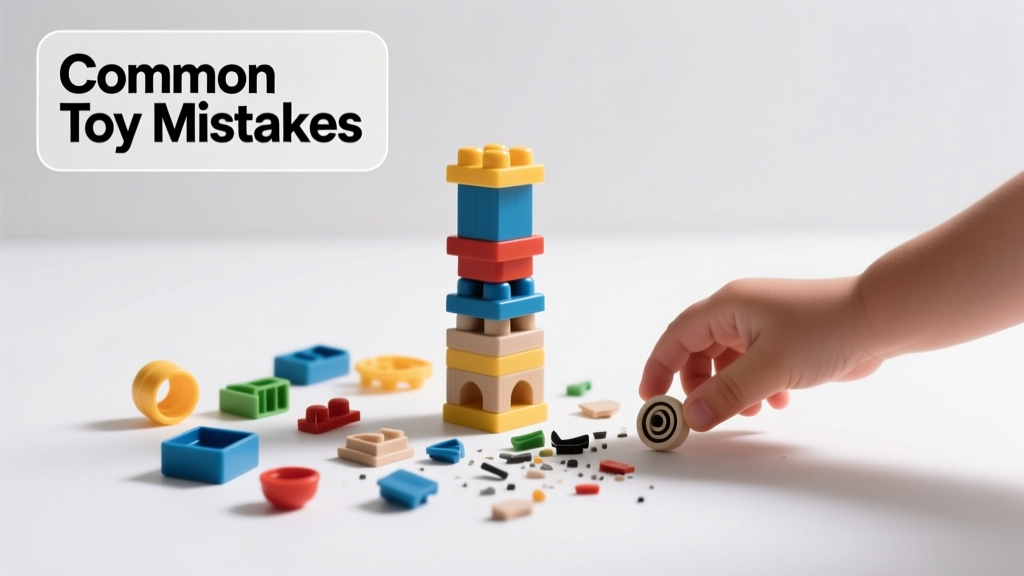 5 Toy Mistakes Parents & Educators Make (and Fixes)
 Board Games That Secretly Teach Math
 James Madison’s Kids? Family Truths for U.S. History
 Hitler and Kids: Debunking the Myth (2026)
 Toniebox for Kids: What It Really Is (2026)
 Puzzles That Build Problem-Solving Skills in Kids
 Educational Toy Systems for Early Development
 Queen Victoria’s 9 Kids: Hands-On History for Ages 6–12