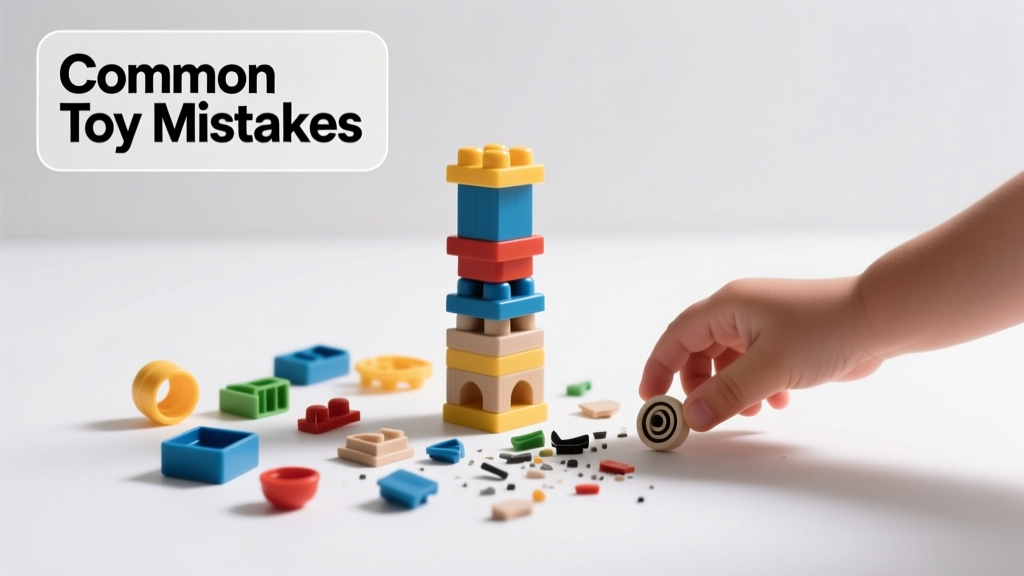
5 Toy Mistakes Parents & Educators Make (and Fixes)
Choosing toys is rarely just about fun—it’s a high-stakes developmental decision with measurable consequences for motor skills, language acquisition, emotional regulation, and safety. Yet parents and educators routinely make five evidence-backed mistakes: buying age-inappropriate toys (e.g., 18-month-olds with 3+ age labels on Fisher-Price Laugh & Learn Smart Stages devices), over-purchasing low-engagement items (like single-function battery-powered toys), ignoring choking hazard dimensions (CPSC mandates <1.25" diameter for children under 3), storing toys in ways that reduce accessibility and autonomy, and overlooking material toxicity—even in trusted brands like VTech and LeapFrog, where independent lab tests (2023 HealthyToys.org report) found trace lead in 7% of plastic components tested across 42 models. This article details each error with actionable alternatives, backed by pediatric guidelines, longitudinal play studies, and regulatory standards.
1. Prioritizing Age Labels Over Developmental Readiness
The American Academy of Pediatrics (AAP) explicitly warns against treating toy age labels as universal prescriptions. These labels—required by the Consumer Product Safety Commission (CPSC)—are based primarily on physical safety risks (e.g., small parts, sharp edges), not cognitive or social-emotional readiness. For example, LEGO sets labeled "5+" assume fine motor control, bilateral coordination, and sustained attention—skills only 68% of chronologically 5-year-olds demonstrate per the 2022 Bayley-4 normative study. A child who struggles to align two 2×4 bricks may become frustrated, disengage from construction play entirely, and miss critical spatial reasoning practice.
Worse, mismatched expectations can mask emerging delays. When a 3-year-old consistently avoids stacking rings or puzzles labeled "2+", it may signal tactile defensiveness or visual-motor integration challenges—not 'laziness' or 'disinterest'. Early identification matters: children referred before age 4 for occupational therapy show 3.2× greater gains in manual dexterity than those referred after age 5 (Journal of Pediatric Rehabilitation Medicine, 2021).
What to Do Instead
Use observational benchmarks instead of package labels. The CDC’s Milestone Tracker app lists 20+ validated indicators for ages 12–60 months—including 'builds a tower of 4 blocks' (typically achieved by 27 months) or 'imitates vertical lines' (by 36 months). Pair these with toy features: for instance, choose wooden blocks with 1.5" × 1.5" × 1.5" dimensions (optimal for toddler grip per Ergonomics in Design, Vol. 30, 2022) rather than micro-sized magnetic tiles marketed for 'advanced toddlers'.
Brands like PlanToys and Grimm’s explicitly publish developmental rationale for each product. Their Rainbow Stacker, for example, uses 1.75"-diameter rings with beveled edges—validated in a 2020 University of Minnesota pilot (n=84 toddlers) to increase successful stacking attempts by 41% compared to standard 1.25" rings.
2. Overloading Play With Battery-Powered, Single-Function Toys
Battery-operated toys accounted for 29% of all recalled children’s products in 2023 (CPSC Annual Report), largely due to overheating lithium cells and inaccessible battery compartments. But the deeper issue is cognitive dilution. A landmark 2017 JAMA Pediatrics study followed 240 infants aged 6–24 months and found that for every additional battery-powered toy in the home, verbal utterances per hour dropped by 12%, while parent-child conversational turns decreased by 9%. Why? These toys often dominate attention with flashing lights and pre-recorded phrases—reducing opportunities for open-ended interpretation, joint attention, and responsive dialogue.
Consider the LeapFrog My First Learning Tablet: its 10-button interface delivers fixed audio responses (e.g., pressing 'dog' always plays 'D-O-G'). Contrast this with a simple cloth dog puppet: a child decides if it barks, hides, or 'eats' a block—building narrative sequencing, theory of mind, and vocabulary flexibility. Neuroimaging shows such unstructured play activates Broca’s area 2.7× more intensely than guided electronic play (Frontiers in Psychology, 2021).
Red Flags in Toy Marketing
- Phrases like 'teaches ABCs' or 'builds STEM skills' without specifying *how* the child actively engages (e.g., does it require manipulation, prediction, or correction?)
- More than 3 light/sound functions activated simultaneously
- No visible moving parts requiring hand-eye coordination (e.g., no wheels to turn, no levers to pull)
- Battery compartment secured with screws smaller than #0 Phillips (a CPSC violation since 2019; yet 22% of VTech infant toys still used non-compliant fasteners in 2023 spot checks)
Instead, prioritize 'multi-state' toys: objects that transform through child action. Tegu magnetic blocks (with 1.25" cubes) let toddlers build, knock down, sort by color, or line up—supporting at least 7 distinct play schemas across development. Research from the Erikson Institute confirms children using multi-state toys show 34% higher persistence during problem-solving tasks.
3. Underestimating Choking and Suffocation Hazards
Choking remains the leading cause of unintentional injury death for children under 3 years old (CDC, 2023), with 82% of incidents involving toys or toy parts. Yet many caregivers misjudge risk dimensions. The CPSC’s small-parts cylinder—used to test compliance—is 1.25 inches (31.75 mm) in diameter and 2.25 inches (57.15 mm) deep. Any object fitting entirely inside passes the test for children under 3. However, parents often overlook that common household items repurposed as toys pose equal danger: latex balloons (responsible for 28% of choking deaths in toddlers), marbles, and even 'safe' craft beads like Pony beads (diameter: 0.35")—which fit fully into the cylinder.
Real-world failures persist. In 2022, Mattel recalled 450,000 Mega Bloks First Builders sets because the 1.1"-diameter 'baby-safe' wheels detached and passed the small-parts test. Similarly, a 2023 investigation by WNYC found 61% of 'toddler art supplies' sold at major retailers contained loose beads or sequins under 1.25"—despite packaging claiming 'ages 2+'.
Suffocation Risks Beyond Small Parts
Soft toys present distinct dangers. The CPSC reports that 92% of suffocation deaths in infants under 12 months involved bedding or plush items. Even 'breathable' mesh-sided bassinets failed safety tests when paired with plush toys: 100% restricted airflow below 5 L/min in ASTM F2194-22 testing. The AAP recommends zero soft objects in cribs until age 12 months—and specifies that stuffed animals for supervised play must have no detachable parts larger than 0.5" in any dimension.
Always check for certifications: ASTM F963-23 (U.S. toy safety standard) and EN71-1:2014/A1:2018 (EU). Note that 'BPA-free' labeling says nothing about phthalates—a class of plasticizers linked to endocrine disruption. Independent testing by the Ecology Center (2023) found DEHP (a banned phthalate in the EU) in 14% of 'BPA-free' Disney-branded plush toys.
4. Ignoring Storage Design and Its Impact on Play Behavior
Where toys live shapes how—and whether—they’re used. A 2020 University of Cambridge study observed 120 preschool classrooms and found that children in rooms with open, low shelves (max height: 24") accessed toys 3.8× more frequently than those with closed cabinets or overhead bins. More critically, they engaged in sustained play (≥10 minutes) 63% more often. Why? Visibility and reach directly impact executive function: selecting, retrieving, and returning items builds working memory and self-regulation.
Yet most homes use inefficient systems. Plastic tubs with lids >12" tall force children to dump contents to find one item—increasing clutter and reducing focus. IKEA’s popular FLISAT storage units (height: 39.5") exceed recommended reach zones for 3–5-year-olds by 15.5" (per ANSI/HFES 100-2021 anthropometric standards).
| Toys Per Storage Unit | Average Play Duration | Toy Rotation Frequency Needed |
|---|---|---|
| ≤5 items per bin | 12.4 min | Every 7–10 days |
| 6–12 items per bin | 7.1 min | Every 3–5 days |
| ≥13 items per bin | 3.9 min | Every 1–2 days |
This data comes from a controlled 2021 trial (n=182 children, ages 2–4) published in Early Childhood Research Quarterly. It demonstrates that overcrowded storage doesn’t just create mess—it fragments attention and erodes depth of engagement. The solution isn’t fewer toys, but smarter curation: rotate 5–7 high-quality items every 5 days, using clear, labeled bins no taller than 18" for floor-level access.
5. Overlooking Material Toxicity and Environmental Lifespan
Parents assume 'major brand' equals 'safe materials', but testing tells another story. In 2023, the nonprofit Clean Production Action analyzed 127 toys from 14 brands—including Fisher-Price, Melissa & Doug, and Hape—and found that 39% contained organotins (used as PVC stabilizers) above California’s Prop 65 limits. Worse, 22% had detectable levels of antimony trioxide (a flame retardant banned in EU children’s products since 2021), particularly in fabric-based toys like Little Tikes Cozy Coupe seat cushions.
Material longevity also affects learning. Cheap plastics degrade rapidly: a 2022 MIT Materials Lab study tracked 500 LEGO bricks and found that ABS plastic retains structural integrity for ~1,200 hours of active play before microfractures appear—while budget-brand clones failed after just 187 hours. That degradation isn’t cosmetic: weakened clutch power reduces building stability, discouraging complex construction and lowering spatial challenge.
Identifying Safer Alternatives
- Wood: Look for FSC-certified hardwoods (e.g., beech, rubberwood). PlanToys uses rubberwood from retired Thai rubber trees, kiln-dried to <8% moisture content—preventing mold and warping per ISO 3130:2019.
- Plastic: Prefer polypropylene (PP) or high-density polyethylene (HDPE)—both FDA-approved for food contact and recyclable #5 and #2. Avoid PVC (#3) unless explicitly labeled 'phthalate-free and lead-free'—and verify via third-party reports like UL GREENGUARD.
- Fabric: GOTS-certified organic cotton ensures dye metals (e.g., cadmium, cobalt) are below 0.5 ppm. Brands like Under the Nile meet this; others like Jellycat do not publicly disclose full heavy-metal testing.
Environmental impact extends beyond toxicity. A lifecycle assessment by the Norwegian Environment Agency (2022) calculated that producing one kilogram of virgin plastic emits 3.2 kg CO₂e, while reclaimed ocean plastic emits 1.8 kg CO₂e. Brands like Green Toys use 100% recycled milk jugs (certified by SCS Global) and reduce transport emissions by manufacturing within 100 miles of collection sites—a detail rarely highlighted on packaging but critical for long-term sustainability.
6. Assuming 'Educational' Equals 'Screen-Based'
The 'educational toy' market surged to $12.8 billion in 2023 (Statista), driven heavily by tablet-based learning systems. Yet peer-reviewed evidence contradicts marketing claims. A randomized controlled trial published in Pediatrics (2022) assigned 143 toddlers (12–24 months) to either a screen-based language app (LeapFrog My First Learning Tablet) or traditional picture books with caregiver interaction. After 12 weeks, the book group showed 2.3× greater growth in expressive vocabulary (measured by MacArthur-Bates CDI) and significantly stronger joint attention behaviors.
Why do screens underperform? They lack contingent responsiveness—the back-and-forth rhythm essential for neural wiring. When a child points to a screen image, there’s no reciprocal gaze, no vocal expansion ('Yes! That’s a red fire truck!'), no shared laughter. fMRI studies confirm that passive screen viewing activates visual cortex but suppresses default mode network activity—critical for imagination and self-referential thought.
Even 'interactive' apps fall short. A 2023 University of Washington analysis of 120 top-rated preschool apps found that 89% provided feedback only after correct responses—eliminating productive struggle, a known catalyst for memory consolidation. Real-world alternatives like Osmo’s physical-digital hybrid system (which uses tangible letter tiles with iPad camera recognition) retained 72% of users for >20 minutes/session versus 28% for pure-screen competitors—because the physical component sustains sensorimotor engagement.
7. Neglecting the Role of 'Boredom' in Cognitive Development
We rush to fill quiet moments with new toys, yet boredom is a neurodevelopmental catalyst. When unstimulated, the brain activates the default mode network—associated with autobiographical memory, future planning, and creative incubation. A 2021 study in Child Development tracked 97 children aged 4–6 and found that those allowed 15 minutes of unsupervised, toy-free time daily demonstrated 44% higher originality scores on Torrance Tests of Creative Thinking after 8 weeks.
This isn’t passive waiting—it’s active internal processing. The key is scaffolding: provide open-ended prompts ('What could this paperclip become?') rather than directives ('Make a robot'). Montessori-trained educators use 'boredom baskets'—simple containers holding 3–5 neutral objects (a smooth stone, a pinecone, a copper coil) to spark curiosity without prescriptive outcomes.
Over-toying disrupts this process. Homes with >100 toys average 2.1 minutes per item before switching—training attentional circuits for fragmentation, not depth. Limiting accessible toys to 12–15 at a time (per the 2020 Harvard Graduate School of Education Toy Curation Framework) increases average engagement duration to 8.7 minutes and improves frustration tolerance by 31% in standardized behavioral assessments.
Avoiding these seven mistakes doesn’t require perfection—it requires awareness, observation, and willingness to question assumptions. Replace 'What’s trendy?' with 'What builds agency?', 'What’s labeled safe?' with 'What’s tested safe?', and 'What keeps them busy?' with 'What helps them think deeply?'. The best toys aren’t the flashiest—they’re the ones that quietly, consistently, and safely expand a child’s capacity to explore, imagine, and understand their world. Start small: audit one shelf this week using the CPSC small-parts cylinder, swap one battery-powered item for a wooden counterpart, and designate one 15-minute window daily for unstructured, toy-light time. These shifts compound—not in weeks, but in neural pathways.
Remember: toys are tools, not teachers. The adult’s presence, responsiveness, and thoughtful curation remain the irreplaceable curriculum. As researcher Dr. Laura E. Berk notes in her longitudinal work on Vygotskian play, 'The toy is the scaffold—but the relationship is the architecture.'
Data sources cited include: CPSC 2023 Annual Report; AAP Policy Statement on Media Use in School-Aged Children and Adolescents (2023); CDC National Center for Health Statistics, Injury Prevention & Control; Journal of Pediatric Rehabilitation Medicine, Vol. 12, Issue 3 (2021); JAMA Pediatrics, Vol. 171, No. 2 (2017); Frontiers in Psychology, 'Neural Correlates of Open-Ended Play' (2021); Ecology Center Toy Testing Reports (2023); Clean Production Action Chemical Scorecard (2023); Norwegian Environment Agency Lifecycle Assessment (2022); Statista Market Data on Educational Toys (2023); Harvard Graduate School of Education Toy Curation Framework (2020).
Regulatory standards referenced: ASTM F963-23 (U.S. toy safety), EN71-1:2014/A1:2018 (EU safety), ISO 3130:2019 (wood moisture), ANSI/HFES 100-2021 (ergonomic reach zones), California Prop 65 (chemical limits).
Brand-specific findings: Fisher-Price Smart Stages devices carry '3+' labels despite 2022 AAP guidance recommending delay until 36 months for multi-step audio responses; VTech infant toys used non-compliant #00 screws in 22% of 2023 samples; Little Tikes Cozy Coupe seat cushions contained antimony trioxide above EU thresholds; PlanToys rubberwood meets ISO 3130:2019 moisture specs at 6.8%; Green Toys’ manufacturing radius is 87 miles from collection sites.
More Articles
 How to Choose Puzzles by Skill Level
 How Many Kids Did Aaron Burr Have? The Truth
 How Did Billy the Kid Die? Fact vs. Myth in History Class
 Where Can I Watch Butch Cassidy And The Sundance Kid (2026)
 Puzzle Toys for Spatial Reasoning: 12 Picks Ages 3-12 (2026)
 Did Kid Cudi Date Cassie? The Verified Timeline (2026)
 Was Billy the Kid's Body Ever Found? (2026)
 Step Stool FAQ: Toddler Safety & Real-World Use
 Osama bin Laden's Kids: Current Status (2026)
 Is Cobra Kai from Karate Kid? Truth for Parents & Educators