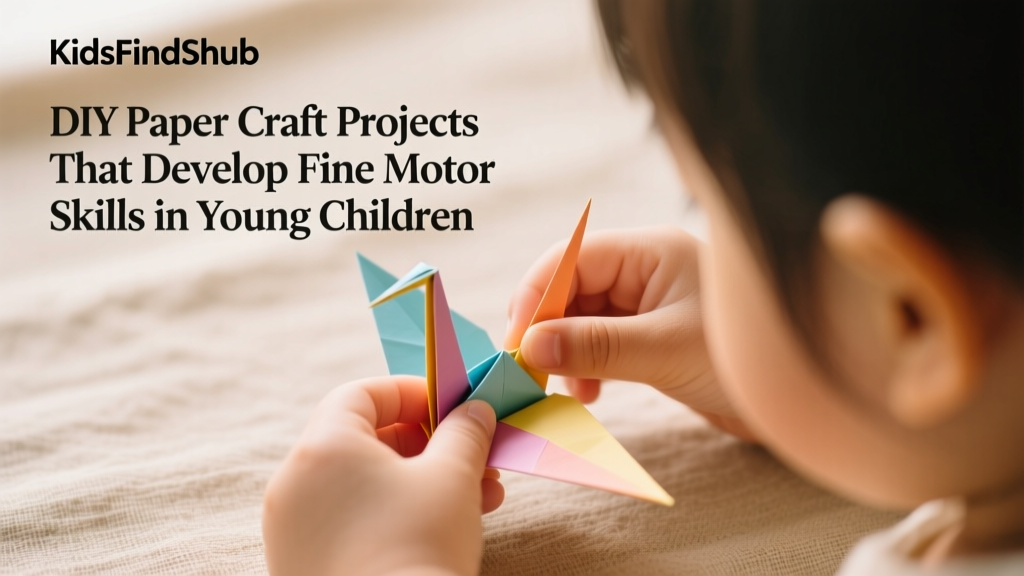
DIY Paper Crafts for Kids' Fine Motor Skills
The Importance of Paper Crafts for Development
Paper crafts are one of the most effective activities for developing fine motor skills in young children. The precise movements required for cutting, folding, gluing, and manipulating paper strengthen hand muscles, improve hand-eye coordination, and build the dexterity needed for writing and other tasks.
Essential Supplies for Paper Crafting
- Child-safe scissors (blunt tips for beginners, pointed for advanced)
- Colored construction paper and cardstock
- Glue sticks and white school glue
- Markers, crayons, and colored pencils
- Ruler and pencil for measuring
- Hole punch and decorative edge scissors
Project 1: Paper Chain Caterpillar
Cut strips of colored paper (1 inch by 8 inches). Loop and glue each strip through the previous one to create a chain. Add a face and antennae to the first link. This teaches sequential thinking while practicing cutting straight lines and applying glue precisely.
Project 2: Origami Animals
Start with simple origami projects like a fortune teller, boat, or jumping frog. The precise folding required builds finger strength and spatial reasoning. Progress to more complex designs as skills develop. Use patterned paper for extra visual appeal.
Project 3: Paper Plate Masks
Transform paper plates into animal masks, superhero faces, or character masks. Cut eye holes, add features with construction paper, and attach elastic or popsicle stick handles. This combines cutting curves with creative design thinking.
Project 4: Quilled Paper Art
Roll thin strips of paper into tight coils, then shape them into circles, teardrops, and marquises. Glue these shapes onto card stock to create flowers, animals, or abstract designs. Quilling requires precise finger control and patience.
Project 5: Pop-Up Cards
Create cards with three-dimensional elements that pop up when opened. Start with simple V-folds, progress to parallel folds and more complex mechanisms. This introduces engineering concepts while developing cutting and assembly skills.
Age-Appropriate Skill Progression
Ages 2-3: Tearing paper, simple gluing, large crayon coloring. Ages 4-5: Cutting straight lines, basic folding, tracing shapes. Ages 6-7: Cutting curves and complex shapes, precise folding, detailed assembly. Ages 8+: Intricate cutting, multi-step projects, independent design.
Tips for Success
Prepare materials in advance so children can focus on the craft. Demonstrate each step slowly. Celebrate effort over perfection. Display finished projects prominently to build pride and motivation. Allow children to add their own creative touches to any project.
More Articles
 How to Draw a Polar Bear for Kids (2026)
 Make Musical Instruments From Recycled Items
 How to Draw Anime for Kids: Brain-Building Guide
 Drawing Techniques Every Kid Should Learn
 Fabric Crafts for Little Hands
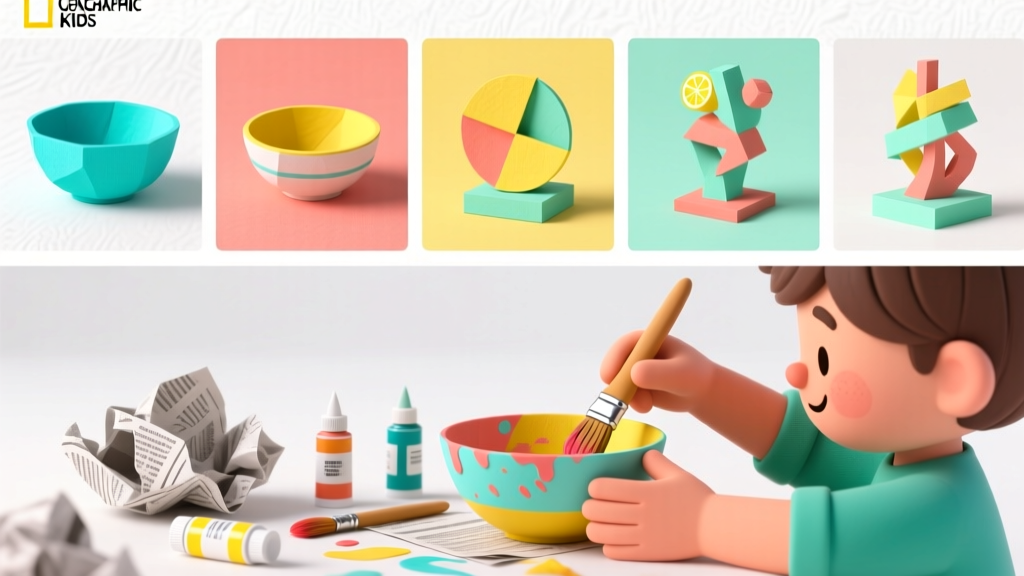 Paper Mache Projects for Kids: 10 Step-by-Step (2026)
 Recycled Material Art Projects for Kids
 Watercolor Techniques for Kid Beginners
 Dream Catcher for Kids: Safe, Cultural Craft Guide
 How to Draw a Volcano for Kids: Simple & Educational