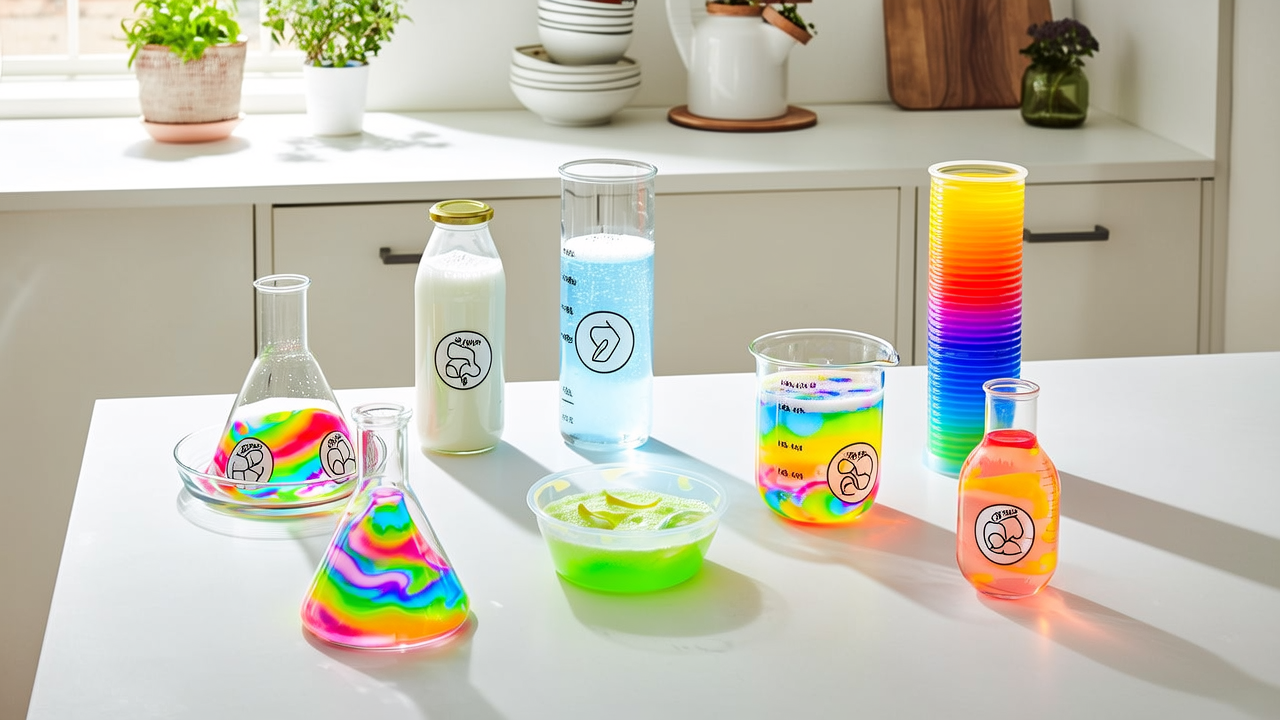
Kitchen Science: 10 Experiments for Families
Science Is Everywhere
Your kitchen is a fully equipped science lab. These experiments use common ingredients to demonstrate real scientific principles.
1. Volcano Reaction
Baking soda and vinegar create CO2 gas. Add food coloring for visual impact. Teaches acid-base reactions and gas production.
2. Milk Color Explosion
Whole milk with food coloring drops. Touch with soapy cotton swab. Soap breaks surface tension, creating colorful swirls.
3. Density Tower
Layer honey, dish soap, water, oil, and rubbing alcohol. Each liquid has different density, creating a rainbow column.
4. Egg in a Bottle
Hard-boiled egg on bottle with lit match inside. Air pressure change pulls egg in. Demonstrates atmospheric pressure.
5. Growing Crystals
Sugar or salt dissolved in hot water. String suspended in solution grows crystals over days. Shows saturation and crystallization.
6. Homemade Lava Lamp
Oil, water, food coloring, and Alka-Seltzer. Bubbling colored droplets rise and fall. Teaches density and gas reactions.
7. Invisible Ink
Lemon juice writes invisible messages. Heat reveals them through oxidation. Introduce chemical change concepts.
8. Bread Mold Race
Touch bread with clean vs dirty hands. Seal in bags and compare mold growth. Teaches germ theory and hygiene.
9. Oobleck
Cornstarch and water create a non-Newtonian fluid. Acts as solid under pressure, liquid at rest. Defies simple classification.
10. Ice Cream in a Bag
Milk, sugar, vanilla in small bag inside ice-salt bag. Shake 10 minutes. Freezing point depression makes ice cream.
More Articles
 What Is 67 for Kids? Building Place Value Confidence
 Space Science Activities for Curious Kids
 Kirk vs Free: STEM Platform Review
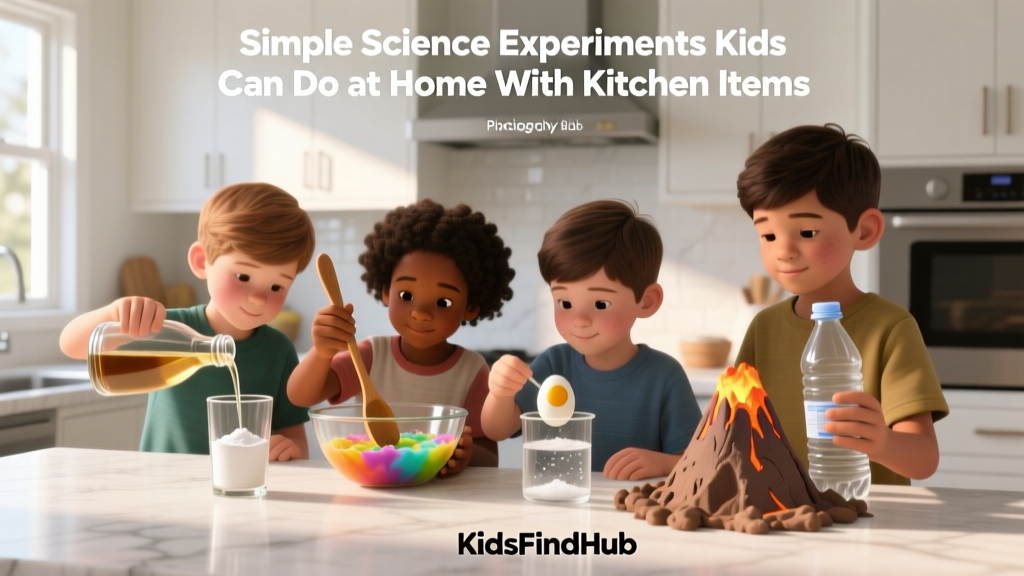 Simple Science Experiments with Kitchen Items
 Privacy for Beginners: Simple Digital Safety Guide
 Paper Mistakes: Avoid Printer Jams, Curl, Wrong Stock
 Magnet Experiments for Preschoolers
Best Science Apps for Kids That Make Learning Fun in 2026
 Weather Science Projects for Kids
 What Does Geography Mean for Kids? (2026)