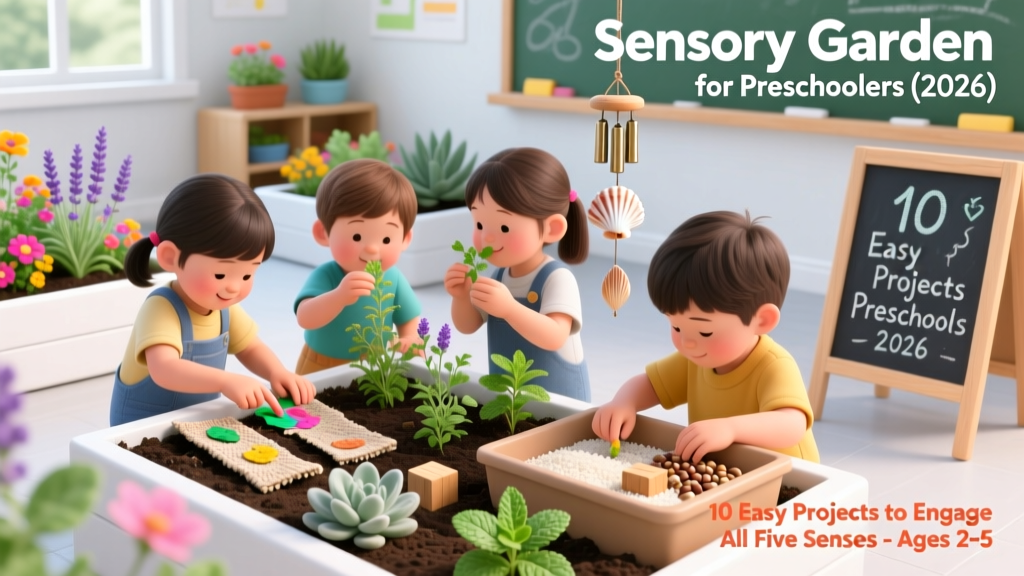
Sensory Garden Projects for Preschoolers (2026)
Why Sensory Gardens Matter
Occupational therapists recommend sensory-rich environments for children ages 2-5 because they support critical developmental milestones:
- Tactile processing: Different textures teach the brain to categorize sensory input
- Language development: Describing "soft," "rough," "smooth" builds vocabulary
- Emotional regulation: Gentle sensory input (lavender smell, soft lamb's ear) calms the nervous system
- Fine motor skills: Planting seeds, pinching herbs, watering with small cans
10 Sensory Garden Projects
1. Touch Garden: The Texture Bed
Plant a collection of touchable plants: lamb's ear (fuzzy), sage (soft), rosemary (prickly), sedum (smooth), and ornamental grasses (tickly). Label each with picture tags.
2. Smell Garden: The Herb Spiral
Build a spiral from stones or bricks. Plant herbs at different heights: mint at the bottom (loves moisture), lavender and thyme at the top (prefers dry). Kids crush leaves and identify scents.
3. Sound Garden: Wind and Rustle
Plant ornamental grasses that rustle in the breeze. Add bamboo wind chimes, a small water feature, and dried seed pods that rattle when shaken.
4. Taste Garden: The Snack Bed
Grow cherry tomatoes, strawberries, snap peas, and herbs kids can taste. Teach them to always ask before eating anything from the garden.
5. Color Garden: Rainbow Rows
Plant flowers in rainbow order: red (zinnia), orange (marigold), yellow (sunflower), green (lettuce), blue (borage), purple (lavender).
6. Butterfly Garden
Plant milkweed, butterfly bush, and zinnias. Add a shallow water dish with stones for butterflies to land on. Keep a butterfly journal with drawings.
7. Mud Kitchen
Old pots, pans, spoons, and a designated muddy area. Kids make "mud pies," "herb soups," and "flower salads." Pure imaginative sensory play.
8. Watering Can Station
Small watering cans (1 pint size) that preschoolers can actually manage. Teach them to water the base of plants. Responsibility + fine motor practice.
9. Seed Planting Tray
Large seeds (sunflowers, beans, peas) that small fingers can handle. Use egg cartons as starter pots. Kids watch their seeds grow over weeks.
10. Sensory Path
Create a barefoot path with different materials: smooth stones, bark chips, soft grass, sand, and rubber mulch. Kids walk it with eyes open, then closed.
Planting Calendar for Families
| Season | Plant | Sensory Focus |
|---|---|---|
| Spring | Snap peas, sunflowers, herbs | Touch + smell |
| Summer | Cherry tomatoes, zinnias, lavender | Taste + sight |
| Fall | Ornamental grasses, mums | Sound + touch |
| Winter | Evergreens, dried arrangements | Smell + sight |
Safety Tips
⚠️ Garden Safety for Little Ones
- Avoid toxic plants (oleander, foxglove, lily of the valley)
- Use child-safe gardening tools (no sharp edges)
- Supervise with soil — some kids will taste it
- Check for bees/wasps before letting kids dig in new areas
- Wash hands after gardening, especially before eating
More Articles
 Natural Obstacle Course Ideas for Kids
 Trampoline Safety for Kids: 5 Rules That Prevent ER Visits
Outdoor Water Play Activities for Hot Summer Days
Trampoline Safety for Kids: 5 Rules That Prevent ER Visits
Outdoor Water Play Activities for Hot Summer Days
 Colorado Fishing License for Kids: Age Rules & Free Days
 Outdoor Privacy Solutions for 2024 Living Spaces
 Science-Backed Outdoor Play Essentials for Backyards
 Rainy Day Outdoor Activities Kids Love
 Playground Games You Can Teach Anywhere
 Age-Appropriate Outdoor Play Equipment & Safety
 Kids Golf: Build Confidence, Coordination & Love of Movement