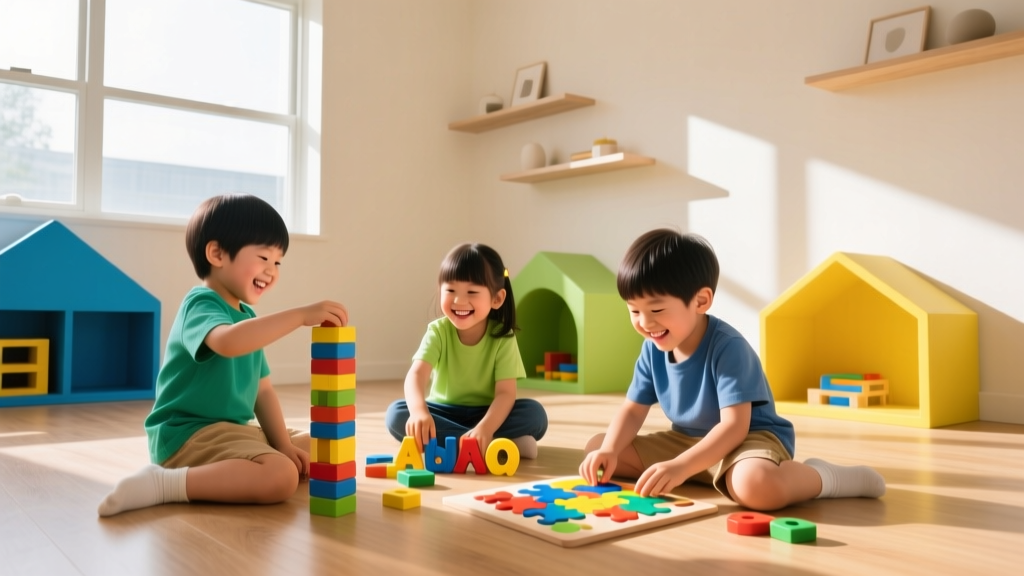
Best Backyard Games for Kids Ages 5–10
Summer days, fresh air, and joyful movement—backyard play is where coordination blossoms and teamwork takes root. For kids ages 5–10, unstructured outdoor time isn’t just fun; it’s foundational. Research shows that age-appropriate physical play strengthens neural pathways, improves balance and spatial awareness, and nurtures social-emotional growth through shared goals and cooperative problem-solving. As a children’s content writer and early childhood development specialist, I’ve observed hundreds of backyard play sessions—and the games below consistently deliver measurable gains in gross motor control, hand-eye coordination, communication, and collaborative spirit. All are easy to set up, require minimal equipment, and scale beautifully for mixed-age groups (including siblings or neighborhood friends).
Why Coordination + Teamwork Matter at This Age
Between ages 5 and 10, children experience rapid development in both fine and gross motor systems. The cerebellum—the brain’s coordination center—undergoes significant maturation, making this window ideal for reinforcing skills like throwing accuracy, rhythmic jumping, directional control, and reciprocal movement (e.g., skipping or dribbling). Simultaneously, their capacity for perspective-taking and group negotiation expands dramatically. Games that ask kids to strategize together (“How will we get everyone across the ‘lava’?”), assign roles (“You’re the caller, I’ll be the catcher”), or adapt rules on the fly lay critical groundwork for classroom collaboration and lifelong relationship skills.
Top 6 Backyard Games That Build Both Skills
1. Parachute Play (Ages 5–10)
A brightly colored, 12-foot nylon parachute (like the FlagHouse Rainbow Parachute) transforms any flat yard into a dynamic coordination lab. Kids hold edges and work together to create waves, lift balls, or make “mushrooms” by lifting and sitting—requiring synchronized timing, core engagement, and constant visual scanning.
- Coordination boost: Bilateral coordination, rhythm, upper-body strength, visual tracking
- Teamwork boost: Shared focus, verbal cueing (“Up… now DOWN!”), role rotation, inclusive participation
- Pro tip: Start with 4–6 kids; add more as confidence grows. Try “Parachute Volleyball” using lightweight beach balls—no one can hit twice in a row!
2. Obstacle Relay Race (Ages 6–10)
Create a rotating course using hula hoops (jump in/out), cones (weave), pool noodles (crawl under), and chalk-drawn balance beams. Use the GoSports Outdoor Obstacle Course Kit (2026 Edition), which includes durable, adjustable components and a rulebook with team-based challenges.
- Coordination boost: Dynamic balance, agility, sequencing, cross-lateral movement
- Teamwork boost: Strategy planning (“Who does the hopscotch first?”), cheering, peer encouragement, shared accountability
- Pro tip: Assign each child a color-coded wristband and rotate stations every 2 minutes—keeps energy high and prevents waiting fatigue.
3. Giant Jenga® (Ages 5–10)
The classic game scales up beautifully outdoors. The JOYIN Giant Jenga Set (2026 version, 54 extra-thick pine blocks) encourages careful hand placement, steady breathing, and joint decision-making (“Should we pull from the left tower or the middle?”).
- Coordination boost: Fine motor control, finger isolation, proprioceptive awareness, controlled force modulation
- Teamwork boost: Turn-taking, consensus-building, supportive language (“You’ve got this!”), shared suspense and celebration
- Pro tip: Add a “team builder” twist: Two players must remove one block together using only one hand each—or describe moves aloud before acting.
4. Capture the Flag (Ages 7–10)
This timeless favorite remains unmatched for integrating running, dodging, strategic thinking, and group loyalty. Use biodegradable flag tape (like EcoFlag Roll) and designate zones with garden stakes and ribbons for clear boundaries.
- Coordination boost: Sprinting, lateral shuffling, quick directional changes, spatial mapping
- Teamwork boost: Role assignment (scouts, defenders, flag guards), real-time communication, adaptive strategy, fair-play negotiation
- Pro tip: Rotate “flag keeper” and “base defender” roles every 5 minutes so all kids practice leadership and responsibility—not just speed.
5. Bean Bag Toss Relay (Ages 5–8)
Simpler than cornhole but rich in skill-building: Set up three hula hoops at increasing distances (3 ft, 6 ft, 9 ft) and have teams pass bean bags down a line using only spoons, scarves, or partner-held trays. The Learning Resources Scoop & Stack Bean Bags (2026 set of 12) features soft, weighted fabric perfect for small hands.
- Coordination boost: Hand-eye precision, bilateral integration, grip strength, visual estimation
- Teamwork boost: Patience, active listening, constructive feedback (“Try holding the spoon lower”), collective goal-setting
- Pro tip: Add a “quiet challenge”—no talking allowed during the relay—to deepen focus and nonverbal cooperation.
6. Shadow Tag (Ages 5–10)
A sunshine-powered twist on tag: Instead of touching bodies, players step on each other’s shadows. Works best midday when shadows are crisp. Requires zero gear—just open space and observation.
- Coordination boost: Dynamic footwork, body awareness, reaction time, anticipatory movement
- Teamwork boost: Spontaneous alliances (“Let’s corner them near the fence!”), shared laughter, gentle conflict resolution (“Your shadow was half-on!”)
- Pro tip: Introduce “shadow shields”: One player holds a large piece of cardboard to cast a moving shadow—adds strategy and role variety.
Setting Up for Success: 4 Practical Tips
- Start small, then layer: Introduce one new rule or role per session (e.g., “Today, the caller also chooses the next activity”). This builds confidence without overwhelm.
- Embrace “imperfect” play: Let kids modify rules—this is where executive function and social negotiation thrive. A “no running” version of Capture the Flag? Brilliant. Document it in your family’s Backyard Rule Book!
- Rotate equipment ownership: Assign a “Game Captain” each week who helps set up, leads warm-ups, and ensures fairness. Builds leadership and investment.
- Wind down with reflection: Spend 2 minutes after play asking: “What worked well as a team?” and “What helped your body feel strong today?” Reinforces metacognition and pride.
Conclusion
Backyard games aren’t just about burning off energy—they’re subtle, joyful classrooms where kids learn how their bodies move *with* others, not just beside them. The six games above were chosen not only for their fun factor but for their consistent, research-backed impact on coordination milestones and prosocial development in children ages 5–10. Whether you’re using a $15 parachute or tracing hopscotch with sidewalk chalk, what matters most is presence: joining in, modeling patience, celebrating effort over outcome, and noticing growth—like the first time your 7-year-old successfully calls out cues for the whole group, or your 5-year-old waits patiently for their turn without prompting. In 2026 and beyond, these moments remain irreplaceable. So grab some water bottles, kick off your shoes, and let the backyard do its quiet, powerful work.
More Articles
 Best Family Hiking Trails for Young Kids (2026 Guide)
 Outdoor Play for Kids: Safe, Inclusive & Developmental
Treehouse Safety Tips Every Parent Should Know
 DIY Outdoor Obstacle Course Ideas for Families
 Nature Scavenger Hunt: Printable List
 Backyard Camping Games for Families
Kids Gardening Projects for Small Spaces (2026)
 Kids Garden Projects: Beginner Guide
 How to Plan a Family Camping Trip with Young Kids (2026)
 Family Camping Checklist: 47 Items Parents Always Forget