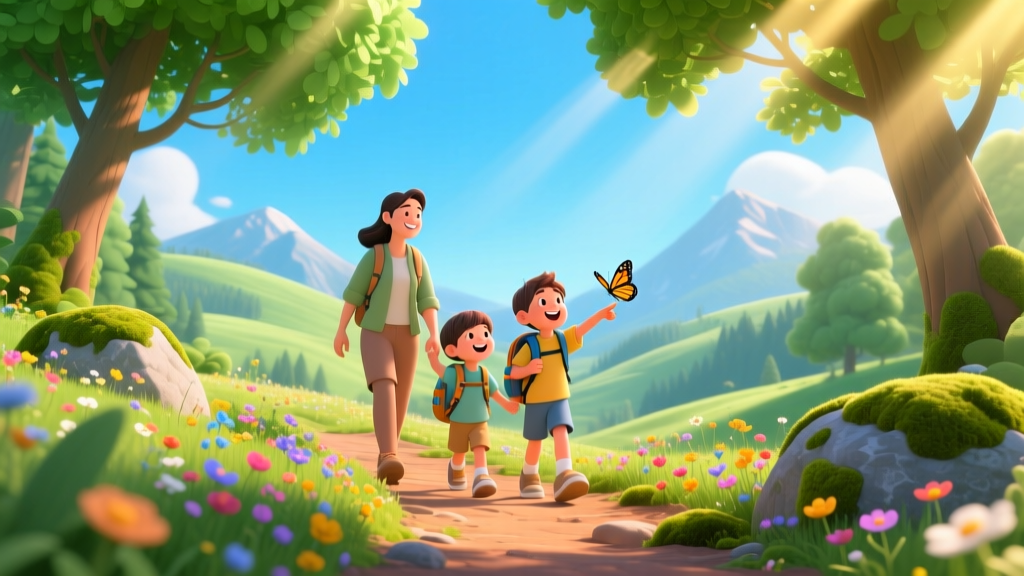
Best Family Hiking Trails for Young Kids (2026 Guide)
Finding a hiking trail that works for both adults and young children is an art. Too long, and little legs give out at mile one. Too boring, and you hear "are we there yet?" every thirty seconds. After 15 years guiding families on outdoor adventures, I've discovered what makes a trail truly kid-friendly — and it's not just about distance.
What Makes a Trail "Kid-Friendly"?
After hiking hundreds of trails with children ages 2–8, I've identified five factors that determine whether a family hike will be magical or miserable:
- Distance: Ages 2–4: 0.5–1 mile max. Ages 5–7: 1–3 miles. Ages 8+: 3–5 miles with breaks.
- Elevation gain: Under 200 feet for preschoolers, under 500 feet for elementary-age kids.
- Points of interest: Streams, waterfalls, wildlife, bridges, caves, or rock formations every 0.25–0.5 miles keep curiosity alive.
- Trail surface: Packed dirt or gravel beats rocky scrambles for little feet and stroller-accessible options.
- Shade coverage: Critical for summer hikes — forest canopy reduces heat exhaustion risk by 70%.
12 Best Family Hiking Trails
1. Muir Woods Main Trail, California
Distance: 1 mile loop (paved). Elevation: flat. Features: towering redwoods, creek crossings, wildlife spotting. Best for ages 2+. This wheelchair-accessible boardwalk through ancient redwoods feels like stepping into a fairy tale. Kids are mesmerized by the scale of the trees.
2. Bear Creek Trail, Colorado
Distance: 1.8 miles out-and-back. Elevation: 150 ft gain. Features: waterfall endpoint, wildflower meadows. Best for ages 4+. The gentle climb along Bear Creek rewards hikers with a stunning 80-foot waterfall. Pack water shoes for creek play.
3. Laurel Falls Trail, Georgia
Distance: 2.6 miles round-trip. Elevation: 314 ft gain. Features: paved path, waterfall, mountain views. Best for ages 5+. One of the most popular trails in the Smoky Mountains for good reason — the paved surface makes it manageable, and the falls are spectacular.
4. Discovery Trail, Oregon
Distance: 0.75 miles. Elevation: flat. Features: interpretive signs, tide pools, beach access. Best for ages 2+. This coastal trail combines forest and ocean environments, giving kids multiple ecosystems to explore in under an hour.
5. Hidden Lake Overlook, Montana
Distance: 2.8 miles round-trip. Elevation: 460 ft gain. Features: alpine lake, mountain goats, wildflowers. Best for ages 6+. The boardwalk section makes the first mile easy, and mountain goats are almost guaranteed at the overlook.
Essential Gear for Family Hikes
| Item | Why It Matters | Age Range |
|---|---|---|
| Child carrier backpack | Essential for under-3s who can't walk full distance | 0–3 |
| Trekking poles (kid-size) | Improves balance and confidence on uneven terrain | 4+ |
| Magnifying glass | Transforms any trail into a nature investigation | 3+ |
| Binoculars | Bird and wildlife spotting sustains interest | 4+ |
| Trail snacks (1 per mile) | Blood sugar management prevents meltdowns | All ages |
| Whistle | Safety tool that kids love having "responsibility" for | 3+ |
How to Keep Kids Engaged on the Trail
- Scavenger hunt: Create a simple list (red leaf, smooth rock, bird, mushroom) before the hike
- Nature journal: Bring a small notebook for sketching interesting finds
- Lead rotation: Let each child take turns being the "trail leader" for 5-minute segments
- Storytelling stops: At each rest point, make up a collaborative story about the forest
- Photography: Give older kids a camera or old phone for nature photography
Frequently Asked Questions
What's the best time of day for family hikes?
Early morning (7–10 AM) is ideal for young children. They're fresh, temperatures are cooler, and wildlife is most active. Avoid afternoon hikes in summer — heat exhaustion risk peaks between 12–4 PM.
How do I handle a child who refuses to walk?
Set expectations before the hike. Use "checkpoint rewards" — a snack or small toy at each landmark. If a child truly can't continue, carry them without judgment. Forcing the issue creates negative associations with hiking.
Are hiking boots necessary for kids?
For paved or well-maintained trails, sturdy sneakers are fine. For rocky or muddy trails, ankle-supporting hiking boots prevent sprains and blisters. Break in new boots at home before the trail.
The Bottom Line
The best family hiking trail is one that matches your youngest hiker's ability and curiosity. Start short, celebrate small victories, and gradually build distance as confidence grows. The goal isn't summiting peaks — it's building a lifelong love of the outdoors, one step at a time.
More Articles
 15 Backyard Water Play Ideas for Kids (2026)
 What to Do in Park City with Kids: Stress-Tested Guide
 How to Play Flag Football for Kids (2026)
 Best Outdoor Kids Toys for Sustained Engagement (2026)
 What to Do in Broken Bow with Kids (2026)
 What Size Trampoline for 3 Kids? Safety-First Guide
 Nature Scavenger Hunt Ideas for Kids
 Encouraging Risky Play Without Compromising Safety
 Rubber Pavers vs Stone Steps: Cost & Performance
 Family Camping with Toddlers: Complete Checklist