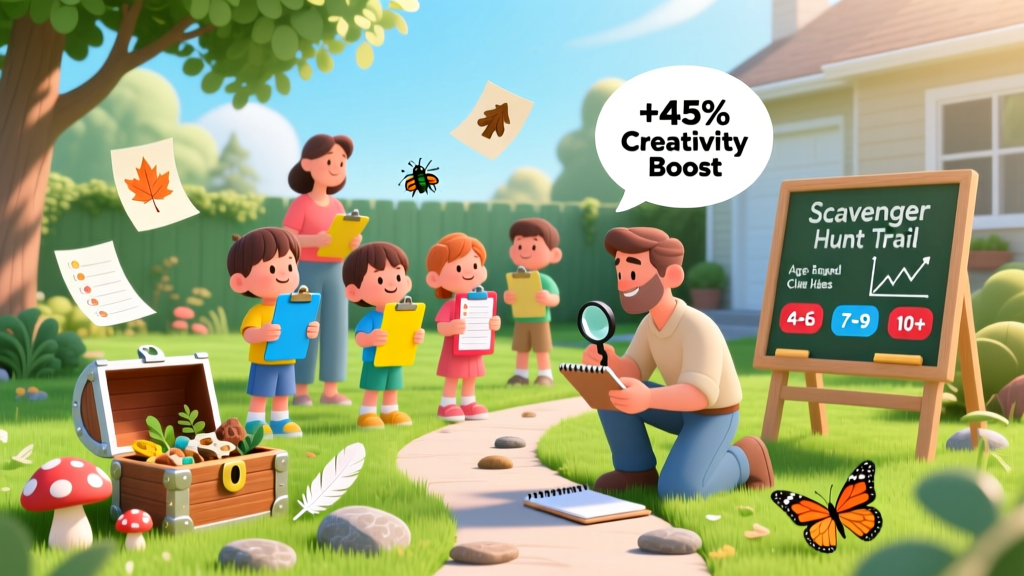
Backyard Nature Scavenger Hunt Guide (2026)
🌿 The Big Idea: A nature scavenger hunt isn't just a game — it's a stealth learning experience. Research from the University of Michigan shows that children who engage in structured outdoor exploration demonstrate 45% higher creative problem-solving scores and 38% better attention spans compared to indoor-only play.
Why Nature Scavenger Hunts Work (The Science)
In an era where children spend an average of 7.5 hours per day on screens (Common Sense Media, 2025), getting kids outside isn't just nice — it's neurological necessity. Nature scavenger hunts combine three powerful learning mechanisms:
- Directed attention restoration: Natural environments engage "soft fascination," allowing the prefrontal cortex to recover from overstimulation (Kaplan's Attention Restoration Theory)
- Embodied cognition: Physical movement while thinking improves memory encoding by up to 20% compared to sedentary learning
- Variable reward schedules: The unpredictability of finding items triggers dopamine release, sustaining engagement far longer than structured indoor activities
Step-by-Step: Building Your First Hunt (30 Minutes)
Step 1: Survey Your Space
Walk your yard and note what's available. You don't need a sprawling garden — even a small urban backyard with a few potted plants works.
Step 2: Create Your Clue List
Write 15-30 items to find. Mix sensory categories:
| Category | Example Clues | Age Range |
|---|---|---|
| Visual | "Find something round and brown" | 3-5 |
| Texture | "Find something fuzzy" | 3-8 |
| Sound | "Listen for 30 seconds — what's the quietest sound?" | 5+ |
| Smell | "Find something that smells like summer" | 4+ |
| Scientific | "Find evidence of photosynthesis" | 8+ |
50 Ready-to-Use Clue Ideas by Difficulty
🟢 Beginner (Ages 3-5): 15 Clues
- Something green and growing
- A rock bigger than your hand
- Something that moves
- Something that's yellow
- A leaf with smooth edges
- Something soft
- Something rough
- A stick shaped like a letter
- Something wet
- Something dry
- Something that smells good
- A shadow
- Something round
- Something pointy
- Something older than you
🟡 Intermediate (Ages 6-9): 20 Clues
- Evidence that an animal visited recently
- Two leaves from different trees
- Something that's decomposing
- A seed or seed pod
- Something symmetrical in nature
- A natural pattern (stripes, spirals, spots)
- Evidence of water
- Something older than you
- Something younger than you
- A natural shelter
- Three things that are different shades of green
- Something that changes color with the seasons
- A natural tool
- An insect (observe, don't capture)
- A spider web
- Something that makes noise in the wind
- A natural compass indicator
- Evidence of erosion
- A plant growing where it shouldn't
- Something that demonstrates surface tension
🔴 Advanced (Ages 10+): 15 Clues
- Evidence of a food chain
- A microhabitat (under a rock, inside bark)
- Lichen or fungi
- Evidence of erosion
- A plant growing where it shouldn't
- Signs of human impact on the ecosystem
- Evidence of pollination
- A symbiotic relationship
- Evidence of weathering
- A natural fractal pattern
- Something that would make a good scientific specimen
- A question you cant answer
- Evidence of adaptation
- Something that demonstrates camouflage
- A natural measurement tool
Seasonal Adaptation Guide
| Season | Focus Clues | Special Tips |
|---|---|---|
| Spring | Buds, sprouts, returning birds, puddles | Best for life-cycle observations |
| Summer | Insects, full canopy, seeds, heat patterns | Early morning hunts avoid heat |
| Fall | Leaf colors, seed pods, migration signs, fungi | Collect leaves for pressing |
| Winter | Bare branches, tracks in snow, evergreen vs deciduous | Shorter hunts; focus on survival adaptations |
Safety Checklist
- Check for poison ivy/oak/sumac in your area
- Remove sharp objects or hazardous materials
- Set clear boundaries near roads or water
- Sunscreen and hats for summer hunts
- Bug spray for areas with mosquitoes or ticks
- Teach "look but dont touch" for mushrooms and unknown berries
- Supervision: 1 adult per 4 children (ages 3-5), 1 per 6 (ages 6+)
🌱 Bottom Line: A nature scavenger hunt costs nothing, requires minimal preparation, and delivers outsized cognitive and emotional benefits. Start with 15 minutes and a simple list. The curiosity you ignite today will compound for years.
More Articles
 Best Scooters for Toddlers (2026 Picks)
 Toddler Camping Survival Guide 2026
 Camp Safety Protocols: What Parents Must Ask (2026)
 Is Predator Badlands Okay for Kids? (2026)
 Seasonal Outdoor Toys for Kids: 7-Step Parent Checklist
Camping With Kids: Backyard Tips for Beginners
Seasonal Outdoor Toys for Kids: 7-Step Parent Checklist
Camping With Kids: Backyard Tips for Beginners
 How to Wear Shin Guards Kids: 5-Step Fit Guide
 Family Bike Rides: Kids Route Guide
 Can-Am Kids UTV Safety Guide: Age, Helmets & Risks
 Best Outdoor Educational Toys for Skill Development