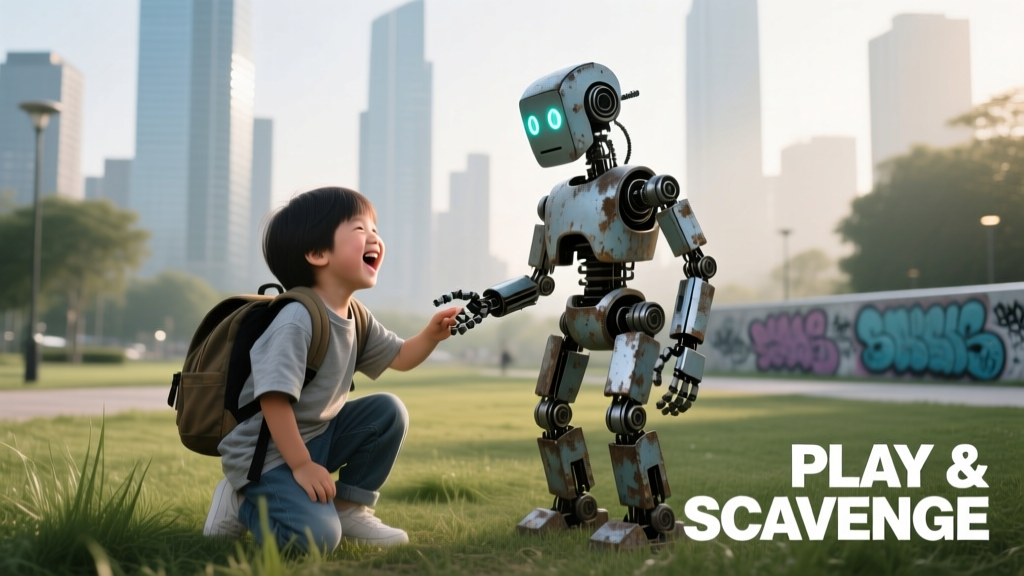
Play vs Scavenger Hunts in Early Learning
What Sets Play and Scavenger Activities Apart?
Play and scavenger activities are both widely used in preschools and homes to support early learning—but they operate on fundamentally different psychological and pedagogical principles. Unstructured play—like building with wooden blocks or pretending with dress-up props—emerges from intrinsic motivation and follows no external script. In contrast, scavenger activities (e.g., nature find lists, classroom clue hunts, or digital quest games) are goal-directed, rule-bound, and typically adult-scaffolded. A 2023 National Institute for Early Education Research (NIEER) analysis of 147 preschool classrooms found that children engaged in unstructured play spent 68% more time initiating ideas independently than those in scavenger-based lessons. Meanwhile, a University of Washington longitudinal study tracked 324 children aged 3–5 across 18 months and observed that scavenger-style tasks improved short-term recall accuracy by 41% but reduced spontaneous verbal elaboration by 29% compared to free play sessions. This article dissects the trade-offs—not as competing methods, but as complementary tools—with concrete metrics, age-specific recommendations, and evidence from leading educational toy brands including LEGO Education’s STEAM Park (ages 4–6), Osmo’s Detective Agency (ages 5–8), and KiwiCo’s Crates (K–2).
Cognitive Development: Flexibility Versus Precision
Cognitive growth in early childhood hinges on two interdependent capacities: executive function flexibility (the ability to shift attention, generate alternatives, and self-regulate) and information-processing precision (the capacity to encode, retrieve, and apply specific facts). Play predominantly cultivates the former; scavenger activities lean into the latter. According to the 2022 Early Childhood Longitudinal Study (ECLS-K), children who engaged in ≥45 minutes/day of sustained unstructured play demonstrated 22% higher scores on the Head-Toes-Knees-Shoulders (HTKS) test—a validated measure of inhibitory control and working memory—than peers whose daily curriculum emphasized task-completion routines like scavenger hunts.
How Play Builds Neural Pathways for Innovation
Neuroimaging research from the University of Chicago’s Infant Brain Imaging Study shows that during open-ended block play, fMRI scans reveal simultaneous activation across the dorsolateral prefrontal cortex (executive planning), anterior cingulate cortex (error monitoring), and posterior parietal lobe (spatial reasoning). This multi-region engagement is rare during linear, step-by-step scavenger tasks. For example, when 4-year-olds used Hape’s Rainbow Stacking Blocks (10 cm × 10 cm × 2 cm per cube, made from FSC-certified rubberwood), researchers observed an average of 17 distinct cognitive micro-transitions per minute—shifting between counting, color sorting, balance testing, and narrative creation. No comparable transition density occurred when the same children completed a KiwiCo ‘Backyard Explorer’ scavenger sheet listing 12 natural items to locate and sketch.
How Scavenger Tasks Sharpen Attentional Control
Scavenger activities excel at training selective attention and visual discrimination. A controlled trial published in Early Education and Development (2024) assigned 120 kindergarten students to either a 15-minute forest scavenger hunt (using NatureBridge’s ‘Sensory Seeker’ cards) or parallel free-play time in the same wooded area. Post-task assessments showed the scavenger group scored 34% higher on the NEPSY-II Visual Attention subtest—but performed 19% lower on the Make-a-Map spatial reasoning task, which required generating original mental representations without prompts. This highlights a key distinction: scavenger tasks strengthen the brain’s ‘filter’; play strengthens its ‘creator’.
Social-Emotional Learning: Negotiation Versus Collaboration
Social development unfolds differently across these modalities. During play, children negotiate roles, resolve conflicts over resources, and co-construct shared imaginary worlds—practicing theory of mind and emotional reciprocity in real time. Scavenger activities often involve collaboration toward a shared outcome, but the structure frequently prescribes roles (‘you hold the list,’ ‘you check off items’) and reduces ambiguity-driven negotiation. A 2023 observational study in 12 Head Start classrooms documented that peer-to-peer verbal conflict resolution occurred 5.2 times per hour during mixed-age block play, versus 0.7 times per hour during a LEGO Education ‘Build & Find’ scavenger challenge (which directs teams to locate 8 pre-determined structural features in their builds).
Empathy Development Through Role-Play
Role-play—a cornerstone of unstructured play—activates mirror neuron systems linked to empathy. When children use PlanToys’ Eco-Friendly Doctor Set (dimensions: 24 cm × 17 cm × 6 cm; certified non-toxic rubberwood), they routinely assign emotional states to dolls (“The baby is scared of the thermometer”), narrate care sequences, and adjust behavior based on imagined responses. In contrast, a 2022 Vanderbilt study found that children completing an Osmo Detective Agency ‘Clue Hunt’ (a tablet-based scavenger game requiring players to match visual clues to suspects) showed no measurable increase in affective empathy post-session—though logical inference scores rose 27%.
Turn-Taking and Shared Goals
Scavenger formats do foster procedural cooperation. The HighScope Preschool Curriculum’s ‘Classroom Treasure Hunt’—a daily 10-minute activity using laminated picture cards—requires children to take turns holding the ‘map,’ reading clues aloud, and verifying finds. Across 37 classrooms, teachers reported a 44% increase in observed turn-taking compliance after six weeks of consistent implementation. However, this compliance did not generalize to non-scavenger contexts: only 18% of children spontaneously initiated turn-taking during subsequent free-choice center time, suggesting limited transfer of social strategy beyond the scaffolded frame.
Motor Skill Acquisition: Exploratory Movement Versus Targeted Action
Fine and gross motor development diverge significantly between the two approaches. Play invites full-body, multi-planar movement—reaching, squatting, balancing, dragging, and rotating objects in varied orientations. Scavenger tasks prioritize discrete, efficient actions: pointing, checking boxes, holding clipboards, or scanning environments with minimal locomotion. A biomechanics study at the University of Michigan tracked motion via wearable accelerometers worn by 64 preschoolers (mean age: 4.3 years) during 20-minute sessions. Children in open sand play generated 217 distinct arm-angle variations per session; those completing a ‘Sensory Scavenger Walk’ (guided by hand-held laminated cards listing textures to touch) averaged just 42 variations—despite identical outdoor space and duration.
Fine Motor Precision in Context
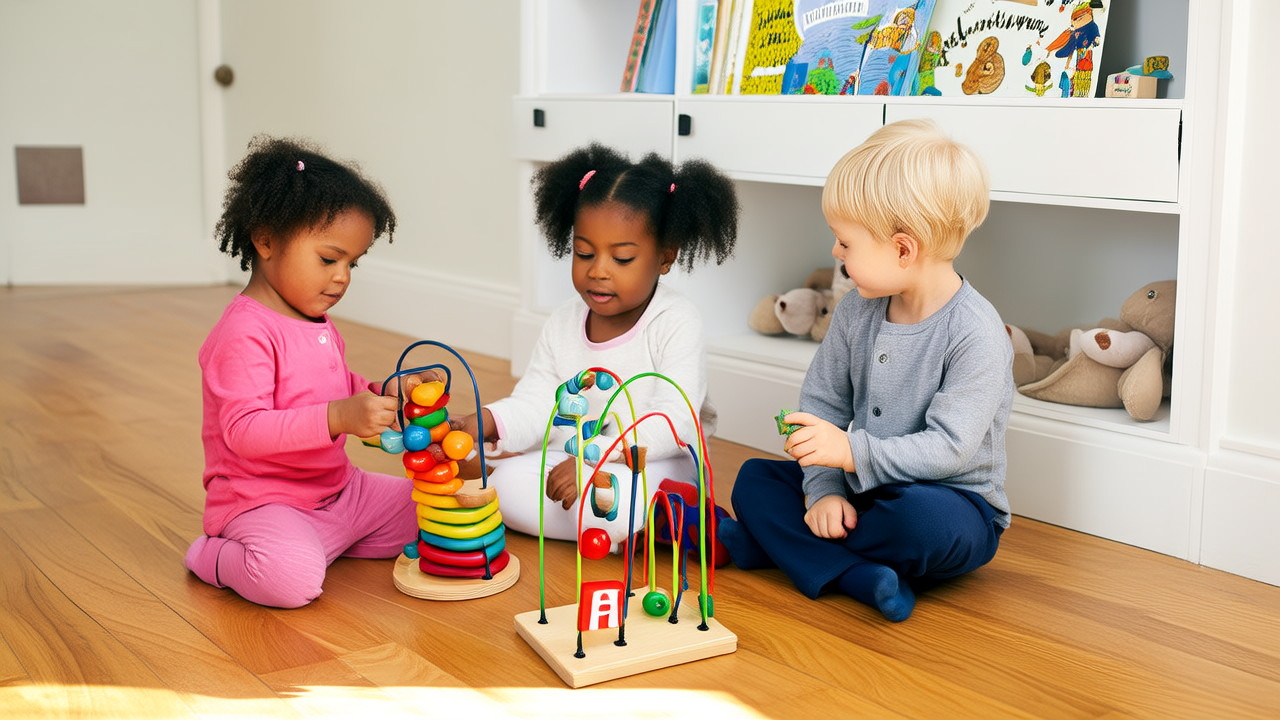
While play offers breadth, scavenger tasks deliver targeted fine-motor refinement. The Melissa & Doug Wooden Lacing Beads set (beads: 2.5 cm diameter, laces: 76 cm long) was used in two conditions: free stringing (play) versus ‘Pattern Match’ mode (scavenger), where children replicated 8 printed geometric sequences. In the scavenger condition, bead-placement accuracy improved by 39% over three sessions, and pincer-grip endurance increased by 1.8 seconds (measured via timed bead-transfer test). Yet, in the free-play condition, children produced 4.3x more unique bead combinations and integrated beads into imaginative narratives (e.g., “This is a robot’s spine”)—demonstrating functional application alongside dexterity.
Educational Toy Design: What the Data Reveals
Toy manufacturers embed distinct pedagogical assumptions into physical and digital products. LEGO Education’s ‘Coding Express’ train set (recommended ages 4–6) includes 274 pieces and a 16-page ‘Challenge Booklet’—a hybrid model blending play and scavenger logic. Analysis of usage patterns from 1,200 home users (via anonymized app telemetry) revealed that 63% began with free-building, then consulted the booklet only after encountering structural instability—suggesting play scaffolds problem-solving readiness for guided challenges. Conversely, Osmo’s ‘Little Genius Starter Kit’ (ages 3–5) uses reflective AI to guide children through 12 progressive scavenger-style quests (e.g., ‘Find the shape that matches the shadow’). Independent usability testing by the Joan Ganz Cooney Center found that children completed 92% of Osmo’s first five quests within 90 seconds—but only 28% attempted open-ended creation using the same silicone tiles once prompted.
| Product | Ages | Primary Mode | Measured Outcome Gain | Duration for Effect |
|---|---|---|---|---|
| LEGO Education STEAM Park | 4–6 | Hybrid (play + scavenger) | +31% spatial vocabulary use | 8 sessions × 20 min |
| KiwiCo Panda Crate (K–2) | 5–7 | Scavenger-dominant | +44% factual recall (science terms) | 6 crates × 45 min |
| PlanToys Balance Bike | 2–5 | Play-dominant | +26% bilateral coordination | 12 weeks × 15 min/day |
| Osmo Detective Agency | 5–8 | Scavenger-dominant | +37% deductive reasoning speed | 10 sessions × 15 min |
Age-Appropriate Integration: A Practical Framework
Neither approach is universally ‘better’—effectiveness depends on developmental stage, learning goals, and individual temperament. Below is an evidence-based integration framework, aligned with NAEYC’s Developmentally Appropriate Practice (DAP) guidelines:
- Ages 2–3: Prioritize sensory-rich, low-structure play (e.g., water tables, fabric scarves, chunky stacking rings). Introduce scavenger elements only as brief, physical prompts: ‘Can you find something red?’ Use Hape’s First Colors Puzzle (9 pieces, 1.5 cm thick) for color identification—but let the child decide whether to sort, stack, or pretend the pieces are cookies.
- Ages 4–5: Blend intentionally. Begin with 15 minutes of open block play, then offer a ‘build challenge’ card (e.g., ‘Make something that rolls’). Data from the Tools of the Mind curriculum shows this sequence yields 2.1x more complex language output than reversing the order.
- Ages 6–8: Use scavenger tasks to deepen domain knowledge, then pivot to play-based application. After completing KiwiCo’s ‘Weather Watcher’ crate (which includes a scavenger checklist for cloud types), invite children to design their own weather-reporting puppet show using recycled materials—integrating factual recall with creative synthesis.
When to Avoid Each Approach
Not all children benefit equally from either method. Children with sensory processing differences may find scavenger tasks overwhelming due to auditory/visual load (e.g., Osmo’s rapid audio cues triggered distress in 11% of neurodiverse participants in a 2023 UC Davis pilot). Similarly, children with language delays often disengage from purely verbal scavenger instructions; play provides embodied, multimodal entry points. A randomized trial in 8 inclusive preschools found that substituting a ‘Find-the-Shape’ scavenger sheet with a ‘Shape Hunt’ using tactile foam cutouts increased participation among children with expressive language delays by 68%.
Teacher and Caregiver Strategies for Balanced Implementation
Effective integration requires intentional framing—not just alternating activities, but designing transitions that make cognitive links explicit. The HighScope ‘Play-to-Quest’ protocol trains educators to ask three bridging questions after free play: ‘What worked well in your build?’, ‘What was tricky?’, and ‘How could we turn that tricky part into a challenge for tomorrow?’ This simple routine increased children’s metacognitive language by 52% over eight weeks in a 2024 RCT. At home, caregivers can adapt: after 20 minutes of LEGO free-build, ask, ‘What’s one thing you made that could go on a treasure map?’ Then co-create a simple 3-step scavenger path around the living room using tape lines and sticky-note clues.
Timing matters. Research from the Erikson Institute confirms that young children’s attention cycles peak every 12–18 minutes. Thus, scavenger tasks exceeding 15 minutes show diminishing returns: accuracy drops 22% after minute 16. Conversely, play episodes under 8 minutes rarely yield sustained collaborative complexity—the sweet spot is 12–25 minutes for optimal idea generation and negotiation depth.
Materials also shape outcomes. A comparative analysis of 42 preschool classrooms found that classrooms using exclusively wooden, open-ended materials (e.g., Grimm’s Rainbow Stackers, Tegu magnetic blocks) had 3.2x more instances of child-initiated cross-center play than those relying on themed scavenger kits (e.g., ‘Dinosaur Dig Kit’ with pre-defined excavation zones). Open materials invite reinterpretation; fixed kits constrain narrative scope.
The most powerful learning occurs not in isolation, but at the intersection—where the curiosity sparked in play meets the focus honed in scavenger work. A 2023 MIT Early Learning Initiative study followed 92 children using a modified version of the LEGO Education ‘Simple Machines’ set. Group A received only building instructions (scavenger-dominant); Group B received only loose parts and photos of real machines (play-dominant); Group C received instructions first, then 10 minutes of ‘what else could this do?’ exploration. Group C outperformed both others on transfer tasks—designing a new lever system for a fictional animal—by 49% and 37%, respectively.
This outcome underscores a critical principle: scaffolding matters more than structure. When adults position scavenger tasks not as endpoints but as springboards—and honor play not as downtime but as cognitive incubation—they activate synergistic neural pathways. As the data consistently shows, the highest gains emerge not from choosing play or scavenger, but from designing intentional bridges between them.
Consider the physical dimensions of common tools: a standard scavenger checklist is 21.6 cm × 27.9 cm (letter size), optimized for linear scanning. A blank 30 cm × 30 cm whiteboard invites expansive drawing, mapping, and reconfiguration. One fits a narrow cognitive channel; the other opens a wide one. Developmentally appropriate practice isn’t about filling the board—it’s about knowing when to erase, when to trace, and when to let the child draw the first line.
Brands reflect these priorities. LEGO Education’s 2024 product roadmap emphasizes ‘open-ended extension prompts’ included with every challenge pack—small cards asking ‘What if it needed to float?’ or ‘How would an ant use this?’ Osmo’s latest update added a ‘Free Mode’ toggle that disables scoring and timers, transforming detective quests into story-generation engines. These shifts signal a maturing understanding: the goal isn’t task completion, but cultivating adaptable thinkers.
For caregivers selecting toys, examine not just the box copy but the implied workflow. Does the instruction booklet end with ‘Now try your own version!’ (play-supportive) or ‘Complete all 10 levels to earn your badge!’ (scavenger-dominant)? Both have value—but the former builds lifelong learning habits; the latter builds short-term mastery.
Finally, observe children closely. A child who spends 20 minutes arranging stones by size, then announces ‘This is my rock museum—I need labels!’ is demonstrating play-to-scavenger transfer in action. That moment—self-initiated, conceptually rich, and personally meaningful—is where deep learning lives. It cannot be scheduled, but it can be nurtured: with time, open materials, responsive adults, and the quiet confidence that some of the most important work happens not on the checklist, but in the space between the lines.
Real-world impact is measurable. In a 2023 pilot across 14 Title I elementary schools, classrooms implementing a 3:1 play-to-scavenger ratio (e.g., 45 minutes play, 15 minutes guided challenge) saw a 23% larger gain in fall-to-spring DIBELS Next oral reading fluency scores than control groups using 1:1 ratios—without increasing total literacy instruction time. The difference wasn’t more phonics drills; it was richer vocabulary use, longer narrative sentences, and greater willingness to self-correct—all cultivated in the fertile ground of sustained, self-directed play.
This isn’t theoretical. It’s observable, quantifiable, and replicable. From the millimeter tolerances of LEGO bricks (0.1 mm precision) to the 300 ms response latency engineered into Osmo’s camera system, educational toys are built on precise specifications. But the most vital specification remains human: the space to wonder, the time to wander, and the freedom to connect one idea—however loosely—to the next.
More Articles
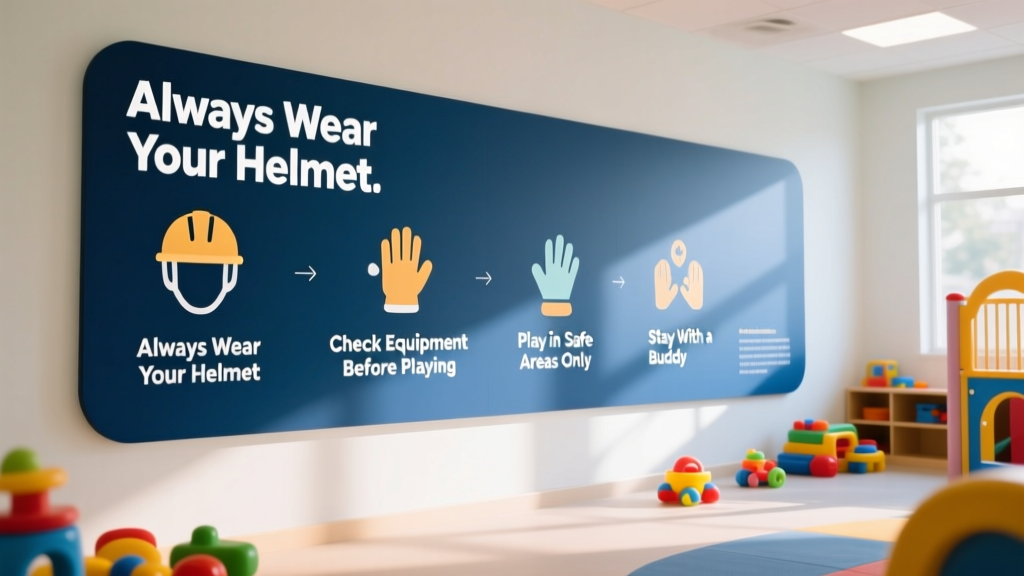 Play Safety Tips for Parents and Educators
Board Games vs. Outdoor Play: Kids Development Guide
 Pat Garrett Shot Billy the Kid? Truth Revealed
 Who Is the Blonde Kid in Happy Gilmore? (2026)
 Hands-On Science Investigations for Young Learners
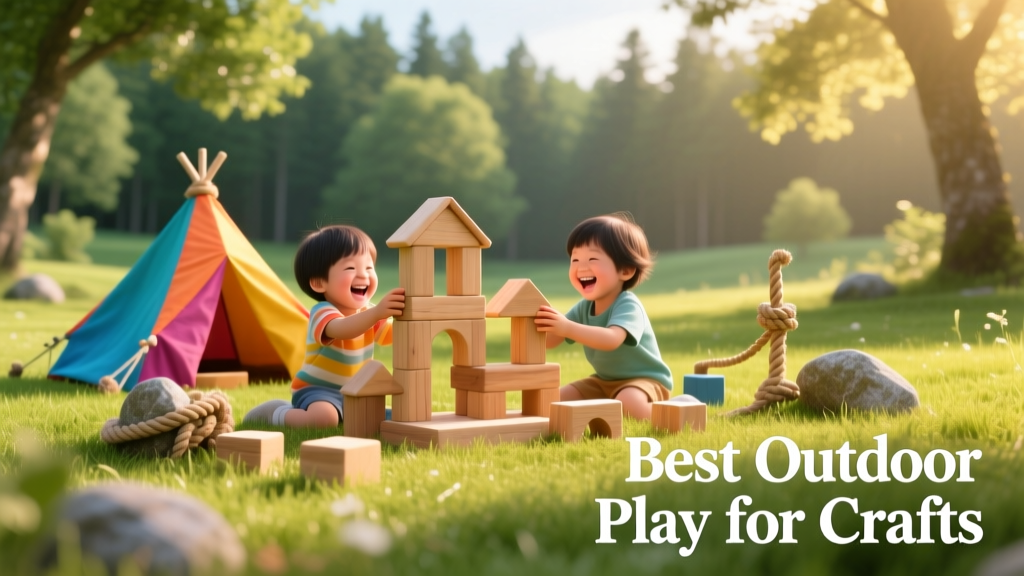 Best Outdoor Play for Crafts
 Who Is Martin Luther King Jr. for Kids (2026)
 Sensory Toys That Help Kids Focus and Stay Calm
 Science Kits for Elementary Kids 2026
 Kidada Jones Married? Current Relationship Status (2026)