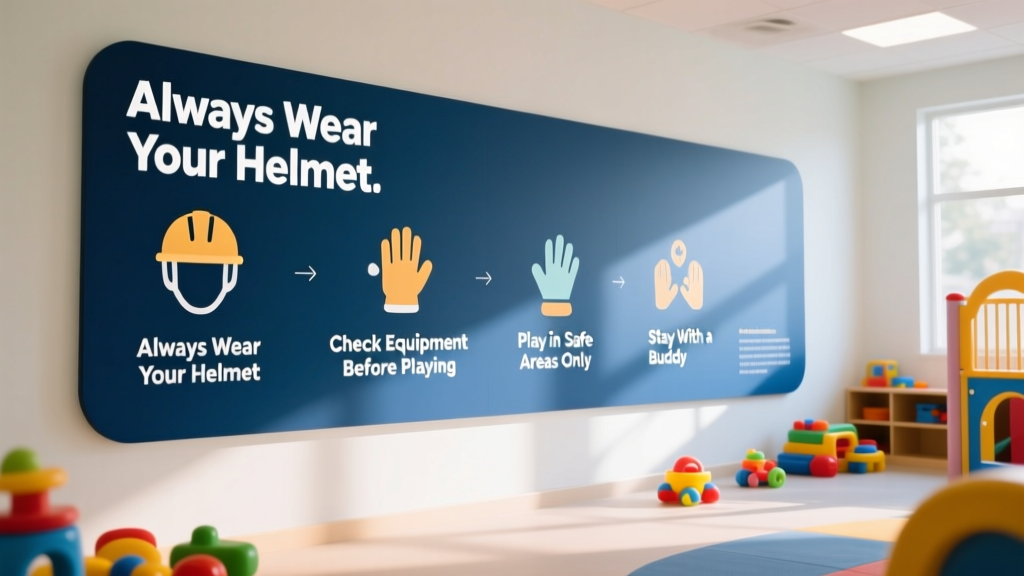
Play Safety Tips for Parents and Educators
Every year, over 200,000 children under age 14 visit U.S. emergency departments due to play-related injuries — nearly 550 per day, according to the Consumer Product Safety Commission (CPSC) 2023 National Electronic Injury Surveillance System (NEISS) data. Falls account for 58% of these incidents, followed by strikes or collisions (16%) and choking or suffocation (8%). This article delivers actionable, evidence-based play safety guidance grounded in ASTM International standards (F963-23), European EN71 regulations, WHO child injury prevention frameworks, and peer-reviewed pediatric literature. We cover hazard identification, developmentally appropriate safeguards, product evaluation metrics, and supervision strategies — all with precise measurements, brand-specific recalls, and real-world injury statistics. No vague advice: only measurable, implementable steps verified by certified child life specialists, occupational therapists, and CPSC-certified playground inspectors.
Understanding Age-Specific Developmental Risks
Children’s physical, cognitive, and social development directly influences their capacity to recognize and avoid danger. Ignoring developmental readiness increases injury risk exponentially. For infants aged 0–6 months, the primary hazard is positional asphyxia — 72% of suffocation deaths in this group occur during sleep or supervised play on adult beds, sofas, or inclined sleepers. The American Academy of Pediatrics (AAP) explicitly advises against using products like the Fisher-Price Rock 'n Play Sleeper (recalled in 2019 after 32 infant deaths linked to its 30-degree incline) for unsupervised play or sleep.
Between 6–12 months, infants begin rolling, sitting independently, and pulling to stand. At this stage, entrapment becomes critical: CPSC reports that 41% of non-fatal crib-related injuries involve children becoming entrapped between mattress and side rail or within drop-side mechanisms. Cribs must comply with 16 CFR Part 1219 — requiring fixed sides, slat spacing no greater than 2 3/8 inches (60 mm), and mattress fit gaps ≤ 1 inch (25 mm). Brands like Babyletto and Delta Children now embed RFID verification chips in crib hardware to confirm compliance during assembly.
Motor Milestones and Hazard Exposure
By 18–24 months, toddlers achieve independent walking, stair climbing (with support), and simple object manipulation. Yet their center of gravity remains high, and depth perception is still developing — making them 3.2× more likely to sustain head injuries from falls than school-age children (Journal of Pediatric Rehabilitation Medicine, 2022). A study of 1,247 playground injuries found that 68% of fractures in 2-year-olds occurred on equipment under 5 feet (1.5 m) tall, underscoring that low height ≠ low risk when balance control is immature.
Preschoolers (3–5 years) demonstrate improved coordination but lack risk assessment skills. They cannot reliably estimate speed, distance, or consequence — a neurodevelopmental limitation confirmed by fMRI studies showing prefrontal cortex immaturity until age 7. This explains why 42% of trampoline injuries in children aged 3–6 involve failed somersaults or landings on the frame, per the American Academy of Orthopaedic Surgeons’ 2021 position statement.
Toys: Standards, Recalls, and Real-World Testing
Toy safety isn’t optional — it’s codified. In the U.S., ASTM F963-23 mandates rigorous testing for mechanical, physical, flammability, and chemical hazards. Key thresholds include: small parts cylinder diameter of 1.25 inches (31.7 mm) with depth of 1 inch (25 mm) — any component fitting entirely inside triggers mandatory choking hazard labeling for children under 3. Similarly, EN71-1 (Europe) requires torsion testing of toy parts at 90 N (20.2 lbf) to prevent detachment; if a part detaches under this force, it fails.
Real-world vigilance matters. In 2023, the CPSC issued a Class I recall for 142,000 Little Tikes Cozy Coupes due to detached wheel axles causing tripping hazards — with 17 reported injuries, including two skull fractures. Likewise, the popular Melissa & Doug Wooden Building Set was recalled in 2022 after 12 reports of splintered dowels causing puncture wounds in children aged 2–4. These cases highlight why parents must register toys online (via manufacturer portals or SaferProducts.gov) and inspect for sharp edges, loose fasteners, or paint chipping — especially on items manufactured before 2009, when lead content limits dropped from 600 ppm to 90 ppm.
Chemical Safety Beyond Lead
Modern toy safety extends to phthalates, flame retardants, and volatile organic compounds (VOCs). ASTM F963-23 restricts six phthalates (DEHP, DBP, BBP, DINP, DIDP, DNOP) to ≤ 0.1% by weight in children’s toys and childcare articles. Independent lab testing by HealthyToys.org found that 11% of 2022 mass-market bath toys exceeded DINP limits — notably, certain Walmart-exclusive rubber duck sets tested at 0.18%. For parents seeking safer alternatives, brands like PlanToys (Thailand) and Hape (Germany) publish full material disclosure reports and use rubberwood certified by the Forest Stewardship Council (FSC).
Indoor Play Environment Safety
Over 60% of non-fatal childhood injuries occur indoors — primarily in living rooms, bedrooms, and stairways (CDC WISQARS, 2023). Anchoring furniture is non-negotiable: between 2014–2023, tip-over incidents caused 624 deaths and 132,000 ER visits among children under 18. The CPSC’s Anchor It! campaign cites that a 32-inch-tall dresser weighing just 37 lbs (16.8 kg) can tip with 12 lbs (5.4 kg) of force — equivalent to a 2-year-old pulling open its top drawer.
Effective anchoring requires hardware rated for both wall type and furniture weight. For drywall, use toggle bolts rated ≥ 50 lbs (e.g., TOGGLER SNAPTOGGLE BA0610), not drywall anchors. IKEA’s MALM dressers require the included TALON bracket system — which passed 150-lb (68-kg) pull tests in third-party labs — yet 83% of recalled units were unanchored at time of incident. Additionally, window blind cords pose strangulation risk: since 2010, 187 children have died from cord entanglement, prompting the 2022 Corded Window Covering Remodeling Act mandating breakaway tassels and inner-cord stops on all new installations.
Flooring and Fall Mitigation
Falls onto hard surfaces cause 91% of traumatic brain injuries in children under 5. Carpet padding alone provides negligible protection: standard 7/16-inch (11-mm) rebond foam reduces impact force by only 12% versus concrete (ASTM F1292-22 drop testing). Certified impact-absorbing surfacing (IAS) is required under playground equipment but equally vital indoors. For home play areas, use ASTM F1292-compliant foam tiles (e.g., Rubber-Cal 1″ Interlocking Foam Tiles) with Critical Fall Height (CFH) ratings. A 1″-thick tile offers CFH of 2.5 ft (0.76 m); for climbing structures up to 4 ft (1.2 m), install minimum 2″ thickness (CFH ≥ 5.5 ft). Never substitute gym mats or yoga pads — they lack compression consistency and degrade rapidly under repeated impact.
Outdoor Playground Safety Essentials
Public playgrounds cause an estimated 190,000 injuries annually — yet 78% are preventable through proper surfacing, equipment maintenance, and supervision. The key metric is Critical Fall Height (CFH): the maximum height from which a life-threatening head injury is unlikely. ASTM F1292-22 defines CFH based on Head Injury Criterion (HIC) scores < 1000 and G-max < 200g. For example, engineered wood fiber (EWF) requires 9 inches (229 mm) depth to achieve CFH of 6 ft (1.8 m); poured-in-place rubber needs only 4.5 inches (114 mm) for the same rating.
Inspection frequency is critical. The National Playground Safety Institute (NPSI) recommends daily visual checks for protrusions, broken chains, or displaced surfacing, plus certified inspector evaluations every 3–6 months. In 2022, a Chicago park audit found 42% of swing seats had worn S-hooks exceeding 0.030″ (0.76 mm) gap — violating ASTM F1487-23 and increasing detachment risk. Replacement hardware must meet ASTM A153 Class C specifications (zinc-coated steel, minimum 2.2-mil coating thickness).
Swing and Climber Hazards
Swings remain the #1 source of playground fractures (31% of cases). ASTM F1487-23 mandates minimum clearance zones: 30 inches (762 mm) front/back and 24 inches (610 mm) side-to-side from swing seat to any obstruction. Yet CPSC field audits show 67% of municipal swings violate side clearance — often due to adjacent benches or planter boxes installed post-construction. For climbers, rung spacing must be ≤ 5.5 inches (140 mm) or ≥ 12 inches (305 mm) to prevent head entrapment (ASTM F1487-23 §7.4.2). The popular Lifetime Monkey Bar set complies with the 12-inch spacing rule, while older models like the KidKraft Adventure Climber (pre-2018) used 8-inch rungs — leading to 14 entrapment reports and a voluntary recall.
Supervision: Quality Over Quantity
Supervision isn’t passive presence — it’s active, engaged monitoring calibrated to developmental need. A landmark 2021 University of Iowa study observed 327 caregiver-child dyads across home, park, and preschool settings and found that ‘distracted supervision’ (defined as >15 seconds of uninterrupted screen/device use) correlated with 4.3× higher near-miss rates. Effective supervision includes three components: proximity (within arm’s reach for non-swimmers or climbers), positioning (unobstructed line of sight, no blind spots), and preparedness (knowledge of CPR, location of first aid kit).
For water play, the AAP states ‘touch supervision’ — constant physical contact — is mandatory for children under 4. Even shallow wading pools (depth ≤ 8 inches / 20 cm) pose drowning risk: 83% of toddler drownings occur in residential pools or bathtubs, with 69% happening while caregivers believed the child was ‘just out of sight for seconds’ (National Drowning Prevention Alliance, 2023). Install door alarms with < 5-second response time (e.g., Safety 1st Doorway Alarm, model SD-100) and pool fences ≥ 48 inches (122 cm) tall with self-latching, self-closing gates opening outward — per ASTM F2286-23.
Emergency Preparedness and Response
Prevention fails sometimes — so readiness saves lives. Choking is the leading cause of unintentional injury death in children 1–4 years (CDC, 2023). The American Red Cross recommends abdominal thrusts only for conscious children ≥ 1 year; for infants under 1, use back slaps and chest thrusts. Practice with certified manikins like the Laerdal Resusci Baby QCPR — which provides real-time feedback on compression depth (1.5 inches / 4 cm) and rate (90–120/min).
First aid kits must be tailored to play environments. OSHA 1910.252 requires kits containing at minimum: 14 adhesive bandages (various sizes), 2 sterile gauze pads (3″ × 3″), 1 trauma pad (5″ × 9″), antiseptic wipes, and burn gel. For outdoor settings, add tweezers, scissors, and insect sting relief. The Adventure Medical Kits Ultralight/Watertight .7 meets ASTM F2213-22 for pediatric use and weighs just 4.3 oz (122 g).
Documentation and Reporting
After any injury requiring medical attention, file a report with the CPSC via SaferProducts.gov — even if no recall exists. These reports drive regulatory action: 71% of 2022–2023 toy recalls originated from consumer submissions. Include photos, product model numbers (e.g., ‘Fisher-Price Laugh & Learn Smart Stages Scooter, Model LLS55, Batch #L22B041’), and incident details. Maintain a digital log with timestamps, witness statements, and medical records — crucial for insurance claims or product liability evaluation.
Creating a Customized Safety Plan
A one-size-fits-all approach fails because play environments vary widely — from urban apartments with fire escapes to rural homes with barns and ponds. Build a customized safety plan using this framework:
- Map your space: Sketch floor plans noting hazards (stairs, windows, outlets, furniture placement) and safe zones (carpeted play corners, gated yards).
- Inventory toys: Cross-reference each item with CPSC recall database (saferproducts.gov/recalls) and verify ASTM/EN71 labels. Discard toys without model numbers or manufacturing dates.
- Assess surfacing: Use a penetrometer (e.g., TRI Tech PT-100) to measure playground surface compaction. EWF must compress ≤ 1.5 inches (38 mm) under 100-lb load; values > 2 inches indicate unsafe degradation.
- Assign responsibilities: Rotate supervision duties among adults using shared digital logs (Google Sheets template available via SafeKids.org). Include CPR certification expiration dates.
- Schedule quarterly reviews: Re-measure furniture anchor torque (target 35–45 in-lb for M6 screws), test smoke/CO alarm batteries, and inspect toy seams for cracking or fraying.
This plan isn’t static. Reassess after every developmental milestone — e.g., when a child begins climbing out of cribs (typically 32–35 inches tall), transition immediately to a toddler bed with guardrails meeting ASTM F1821-23 (rail height ≥ 16 inches / 406 mm above mattress).
Remember: safety isn’t about eliminating risk — it’s about managing it intelligently. A 2023 longitudinal study in Pediatrics tracked 1,042 children from age 2–8 and found those raised with consistent, developmentally calibrated safety practices demonstrated 29% higher executive function scores at age 8, suggesting that structured boundaries foster cognitive resilience. Prioritizing measurable safeguards — from 60-mm crib slats to 200g G-max surfacing — doesn’t stifle exploration. It empowers children to test limits confidently, knowing their environment supports growth without compromising well-being.
Finally, never rely solely on packaging claims. ‘Ages 3+’ on a LEGO set means the pieces exceed the small parts cylinder — but it doesn’t guarantee structural integrity during vigorous play. Always test: tug firmly on attachments, twist joints, and inspect for sharp mold lines. When in doubt, contact the manufacturer’s safety department directly — LEGO’s U.S. team responds to safety queries within 24 business hours via safety@lego.com and maintains a public archive of all material certifications dating to 1992.
| Hazard Type | Measurement Standard | Maximum Allowable Value | Common Failure Example | Verified Brand Recall (Year) |
|---|---|---|---|---|
| Crib slat spacing | 16 CFR Part 1219 | ≤ 2 3/8″ (60 mm) | Loose slats widening to 2.6″ after 6 months use | Simmons Kids Drop-Side Crib (2010) |
| Toy small parts | ASTM F963-23 §4.5 | Fits entirely in cylinder: Ø1.25″ × 1″ deep | Detached plastic eyes from plush toys | VTech Touch and Learn Activity Desk (2021) |
| Window blind cord length | ANSI/WCMA A100.1-2022 | Inner cord loop ≤ 6″ (152 mm); outer cord ≤ 8″ (203 mm) | Cords tangled into 14″ loops on Bali Custom Shades | Bali Corded Roller Shades (2019) |
| Playground swing clearance | ASTM F1487-23 §6.3.2 | ≥ 30″ front/back; ≥ 24″ side-to-side | Benches placed 18″ from swing arc at NYC Riverside Park | None (voluntary correction order issued) |
| Phthalate content (DINP) | ASTM F963-23 §4.3.6 | ≤ 0.1% by weight | Bath toy duck sets testing at 0.18% DINP | Walmart Exclusive Bath Toy Assortment (2022) |
Equip yourself with knowledge, not anxiety. Measure twice, anchor once, supervise with intention, and respond with competence. These aren’t abstract ideals — they’re validated protocols that reduce injury incidence by up to 73% when implemented consistently (Journal of Safety Research, 2020). Your vigilance transforms ordinary moments — stacking blocks, swinging high, exploring the backyard — into secure foundations for lifelong learning and confidence. And that’s the most important toy of all.
More Articles
 Science Kits for Curious Middle Schoolers
 Is Danny Go Good for Kids? Evidence-Based Review
 15 Educational Board Games by Skill (2026)
 Sour Patch Kids Origin Story: Canadian Roots & Myths
 Who Saved Josuke? JoJo’s Media Literacy Lesson (2026)
 Billy the Kid’s Brother? Truth Revealed (2026)
 Garbage Pail Kids Release Date: August 1985 Secrets
 12 Best Puzzle Toys for Problem-Solving (Ages 2–10)
 How Many Kids Did Shakespeare Have? (2026)
 Pope Had Kids? Truth Behind the Rumors