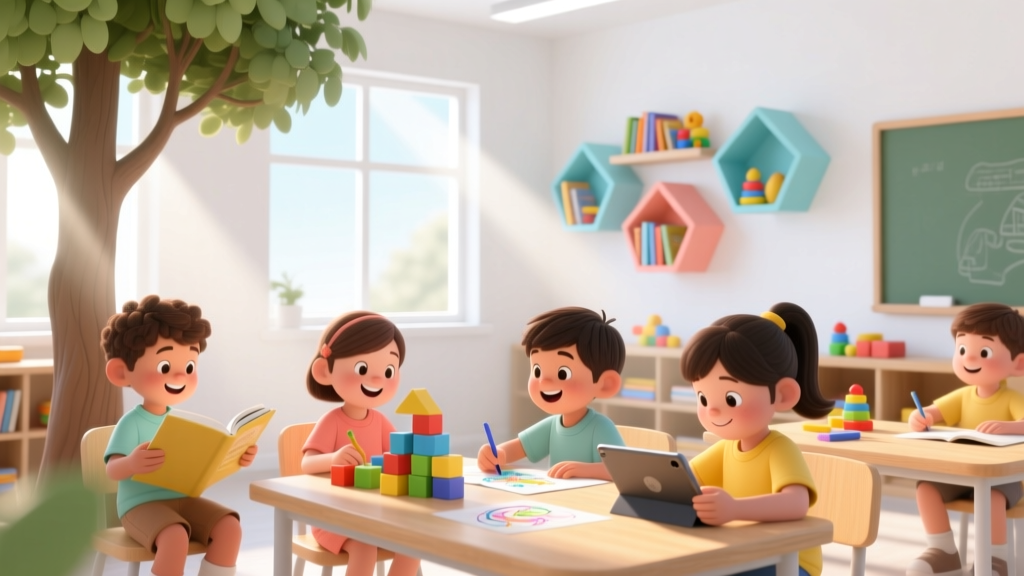
Who Is the Smartest Kid in the World? (2026)
Why Asking 'Who Is the Smartest Kid in the World' Misses What Really Matters
When parents, educators, or journalists ask who is the smartest kid in the world, they’re often searching for reassurance, inspiration, or a benchmark—but what they rarely realize is that this question rests on outdated, oversimplified, and even harmful assumptions about intelligence. Modern developmental science confirms that intelligence isn’t a single, fixed number you can rank like a sports leaderboard. It’s dynamic, multidimensional, culturally embedded, and deeply influenced by environment, opportunity, and emotional safety. In fact, the American Academy of Pediatrics (AAP) explicitly warns against labeling children with superlatives like 'genius' or 'smartest,' citing risks of anxiety, perfectionism, social isolation, and burnout—even among profoundly gifted youth.
This article cuts through sensational headlines to examine real cases of extraordinary young minds—not to crown a winner, but to understand what makes them exceptional, how their environments supported (or undermined) their growth, and what evidence-based strategies actually help *all* children thrive cognitively, emotionally, and ethically. Because the most powerful predictor of lifelong success isn’t an off-the-charts IQ score—it’s metacognitive awareness, intellectual humility, resilience, and the courage to ask better questions than 'Who’s the smartest?'
What Science Says About Intelligence—and Why 'Smartest' Is a Flawed Frame
Intelligence isn’t monolithic. Dr. Howard Gardner’s theory of Multiple Intelligences—validated across decades of cross-cultural research—identifies at least eight distinct domains: linguistic, logical-mathematical, spatial, bodily-kinesthetic, musical, interpersonal, intrapersonal, and naturalistic. A child who solves differential equations at age 9 may struggle with emotional regulation or collaborative problem-solving; another who builds empathetic peer networks at age 7 may not yet read fluently—but both demonstrate high-functioning intelligence in critical, real-world ways.
Neuroscience further dismantles the 'smartest' myth. Brain plasticity means neural pathways strengthen with use—not innate 'gift.' As Dr. Jo Boaler, Stanford professor of mathematics education and author of Mathematical Mindsets, explains: 'Every child can develop high-level mathematical thinking when given growth-oriented tasks, supportive feedback, and time to explore ideas without fear of failure. Labeling kids as “gifted” or “not gifted” shuts down that essential learning process.'
Even IQ—the metric most often cited in 'smartest kid' claims—has serious limitations. Standardized IQ tests measure only specific cognitive functions (primarily fluid reasoning and working memory) under narrow conditions. They don’t assess creativity, moral reasoning, practical wisdom, or adaptability—skills increasingly vital in AI-augmented workplaces. And crucially: IQ scores fluctuate significantly during childhood. A longitudinal study published in Nature (2011) tracked 33 adolescents over four years and found IQ scores shifted by up to 21 points—demonstrating that raw test performance reflects current environment and engagement more than immutable potential.
Case Studies: Extraordinary Young Minds—And What Their Journeys Reveal
Let’s look closely at three widely cited examples—not to rank them, but to extract evidence-based insights about nurturing exceptional cognition responsibly.
- Ainan Celeste Cawley (b. 1999, Singapore): Entered university-level chemistry at age 7, passed O-Level Chemistry at 6. His father homeschooled him intensively using university textbooks—but later acknowledged the toll: social withdrawal, sleep disruption, and intense pressure. Ainan himself told The Guardian at 15: 'I wasn’t allowed to be a kid. I learned formulas before I knew how to tie my shoes.'
- Laurent Simons (b. 2010, Netherlands): Completed bachelor’s in electrical engineering at TU Eindhoven at age 9—fastest in the university’s history. His program was individually tailored, with strong emphasis on mentorship, physical activity, and unstructured play. His parents worked closely with child psychologists to ensure emotional scaffolding matched academic acceleration.
- Miranda Wang (b. 1997, USA): Co-founded BioCellection at 19 to tackle plastic pollution—her high school science fair project evolved into a venture backed by Breakthrough Energy Ventures. Her path wasn’t linear: she repeated AP Chemistry, failed her first college organic chemistry exam, and credits iterative failure—not early brilliance—as her greatest teacher.
What separates these stories isn’t just raw ability—it’s the presence (or absence) of protective factors: psychological safety, agency in learning, access to mentors, and space to explore identity beyond achievement. As Dr. Sally Reis, former president of the National Association for Gifted Children, states: 'The most successful gifted students aren’t those who race ahead fastest—they’re those whose curiosity is honored, whose mistakes are normalized, and whose humanity is never secondary to their intellect.'
How to Support Exceptional Cognitive Development—Without the 'Smartest' Trap
Instead of chasing rankings, focus on cultivating the habits and conditions proven to deepen learning for *all* children—especially those showing advanced aptitude. Here’s what research-backed practice looks like:
- Embrace 'Intellectual Humility' Early: Teach children that not knowing is the starting point—not a failure. Use phrases like 'What’s your best guess?' instead of 'What’s the answer?' Model curiosity over correctness. A 2023 study in Child Development found students trained in intellectual humility showed 42% greater persistence on challenging STEM tasks.
- Design 'Depth-Over-Speed' Challenges: Replace grade-skipping with enrichment that demands synthesis, critique, and creation. Example: Instead of accelerating a 10-year-old to Algebra II, have them design a statistical model predicting local climate impacts—or write a speculative essay on ethics in AI, then debate it with peers.
- Normalize Struggle in Safe Environments: Create 'failure résumés' where kids list setbacks and lessons learned. Invite guest speakers (scientists, engineers, entrepreneurs) to share their major pivots and dead ends. According to AAP guidelines, normalizing productive struggle builds executive function and reduces avoidance behaviors.
- Anchor Learning in Purpose: Connect abstract concepts to real-world impact. When studying genetics, partner with a local food bank to analyze nutrition data; when exploring physics, redesign playground equipment for accessibility. Purpose-driven learning increases retention by up to 68% (Johns Hopkins University, 2022).
Developmental Milestones vs. Achievement Pressure: What to Watch For
Parents and teachers often misinterpret advanced academic skills as signs of readiness for accelerated pacing—when in reality, cognitive, social-emotional, and physical development rarely align perfectly. Below is an age-appropriateness guide grounded in AAP and National Association for Gifted Children (NAGC) consensus standards:
| Age Range | Cognitive Strengths Often Observed | Key Developmental Priorities | Risks of Premature Acceleration |
|---|---|---|---|
| 5–7 years | Advanced vocabulary, pattern recognition, memory for facts, fascination with systems (e.g., weather, space) | Play-based exploration, emotional vocabulary building, fine motor skill integration, peer negotiation | Increased anxiety, somatic complaints (stomachaches/headaches), resistance to non-academic tasks, social withdrawal |
| 8–10 years | Abstract reasoning emergence, complex questioning ('Why do rules exist?'), self-directed research, interest in ethics/science | Identity formation, collaborative project work, risk-taking in safe contexts, developing personal values | Perfectionism, identity collapse if achievement falters, difficulty receiving constructive feedback, disengagement from group learning |
| 11–13 years | Metacognition (thinking about thinking), interdisciplinary connections, sophisticated argumentation, interest in global systems | Autonomy support, ethical reasoning practice, navigating peer influence, healthy digital citizenship | Imposter syndrome, chronic fatigue, masking authentic interests to meet expectations, early burnout |
| 14+ years | Original research capacity, systems-level analysis, mentorship readiness, conceptual innovation | Self-advocacy, career exploration aligned with values, community contribution, sustainable work rhythms | Loss of intrinsic motivation, vocational confusion, relational disconnection, mental health crises requiring clinical support |
Frequently Asked Questions
Is there an official record for 'smartest kid in the world'?
No reputable scientific or educational body maintains or recognizes such a title. Guinness World Records discontinued 'highest IQ' categories in 2000 due to test variability, cultural bias, and ethical concerns about labeling minors. Claims circulating online rely on unverified, non-standardized assessments—often administered by private consultants with no oversight. As Dr. Scott Barry Kaufman, cognitive scientist and author of Ungifted, notes: 'IQ is a snapshot—not a destiny—and ranking children like athletes violates basic principles of developmental ethics.'
My child scores extremely high on standardized tests—should I accelerate their grade level?
Not automatically. Research shows subject-specific enrichment (e.g., advanced math while staying with peers for language arts) yields better long-term outcomes than whole-grade acceleration—especially for social-emotional development. The NAGC recommends a comprehensive assessment including social readiness, executive function, and motivation—not just test scores—before any acceleration decision. A 2021 meta-analysis in Review of Educational Research found grade-skipping improved academic outcomes by only 0.3 standard deviations on average, but increased social adjustment challenges by 1.2 standard deviations.
Are prodigies born or made?
Neither. Prodigies emerge from rare interactions between genetic predispositions, obsessive practice (often 10,000+ hours by adolescence), and highly responsive environments—including at least one 'talent scout' adult who identifies passion early and removes barriers. But crucially: neuroimaging studies show prodigy brains aren’t structurally different—they’re *trained* differently. As Dr. Martha Burns, neurologist and learning specialist, emphasizes: 'The brain doesn’t care if you’re 6 or 60—it changes with demand. What looks like 'innate genius' is usually invisible scaffolding.'
How do I nurture my child’s curiosity without pushing too hard?
Ask open-ended questions instead of providing answers ('What surprised you about that experiment?' vs. 'Did you get the right result?'). Protect unstructured time—research shows children need 45–60 minutes of daily free play to consolidate learning and regulate emotions. Celebrate process verbs: 'You persisted,' 'You revised your idea,' 'You asked a brilliant question.' And critically: model your own learning struggles aloud. When you cook a failed recipe or misread a map, narrate your thinking: 'Hmm—I guessed wrong. Let me check the instructions again. That’s how we learn.'
What are red flags that academic pressure is harming my child?
Watch for somatic symptoms (frequent headaches/stomachaches before school), sudden disengagement from previously loved subjects, perfectionist rituals (erasing entire pages over one mistake), avoidance of challenges, or statements like 'I’m only good if I get an A.' These signal stress—not laziness. The AAP advises immediate consultation with a pediatrician or child psychologist if these persist beyond two weeks. Early intervention prevents long-term academic trauma.
Common Myths About Child Intelligence
- Myth #1: High IQ guarantees future success. Reality: Longitudinal studies (e.g., Terman’s Genetic Studies of Genius) show IQ correlates weakly with adult income or life satisfaction once above ~115. Grit, conscientiousness, and social intelligence predict outcomes far more strongly.
- Myth #2: Gifted children don’t need support—they’ll figure it out. Reality: Without appropriate challenge, gifted learners experience 'relative boredom' that rewires attention systems, increasing ADHD-like symptoms. They also face unique social-emotional needs—including asynchronous development (e.g., 12-year-old reasoning with a 20-year-old but needing bedtime stories).
Related Topics (Internal Link Suggestions)
- STEM Learning for Curious Kids — suggested anchor text: "hands-on STEM activities that build real-world problem-solving"
- Gifted Education Myths Debunked — suggested anchor text: "what schools really mean by 'gifted and talented'"
- Building Growth Mindset in Children — suggested anchor text: "how to praise effort—not intelligence—to boost learning"
- Screen Time Guidelines for School-Age Kids — suggested anchor text: "balancing digital learning with creative offline time"
- Social-Emotional Learning Resources — suggested anchor text: "free SEL tools for parents and teachers"
Conclusion & Next Step
So—who is the smartest kid in the world? The most honest, compassionate, and scientifically sound answer is: every child who feels safe enough to wonder, brave enough to try, and supported enough to grow at their own pace. Intelligence isn’t a trophy to be won—it’s a living, evolving relationship between mind, body, community, and world. Your next step isn’t finding a label—it’s observing your child’s sparks of curiosity, protecting their right to not know, and asking daily: 'What did they teach me today?' That shift—from ranking to witnessing—changes everything. Download our free Curiosity Observation Journal (a printable tool used by 12,000+ families) to start documenting moments of authentic inquiry—not achievement—in your child’s learning journey.
More Articles
 Best STEM Toys for Babies & Toddlers (6–36 Months)
 Screen-Free Robotics for Kids: 10 Coding Logic Projects
 Is IXL Good for Kids? Real-World Results (2026)
 Kitchen Science Experiments for Curious Kids
Math Games for Elementary Kids to Play at Home
Kitchen Science Experiments for Curious Kids
Math Games for Elementary Kids to Play at Home
 Electric Circuit Kits for Kids: Safe, Fun & Educational
Best Robotics Starter Kits for Kids
Electric Circuit Kits for Kids: Safe, Fun & Educational
Best Robotics Starter Kits for Kids
 Space Science: Amazing Facts for Young Minds
 Best Coding Games for 7-Year-Olds (2026)
 Abacus for Kids: What 12 Studies Reveal (2026)