Simple Machines: Fun Experiments for Kids
The Six Simple Machines
Every complex machine in the world is built from just six simple machines: the lever, wheel and axle, pulley, inclined plane, wedge, and screw. Teaching kids to spot these in everyday life builds engineering thinking from an early age.
Hands-On Experiments
Experiment 1: Lever Challenge
Materials: Ruler, pencil (fulcrum), coins of different sizes.
Balance a ruler on a pencil. Place coins at different distances from the fulcrum and discover how position affects force. Ask: "Can one penny lift three quarters?"
Experiment 2: Pulley Power
Materials: String, a doorknob or hook, a small bucket, weights (books or toys).
Loop string over a doorknob. Pull down to lift the bucket. Compare: is it easier to lift directly or through the pulley? Add a second pulley for compound advantage.
Experiment 3: Ramp Race
Materials: Cardboard pieces, books (to create slopes), toy cars, measuring tape.
Build ramps at different angles. Roll cars down and measure distance. Graph the results. What angle gives the farthest roll? Why?
Experiment 4: Wedge vs. Flat
Materials: Clay or playdough, a butter knife (wedge), a flat card.
Try splitting clay with a flat card vs. the knife edge. Which cuts more easily? This demonstrates why knives, axes, and teeth are all wedge-shaped.
Discussion Questions
- Where do you see levers in your kitchen? (Scissors, bottle openers, doors)
- How does a slide at the playground use an inclined plane?
- Why do stairs use the inclined plane principle?
More Articles
 How to Make Volcano for Kids: Safe, Real Science (2026)
 How to Build a Boom! STEM Activities for Kids
 Kids' Weather Science Projects: Build Your Own Station
 Space Science: Amazing Facts for Young Minds
 What Are Germs for Kids? A Pediatrician-Approved Guide
 How the Internet Works: Kids' Visual Guide (2026)
 Simple Machine Projects Using Household Items (2026)
 10 STEM-Teaching Science Board Games for Kids
 Cheap vs Premium Building
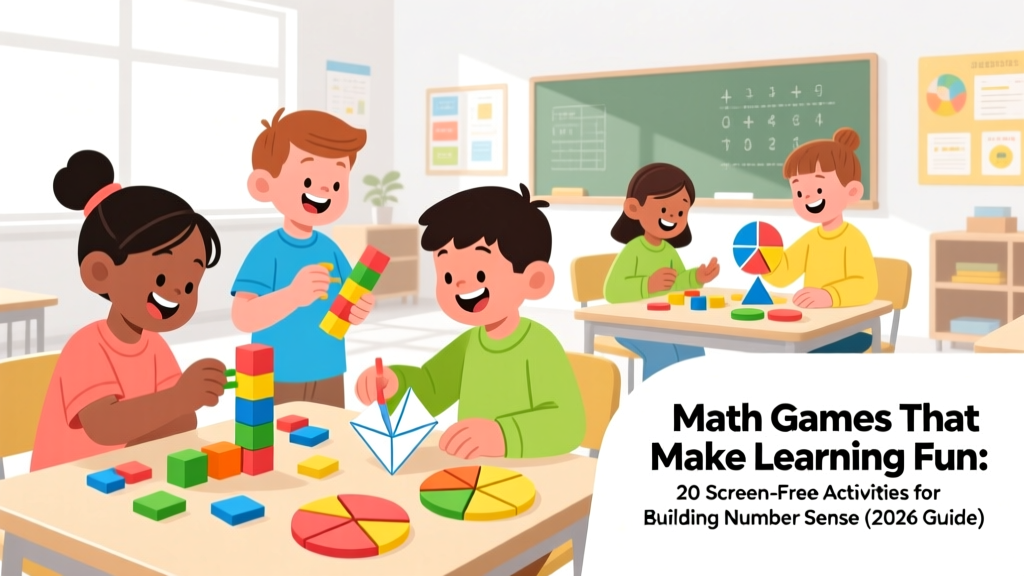 Math Games That Make Learning Fun: 20 Screen-Free Activities