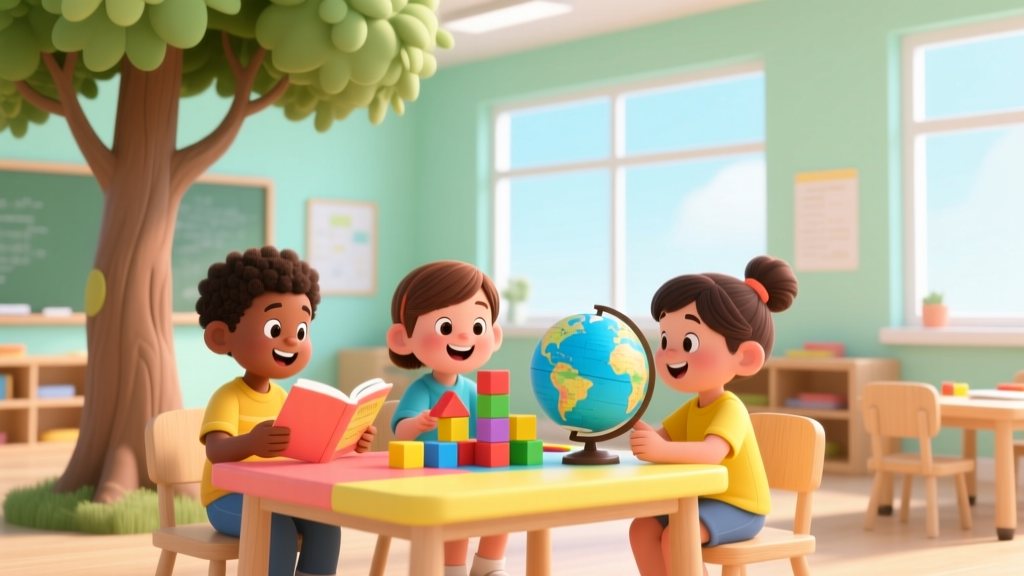
Teach Math to Kids Without Worksheets or Tears
Why 'How to Teach Math to Kids' Is the Most Misunderstood Question in Modern Parenting
If you've ever Googled how to teach math to kids, you've likely been met with overwhelming advice—flashcards, timed drills, apps promising 'genius-level results,' or vague platitudes like 'make it fun.' But here’s the uncomfortable truth: most well-intentioned approaches backfire. According to Dr. Julie Sarama, co-author of the landmark NSF-funded Building Blocks curriculum and professor of early mathematics education at the University of Denver, 'Children don’t learn math through repetition alone—they learn it through structured, meaningful experiences that connect symbols to sensory, spatial, and social understanding.' In fact, research from the National Council of Teachers of Mathematics (NCTM) shows that students exposed to concept-first, play-anchored math before age 8 are 3.2x more likely to excel in algebra by middle school—and far less likely to develop math anxiety. This isn’t about turning your living room into a classroom. It’s about recognizing that every block tower, snack-sharing moment, and hopscotch game is already rich with mathematical thinking—if you know how to nurture it.
Stop Starting With Symbols: The Concrete-Pictorial-Abstract (CPA) Sequence That Actually Works
Most parents—and even many teachers—begin math instruction with abstract symbols: '2 + 3 = ?' written on paper. But developmental neuroscientists at the University of Cambridge have confirmed that children under age 7 rely heavily on sensorimotor and visual-spatial processing. Their brains literally cannot access symbolic arithmetic without first grounding it in physical experience. That’s why Singapore Math, Finland’s national curriculum, and Montessori pedagogy all follow the same proven progression: Concrete → Pictorial → Abstract (CPA).
Here’s how to apply it daily:
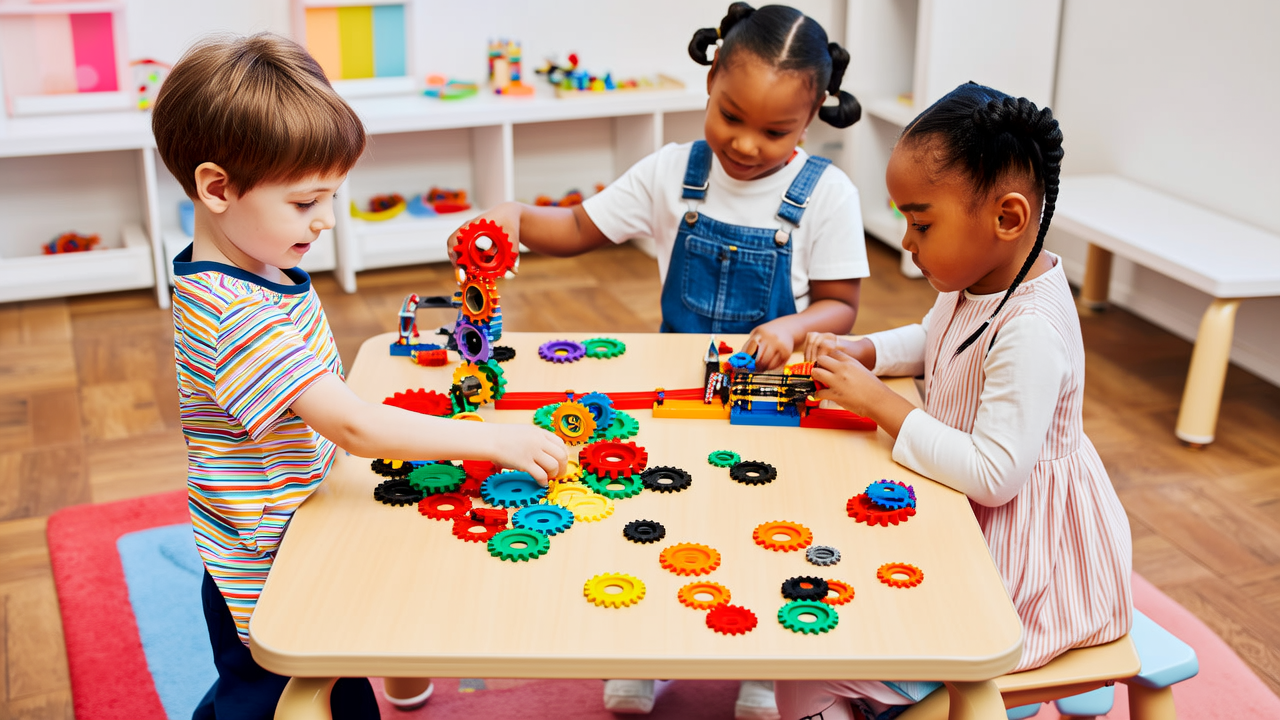
- Concrete Stage (Ages 3–6): Use real objects—counting bears, buttons, grapes, or LEGO bricks—to model operations. Instead of saying 'What is 4 + 2?', ask: 'You have 4 blue cars. I’ll give you 2 red ones. How many cars do you have now? Let’s push them together and count.' This builds one-to-one correspondence and part-whole understanding—the bedrock of addition.
- Pictorial Stage (Ages 5–8): Transition to drawings, diagrams, or number bonds. Draw 5 circles, shade 3, and ask: 'How many are unshaded? Can you write a number sentence for that?' Avoid clipart-style images; encourage child-drawn representations—they activate deeper neural encoding.
- Abstract Stage (Age 7+): Only introduce numerals and symbols once children consistently solve problems concretely and pictorially. Even then, keep equations grounded: 'If this bar represents 12 cookies and we split it into 3 equal parts, what does each part show?' not '12 ÷ 3 = ?'
A powerful case study comes from the Boston Public Schools’ 2022 pilot program: classrooms using strict CPA sequencing saw a 41% reduction in early-grade math anxiety and a 27% gain in standardized problem-solving scores within one semester—compared to control groups using traditional workbook-first methods.
The 5 Daily Math Micro-Moments You’re Already Missing (And How to Harness Them)
You don’t need dedicated 'math time.' Children absorb mathematical concepts constantly—but only when adults intentionally name, extend, and question the math embedded in everyday life. These aren’t 'activities' to schedule—they’re responsive interactions woven into routines. Pediatric occupational therapist and math literacy consultant Dr. Laura Overdeck (founder of Bedtime Math) emphasizes: 'Math isn’t something you *do*—it’s something you *notice*, *wonder*, and *talk about*. The language you use matters more than the lesson plan.'
Try these five high-leverage micro-moments:
- Snack Time Symmetry: When cutting an apple, ask: 'If I cut it right down the middle, will both sides match? What if I rotate it? Is it still the same shape?' Introduces reflection, rotation, and equivalence—concepts often delayed until grade 3 but cognitively accessible at age 4.
- Staircase Counting: Going up stairs? Count forward. Coming down? Count backward—and pause on step 5: 'We’ve gone down 5 steps. How many more to reach the bottom?' Embeds subtraction as 'distance between numbers'—a key conceptual shift away from 'take away' misconceptions.
- Laundry Sorting Logic: Fold socks together and ask: 'Are there more striped socks or polka-dot ones? How do you know without counting?' Encourages subitizing (instant quantity recognition), comparison language ('more/less/fewer'), and data reasoning.
- Weather Pattern Predictions: Track daily temperatures on a simple line graph (even just with stickers). Ask: 'Was yesterday warmer or colder? How much warmer? What might tomorrow be?' Builds measurement sense, change over time, and informal graph interpretation.
- Bedtime Estimation: 'How many books can fit on this shelf? Let’s guess, then test. Were we close? Why did our guess go too high or too low?' Develops spatial reasoning, measurement estimation, and metacognition—skills strongly correlated with later success in geometry and physics.
Crucially, avoid asking 'What’s the answer?' Focus instead on 'How did you figure that out?' or 'Can you show me another way?' This signals that process—not product—is valued, reducing performance pressure and building flexible thinking.
When 'Learning Styles' Hurt More Than Help: The Truth About Visual, Auditory, and Kinesthetic Math
You’ve probably heard: 'My child is a visual learner, so they need charts and videos.' Or 'He’s kinesthetic—he needs to move!' While well-meaning, this popular framing is dangerously outdated. A 2023 meta-analysis published in Educational Psychology Review, reviewing 329 studies on learning modalities, concluded: 'There is no credible evidence that matching instruction to supposed “learning styles” improves outcomes.' In fact, over-relying on one modality limits neural pathway development. True math fluency requires multimodal integration: seeing a pattern, hearing its rhythm, touching its structure, and moving through its logic.
Instead of labeling your child, design for multisensory anchoring:
- For place value: Use base-ten blocks (touch), say 'three hundreds, four tens, two ones' aloud (sound), draw a place-value chart (sight), and physically jump three times for hundreds, four for tens, two for ones (movement).
- For fractions: Cut real food (touch), sing a fraction song ('One-half, one-half, it’s half of the pie!'), sketch a pizza divided into slices (sight), and walk half the length of the hallway (movement).
This approach aligns with how the brain actually learns: via cross-modal reinforcement. As Dr. Daniel Ansari, Canada Research Chair in Developmental Cognitive Neuroscience, explains: 'Mathematical understanding emerges when multiple brain regions—parietal (spatial), temporal (language), frontal (reasoning), and motor cortices—fire in coordinated patterns. Isolating one sense weakens those connections.'
Developmental Milestones & Red Flags: What’s Normal, What’s Not, and When to Seek Support
Every child develops math understanding at their own pace—but certain patterns warrant gentle observation. The American Academy of Pediatrics (AAP) and NCTM jointly recommend monitoring these evidence-based milestones. Importantly, delays in math reasoning are often early indicators of broader learning differences—including dyscalculia, language-based learning challenges, or executive function gaps—that benefit significantly from early, targeted support.
| Age Range | Typical Math Behaviors | Green Light (On Track) | Yellow Flag (Observe & Enrich) | Red Flag (Consult Specialist) |
|---|---|---|---|---|
| 3–4 years | Counts objects with accuracy up to 5; matches same-sized/shaped items; uses words like 'more,' 'same,' 'biggest' | Points and counts slowly but correctly; sorts by color or size independently | Counts but skips numbers or repeats; struggles to match identical objects after age 4 | Cannot count to 3 accurately by age 4.5; doesn’t recognize any numerals; avoids counting games entirely |
| 5–6 years | Counts to 20; understands 'one more/one less'; compares sets up to 10; recognizes numerals 0–10 | Uses fingers or objects to solve '3 + 2'; draws simple tally marks for counting | Relies exclusively on counting from 1 for all additions—even '2 + 1'; confuses numerals (e.g., 6/9, 12/21) | Cannot reliably identify numerals 1–10 by age 6; mixes up ordinal and cardinal numbers ('first' vs. 'one'); extreme frustration or avoidance during any number-related task |
| 7–8 years | Solves addition/subtraction facts to 20 mentally; understands place value to 100; measures with non-standard units (paperclips, hands) | Explains thinking verbally ('I knew 8 + 7 is 15 because 8 + 2 is 10, plus 5 more') | Still uses fingers for all single-digit facts; cannot explain strategy; misreads clocks beyond hour/half-hour | Cannot recall any addition facts; writes numbers backward consistently past age 7.5; confuses left/right orientation affecting symbol writing |
If you notice persistent red flags, consult your pediatrician or school psychologist—and request a screening from a certified educational diagnostician. Early intervention (before grade 3) dramatically improves long-term outcomes. As Dr. Lynn Fuchs, Vanderbilt University’s leading researcher on math learning disabilities, states: 'Dyscalculia isn’t a 'math disability'—it’s a neurodevelopmental difference in how the brain processes numerical magnitude. With appropriate, explicit instruction, children thrive.'
Frequently Asked Questions
My child hates worksheets and gets anxious during 'math time.' What should I do instead?
Ditch the worksheets—and the label 'math time' altogether. Anxiety spikes when math feels like a performance or judgment zone. Replace it with low-stakes, curiosity-driven exploration: build towers and ask 'How many more blocks to beat your last tower?'; bake cookies and double the recipe together; play 'I Spy' with shapes ('I spy something with 4 equal sides'). Focus on joyful noticing, not correctness. A 2021 study in Journal of Educational Psychology found that children who engaged in 10 minutes of playful math daily (no worksheets, no grading) showed greater growth in number sense than peers doing 30 minutes of traditional drill—because engagement drives neural plasticity.
Is screen time ever helpful for teaching math to kids?
Yes—but only with extreme selectivity. Most 'educational' math apps reinforce rote memorization and speed, worsening anxiety. Look for apps grounded in research: DragonBox Numbers (teaches number composition visually), Wuzzit Trouble (develops algebraic thinking through puzzle logic), and Prodigy Math (adaptive, curriculum-aligned, with strong teacher dashboard). Limit to 15–20 minutes/day, always co-play initially, and debrief: 'What was tricky? How did you solve it?' Avoid apps with heavy rewards, timers, or public leaderboards—these activate threat response, not learning.
Do I need special training or materials to teach math to kids effectively?
No—you already have everything you need. Your voice, your presence, and everyday objects are the most powerful tools. Research from the University of Chicago’s Early Math Collaborative confirms that parent-child math talk—using precise vocabulary ('triangle,' 'estimate,' 'symmetrical') during routine moments—is the strongest predictor of kindergarten math achievement, outperforming income, parental education, or purchased materials. Start small: narrate your own math thinking aloud ('Hmm, we need 3 eggs—I’ll take one, then another, then another… that’s 3!'). That modeling is gold.
My child excels at counting but struggles with word problems. Why?
This is extremely common—and revealing. Counting is procedural memory; word problems demand language comprehension, visualization, and inference. Many children decode the words but miss the underlying mathematical structure. Try 'reverse engineering': give the answer first ('The answer is 8. What could the question be?'), draw the problem together before solving, or act it out with toys. Also, simplify language: replace 'Jenny had some apples. She gave away some. How many does she have left?' with 'Jenny had 5 apples. She gave 2 to Max. How many does Jenny have now?' Clarity unlocks cognition.
Should I correct my child’s math mistakes immediately?
Not always—and never with 'That’s wrong.' Instead, use 'noticing and wondering': 'I see you wrote 7 + 5 = 11. Tell me how you got that.' Often, the child articulates their logic ('I counted 7, then 5 more: 8, 9, 10, 11, 12—oh wait, that’s 5 numbers, so it’s 12!'). This builds self-correction, not shame. Immediate correction shuts down thinking; inquiry opens it. As NCTM’s Principles to Actions states: 'Errors are not obstacles to learning—they are the raw material of learning.'
Common Myths
Myth #1: 'Kids need to memorize math facts before understanding concepts.'
False. Rote memorization without conceptual grounding creates fragile knowledge. Children who understand that 8 + 5 means '8, then 2 more makes 10, then 3 more makes 13' retain facts longer and transfer knowledge better than those who only memorize. Conceptual fluency precedes and enables automaticity.
Myth #2: 'If my child isn’t doing advanced math by age 6, they’re behind.'
Also false. Rushing to algorithms (like column addition) before children internalize place value and number relationships leads to procedural errors and disengagement. Depth—not speed—predicts lifelong math success. Finland, consistently top-ranked in global math assessments, doesn’t introduce formal arithmetic until age 7—and focuses intensely on play-based number sense until then.
Related Topics (Internal Link Suggestions)
- Best Math Manipulatives for Preschoolers — suggested anchor text: "hands-on math tools for early learners"
- Montessori Math Activities at Home — suggested anchor text: "Montessori-inspired math for toddlers and preschoolers"
- How to Talk Math with Your Child (Even If You Hate Math) — suggested anchor text: "math-positive language for parents"
- Screen-Free Math Games for Kids Ages 3–8 — suggested anchor text: "play-based math games without devices"
- Recognizing Early Signs of Dyscalculia — suggested anchor text: "what is dyscalculia and how to spot it"
Conclusion & CTA
Teaching math to kids isn’t about delivering content—it’s about cultivating a mindset of curiosity, resilience, and joyful pattern-seeking. You don’t need a degree, a curriculum, or expensive tools. You need presence, patience, and the willingness to see math everywhere: in the rhythm of clapping, the symmetry of a leaf, the fairness of sharing cookies. Start today—not with a lesson plan, but with one intentional question during snack time: 'How do you know that’s half?' Then listen deeply. That tiny interaction, repeated with warmth and wonder, is where true mathematical identity begins. Your next step? Pick one micro-moment from this article—snack time, stairs, or laundry—and practice naming the math in it tomorrow. Then come back and share what you noticed in the comments—we’ll help you reflect and go deeper.
More Articles
 Common STEM Back-End Mistakes & How to Fix Them
 Unplugged Coding Activities For Kids No Screens (2026)
 Robotics for Kids: Beyond Toys to Real Skills (2026)
 How Many Kids Did Katherine Johnson Have?
Best Coding Apps for Kids Under 8
How Many Kids Did Katherine Johnson Have?
Best Coding Apps for Kids Under 8
 How to Explain Multiplication to a Kid (2026)
 How to Make Volcano for Kids: Safe, Real Science (2026)
 Engineering Challenges for Kids Using Recycled Materials
 KARS for Kids: Real STEM Coding Confidence (2026)
 STEM Activities for Preschoolers Ages 3-5