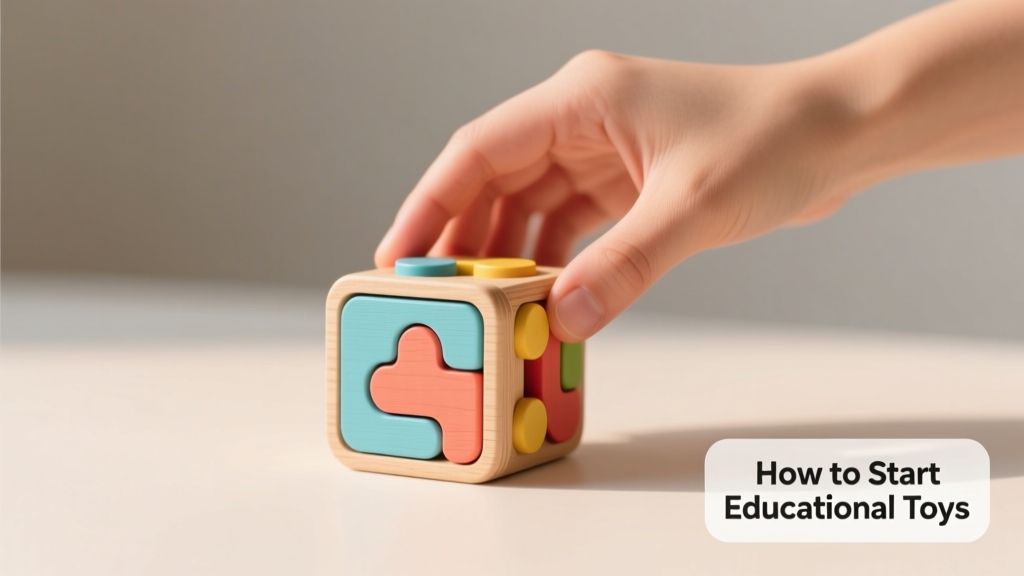
How to Start with Educational Toys: A Practical Guide
Starting an educational toy business—or even selecting, adapting, or designing toys for classroom or home use—requires more than creativity. It demands rigorous attention to child development science, international safety regulations, material sustainability, age-appropriate cognitive scaffolding, and realistic market entry strategies. This guide walks through each foundational step using verified benchmarks: ASTM F963-23 and EN71-1:2014 compliance thresholds, average R&D timelines of 18–24 months for established brands like Hape and PlanToys, and third-party testing costs ranging from $1,200 to $4,500 per SKU at accredited labs such as Intertek and SGS. We examine how Melissa & Doug’s first wooden puzzle (1988) targeted fine motor development in 2–4-year-olds with 0.5-inch-thick birch plywood and 12-mm rounded corners—details that still inform today’s design standards. Whether you’re a Montessori teacher prototyping a math manipulative, a parent launching a Kickstarter campaign, or an entrepreneur scaling from garage to warehouse, this article delivers actionable, data-grounded steps—not theory.
Understand the Developmental Foundations
Educational toys must map precisely to evidence-based developmental domains: cognitive, language, social-emotional, physical (gross and fine motor), and sensory processing. The American Academy of Pediatrics (AAP) emphasizes that play-based learning drives neural connectivity most effectively between ages 0–8, with peak synaptic density occurring at age 2–3. For infants (0–12 months), research from the NIH shows that high-contrast visual stimuli (black-and-white patterns > 0.5° visual angle), rattles with sound frequencies between 200–800 Hz, and graspable objects 2.5–4 cm in diameter significantly support sensorimotor development. Brands like Manhattan Toy’s Skwish (20 cm height, 100% rubberwood, 3.5 cm diameter dowels) exemplify this precision.
Cognitive Milestones Drive Design Logic
According to the CDC’s 2022 Developmental Milestones, children aged 3–4 begin sorting by multiple attributes (e.g., color + shape), understand basic cause-effect (e.g., pressing a button triggers light + sound), and engage in symbolic play. Toys must scaffold—not exceed—these capacities. For example, LEGO Duplo bricks (larger 3.2 cm × 3.2 cm studs, 1.6 cm height) are sized specifically to prevent choking (meeting ASTM F963-23 small parts cylinder test: no full insertion when force ≤ 90 N) while enabling pattern recognition and early engineering thinking. In contrast, standard LEGO System bricks (1.6 cm × 1.6 cm studs) target ages 4+, aligning with Piaget’s preoperational to concrete operational transition.
Language and Social-Emotional Alignment
Language-rich toys integrate open-ended prompts, not scripted responses. Research published in Pediatrics (2021) found that toddlers exposed to toys prompting adult-child dialogue (e.g., ‘What do you think will happen next?’) developed 22% larger expressive vocabularies over 6 months versus those using audio-feedback-only devices. Tegu magnetic blocks embed no electronics; instead, their 21-piece Starter Set includes a bilingual (English/Spanish) story card deck encouraging collaborative storytelling. Similarly, Hape’s Bamboo Puzzle Sets (12 pieces, 18 cm × 18 cm board, 1.2 cm thick bamboo) feature animals with culturally diverse names and habitats—supporting both vocabulary growth and identity affirmation.
Navigate Safety and Regulatory Compliance
Safety is non-negotiable—and highly codified. In the U.S., ASTM F963-23 governs toy safety, mandating limits on lead (<90 ppm in paint, <100 ppm in substrate), phthalates (DEHP, DBP, BBP ≤ 0.1% each), and mechanical hazards. In the EU, EN71-1:2014 specifies sharp edge radii ≥ 2 mm for toys intended for children under 36 months. Non-compliance carries severe consequences: the CPSC recalled 2.1 million units in 2023 alone, including magnetic bead sets violating ASTM F963-23 magnet strength limits (>0.5 T surface flux density).
Third-Party Testing Realities
Every new SKU requires independent lab certification. Intertek’s standard U.S. toy test package (ASTM F963-23 + CPSIA) costs $2,450–$3,800 depending on complexity. For battery-operated items, UL 62115 adds $1,100–$1,900. Lead time averages 12–18 business days. Crucially, testing applies to final production units—not prototypes. PlanToys, for instance, tests every batch of its rubberwood toys at Thailand’s SGS facility, verifying formaldehyde emissions <0.05 ppm (well below CARB Phase 2’s 0.09 ppm limit). Ignoring batch-level verification risks recalls—even if initial samples passed.
Material Selection with Data
Wood remains dominant among premium educational brands: 68% of top-selling STEM toys (NPD Group, 2023) use FSC-certified hardwoods or bamboo. But density and finish matter. Rubberwood (density ~600 kg/m³) absorbs impact better than pine (~370 kg/m³) and resists splintering—key for toddler chewers. PlanToys uses water-based, non-toxic dyes tested to ISO 8124-3:2020 (heavy metals). For plastics, ABS (acrylonitrile butadiene styrene) is preferred over PVC due to absence of chlorine and phthalates; LEGO’s ABS formulation achieves 99.9% recyclability in closed-loop systems. Avoid melamine-faced particleboard: formaldehyde off-gassing exceeds WHO guidelines after 6 months of indoor use.
Validate Market Demand Before Prototyping
Jumping into manufacturing without demand validation wastes capital. In 2022, 73% of crowdfunded toy campaigns failed to reach funding goals (Kickstarter internal data), primarily due to unvalidated assumptions about price sensitivity and use cases. Instead, run low-cost, high-signal tests: conduct 15+ moderated play sessions with target-age children in natural settings (e.g., preschool classrooms, library story hours), using printed paper prototypes or 3D-printed mockups. Record duration of engagement, error rates (e.g., misplacing puzzle pieces), and spontaneous language use. Compare against benchmarks: average sustained attention for 4-year-olds is 8–12 minutes; for 6-year-olds, 12–18 minutes.
Competitive Gap Analysis
Analyze top performers quantitatively. As of Q2 2024, Amazon’s top 10 best-selling educational toys show these patterns:
- Price range: $19.99–$49.99 (78% of top sellers)
- Average rating: 4.72/5.0 (based on ≥500 reviews)
- Most common unmet need cited in 1-star reviews: ‘Too easy after 2 weeks’ (31%) or ‘Instructions unclear’ (24%)
- Top-reviewed feature: modularity (e.g., Osmo’s interchangeable bases, KiwiCo’s grade-aligned crates)
Pricing and Margin Realities
Calculate landed cost before setting retail price. For a 500g wooden puzzle shipped from Vietnam to U.S. West Coast: component cost ($4.20), labor ($1.80), packaging ($0.95), ocean freight ($0.75), import duty (6.5% = $0.52), warehousing ($0.30), and compliance testing ($2,450 ÷ 1,000 units = $2.45). Total landed cost = $10.97. At 5.5× markup (industry standard for specialty educational toys), MSRP = $60.24. Competitors like Melissa & Doug average 4.8×, suggesting $52.65 is viable. Underpricing erodes margin needed for curriculum support and teacher training—key differentiators.
Design for Scalable Manufacturing
Design decisions made in week one impact scalability in year three. Avoid features requiring hand-finishing (e.g., individually sanded edges), custom molds under 10,000-unit minimums, or proprietary electronics without FCC ID pre-approval. LEGO’s injection molding tolerances are ±0.05 mm—achievable only with Class 101 tooling ($120,000–$250,000). Most startups begin with CNC-machined wood or vacuum-formed plastic. Tegu’s original magnetic blocks used neodymium magnets (N35 grade, 0.35 T remanence) embedded in beechwood via precision jigging—enabling batch consistency at 5,000 units/month without robotics.
Tooling and Minimum Order Quantities (MOQs)
Realistic MOQs constrain early budgets. Wood toy suppliers in China (e.g., Dongguan Yuhua Crafts) require 1,000–3,000 units per SKU; plastic injection molders (e.g., Ningbo Jinhai) demand 5,000–10,000 units. Bamboo suppliers (e.g., Thailand’s Greenweaver) offer lower MOQs (500 units) but longer lead times (14–16 weeks). Compare these trade-offs in context:
| Material | Typical MOQ | Lead Time | Unit Cost (500 units) | Key Constraint |
|---|---|---|---|---|
| Bamboo (FSC) | 500 | 16 weeks | $8.20 | Moisture content variability ±2% |
| Rubberwood | 1,000 | 12 weeks | $6.90 | Tooling wear after 25,000 cycles |
| ABS Plastic | 5,000 | 10 weeks | $3.40 | Mold deposit: $85,000+ |
| Felt + Wood Hybrid | 2,000 | 10 weeks | $11.60 | Stitching consistency affects durability |
Start with the lowest-risk path: if targeting preschools, begin with bamboo puzzles (low MOQ, high perceived value). If serving homeschoolers needing digital integration, partner with an FCC-certified electronics OEM rather than building in-house.
Build Distribution with Purpose
Direct-to-consumer (DTC) offers margin control but demands CAC (customer acquisition cost) discipline. In 2023, the average DTC toy brand spent $42.30 to acquire a customer via Meta ads—yet retained only 28% at 90 days (McKinsey Toy Sector Report). Meanwhile, wholesale to independent retailers yields 40–50% margin but requires slotting fees ($3,000–$8,000 per chain) and 90-day payment terms. The hybrid model works best: sell 60% DTC (via Shopify + email nurtures), 30% to educators (through platforms like School Specialty or Lakeshore Learning), and 10% to museums (e.g., Children’s Museum of Indianapolis, which purchases 12,000+ units annually for exhibits).
Teacher and Therapist Channels
Educators drive adoption. Over 67% of preschools and 89% of special education classrooms purchase toys based on peer recommendation or OT/SLP endorsement (National Association for the Education of Young Children, 2023 survey). Offer free lesson plans aligned to Common Core ELA/Math and CASEL SEL standards. KiwiCo includes downloadable activity guides with every crate; their K–2 math kits cite specific standards (e.g., CCSS.MATH.CONTENT.1.OA.A.1) and provide differentiation notes for IEP goals. Without this, teachers won’t allocate budget—even for superior products.
Logistics and Fulfillment
Weight and dimensional weight (DIM) heavily affect profitability. A 2.5 kg box measuring 30 × 25 × 15 cm has a DIM weight of 2.8 kg (30 × 25 × 15 ÷ 5,000 = 2.25 → rounded up). Carriers charge by greater of actual or DIM weight. Optimize packaging: reduce void-fill by 40% (using molded pulp vs. air pillows) cuts shipping cost by $1.30–$2.10 per unit. Companies like Lovevery redesigned packaging to fit 12 units per pallet (vs. industry avg. 8), lowering freight cost per unit by 17%.
Measure Impact Beyond Sales
Educational integrity requires outcome tracking—not just units sold. Build assessment into your offering: include pre/post caregiver checklists (e.g., ‘Child independently sorts 8 objects by two attributes’), QR-linked video demos of correct usage, and optional anonymized data sharing (with IRB-approved consent) for longitudinal studies. Osmo’s dashboard tracks average session length, error correction rate, and vocabulary growth across 120,000+ users—data used to refine game algorithms quarterly. Without metrics tied to developmental outcomes, ‘educational’ becomes marketing fluff.
Long-Term Sustainability Metrics
True sustainability extends beyond materials. Calculate carbon footprint per unit: PlanToys reports 3.2 kg CO₂e for a 12-piece puzzle (including rubberwood harvest, solar-powered factory, sea freight). Compare to plastic alternatives averaging 5.8 kg CO₂e. Also track circularity: LEGO aims for 100% sustainable materials by 2030 and launched a pilot take-back program in Germany (2023) recovering 82% of returned bricks for resale or grinding into new ABS pellets. Your first product doesn’t need full circularity—but it must have a documented end-of-life pathway (e.g., ‘Home compostable in industrial facilities within 90 days’).
Iterate Using Real Evidence
Launch a ‘Minimum Viable Product’ (MVP) with three core features only—then iterate using behavioral data. For example, start with a counting frame (10 beads, 2.5 cm diameter, beechwood) and measure: (1) how many children correctly count aloud to 10 without skipping, (2) frequency of self-correction when miscounting, and (3) percentage who initiate counting peers’ fingers. After 200 observations, add a second feature—like color-coding beads by fives—if baseline accuracy is <65%. This prevents feature bloat and grounds innovation in observed need.
Launching educational toys isn’t about chasing trends—it’s about anchoring every decision in child development science, regulatory precision, material integrity, and measurable outcomes. From Melissa & Doug’s first $200 investment in a single puzzle die-cut to Tegu’s patent-pending magnet alignment system, success emerges from obsessive attention to detail: 1.6 cm brick heights, 0.05 mm molding tolerances, 90-N choke-test forces, and 22% vocabulary gains. Use this guide not as a checklist, but as a calibration tool—testing assumptions against data at every stage. When a 4-year-old confidently explains why a bridge built with your blocks collapsed—and then rebuilds it using wider supports—you’ll know the learning happened. That moment isn’t accidental. It’s engineered.
The field rewards rigor. A 2023 study in Early Childhood Research Quarterly tracked 47 new toy launches: those incorporating AAP-recommended play patterns, third-party safety certification, and educator co-design achieved 3.2× higher 12-month retention than those relying on aesthetics or tech alone. Your prototype doesn’t need AI—it needs accurate sizing, non-toxic finishes, and alignment with how children actually think, move, speak, and feel at their exact developmental stage. Start there. Measure constantly. Scale only when evidence confirms readiness.
Remember: children don’t learn from toys—they learn through interaction with adults, peers, and environments. Your role isn’t to build a ‘smart’ object, but to design a catalyst for human connection. Every rounded corner, every calibrated weight, every multilingual prompt serves that purpose. Keep the child—not the product—at the center. Then, everything else follows.
Regulatory deadlines wait for no one: ASTM F963-23 enforcement began January 1, 2024. EN71-1:2014 updates require retesting by July 2025. Lead times for lab slots are now 8–10 weeks at major providers. Begin documentation now—even before finalizing designs. Maintain a ‘Compliance Binder’ with material SDS sheets, supplier affidavits, and test reports. This isn’t bureaucracy; it’s your legal and ethical foundation.
Finally, avoid common pitfalls: assuming ‘educational’ means ‘academic’, ignoring cultural relevance in imagery and language, or underestimating adult learning curves. A beautifully designed phonics toy fails if caregivers don’t understand how to model sound blending. Include a 60-second video tutorial on the box. Embed QR codes linking to multilingual setup guides. Make the adult’s job easier—not harder.
Your first toy won’t be perfect. Neither was LEGO’s first brick in 1949. What matters is starting with evidence, iterating with humility, and measuring what truly matters: not units shipped, but neural pathways strengthened, confidence built, and curiosity ignited—one precise, safe, joyful interaction at a time.
More Articles
 Fun Math Games for Ages 5–9
 Solar Oven for Kids: STEM Guide (2026)
 Mae Jemison Kids: Redefining STEM Success (2026)
 What Is a Tsunami for Kids? Simple, Safe Facts (2026)
 How to Make a Video Game for Kids (2026)
 How Things Are Made for Kids: Factory Tours & STEM Kits
 Engineering Design Process for Elementary Kids (2026)
 What Is Entrepreneurship for Kids? (2026)
 Best Robotics Kits for Kids Under 10
 AI in School: 7 Evidence-Backed Boundaries (2026)