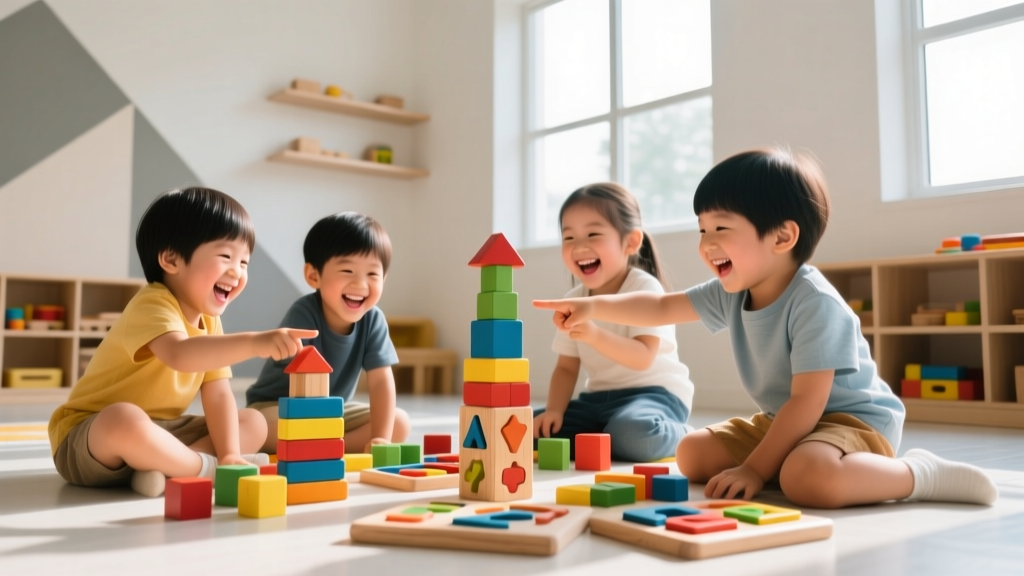
Engineering Design Process for Elementary Kids (2026)
The engineering design process gives children a systematic approach to solving any problem. Unlike trial-and-error, this method teaches structured thinking that transfers to science, math, art, and everyday life.
The 5-Step Process
| Step | Question | Action | Tools |
|---|---|---|---|
| 1. ASK | What's the problem? | Define the challenge and constraints | Discussion, brainstorming |
| 2. IMAGINE | What are possible solutions? | Brainstorm multiple ideas | Sketching, mind maps |
| 3. PLAN | Which solution is best? | Choose and detail the approach | Drawings, material lists |
| 4. CREATE | Build it! | Construct the prototype | Materials, tools |
| 5. IMPROVE | How can it be better? | Test, evaluate, redesign | Testing, data collection |
Classroom-Ready Projects
Project 1: Egg Drop Challenge (Ages 8-12)
ASK: How can we protect an egg from a 10-foot drop? Constraints: only straws, tape, and paper.
IMAGINE: Brainstorm: parachute? cushion? cage? shock absorber?
PLAN: Sketch the chosen design, list materials needed.
CREATE: Build the protector in 30 minutes.
IMPROVE: Test from increasing heights. After first failure, redesign weak points.
Project 2: Paper Bridge (Ages 6-10)
ASK: Build a bridge from paper that holds the most weight.
IMAGINE: Flat? Rolled tubes? Folded accordion? Triangular truss?
PLAN: Choose a design and estimate how many coins it will hold.
CREATE: Build using only paper and tape.
IMPROVE: Test with coins. Identify where it collapsed and reinforce.
Common Mistakes to Avoid
- Skipping "Imagine": Children jump straight to building. Force at least 3 ideas before choosing.
- Calling failures "bad": Reframe: "What did we learn? What will we change?"
- One-and-done: The "Improve" step is the most important. Always build twice.
More Articles
 AI Toys for Kids: 7 Evidence-Based Safety Thresholds (2026)
 How to Open a Geode Kid-Safe (2026)
 Weather Experiments for Kids: Rain Cloud in a Jar
 Rocket Science for Kids: Stomp & Water Rockets
 STEM Activities for Kids: 7 Safe, Thrilling Alternatives
 Best Math Board Games for Elementary Students
 What Are GATE Kids? Truth, Equity & Parent Action
 STEM Parenting Tips for Early Development
Magnetism Experiments Kids Can Do at Home
 Crystal Making for Kids: 5 Safe, Classroom-Ready Methods