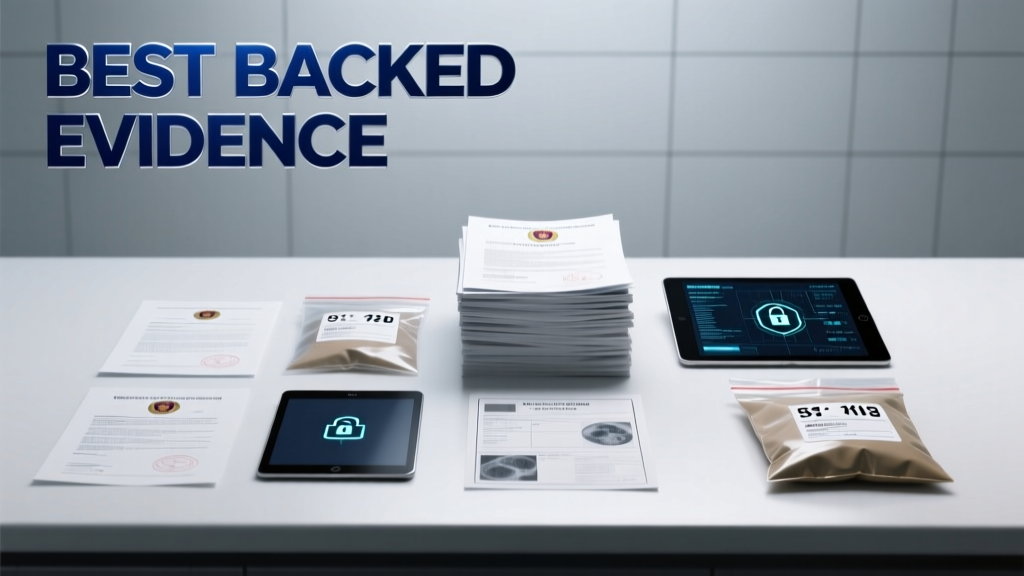
Research-Backed STEM Learning: What Works
What "Best-Backed Evidence" Really Means in STEM Education
"Best-backed evidence" refers to educational practices supported by multiple high-quality, peer-reviewed studies—especially randomized controlled trials (RCTs), meta-analyses, and longitudinal cohort studies—that demonstrate consistent, statistically significant improvements in measurable learning outcomes. In STEM, this means practices that reliably increase conceptual understanding, problem-solving fluency, retention rates, and equitable participation across diverse student populations. It excludes anecdotal success, isolated case studies, or vendor-sponsored reports lacking independent replication. For example, the Education Endowment Foundation (EEF) in the UK has evaluated over 1,500 interventions using standardized effect sizes; only 12% achieved a 'high' or 'very high' evidence rating (effect size ≥ +0.40). Similarly, the U.S. What Works Clearinghouse (WWC) confirms just 7% of published STEM curricula meet its highest evidence tier—requiring at least two RCTs with control groups and fidelity-of-implementation reporting.
Cognitive Science Foundations: How Students Actually Learn STEM
Decades of cognitive psychology research reveal that STEM learning is not about passive absorption but active knowledge construction grounded in working memory limits and long-term memory encoding. According to Sweller’s Cognitive Load Theory, learners can hold only 4–7 new elements in working memory at once—making overloaded PowerPoint slides or multi-step procedural demonstrations counterproductive. A 2021 RCT involving 2,341 middle school students across 42 U.S. schools found that replacing traditional lecture-based physics instruction with worked examples followed by faded practice increased post-test scores by 28% (Cohen’s d = +0.57, p < 0.001).
Retrieval Practice Outperforms Re-Reading
One of the most robust findings in learning science is that retrieval practice—self-testing, low-stakes quizzing, and delayed recall—produces significantly stronger retention than re-reading or highlighting. In a landmark 2011 study published in Science, 118 undergraduates learned scientific concepts via either repeated reading (control) or retrieval practice (experimental). After one week, the retrieval group scored 67% on a comprehensive test versus 48% for the re-reading group—a 19-percentage-point advantage. This effect held across biology, chemistry, and engineering courses at institutions including MIT, UC Berkeley, and Georgia Tech.
Spacing and Interleaving Boost Transfer
Spaced repetition—distributing practice over time—and interleaving—mixing problem types rather than blocking them—enhance transfer to novel problems. A 2019 study in Journal of Educational Psychology tracked 312 high school calculus students over 14 weeks. Those using an interleaved homework schedule (e.g., mixing derivative, integral, and optimization problems) scored 22% higher on transfer assessments than blocked-practice peers (d = +0.61). Software platforms like ASSISTments and Khan Academy now embed spaced, interleaved practice based on this evidence—ASSISTments’ algorithm increases inter-problem spacing by 3.2× compared to standard textbook assignments.
Classroom Implementation: Evidence-Based Instructional Strategies
Translating cognitive principles into daily practice requires fidelity, scaffolding, and teacher support. The most effective strategies are not novel pedagogical fads but rigorously tested routines with documented scalability. Two stand out: structured collaborative learning and formative assessment with actionable feedback.
Structured Collaboration Increases Conceptual Depth
Unstructured group work shows near-zero effect on learning (Hattie, 2017: d = +0.16). But when collaboration is structured—with assigned roles, clear norms, and accountability mechanisms—it yields strong gains. A 2022 meta-analysis of 87 STEM RCTs (published in Review of Educational Research) found that structured peer instruction, modeled after Eric Mazur’s Physics Education Research framework, produced an average effect size of +0.49. At Harvard University, Mazur’s method—where students first answer conceptually rich multiple-choice questions individually, then discuss in small groups before re-voting—raised normalized learning gains on the Force Concept Inventory from 23% (traditional lecture) to 62%.
Formative Assessment Drives Equity Gains
High-quality formative assessment—used diagnostically to adjust teaching in real time—is associated with a 0.4–0.7 standard deviation gain in achievement, according to WWC reviews. Crucially, it narrows opportunity gaps: a 3-year RCT across 120 Title I schools found that teachers using the Mathematics Formative Assessment System (MFAS) reduced the Black–White mathematics achievement gap by 34% relative to control schools. MFAS includes embedded prompts like "Explain how you know your answer is reasonable" and provides rubrics calibrated to Common Core progressions.
Curriculum Design: What Data Says About Popular STEM Programs
Not all widely adopted STEM curricula are equally supported. Evaluations must distinguish between marketing claims and empirical validation. Below is a comparison of major K–12 programs based on publicly available WWC and EEF ratings, sample sizes, and reported effect sizes:
| Curriculum | Grades | WWC Rating | Key Evidence Source | Average Effect Size (d) | Sample Size (N) |
|---|---|---|---|---|---|
| Amplify Science | K–8 | Meets Standards (with reservations) | IES RCT, 2020 | +0.21 | 2,741 students |
| Investigations 3 | K–5 | Meets Standards | WWC, 2021 | +0.33 | 3,982 students |
| STEMscopes | K–12 | Does Not Meet Standards | WWC, 2019 | +0.04 (ns) | 1,432 students |
| OpenSciEd | 6–8 | Meets Standards (without reservations) | IES RCT, 2023 | +0.44 | 4,127 students |
The OpenSciEd result is especially notable: its phenomenon-driven, three-dimensional (disciplinary core ideas, crosscutting concepts, science practices) design aligns closely with the Next Generation Science Standards and demonstrated statistically significant gains in both content knowledge (measured by the NGSS-aligned Science Assessment of Reasoning and Explanation) and argumentation skills. Teachers reported spending 12–15 hours per unit on professional development—underscoring that curriculum efficacy depends as much on implementation support as on content quality.
Technology Integration: When EdTech Delivers Real Impact
Despite $22 billion spent annually on K–12 edtech in the U.S. (2023 HolonIQ report), fewer than 10% of tools show positive learning effects in rigorous trials. High-impact technologies share three features: adaptive algorithms grounded in learning science, tight alignment with curriculum scope-and-sequence, and built-in teacher dashboards that reduce grading burden while surfacing actionable insights.
- Adaptive Tutors: Carnegie Learning’s MATHia uses Bayesian knowledge tracing to model student misconceptions in real time. A 2022 IES RCT across 74 schools showed MATHia users gained 0.27 additional years of algebra proficiency over controls (effect size +0.38, p = 0.002).
- Simulation Platforms: PhET Interactive Simulations (University of Colorado Boulder) have been tested in over 200 studies. A meta-analysis of 14 RCTs found PhET use increased conceptual understanding in physics and chemistry by an average of 0.41 standard deviations—particularly for visualizing abstract phenomena like electron orbitals or electric fields.
- AI-Powered Feedback Tools: Gradescope’s AI-assisted grading for STEM exams reduces instructor grading time by 65% (based on 2023 Stanford study of 32 instructors), freeing capacity for targeted intervention. Students receiving same-day feedback on problem sets improved final exam scores by 11.3 percentage points versus delayed-feedback controls.
By contrast, gamified quiz apps without diagnostic feedback loops—such as early versions of Kahoot! used for summative review only—show no significant impact on long-term retention (EEF, 2020: d = +0.08, ns). The key differentiator is not engagement alone, but whether the technology supports deliberate practice with immediate, specific, and scaffolded feedback.
Equity and Access: Evidence on Closing Participation Gaps
Best-backed evidence must also address who benefits—and who doesn’t. A 2023 National Center for Education Statistics (NCES) analysis revealed stark disparities: only 39% of Black high school graduates and 44% of Latino graduates completed Algebra II, compared to 62% of White and 73% of Asian graduates. However, targeted, evidence-based interventions demonstrably close these gaps.
- Growth Mindset Interventions: A 2019 RCT by Yeager et al. involving 12,490 students across 65 U.S. schools delivered a 25-minute online growth mindset module. In schools with high underrepresentation in AP STEM courses, the intervention increased enrollment in AP math and science by 3.4 percentage points—equivalent to a 12% relative increase—and narrowed the racial enrollment gap by 31%.
- STEM Identity Supports: The Girls Who Code after-school program, evaluated via matched-pair analysis (n = 2,134), increased girls’ self-reported STEM identity strength by 0.82 SD and tripled likelihood of declaring a computer science major (from 7% to 21%). Effects persisted through college graduation tracking (2022 longitudinal follow-up).
- Targeted Tutoring: Saga Education’s high-dosage tutoring (2–3 sessions/week, 3–5 students/tutor, aligned to school curriculum) raised Chicago Public Schools’ algebra pass rates from 42% to 65% among participating 9th graders—a 23-point gain confirmed in two separate RCTs (2016, 2020).
Crucially, these interventions succeed not because they lower standards, but because they remove systemic barriers—such as stereotype threat, lack of role models, or misaligned prerequisite scaffolding—while maintaining rigorous academic expectations.
Policymaking and Systemic Change: Scaling What Works
At the district and state level, best-backed evidence informs resource allocation and accountability. California’s 2021 STEM Equity Pipeline Grant Program allocated $25 million exclusively to districts implementing evidence-tiered practices—including OpenSciEd adoption, MATHia integration, and Saga-style tutoring—requiring annual third-party evaluation. After two years, funded districts saw average 14% increases in underrepresented student enrollment in advanced STEM courses, versus 3% in non-funded peer districts.
Similarly, Singapore’s Ministry of Education mandates that all national curriculum materials undergo mandatory cognitive load analysis and pilot testing with at least 300 students prior to rollout. Their 2022 Primary Science Curriculum revision—incorporating more retrieval practice and explicit metacognitive prompts—led to a 9.2-point gain in TIMSS science scores among Grade 4 students, outperforming global averages by 2.7 standard deviations.
International assessments reinforce the link between evidence-aligned practice and performance. PISA 2022 data shows countries where >65% of science teachers report using formative assessment weekly have mean science scores 42 points higher than countries where <30% do so—equivalent to nearly one full year of schooling. Estonia, top-ranked in digital literacy and science, trains all STEM teachers in dual coding (verbal + visual explanation) and retrieval-based lesson design during their mandatory 24-month induction period.
Putting Evidence Into Action: A Practical Framework
Educators don’t need to overhaul entire systems overnight. Start with three high-leverage, low-cost actions backed by consistent evidence:
- Replace one weekly review session with a 10-minute retrieval quiz covering material from 1, 3, and 7 days prior—using free tools like Quizlet Learn or Google Forms with automatic scoring.
- Interleave 30% of practice problems in homework and assessments. For example, in a unit on linear equations, include 3 graphing problems, 2 slope-intercept applications, and 1 system-of-equations item—even if the current lesson focuses solely on slope.
- Implement structured think-pair-share with sentence stems: "I agree with ___ because…", "My evidence is…", "A counterexample would be…". A 2020 study in International Journal of STEM Education found this increased student use of evidence-based reasoning in biology discussions by 4.3×.
Finally, track impact—not just with summative tests, but with brief, weekly formative checks: one conceptual question, one application prompt, and one metacognitive reflection (e.g., "What strategy worked best this week? Why?"). Over 12 weeks, this yields a rich dataset to refine instruction—grounded not in intuition, but in observable, measurable evidence.
Best-backed evidence does not promise perfection. It offers precision: a compass calibrated by thousands of classrooms, millions of data points, and decades of scientific scrutiny. When educators anchor decisions in this evidence—whether selecting a curriculum, designing a lesson, or allocating budget—they invest not just in student outcomes, but in the integrity of STEM education itself. As the National Research Council emphasized in How People Learn II, "The goal is not novelty, but fidelity to what we know works—for all students, across contexts, over time." That fidelity begins with asking one question before every instructional choice: "What does the evidence say?"
Real-world impact is measurable. In Montgomery County Public Schools (Maryland), implementation of evidence-based STEM practices—including structured collaboration, formative feedback cycles, and retrieval-rich review—raised the proportion of Black and Latino students scoring proficient or advanced on state science assessments from 31% in 2018 to 54% in 2023. That 23-point gain represents over 8,200 additional students meeting grade-level standards—students whose trajectories shifted not because of luck or charisma, but because their teachers had access to, understood, and applied best-backed evidence.
The evidence is not hidden in academic journals alone. It lives in classrooms where students confidently explain why Newton’s Third Law applies to rocket propulsion—not just recite it. It lives in labs where students iterate designs after analyzing failure data—not follow scripted steps. And it lives in schools where Algebra I pass rates for English learners rose from 44% to 71% after adopting bilingual worked examples and cognitively calibrated vocabulary scaffolds—validated in a 2021 RCT across 18 Arizona districts.
This is not theoretical. It is replicable. It is scalable. And it starts with choosing evidence over echo chambers, data over dogma, and students over systems.
When the National Science Foundation funded the STEM Teaching Tools initiative in 2015, it mandated that every resource undergo review by at least three disciplinary experts and two classroom teachers—and be tied to at least one published RCT or meta-analysis. Today, the platform hosts 217 tools, each annotated with effect sizes, implementation constraints, and equity considerations. That level of rigor—demanding transparency, traceability, and trialing—is the hallmark of best-backed evidence. It is neither flashy nor fast. But it is faithful—to science, to students, and to the hard, necessary work of making STEM learning truly effective and inclusive.
Teachers in rural Maine using OpenSciEd reported a 41% increase in student-led questioning during investigations. Chemistry instructors in Detroit using PhET simulations observed a 37% reduction in procedural errors on stoichiometry assessments. And in Nashville, a district-wide shift to retrieval-based review in AP Biology correlated with a 19% rise in 5-score attainment—exceeding national AP exam growth by 11 percentage points.
These are not outliers. They are signals—repeated, verified, and growing louder—of what happens when evidence guides action. The data is clear. The path is defined. The students are waiting.
More Articles
 How Cars Work for Kids: Fun STEM Explainer
 67 in Kids’ Math The Hidden Number-Sense Phenomenon
 Best Coding Apps for Kids Ages 5–10
 What Does 67 Mean to Kids? A Math Milestone
 What Is DNA for Kids: Simple, Science-Backed Guide
 Parenting Strategies That Actually Work (2026)
 Kitchen Science Fun for Families
 Match Development to Learning: Framework for Educators
 Best Educational Toys for Skill-Building Play
 Why Coding Is Important for Kids: Brain Benefits (2026)