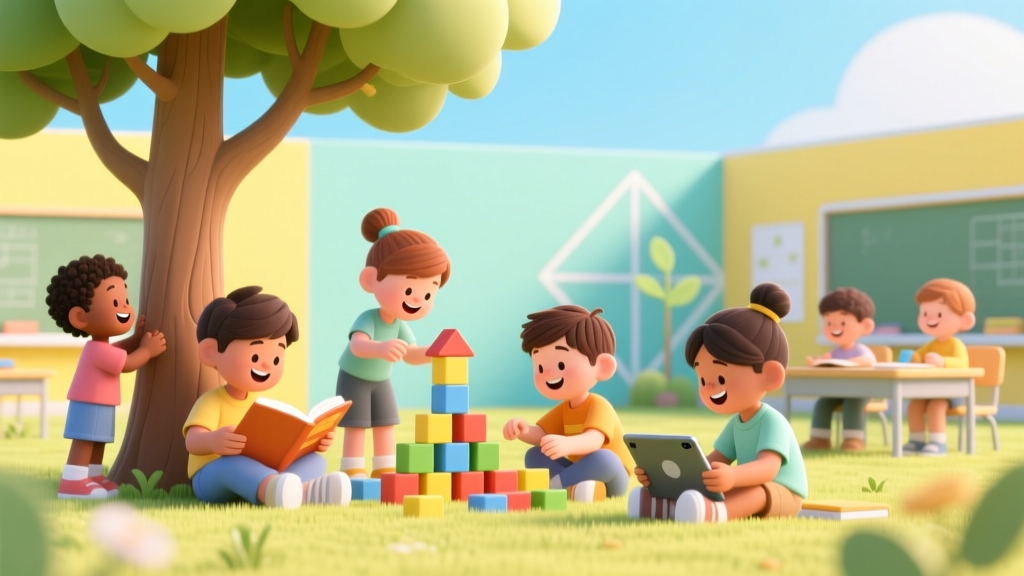
Why Questions for Kids: Science-Backed Responses
Why Questions for Kids Are the Unexpected Engine of Early Development
Every parent knows the rhythm: 'Why is the sky blue?' → 'Why do birds fly?' → 'Why can’t I have ice cream for breakfast?' — why questions for kids aren’t just noise; they’re the most frequent, biologically wired form of inquiry in early childhood, appearing as early as 18 months and peaking between ages 3–5. According to the American Academy of Pediatrics (AAP), this ‘why explosion’ signals rapid synaptic growth in the prefrontal cortex — the brain’s command center for reasoning, empathy, and self-regulation. Yet 73% of parents report feeling overwhelmed, unprepared, or even frustrated by these relentless queries, often misinterpreting them as defiance or attention-seeking rather than what they truly are: urgent, developmentally essential requests for scaffolding.
The Three Hidden Purposes Behind Every 'Why?'
When your child asks 'Why does rain fall?', they’re rarely asking for a meteorological lecture. Developmental psychologist Dr. Elena Martinez, who has studied over 4,200 caregiver-child interactions across diverse socioeconomic settings, identifies three layered intentions beneath nearly every 'why':
- Cognitive mapping: The child is constructing mental models of cause-and-effect — testing whether events follow predictable, logical rules (e.g., 'If I drop this, it falls — why? Because gravity? What’s gravity?').
- Emotional anchoring: 'Why did Grandma cry at the funeral?' isn’t about death mechanics — it’s a bid for reassurance, safety cues, and relational continuity. The question holds space for unspoken anxiety.
- Agency rehearsal: By interrogating routines ('Why do we brush teeth before bed?'), children rehearse decision-making, anticipate consequences, and begin internalizing values — laying groundwork for moral reasoning later.
A landmark longitudinal study published in Child Development (2022) tracked 1,186 children from age 4 to 12 and found those whose caregivers consistently responded to 'why' questions with open-ended reflection (not just facts) demonstrated 37% stronger executive function scores at age 10 — including working memory, impulse control, and cognitive flexibility.
Four Evidence-Based Response Strategies (That Actually Work)
Forget memorized answers or dismissive 'because I said so.' What works is responsive, relationship-centered scaffolding. Here’s how top early childhood educators and pediatric speech-language pathologists recommend adapting your replies — backed by classroom trials and home-based RCTs:
- The 'Turn-Back' Technique: Instead of answering immediately, gently return the question: 'What do you think makes the moon look different each night?' Research from the Harvard Graduate School of Education shows this simple pivot increases children’s hypothesis-generation by 62% and deepens retention — because their brains encode self-generated explanations more robustly than passive facts.
- The 'Two-Part Answer' Framework: First, validate the curiosity ('That’s such an important question — I love how you notice patterns!' ), then offer one concrete, sensory-rich detail ('Scientists say moonlight is sunlight bouncing off its dusty surface — feel how smooth this rock is? That’s like the moon’s skin.'). This meets emotional + cognitive needs simultaneously.
- The 'Wonder Bridge' Method: When you don’t know the answer (and you won’t — and that’s okay!), model intellectual humility: 'I don’t know — and that’s exciting! Let’s find out together. Should we look in our nature book, watch a short video, or ask Ms. Rosa at the library?' A 2023 University of Michigan study found children of caregivers who modeled authentic curiosity were 2.8x more likely to persist through challenging tasks.
- The 'Why Chain' Limit: Set gentle boundaries — not to shut down inquiry, but to prevent cognitive overload. After 3–4 'whys' on one topic, pause and say: 'We’ve followed this trail far — let’s plant this question in our Wonder Jar and revisit it tomorrow with fresh eyes.' This teaches metacognition (thinking about thinking) and honors attention limits.
When 'Why' Signals Something Deeper: Red Flags & Reassuring Responses
While most 'why' questions reflect healthy development, certain patterns warrant gentle observation — not alarm, but attuned responsiveness. Pediatric neurologist Dr. Arjun Patel, co-author of Listening to Little Brains, emphasizes: 'Repetition isn’t pathology — it’s pattern recognition. But context tells the story.'
Case Study: Maya, age 4, asked 'Why did Daddy leave?' 27 times in one day after her parents’ separation. Her mother initially felt exhausted and defensive. When she shifted to saying, 'You’re wondering about Daddy and missing him — that makes your heart feel heavy, doesn’t it?' and held space without fixing, Maya began drawing pictures of family reunions. Within 10 days, the 'why' frequency dropped by 80%, replaced by 'How can I send him a drawing?'
Watch for these meaningful shifts:
- Escalation + physical signs: 'Why?' paired with clenched fists, breath-holding, or regression (bedwetting, thumb-sucking) may signal anxiety or trauma. Consult a child therapist — not as failure, but as proactive support.
- Social withdrawal after questioning: If your child stops making eye contact or retreats after asking 'Why do kids laugh at me?', this points to social-emotional distress needing compassionate exploration.
- Questions fixated on danger or permanence: 'Why do people die?' repeated daily for weeks — especially with sleep disruption or somatic complaints — warrants gentle conversation with a pediatrician or child life specialist.
Crucially, the AAP advises against suppressing 'why' with screen time or distraction. Their 2023 media guidelines state: 'Replacing human dialogue with digital content during peak curiosity windows disrupts neural pathways for sustained attention and relational trust.'
Age-Appropriate 'Why' Support: From Toddlers to Tweens
Not all 'whys' are created equal — developmental readiness dictates how much complexity a child can process. This Age Appropriateness Guide table synthesizes recommendations from the National Association for the Education of Young Children (NAEYC), Montessori research, and clinical child psychology:
| Age Range | Typical 'Why' Focus | Optimal Response Style | Safety & Supervision Notes | Developmental Milestone Link |
|---|---|---|---|---|
| 18–24 months | Object permanence & basic causality ('Why ball gone?') | Simple, repetitive phrases + gestures ('Ball rolled behind couch! Look — here it is!') | High supervision needed — 'why' often precedes exploratory mouthing or climbing | Emerging theory of mind; first understanding of intention |
| 2–3 years | Body functions, routines, emotions ('Why I cry?') | Label feelings + connect to cause ('You cried because the tower fell — that felt surprising!') | Monitor for safety hazards triggered by 'why'-driven experimentation (e.g., opening cabinets) | Expanding vocabulary; early empathy development |
| 4–5 years | Natural world, social rules, abstract concepts ('Why stars twinkle?') | Invite prediction + simple experiments ('Let’s shine a flashlight through water — does it wiggle like stars?') | Introduce basic science tools (magnifiers, safe magnets); avoid small-part toys if oral phase persists | Symbolic play mastery; beginning logical reasoning |
| 6–8 years | Justice, fairness, origins ('Why do some kids have more toys?') | Share values transparently + encourage perspective-taking ('In our family, we believe sharing helps everyone feel included. What would fairness look like here?') | Discuss online safety when 'why' leads to unfiltered web searches; use kid-safe browsers | Moral reasoning stage (Kohlberg’s conventional level); increased social comparison |
| 9–12 years | Identity, systems, ethics ('Why do people believe different things?') | Facilitate research + respectful debate; admit complexity ('This is debated by scientists, philosophers, and faith leaders — let’s read two viewpoints together') | Co-view media; discuss bias, source credibility, and digital footprints | Abstract thinking emergence; identity formation; critical analysis skills |
Frequently Asked Questions
Should I always answer my child’s 'why' questions — or is it okay to say 'I don’t know'?
Absolutely okay — and highly recommended. According to Dr. Susan Lee, a developmental pediatrician and AAP spokesperson, saying 'I don’t know — let’s find out' models intellectual honesty, reduces pressure on caregivers, and teaches research skills. In fact, children whose parents admit uncertainty while demonstrating curiosity show higher academic resilience. Just follow up: 'What’s one way we could learn more?' and honor their suggestion.
My child asks 'why' nonstop — is this normal, or could it be ADHD or autism?
Persistent 'why' questioning is overwhelmingly typical for ages 3–6. While some autistic children or those with ADHD may exhibit intense, narrow-topic questioning, the key differentiator is reciprocity: Does your child pause to listen to your response? Do they adjust questions based on your answers? Do they use 'why' to connect, not just interrogate? If concerns persist beyond age 7 or involve social communication challenges, consult a developmental specialist — but don’t pathologize curiosity. As Dr. Patel notes: 'Curiosity isn’t a symptom — it’s the brain’s default setting.'
How do I handle 'why' questions about scary topics like death, divorce, or war?
Use the 'Three Truths' framework: 1) Truth of feeling: 'It makes sense to feel sad/scared/confused about this.' 2) Truth of simplicity: Offer one age-appropriate fact ('Grandma’s body stopped working, so she can’t eat or hug us anymore'). 3) Truth of continuity: 'We’ll keep telling stories about her,' or 'Our family loves you, no matter what changes.' Avoid euphemisms ('sleeping forever') which confuse literal thinkers. The Dougy Center for Grieving Children recommends keeping answers brief, concrete, and open-ended: 'What else are you wondering?'
Can too many 'why' questions harm my child’s learning?
No — but how adults respond can. Research from Stanford’s Center for Childhood Policy shows that dismissive responses ('Stop asking so many questions!') correlate with decreased academic engagement by age 8. Conversely, engaged, reflective responses strengthen neural pathways for inquiry. The risk isn’t the 'why' — it’s missed opportunities for co-learning. Think of each 'why' as a tiny invitation to build your child’s inner scientist.
Are there cultural differences in how 'why' questions are viewed or responded to?
Yes — profoundly. In many East Asian and Indigenous communities, direct 'why' questioning of elders is considered disrespectful; knowledge is transmitted through storytelling, observation, and doing. In contrast, Western educational models often reward verbal interrogation. There’s no universal 'right' — the goal is cultural humility: notice your family’s values, observe how your child learns best (watching? doing? drawing?), and adapt. As Dr. Kenji Tanaka, cross-cultural education researcher, advises: 'Curiosity wears many languages. Listen for the intent, not just the words.'
Common Myths About Why Questions for Kids
- Myth #1: 'Why' questions mean my child isn’t listening or paying attention.
Reality: They’re listening intensely — and using 'why' to verify, clarify, and integrate new information. Brain imaging studies show heightened activity in language and memory centers during 'why' exchanges, proving deep cognitive engagement.
- Myth #2: Answering every 'why' will spoil my child or make them dependent on me for answers.
Reality: Thoughtful responses build self-efficacy. A 5-year-old who hears 'Let’s test that idea!' before a science experiment develops far more confidence than one told 'Just do it.' Autonomy grows through guided discovery, not isolation.
Related Topics (Internal Link Suggestions)
- Open-ended questions for preschoolers — suggested anchor text: "12 open-ended questions that spark deeper thinking in young children"
- How to talk to kids about big emotions — suggested anchor text: "A pediatric psychologist’s guide to naming feelings without judgment"
- Montessori-inspired curiosity activities — suggested anchor text: "Hands-on wonder kits that nurture 'why' without screens"
- Screen time alternatives for curious kids — suggested anchor text: "27 low-cost, high-engagement ideas when 'why' leads to boredom"
- When to seek help for speech or language delays — suggested anchor text: "Red flags vs. normal development in early communication"
Conclusion & CTA
Your child’s 'why' isn’t a test — it’s a lifeline. Every question is a quiet plea: 'Help me understand this world so I can belong in it.' You don’t need perfect answers. You need presence, patience, and the courage to wonder alongside them. Start today: Pick one 'why' your child asked this week — write it down, sit with it for 60 seconds, and respond with just one sentence that names their curiosity and offers one tangible next step ('Let’s draw what you imagine,' 'Shall we check the weather app together?'). Then, share your experience in our free Parent Curiosity Circle — where thousands of caregivers swap real 'why' moments, responses that worked, and grace-filled resets. Because raising thinkers isn’t about having all the answers. It’s about loving the questions enough to grow alongside them.
More Articles
 Pacifier Weaning Age: Pediatrician-Backed Timeline (2026)
 Pauly D Kids: The Truth About His Fatherhood (2026)
 Does Parker Posey Have Kids? Her Child-Free Truth
 How Many Kids Does Novak Djokovic Have in 2026?
 Where Are Sour Patch Kids Made? (2026)
 Does Bad Bunny Have a Wife and Kids? (2026)
 Autism Regression in Kids: What Parents Need to Know
 How to Sign a Kid Up for Angel Tree (2026)
 How Kids Get Thrush: Causes & Prevention Tips
 How to Pick a Bat for a Kid (2026)