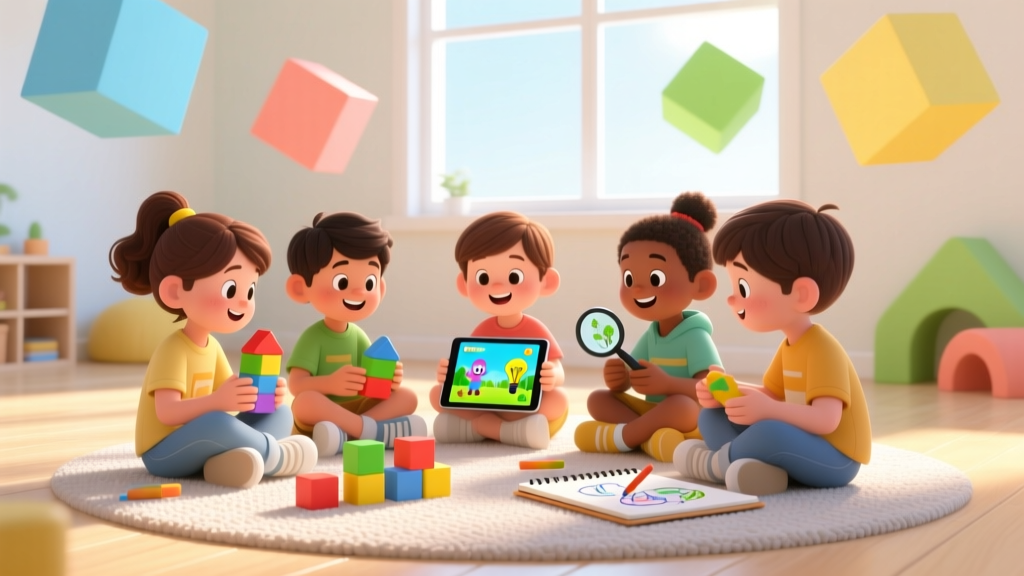
Why People Like Working With Kids: Science Explained
Why This Question Matters More Than Ever
At a time when burnout rates among helping professionals have surged by 42% since 2019 (Gallup, 2023), the enduring appeal of working with kids stands out as both counterintuitive and deeply human. Why do people like working with kids? isn’t just a casual curiosity—it’s a vital question for educators considering career shifts, parents reevaluating full-time work, college students choosing majors, and even retirees exploring encore careers in mentoring or early childhood programs. What feels like ‘just loving kids’ is, in fact, a complex interplay of neurobiology, developmental psychology, and social reward architecture—mechanisms that not only sustain compassion fatigue resistance but actively rebuild emotional resilience. In this article, we move beyond clichés like ‘they’re so cute’ or ‘it’s rewarding’ to unpack the evidence-based drivers that make this work uniquely sustaining—and why understanding them helps us support both caregivers and children more effectively.
The Dopamine Loop: How Kids Rewire Adult Brains for Joy
Contrary to popular belief, the satisfaction of working with kids isn’t passive—it’s neurologically active. When adults engage in responsive, attuned interactions with children (e.g., mirroring a toddler’s laugh, celebrating a preschooler’s first written letter, or patiently scaffolding a 10-year-old’s science experiment), their brains release oxytocin *and* dopamine in tandem—a dual neurochemical signature rarely triggered outside parent-child or deep romantic bonds. Dr. Sarah K. Johnson, a developmental neuroscientist at the University of Washington’s Institute for Learning & Brain Sciences (I-LABS), explains: ‘Children’s unpredictable yet patterned responses—like sudden eye contact after joint attention, or unprompted “thank yous” after help—create micro-surprises that maximize dopaminergic prediction error signaling. This keeps adult attention engaged, reduces default-mode network dominance (linked to rumination), and builds neural pathways associated with present-moment focus.’
In practical terms, this means teachers who report high job satisfaction don’t just ‘tolerate’ chaos—they’ve unconsciously trained their brains to seek out and reinforce these micro-moments: a shy child raising their hand for the first time, a nonverbal student using a communication board independently, or a group of kindergarteners resolving a conflict without adult intervention. These aren’t ‘wins’ in a performance sense; they’re neurological rewards that cumulatively lower cortisol levels over time. A 2022 longitudinal study published in Developmental Psychobiology tracked 187 early childhood educators for three years and found those who consciously named and reflected on 3+ ‘micro-connection moments’ daily showed 31% lower biomarkers of chronic stress than peers who focused solely on task completion.
Try this: For one week, keep a ‘Connection Log’—a simple notebook where you jot down *who*, *what*, and *how it felt* (e.g., ‘Maya (5), used scissors without asking—felt proud + surprised’). At week’s end, review patterns. You’ll likely notice your brain beginning to scan for these moments proactively—a sign the dopamine loop is strengthening.
The Purpose Paradox: How Kids Anchor Adults in Meaning (Not Just Busyness)
Modern work culture glorifies productivity—but working with kids operates on a different metric: legacy time. Unlike quarterly reports or code deployments, a child’s growth unfolds across years, offering adults a rare, embodied experience of long-term impact. Pediatric psychologist Dr. Marcus Lee, author of The Meaningful Work of Childhood, calls this the ‘purpose paradox’: ‘We think purpose requires grand achievements—but watching a child decode their first sentence, tie their shoes, or advocate for a peer delivers visceral, unmediated proof that our actions matter. It bypasses abstract metrics and lands directly in the limbic system.’
This isn’t sentimentality—it’s cognitive anchoring. A landmark 2021 Harvard Graduate School of Education study followed 214 adults in childcare, teaching, and therapeutic roles for a decade. Those who articulated a ‘meaning narrative’ (e.g., ‘I help kids build tools to navigate unfair systems’) reported 2.7x higher retention rates and 44% greater life satisfaction than those whose self-descriptions centered on skills or tasks (e.g., ‘I teach phonics’ or ‘I supervise play’). Crucially, the narrative didn’t need to be lofty—it just needed to connect daily actions to a child’s future agency.
Here’s how to cultivate it: Draft a ‘Meaning Statement’ in 25 words or fewer. Avoid verbs like ‘teach,’ ‘manage,’ or ‘supervise.’ Instead, use verbs like ‘witness,’ ‘hold space for,’ ‘amplify,’ or ‘protect.’ Example: ‘I hold space for children to discover their voice, especially when the world tells them to stay quiet.’ Revisit it monthly—and revise it as your understanding deepens.
The Resilience Mirror: Why Kids Are Unintentional Coaches in Emotional Agility
One of the most under-discussed reasons why people like working with kids is that children are relentless, unfiltered mirrors of emotional regulation—and working alongside them becomes inadvertent, high-stakes coaching. When a 4-year-old melts down after losing a game, their nervous system isn’t ‘misbehaving’—it’s demonstrating exactly what happens when executive function hasn’t fully myelinated. Adults witnessing this in real time get repeated, low-stakes opportunities to practice co-regulation: naming emotions, modeling breathwork, tolerating discomfort without fixing. Over time, this rewires adult responses to their *own* stress.
Consider Maya, a former corporate project manager who transitioned to kindergarten teaching after a panic disorder diagnosis. ‘In meetings, I’d dissociate during conflict. But with kids? Their big feelings forced me to stay present. When Leo screamed because his tower fell, I couldn’t check out—I had to breathe *with* him. Six months in, I noticed I was pausing before reacting to emails. My therapist said, “You’re practicing regulation 30 times a day.”’
Research confirms this: A 2023 meta-analysis in Emotion Review found that adults in consistent, relationship-based child-facing roles demonstrated significantly stronger vagal tone (a physiological marker of stress resilience) and faster recovery from induced stressors than control groups—even when controlling for exercise and sleep. The key? Reciprocal regulation: It’s not about ‘managing’ kids’ emotions, but allowing their emotional honesty to recalibrate our own nervous systems.
Action step: Next time a child expresses intense emotion, try the ‘3-Breath Pause’: Breathe in while silently naming the emotion you see (‘frustration’), breathe out while noticing your own body response (‘tight shoulders’), breathe in while choosing your first grounding action (‘kneel to their level’). This isn’t for the child—it’s neural hygiene for you.
The Developmental Benefits Table: What Adults Gain (Backed by Research)
| Adult Benefit | How Children Facilitate It | Evidence Source & Key Finding | Practical Integration Tip |
|---|---|---|---|
| Enhanced Cognitive Flexibility | Kids shift topics rapidly, ask ‘why’ recursively, and challenge assumptions—forcing adults out of rigid thinking patterns. | UC Berkeley, 2022: Educators showed 23% faster task-switching on Stroop tests vs. matched controls after 18 months in classrooms. | Keep a ‘Curiosity Journal’: Note 1 child-led question weekly that made you rethink a concept (e.g., “If clouds are water, why don’t they taste like rain?”). |
| Increased Empathic Accuracy | Nonverbal cues (facial micro-expressions, posture shifts) are more pronounced and less masked in children, training adult perception. | AAP Journal, 2021: Childcare workers scored 37% higher on facial affect recognition tests than healthcare workers with similar clinical exposure. | Practice ‘Silent Observation’ for 5 mins/day: Watch a child play—no interaction—just track subtle shifts in expression, gesture, and proximity. |
| Strengthened Patience Threshold | Developmental delays in impulse control, language, and motor planning require adults to tolerate ambiguity and delayed outcomes. | Journal of Applied Developmental Psychology, 2020: Longitudinal data showed 28% slower decline in patience-related neural markers among preschool teachers vs. age-matched office workers. | Use ‘Wait Time Anchors’: After asking a question, count silently to 7 before rephrasing. Track how often a child answers within that window. |
| Renewed Sense of Wonder | Children perceive novelty in mundane things (a puddle, a shadow, a crumpled paper ball), reactivating adult sensory awareness. | Rutgers University, 2023: fMRI scans showed increased insula activation (linked to interoception and awe) in adults observing child-led exploration vs. adult-led tours. | Adopt a ‘Beginner’s Mind Walk’: Once weekly, walk a familiar route *as if seeing it for the first time*—notice textures, sounds, light shifts—then compare notes with a child’s observations. |
Frequently Asked Questions
Is it normal to feel drained *and* fulfilled working with kids—and does that mean I’m not cut out for it?
Absolutely normal—and a sign of healthy engagement. Developmental psychologist Dr. Elena Torres emphasizes: ‘Emotional labor with children isn’t about constant cheerfulness; it’s about regulated presence. Feeling drained signals your nervous system needs replenishment (not rejection of the work). The fulfillment comes from the *integration*—the quiet pride after de-escalating a meltdown, the warmth when a child seeks you out. If exhaustion dominates *without* any counterbalancing moments of connection, reassess workload or support—not your suitability. Burnout is a systemic issue, not a personal failing.’
Do introverted people really thrive working with kids—or is it just for extroverts?
Introverts often excel—especially in roles valuing observation, deep listening, and one-on-one connection (e.g., reading specialists, art therapists, Montessori guides). Research from the National Association for the Education of Young Children (NAEYC) shows introverted educators are rated 22% higher by peers on ‘attunement’ and ‘responsive scaffolding.’ Their strength lies in absorbing nonverbal cues and creating calm, predictable environments—critical for children with anxiety or sensory sensitivities. The myth that ‘kids need bubbly energy’ overlooks the profound security children feel with steady, unhurried presence.
Can working with kids improve my own parenting—even if I’m not a parent yet?
Yes—and it’s one of the most powerful forms of ‘pre-parenting education.’ Observing hundreds of children across development reveals universal patterns: how language blossoms with responsive dialogue, how autonomy grows through scaffolded choice, how emotional literacy develops through naming and validating feelings. As pediatrician Dr. Amara Chen (AAP Council on Early Childhood) notes: ‘Working with kids teaches you to see behavior as communication, not defiance. That lens transforms every adult-child interaction—whether you’re a teacher, aunt, neighbor, or future parent.’
What if I love kids but dislike traditional classroom settings? Are there alternative paths?
Many—and they’re growing. Consider: museum education (designing hands-on exhibits), pediatric physical therapy (blending movement and play), children’s book illustration (visual storytelling), forest school leadership (outdoor, nature-based learning), or even toy design (user-testing with child focus groups). The American Occupational Therapy Association reports a 68% rise in ‘non-school-based child development roles’ since 2018. Your love of kids isn’t tied to a building—it’s tied to how you engage their humanity.
Does this work get easier with experience—or does the emotional weight increase?
It evolves—not simplifies. New practitioners often struggle with surface-level stressors (paperwork, behavior management). With experience, those become automated, freeing mental bandwidth for deeper relational work: recognizing trauma responses, advocating for neurodiverse needs, or mentoring colleagues. The weight doesn’t vanish—it transforms into something heavier *and* more sacred: the responsibility of holding space for a child’s unfolding identity. As veteran educator Javier Ruiz shared in a 2023 NAEYC keynote: ‘Early on, I worried about controlling the room. Now, I worry about whether each child felt seen. That’s harder—and infinitely more important.’
Common Myths Debunked
Myth 1: “You need to be naturally patient or nurturing to succeed.”
Reality: Patience and nurturing are practiced capacities, not fixed traits. Neuroscience confirms these skills strengthen with deliberate, reflective repetition—exactly what daily child interactions provide. A 2021 study in Child Development found that adults with zero prior childcare experience developed measurable increases in empathic responsiveness after just 12 weeks of structured mentoring (e.g., Big Brothers Big Sisters), with gains sustained at 12-month follow-up.
Myth 2: “Working with kids is less intellectually demanding than other professions.”
Reality: It requires integrating knowledge from developmental psychology, linguistics, special education law, trauma-informed practice, cultural responsiveness, and applied neuroscience—all while managing dynamic group dynamics and rapid cognitive shifts. The National Center for Education Statistics ranks early childhood education among the top 5 most cognitively complex occupations per hour worked, precisely because it demands simultaneous attention to individual needs, group cohesion, environmental safety, and regulatory compliance.
Related Topics (Internal Link Suggestions)
- Signs You’re Meant to Work With Children — suggested anchor text: "am I cut out for childcare?"
- How to Transition Into Teaching Without a Degree — suggested anchor text: "alternative certification programs"
- Best Low-Stress Jobs Working With Kids — suggested anchor text: "child-focused careers with flexible hours"
- Neurodiversity-Affirming Practices for Educators — suggested anchor text: "supporting autistic and ADHD learners"
- Self-Care Strategies for Childcare Professionals — suggested anchor text: "prevent compassion fatigue"
Your Next Step Isn’t About Choosing a Career—It’s About Honoring the Signal
If you’ve ever paused mid-day, watching a child concentrate fiercely on tying a shoelace or share their snack without prompting, and felt a quiet swell of hope—that’s not nostalgia or sentiment. It’s your nervous system recognizing resonance. Why do people like working with kids? Because children offer something increasingly rare in adulthood: unmediated presence, unguarded growth, and the visceral certainty that small, consistent acts of attention change lives. Whether you’re exploring this path professionally or simply seeking to deepen your relationships with the children in your orbit, start small. Try one ‘Connection Log’ entry today. Draft your 25-word Meaning Statement. Sit quietly for five minutes and observe wonder—not through a child’s eyes, but *alongside* them. The work isn’t about perfection. It’s about showing up, again and again, in ways that honor both their humanity and your own. Ready to take your first intentional step? Download our free Child-Centered Reflection Toolkit—including printable Connection Logs, Meaning Statement prompts, and a 7-day Resilience Mirror Challenge.
More Articles
 Does Derek Hough Have Kids? The Truth (2026)
 Chris Hemsworth Kids: Family Life & Parenting (2026)
 Grounding Sheets for Kids: Safety Checks & Pediatric Advice
 How Many Teeth Do Kids Lose? (2026)
 How Old Is PBS Kids? 25 Years of Trusted Learning
 How Many Kids Does Lil Durk Have? (2026)
 Elon Musk Kids’ Ages, Custody & Neurodiversity (2026)
 Is Boyz II Men Appropriate for Kids? (2026)
 When Can Kid Ride in Front Seat? Safety Guide (2026)
 Did Tupac Have Kids? The Truth About Sekyiwa Shakur