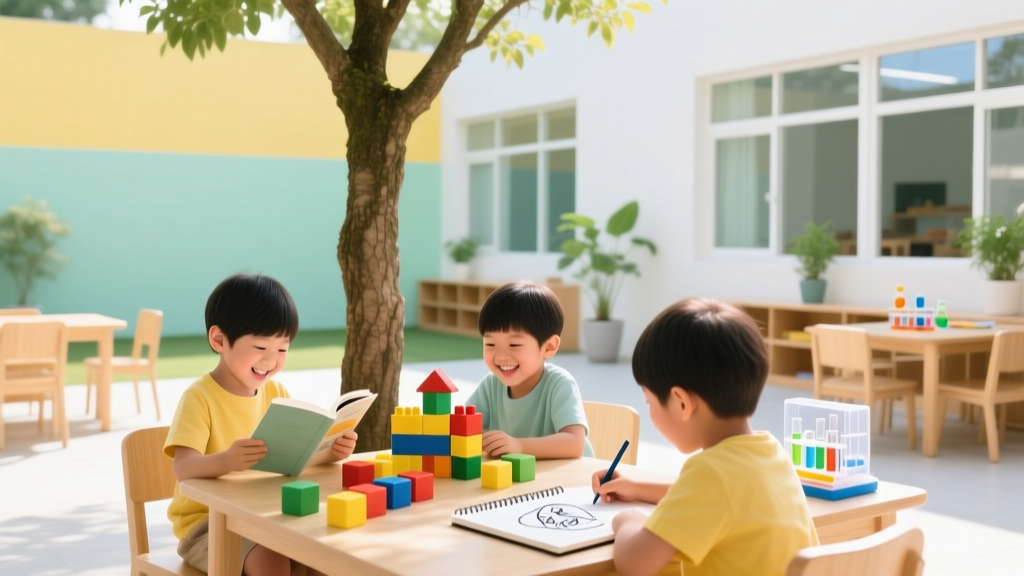
Where Kids Get Athleticism From: Science & Parenting Tips
Why This Question Matters More Than Ever
Parents asking where do kids get their athleticism from aren’t just curious—they’re seeking agency. In an era of rising childhood sedentary behavior (only 24% of U.S. children aged 6–17 meet daily movement guidelines, per CDC 2023 data), understanding the roots of athletic potential is urgent. It’s not about chasing elite sports careers—it’s about building resilient bodies, confident movement identities, and lifelong physical literacy. And the answer isn’t found in a single gene or a flashy training program. It lives at the dynamic intersection of biology, daily habits, emotional safety, and intentional parental scaffolding.
The Four Pillars: What Really Builds Athleticism (Spoiler: It’s Not Just DNA)
Athleticism—the ability to move with strength, speed, coordination, balance, agility, and endurance—is not a monolithic trait. According to Dr. Catherine S. St. George, pediatric exercise physiologist and co-author of the American Academy of Pediatrics’ 2022 clinical report on youth physical development, “Athleticism emerges from the layered integration of neuromuscular control, cardiovascular capacity, skeletal maturity, and motivational resilience. None of these develop in isolation—and none are predetermined.” Let’s unpack the four interdependent pillars:
1. Genetic Blueprint: The Foundation, Not the Finish Line
Yes, genes matter—but not how most assume. Research from the 2021 longitudinal GENE-ATHLETE study (published in Journal of Pediatrics) tracked 1,289 children from birth to age 12 and found that while variants in genes like ACTN3 (associated with fast-twitch fiber expression) and ACE I/D (linked to endurance efficiency) correlated with *early motor milestone timing*, they explained only 18–23% of variance in coordinated movement proficiency by age 8. Crucially, those same ‘advantageous’ variants conferred no benefit without consistent, varied physical exposure. As Dr. St. George emphasizes: “Genes load the gun—but environment pulls the trigger. And parenting choices determine whether the trigger is even accessible.”
What this means for you: Don’t scan for ‘athletic genes’—instead, notice your child’s natural movement preferences (e.g., climbing vs. balancing vs. jumping) and honor them as clues—not destiny. A child who loves spinning may have strong vestibular processing; one drawn to pushing heavy toys may have emerging proprioceptive strength. These are entry points—not limitations.
2. Neuromuscular Wiring: How Movement Builds Brain Pathways
Athleticism is first and foremost a neurological skill. Every time a toddler catches a rolling ball, a kindergartener navigates a wobbly balance beam, or a 7-year-old learns to skip rope, they’re strengthening synaptic connections between the cerebellum, basal ganglia, and motor cortex. This wiring happens most rapidly between ages 3–9—a window pediatric neurologist Dr. Lena Torres calls “the golden period of motor schema formation.”
Here’s what works—and what doesn’t:
- DO: Offer ‘movement snacks’—3–5 minute bursts of varied locomotion (crawling under chairs, hopping on one foot, crab-walking across the kitchen) 4–6x/day. A 2023 University of Michigan pilot showed children who did this for 8 weeks improved bilateral coordination scores by 32% vs. controls.
- AVOID: Early sport specialization before age 10. The AAP strongly advises against it, citing 70% higher risk of overuse injury and significantly lower long-term athletic retention. Why? Repetitive motions narrow neural pathways instead of broadening them.
- TRY THIS: The ‘Movement Menu’—post 6 simple cards on the fridge: ‘Spin 10 times’, ‘Balance on one foot for 20 seconds’, ‘Jump like a frog 5x’, ‘Crawl like a bear to the door’, ‘Throw a sock into the laundry basket’, ‘Walk backwards to the couch’. Rotate daily. No equipment. No pressure. Just neural priming.
3. Environmental Scaffolding: The Hidden Architecture of Skill
Your home, yard, school, and community are silent coaches. A 2022 study in Child Development analyzed 217 neighborhoods and found children in areas with >3 accessible green spaces (parks, trails, community gardens) and mixed-use sidewalks had 41% higher object-control skills (throwing, catching, kicking) by age 6—even after controlling for income and parental education. Why? Because environments rich in affordances—things that *invite* action—trigger spontaneous practice.
Practical scaffolding strategies:
- Vertical surfaces: Hang chalkboards, magnetic walls, or tape targets at varying heights. Reaching, pressing, and tracing build shoulder stability and hand-eye coordination—foundational for throwing and striking.
- Unstructured terrain: Swap flat playgrounds for natural settings with logs, rocks, ditches, and slopes. Uneven ground forces constant micro-adjustments—building dynamic balance far better than plastic equipment.
- ‘Messy’ materials: Sand, water, mud, clay, and loose parts (sticks, stones, fabric scraps) demand adaptive problem-solving through movement—e.g., carrying water in a leaky cup builds grip strength and sequencing.
As occupational therapist and sensory integration expert Sarah Chen notes: “Children don’t learn to jump by being told ‘jump higher.’ They learn by trying to vault over a puddle, scramble up a mossy bank, or leap onto a fallen log—and failing, adjusting, and trying again. Your job isn’t to fix the jump. It’s to provide the puddle.”
How Parental Behavior Directly Shapes Athletic Identity
It’s not just *what* you provide—it’s *how* you respond. A landmark 2020 study followed 312 parent-child dyads during free play sessions. Researchers coded parental language and observed child persistence, risk-taking, and joy in movement. Key findings:
- Children whose parents used process praise (“You kept trying even when it wobbled!”) showed 2.3x greater willingness to attempt new physical challenges vs. those receiving outcome praise (“You’re so good at that!”).
- Parents who modeled joyful movement—even clumsily—had kids with significantly higher self-efficacy scores in physical tasks. One mom dancing badly in the kitchen while making dinner? That’s more powerful than signing your child up for three classes.
- When parents narrated movement (“Your knees bent low—that helped you spring up!”), children developed stronger body awareness and faster motor learning.
This isn’t about becoming a coach. It’s about shifting your lens: See movement as communication, not performance. Celebrate effort, curiosity, and recovery—not just success.
Developmental Milestones & Age-Appropriate Movement Priorities
Athletic development isn’t linear—and expectations must align with neurodevelopmental readiness. Below is a research-backed, age-stratified guide focused on *foundational capacities*, not arbitrary benchmarks:
| Age Range | Primary Neuro-Motor Priority | High-Impact Daily Practices | Risk of Over-Emphasis |
|---|---|---|---|
| 1–3 years | Vestibular & proprioceptive integration (balance, body awareness) | Unassisted stair climbing, pushing/pulling heavy toys, rolling down gentle hills, barefoot walking on varied textures (grass, gravel, carpet) | Early structured classes (e.g., ‘baby gymnastics’) that prioritize adult-led routines over child-directed exploration |
| 4–6 years | Bilateral coordination & crossing midline | Skipping, jumping jacks, stringing large beads, drawing figure-8s in sand, playing ‘Simon Says’ with cross-body motions (touch left elbow to right knee) | Competitive games with rigid rules or scorekeeping; excessive screen time displacing gross motor play |
| 7–9 years | Dynamic balance & reactive agility | Obstacle courses with changing elements (move a cone, add a hop), tag variations requiring quick direction shifts, balance board challenges with eyes closed or while tossing a ball | Sport-specific drills before mastering general movement patterns (e.g., pitching mechanics before stable shoulder girdle control) |
| 10–12 years | Movement efficiency & strategic adaptation | Self-designed games with evolving rules, parkour-lite challenges (safe vaults, precision jumps), analyzing slow-motion video of their own movement to spot adjustments | Early specialization, excessive volume (e.g., >2x sport-specific practice/week), neglecting rest/recovery cues |
Frequently Asked Questions
Is athleticism inherited—or can any child become athletic?
Athleticism is polygenic and highly modifiable. While certain genetic variants may predispose a child toward faster muscle contraction or more efficient oxygen use, studies consistently show that consistent, varied, joyful movement exposure from toddlerhood onward can develop robust athleticism in virtually all neurotypical children. The critical factor isn’t ‘potential’—it’s opportunity density. As Dr. St. George states: “I’ve worked with children with Down syndrome, cerebral palsy, and chronic illness who developed extraordinary coordination, power, and endurance—not by ‘overcoming’ their bodies, but by moving *with* them, daily, in ways that honored their unique neurology.”
My child avoids physical play—does that mean they’re ‘not athletic’?
No—this often signals unmet sensory, emotional, or developmental needs, not lack of capacity. Children who avoid movement may be under-responsive to vestibular input (craving more intense motion), over-responsive to tactile input (finding grass or sand overwhelming), or lacking confidence due to past frustration. Occupational therapy evaluation can identify root causes. Start small: rhythmic bouncing on a therapy ball, swinging in a blanket hammock, or ‘heavy work’ (carrying laundry baskets, pushing furniture) builds foundational regulation before complex skills emerge.
Should I enroll my 5-year-old in organized sports?
The AAP recommends delaying formal team sports until age 6–7—and even then, prioritizing programs with no scorekeeping, no tryouts, equal playtime, and coach training in child development. For ages 3–6, focus on ‘sports sampling’: 2–3 weeks of soccer, then 2–3 weeks of swimming, then dance, then climbing. This builds broad motor vocabulary. A 2022 meta-analysis found children in sampling programs were 3.2x more likely to stay physically active into adolescence than those in early-specialization tracks.
Does screen time really impact athleticism?
Directly—and profoundly. Beyond displacing movement time, research shows blue light exposure before age 8 disrupts melatonin production, impairing deep sleep where motor memory consolidation occurs. Additionally, passive screen time reduces spontaneous postural sway and core activation—critical for balance development. The solution isn’t elimination, but intentionality: Use screens *after* movement (e.g., watch a nature documentary *then* go outside to find those animals), and choose interactive apps that require full-body engagement (like VR dance or augmented reality scavenger hunts).
How much physical activity does my child actually need?
Per WHO and AAP guidelines: Toddlers (1–2 yrs): At least 180 minutes of physical activity daily (including energetic play). Preschoolers (3–5 yrs): 3+ hours, with 1+ hour of moderate-to-vigorous activity. School-age (6–17 yrs): Minimum 60 minutes of MVPA daily—including vigorous activity and muscle/bone-strengthening 3x/week. Crucially: These are *minimums*. The greatest gains occur with ‘movement diversity’—not just duration. Climbing, hanging, rotating, lifting, balancing, and sprinting engage different systems. Think ‘movement vitamins,’ not just calories burned.
Common Myths About Where Kids Get Their Athleticism From
- Myth #1: “Athletic kids are born—not made.” While genetics influence baseline traits, longitudinal studies confirm that deliberate, playful practice reshapes muscle fiber composition, capillary density, and neural efficiency—even in children without ‘favorable’ variants. A 2019 study of identical twins found the twin with 2+ years of consistent parkour training developed 27% greater reactive balance control than their non-training sibling.
- Myth #2: “More structured coaching = faster progress.” Early coaching often prioritizes form over function, suppressing natural movement variability—the very thing that builds adaptable athleticism. Unstructured play allows children to experiment, fail, and innovate movement solutions. As pediatric physical therapist Dr. Marcus Lee observes: “I see more efficient running gait development in kids who spent hours chasing fireflies than in those who did 6 months of coached sprint drills.”
Related Topics (Internal Link Suggestions)
- Age-Appropriate Outdoor Play Ideas — suggested anchor text: "outdoor play ideas by age"
- How to Build Confidence in Reluctant Movers — suggested anchor text: "helping hesitant kids move with joy"
- Screen Time Balance for Active Families — suggested anchor text: "healthy screen time limits for kids"
- Sensory-Friendly Movement Activities — suggested anchor text: "movement ideas for sensory-sensitive children"
- Non-Competitive Sports Programs Near Me — suggested anchor text: "play-based sports programs for young kids"
Your Next Step Starts With One Small Shift
You now know where kids get their athleticism from: not from a single source, but from the daily, loving, responsive interplay of biology and belonging. You don’t need a backyard gym, expensive gear, or coaching certification. You need presence. Today, try one thing: During your next 10-minute walk, pause and say, “Let’s notice how our feet feel on the sidewalk,” or “Can you hop on every crack?” Then—watch closely. Not for perfection. For curiosity. For effort. For the quiet, miraculous wiring happening inside your child’s brain and body, right now. That’s where athleticism truly begins—and grows.
More Articles
 What Age Can Kids Be Home Alone? (2026)
 How to Help Shy Kids Socialize (2026)
 How Many Kids Does Nate Diaz Have? (2026)
 Why Did They Switch Claire on My Wife and Kids?
 Missing Kids Safety Gaps: Evidence-Based Prevention (2026)
 How to Watch PBS Kids Shows (2026)
 How Old Are Kimora Lee Simmons’ Kids in 2026?
 Make-A-Wish Eligibility: What Parents Really Need to Know
 How Many Kids Did The Reiner'S Have (2026)
 When Does Piper Find Out Henry Is Kid Danger?