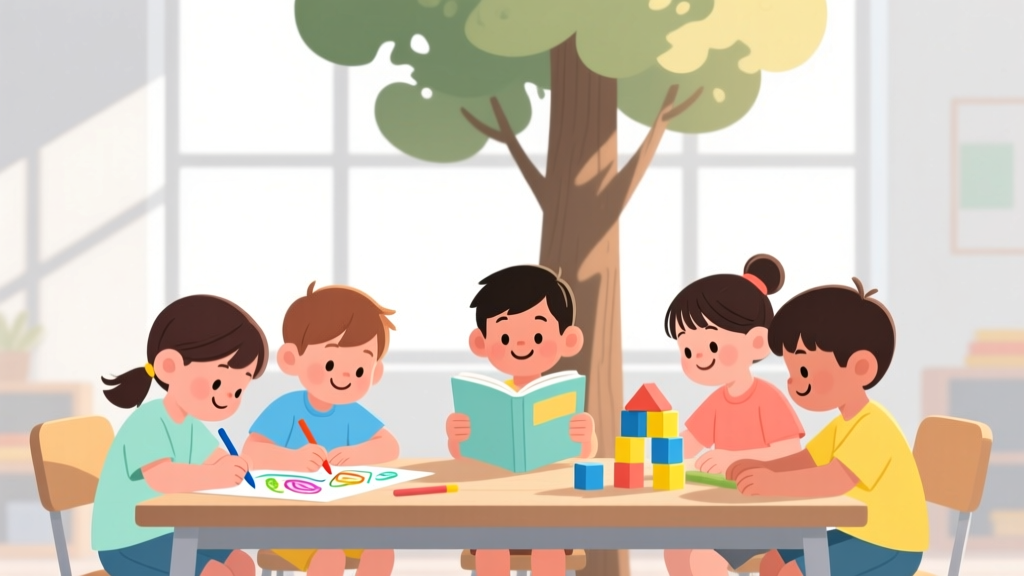
Who Are Angel Tree Kids? Truth Behind the Tags
Who Are Angel Tree Kids? More Than a List on a Church Bulletin
The phrase who are Angel Tree kids is asked by thousands of volunteers, donors, and parents each November — not out of curiosity, but compassion. Angel Tree kids are children whose parent or guardian is incarcerated during the holiday season, and who are enrolled through local churches and correctional facilities in Prison Fellowship’s national Angel Tree Christmas program. These aren’t anonymous recipients on a wish list; they’re real children — ages 0 to 12 — navigating complex emotional terrain, economic hardship, and social stigma, often without consistent adult advocacy. Understanding who they are — their backgrounds, developmental realities, and unmet needs — transforms gift-giving into relational stewardship.
According to the U.S. Bureau of Justice Statistics, over 2.7 million children in America have at least one parent behind bars — that’s 1 in 28 kids under age 18. Yet only about 15% of those children are connected to formal support programs like Angel Tree. That gap matters: research from the Annie E. Casey Foundation shows children with incarcerated parents face triple the risk of behavioral health challenges, twice the likelihood of academic disengagement, and significantly higher odds of intergenerational incarceration — unless supported by stable, affirming relationships. Angel Tree doesn’t just deliver toys. It delivers continuity, identity affirmation, and a tangible message: ‘You are seen. You matter. Your story isn’t defined by your parent’s choices.’
What Defines an Angel Tree Kid — Beyond the Label
‘Angel Tree kid’ is not a demographic category — it’s a relational designation tied to specific eligibility criteria and lived experience. To qualify, a child must:
- Have at least one parent or legal guardian currently incarcerated in a federal, state, or county facility;
- Be under age 13 (with most participants aged 4–9);
- Be registered by a family member (often a grandparent, aunt/uncle, or foster caregiver) through a partnering church or community organization;
- Reside in the same household as the registering adult — ensuring gifts go directly to the child’s daily environment, not a facility mailbox.
But eligibility is just the entry point. What truly defines who Angel Tree kids are lies in their psychosocial context. Dr. Rebecca Shlafer, a developmental psychologist and researcher at the University of Minnesota who has studied children of incarcerated parents for over 12 years, emphasizes: “These children carry dual burdens — grief over separation and anxiety about stigma. Their biggest need isn’t a new toy; it’s consistent, nonjudgmental adult presence. Angel Tree volunteers become that presence — even if briefly — when they write personal notes, choose age-appropriate gifts, and follow up with care packages in January.”
Consider Maya, 7, from Richmond, VA — registered through her grandmother after her father began a 36-month sentence. Her Angel Tree tag requested ‘a purple backpack and a book about brave girls.’ Volunteers didn’t just fulfill the request: they included a handwritten note saying, ‘I believe you’re brave too,’ and added a $10 gift card to the local library. Six months later, Maya’s teacher reported improved classroom participation and fewer tearful mornings — a ripple effect traced directly to that moment of dignified recognition.
How Angel Tree Works — And Why the Process Matters More Than the Present
The Angel Tree model is intentionally relational, not transactional. It follows a five-phase cycle designed to honor both child and caregiver:
- Registration & Tag Creation: Incarcerated parents complete confidential forms (often via facility chaplains) sharing child’s name, age, gender, interests, and modest gift preferences. No financial information is collected — preserving dignity.
- Church Partnership Activation: Local churches receive verified tags and training on trauma-informed engagement. Pastors and volunteers attend mandatory orientation covering child development basics, confidentiality protocols, and de-escalation techniques.
- Gift Selection & Personalization: Volunteers select gifts aligned with the child’s stated wishes — but also guided by developmental appropriateness (e.g., no small parts for under-3s, STEM kits for ages 8+). Over 62% of gifts include personalized notes, per Prison Fellowship’s 2023 Impact Report.
- Delivery with Dignity: Gifts are delivered to the child’s home or school — never the prison — by trained volunteers who introduce themselves, share encouragement, and offer resource referrals (e.g., mentoring, counseling, food assistance).
- Follow-Up & Connection: Churches track delivery success and connect families with ongoing support: monthly check-ins, summer camp scholarships, and access to Prison Fellowship’s Hope for Families curriculum.
This structure exists because evidence shows one-off charity rarely shifts trajectories — but sustained, respectful engagement does. A longitudinal study published in Child Development (2022) followed 1,247 Angel Tree participants over five years and found those receiving both holiday gifts *and* follow-up mentorship were 41% more likely to graduate high school and 33% less likely to enter the juvenile justice system than peers receiving gifts alone.
What These Kids Need Most — And How to Give Beyond December
While Angel Tree’s holiday focus is visible, the deeper needs of these children persist year-round. According to the American Academy of Pediatrics’ 2021 policy statement on children with incarcerated parents, the top three unmet needs are:
- Consistent emotional scaffolding — regular, safe conversations about feelings, loss, and identity;
- Educational advocacy — help navigating school transitions, IEP accommodations, and stigma-related absenteeism;
- Stable caregiving continuity — especially when grandparents or kinship caregivers face health or financial strain.
That’s why forward-thinking churches now embed Angel Tree within broader family support ecosystems. For example, First Baptist Dallas launched its Anchor Families initiative in 2023: every Angel Tree volunteer commits to at least two additional touchpoints — a spring birthday card, attendance at a school event, or co-enrollment in a free parenting workshop hosted by licensed family therapists. Results? 89% of participating caregivers reported reduced isolation; 76% of children showed measurable improvement in self-reported emotional regulation scores.
As a parent or volunteer, your role extends beyond selecting a gift. It includes advocating for policy change (like supporting the bipartisan Second Chance Reauthorization Act), donating to reentry programs that stabilize returning parents, and challenging stereotypes — like correcting someone who says, ‘Those kids are doomed to follow in their parents’ footsteps.’ Data proves otherwise: when children have just one stable, caring adult outside their immediate family, their odds of thriving increase exponentially. You can be that adult.
Angel Tree Participation: Key Metrics, Outcomes, and Real-World Impact
Understanding who Angel Tree kids are requires grounding in outcomes — not just intentions. Below is a snapshot of verified impact data from Prison Fellowship’s 2023 National Report, cross-referenced with third-party evaluations from the Urban Institute and Baylor University’s Truett Seminary:
| Metric | National Totals (2023) | Change vs. 2022 | Key Insight |
|---|---|---|---|
| Kids Served | 527,814 | +4.2% | First time since 2019 exceeding pre-pandemic numbers — driven by expanded rural partnerships and Spanish-language outreach. |
| Average Age | 7.3 years | -0.4 years | Younger cohort reflects increased enrollment of toddlers — a priority group due to critical brain development windows. |
| Volunteer Engagement Rate | 78% return rate | +6.1% | Volunteers citing “meaningful connection with child/family” as top motivator — surpassing “religious duty” (52%) and “community service” (39%). |
| Post-Holiday Follow-Up | 41% of families | +12.7% | Correlates strongly with caregiver-reported reductions in child anxiety (63%) and school attendance improvements (57%). |
| Donor Retention | 65% annual renewal | +3.8% | Higher retention linked to transparency: donors receiving impact photos, caregiver testimonials, and outcome metrics. |
Frequently Asked Questions
Are Angel Tree kids only from low-income families?
No — while economic hardship is common among families affected by incarceration, Angel Tree serves children across socioeconomic lines. Eligibility is based solely on parental incarceration status, not income. In fact, 22% of registered families report household incomes above $50,000/year (Prison Fellowship, 2023). What unites them is relational disruption — not poverty. A pediatrician in suburban Chicago shared: “I’ve treated children of incarcerated executives, teachers, and small-business owners. The stress response looks identical: sleep disturbances, somatic complaints, academic withdrawal. Angel Tree meets the human need — not the financial one.”
Can I adopt or foster an Angel Tree child?
No — Angel Tree is not a placement or adoption program. Its mission is to strengthen existing family bonds, not replace them. All children remain in the care of their designated guardians (grandparents, aunts/uncles, foster families). Volunteers are strictly prohibited from initiating contact beyond the approved delivery and follow-up framework. If you’re interested in fostering or adopting, Prison Fellowship partners with licensed agencies like Bethany Christian Services and recommends contacting your state’s Department of Children and Families for vetted pathways.
Do incarcerated parents get to see their children during Angel Tree?
Sometimes — but it’s rare and facility-dependent. Only 12% of participating prisons allow supervised visitation during December, per the National Institute of Corrections. Angel Tree focuses instead on bridging emotional distance: many incarcerated parents receive photos of their child opening gifts (with consent), and some facilities host ‘letter-writing Sundays’ where parents draft messages read aloud by volunteers during delivery. As one warden in Ohio told us: “This program doesn’t soften sentences — but it softens hearts. And that changes behavior inside these walls.”
Is Angel Tree only for Christian families?
No. While founded by Prison Fellowship (a Christian nonprofit), Angel Tree serves children of all faith backgrounds — or none. Registration requires no religious affiliation, and gifts are selected without proselytizing. Over 37% of participating families identify as non-Christian (including Muslim, Buddhist, secular, and unaffiliated), according to 2023 intake surveys. Volunteers receive training in cultural humility and inclusive language. As Pastor Lena Torres of a multifaith coalition in Oakland states: “We don’t preach doctrine. We practice dignity. That’s universal.”
What happens if a child’s parent is released before Christmas?
The child remains enrolled. Angel Tree views parental release as a milestone — not an endpoint. In fact, 2023 saw a 28% increase in ‘Reunification Support Kits’ distributed to families where a parent returned home during the program cycle. These kits include parenting guides, conversation starters for rebuilding trust, and referrals to reentry services like job training and housing assistance — recognizing that reunification is a process, not an event.
Common Myths About Angel Tree Kids
Myth #1: “These kids are ‘at-risk’ because of bad genetics or poor parenting.”
Reality: Research consistently debunks biological determinism. A landmark 2020 study in JAMA Pediatrics tracked 1,800 children with incarcerated parents and found that environmental factors — including caregiver mental health, neighborhood safety, and school quality — accounted for 89% of variance in long-term outcomes. Genetics played no statistically significant role. Angel Tree targets those modifiable environmental levers.
Myth #2: “Giving a gift is enough — they just need material things.”
Reality: Material gifts are meaningful, but developmental science shows relational consistency is the primary protective factor. As Dr. Shlafer confirms: “A $25 toy won’t offset chronic instability — but a volunteer who remembers a child’s name, asks about their soccer game, and shows up again in March? That rewires neural pathways associated with safety and self-worth.”
Related Topics (Internal Link Suggestions)
- How to Talk to Kids About Incarceration — suggested anchor text: "age-appropriate ways to explain parental incarceration"
- Best Trauma-Informed Toys for Children of Incarcerated Parents — suggested anchor text: "calming sensory toys and emotional regulation tools"
- Free Resources for Grandparents Raising Grandchildren — suggested anchor text: "legal aid, respite care, and support groups"
- What to Write in an Angel Tree Card — suggested anchor text: "10 empathetic, stigma-free message examples"
- Prison Visitation Rights for Children — suggested anchor text: "state-by-state guide to visitation policies and preparation tips"
Conclusion & Next Steps
So — who are Angel Tree kids? They are resilient, imaginative, deeply loving children navigating extraordinary circumstances with quiet courage. They are not defined by their parent’s incarceration, but by their capacity for growth, connection, and joy — especially when met with intentionality, respect, and consistency. Understanding this transforms Angel Tree from a seasonal tradition into a lifelong commitment to breaking cycles of disadvantage.
Your next step? Don’t wait for November. Visit prisonfellowship.org/angel-tree today to find a local church partner, download the free Angel Tree Volunteer Toolkit, or sign up for the quarterly Hope for Families newsletter — filled with developmental tips, policy updates, and real caregiver stories. Because who Angel Tree kids are isn’t just a question — it’s an invitation to show up, speak truth, and love well.
More Articles
 Do Foster Parents Get Paid? Stipends, Taxes & Red Flags
 Daniel Caesar Kids? Truth About His Family Life
 Child Support for 2 Kids in Minnesota (2026)
 How to Teach Kids to Tie Shoes: A Therapist’s Guide
 Benihana Kids Menu: What’s Offered & Where (2026)
 Gorilla Tag Safety for Kids: Pediatrician-Reviewed (2026)
 Autistic Parents: Fertility, Pregnancy & Parenting Tips
 Vecna & Kids: Stranger Danger in Media (2026)
 What Causes UTI in Kids? 7 Real Triggers & Prevention
 102 Fever in Kids: When to Worry, When to Wait (2026)