
Preschool Readiness: When to Start (Not Just Age)
Why This Question Matters More Than Ever Right Now
If you’re wondering when should kids start preschool, you’re not just weighing schedules or logistics—you’re making one of the earliest, most consequential decisions about your child’s social-emotional foundation, attention regulation, and lifelong learning identity. In a post-pandemic landscape where 68% of parents report heightened anxiety about early academic pressure (2023 Zero to Three Parent Survey), and preschool waitlists have surged 42% nationally, the pressure to ‘get it right’ feels overwhelming—and often misdirected. The truth? There’s no universal ‘right age.’ What matters far more than turning three or four is whether your child demonstrates consistent, observable readiness across five core developmental domains. This isn’t about acceleration—it’s about alignment.
What Readiness *Really* Looks Like (Spoiler: It’s Not Just Potty Training)
Most parents default to calendar age—but pediatricians and early childhood specialists emphasize that developmental readiness trumps chronology every time. According to Dr. Sarah Lin, a developmental-behavioral pediatrician and member of the American Academy of Pediatrics’ Early Childhood Committee, ‘A child who’s chronologically 3½ but still struggles with sustained joint attention, self-regulation during transitions, or basic verbal reciprocity may benefit more from another six months of rich, play-based home or community experiences than from a structured classroom setting.’
True readiness unfolds across five interdependent domains—each with concrete, observable markers:
- Social-Emotional: Initiates simple interactions (e.g., hands toy to peer), tolerates brief separation without prolonged distress, shows emerging empathy (e.g., offers comfort when another child cries).
- Communication: Uses 3–5 word phrases consistently, follows two-step verbal directions (‘Put the block in the box and close the lid’), asks ‘what?’ or ‘where?’ questions.
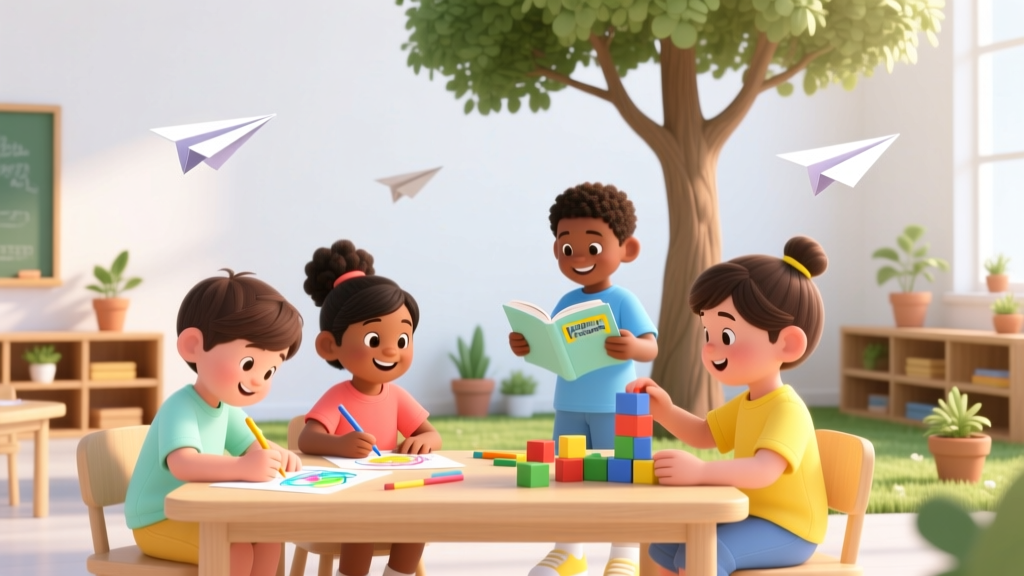
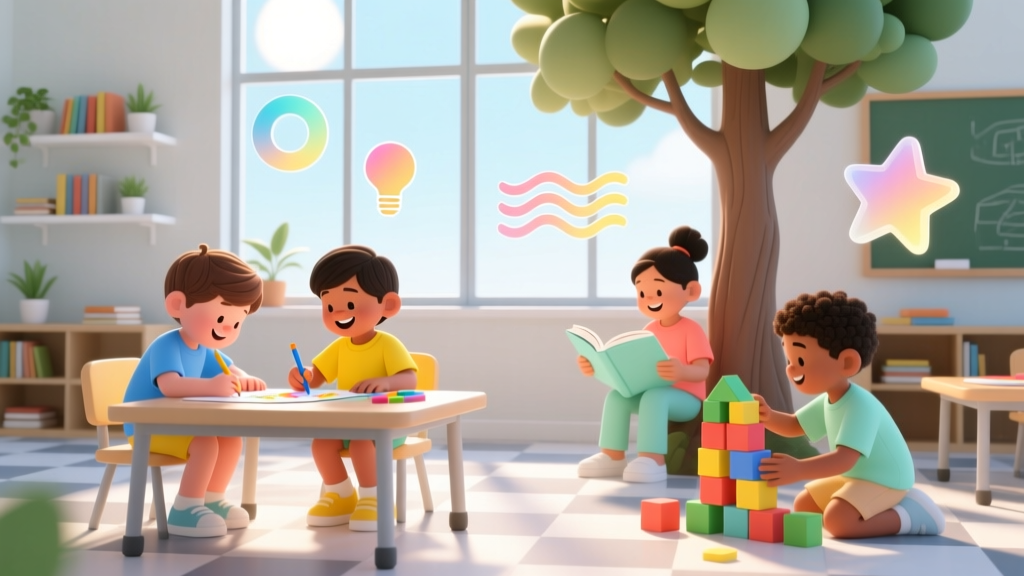
- Cognitive: Engages in symbolic play (pretends a block is a phone), matches colors/shapes independently, sorts objects by one attribute (e.g., all red items together).
- Motor: Can hold a crayon with thumb-and-finger grip (not fist), stack 8+ blocks, walk up stairs alternating feet, and manage basic self-help (pulls pants up/down, washes hands with prompting).
- Regulatory: Transitions between activities within 2–3 minutes with minimal support, sustains focus on a preferred activity for 8–10 minutes, recovers from frustration within 2–3 minutes without physical meltdown.
Notice what’s missing? Potty training. While helpful, it’s not a prerequisite—many high-quality programs accommodate pull-ups and support toileting independence as part of the curriculum. What’s critical instead is predictable routines and co-regulation capacity. A child who dysregulates easily during unstructured moments (e.g., circle time, snack transition) will likely spend more energy managing stress than absorbing learning.
The Hidden Cost of Starting Too Early—And the Risk of Waiting Too Long
Starting preschool before readiness isn’t just ‘a little challenging’—it carries measurable developmental trade-offs. A landmark 2022 longitudinal study published in Early Childhood Research Quarterly tracked 1,247 children across 14 states for five years. Children placed in full-day preschool at age 2.9 (before demonstrating ≥4 of the 5 readiness markers above) were 2.3x more likely to be identified for behavioral intervention by kindergarten—and showed significantly lower growth in executive function skills through Grade 2. Why? Chronic low-grade stress from mismatched expectations impairs prefrontal cortex development—the very area responsible for self-control, working memory, and flexible thinking.
Conversely, waiting too long also carries risks—but they’re subtler and often overlooked. Delaying beyond age 4.5 without intentional scaffolding can widen the ‘social vocabulary gap.’ Children who haven’t regularly navigated peer negotiation (e.g., ‘Can I have a turn?’ ‘No, I’m using it’) or group expectations (e.g., raising hands, listening while others speak) may enter kindergarten feeling socially hesitant or misread as ‘shy’ when they’re actually under-practiced. As Dr. Lin notes, ‘Social competence isn’t innate—it’s built through repeated, supported practice with peers. Preschool isn’t about teaching academics; it’s about building the operating system for learning.’
So where’s the sweet spot? For most children, it’s between 3 years, 4 months and 4 years, 6 months—if they meet ≥4 readiness markers consistently for 4+ weeks. But timing must be personalized. Consider these real-world scenarios:
- The Summer-Born Child: Maya turned 3 in July. Her parents enrolled her in September—despite her still needing full assistance with toileting and frequent meltdowns during transitions. After three weeks, her teacher noted she spent 60% of circle time curled on the rug, avoiding eye contact. At 3 years, 8 months, after targeted co-regulation strategies at home (visual timers, emotion cards, predictable routines), she entered a smaller, play-based program—and thrived.
- The Language-Late Toddler: Leo was 4 years, 2 months with strong motor and cognitive skills—but used mostly single words and rarely initiated communication. His pediatrician recommended speech-language therapy for 3 months first, then a half-day, low-ratio preschool with embedded SLP support. He started at 4 years, 6 months—and within 8 weeks, began using 3-word requests spontaneously.
Your No-Pressure Readiness Assessment Toolkit
Forget vague checklists. Here’s how to gather objective, real-world data over 2–3 weeks—without adding stress to your daily life:
- Observe & Record: Use a simple notebook or voice memo app. Note: How many times does your child initiate interaction with another child (not just adults)? How long do they sustain play with one toy before switching? What happens when you say, ‘In 2 minutes, we’ll clean up’—do they pause, look at you, or continue uninterrupted?
- Test Transitions: Introduce a new 5-minute ‘classroom-like’ routine: Gather 3–4 toys, set a visual timer, invite a neighbor child or cousin for 20 minutes of parallel play. Observe: Does your child notice when the timer rings? Do they follow a simple cleanup cue (e.g., ‘Let’s put blocks in the blue bin’)?
- Consult Your Village: Ask your pediatrician, daycare provider, or even your child’s favorite librarian: ‘What’s one thing you’ve noticed about [child’s name] that suggests they’re ready—or not quite ready—for group learning?’ Their observations are gold—they see patterns you miss.
- Try a ‘Preschool Lite’ Experience: Many centers offer 1–2 day/week ‘explorer’ programs or open-play mornings. Treat it as diagnostic, not evaluative. Watch: Does your child scan the room for familiar faces? Do they watch other children before joining? Do they return to you for reassurance—and then re-engage?
Remember: A ‘no’ this year isn’t failure—it’s strategic investment. One parent shared: ‘We waited until our daughter was 4 years, 3 months. She’d been struggling with big emotions at home. We used those extra months doing forest school, cooking together, and practicing ‘feeling words.’ When she started, her teacher said, ‘She walks in like she owns the place.’ That confidence didn’t come from age—it came from safety and scaffolding.’
How to Choose the Right Program—When You’re Ready
Once readiness is confirmed, program fit becomes paramount. Not all preschools serve the same purpose. Below is a comparison of program models based on developmental priorities—not just cost or convenience:
| Program Type | Best For Children Who… | Key Developmental Focus | Red Flags to Watch For |
|---|---|---|---|
| Play-Based (e.g., Reggio Emilia, Bank Street) | Need rich sensory exploration, thrive with choice, show curiosity about materials (clay, water, nature) | Social negotiation, creative problem-solving, intrinsic motivation | Teachers directing all play, worksheets or letter drills before age 5, rigid schedules with no flexibility for child-led interests |
| Language-Immersion (e.g., Spanish, Mandarin) | Have strong receptive language, enjoy songs/rhymes, show interest in sounds/symbols | Phonological awareness, auditory processing, cultural fluency | No English support for comprehension, teachers speaking only target language to non-speakers without gestures/visuals, pressure to produce language before understanding |
| Therapeutic-Integrated (SLP/OT on-site) | Have diagnosed delays (speech, motor, sensory processing) or need individualized scaffolding | Self-regulation, functional communication, adaptive skills | Lack of certified specialists on staff, no IEP/IFSP collaboration, ‘therapist’ without state licensure |
| Academic-Prep (e.g., Montessori, Waldorf) | Are highly focused, love repetition and order, show early literacy/math curiosity | Executive function, fine-motor precision, independent work habits | Group instruction dominating free choice, no outdoor/unstructured time, emphasis on output (letters written, numbers counted) over process |
Frequently Asked Questions
Is there a minimum age requirement for preschool?
No federal or state law mandates a minimum age for preschool enrollment. Some programs set internal policies (e.g., ‘must be 3 by September 1’) for administrative simplicity—but these aren’t based on developmental science. What matters is whether the program can meet your child’s needs. If your 2-year-old demonstrates strong readiness markers and the center has low ratios (<6:1) and flexible pacing, many experts—including AAP—support inclusion. Always prioritize developmental fit over arbitrary cutoffs.
What if my child is advanced academically but socially immature?
This is extremely common—and often misunderstood. Academic precocity (e.g., reading at age 4) doesn’t predict social-emotional readiness. In fact, gifted toddlers may struggle more with peer dynamics because their cognitive pace outstrips their ability to regulate frustration or interpret subtle social cues. Prioritize programs with trained staff who understand asynchronous development and can scaffold social learning without dampening intellectual curiosity. A child who reads early still needs to learn how to wait for a turn on the slide.
Do boys and girls develop readiness at different rates?
While individual variation dwarfs gender differences, population-level data shows boys tend to mature slightly later in language and impulse control (by ~3–6 months on average), while girls often show earlier social imitation and emotional labeling. However, these are broad trends—not prescriptions. Never delay enrollment solely based on gender. Assess your child—not averages. As Dr. Lin emphasizes: ‘I’ve seen boys master joint attention at 2.9 and girls still needing co-regulation at 4.5. Look at the child in front of you.’
Can preschool help with shyness or separation anxiety?
Yes—but only if the program is intentionally designed for gradual entry and emotional scaffolding. High-pressure ‘cold turkey’ drop-offs often worsen anxiety. Look for centers offering phased-in schedules (e.g., Week 1: 30 mins with parent; Week 2: 1 hour with parent staying nearby; Week 3: 1 hour with parent in hallway), consistent goodbye rituals, and teachers trained in attachment-aware practices. Preschool shouldn’t ‘fix’ shyness—it should honor it while gently expanding comfort zones.
What’s the ideal preschool schedule—half-day vs. full-day?
For first-time preschoolers, research strongly favors half-day (3–4 hours, ideally ending before 12:30 PM). Full-day programs increase fatigue-related behavioral challenges by 3.1x in initial adjustment periods (2021 NAEYC study). Start with 2–3 days/week, and only extend duration or frequency once your child consistently manages transitions, sustains engagement, and shows enthusiasm—not exhaustion—after pickup. Morning-only preserves crucial afternoon downtime for integration and family connection.
Common Myths About Preschool Timing
Myth #1: “Starting earlier gives kids a permanent academic edge.”
Reality: Decades of research—including the Tennessee Voluntary Pre-K study—show early academic push yields short-term test score bumps that fade by Grade 3. What *does* predict long-term success is secure attachment, self-regulation, and intrinsic motivation—skills best nurtured through responsive caregiving, not early worksheets.
Myth #2: “If my child isn’t ready by age 4, something’s wrong.”
Reality: Developmental timelines vary widely—and that’s neurologically normal. The CDC’s latest milestone guidelines now list ‘range windows’ (e.g., ‘says first words between 10–15 months’). Readiness isn’t a deadline; it’s a dynamic process shaped by genetics, environment, and relationship quality. Patience isn’t passive—it’s active, attuned support.
Related Topics (Internal Link Suggestions)
- Signs of developmental delay in toddlers — suggested anchor text: "early developmental milestones checklist"
- How to choose a preschool curriculum — suggested anchor text: "Reggio vs. Montessori vs. play-based preschool"
- Separation anxiety solutions for preschool — suggested anchor text: "gentle preschool transition plan"
- Free and low-cost preschool options — suggested anchor text: "Head Start and state-funded preschool programs"
- Home-based preschool alternatives — suggested anchor text: "structured play-at-home curriculum for 3-year-olds"
Next Steps: Trust Your Observations, Not the Calendar
You now hold a framework grounded in developmental science—not marketing hype or peer pressure. When should kids start preschool isn’t answered by a number on a birth certificate. It’s answered by watching your child’s eyes light up during shared storytime, noticing how they handle a minor disappointment, and trusting your intuition honed by thousands of hours of care. Download our free Preschool Readiness Tracker (a printable 2-week observation sheet with prompts and benchmarks) and join our private community of parents navigating this decision with evidence—not anxiety. Because the greatest gift you can give your child isn’t early enrollment—it’s the unwavering belief that they are exactly where they need to be, right now.
More Articles
 Finesse Two Times Kids: Truth Behind Viral Rumors (2026)
 How Many Kids Do the Reiners Have? (2026)
 George Clooney’s Age When He Had Kids (2026)
 What Age Can Kid Ride in Front Seat? (2026)
 Ares’ Kids: Myth Facts & Parenting Tips
 Best Kids Gummy Vitamins (2026): 3 That Deliver
 How Many Kids Does Chelsea Clinton Have? (2026)
 Are Sour Patch Kids Halal? (2026)
 When Do Kids Get All Their Teeth? (2026)
 Christina Aguilera Family Life: Married? Kids? (2026)