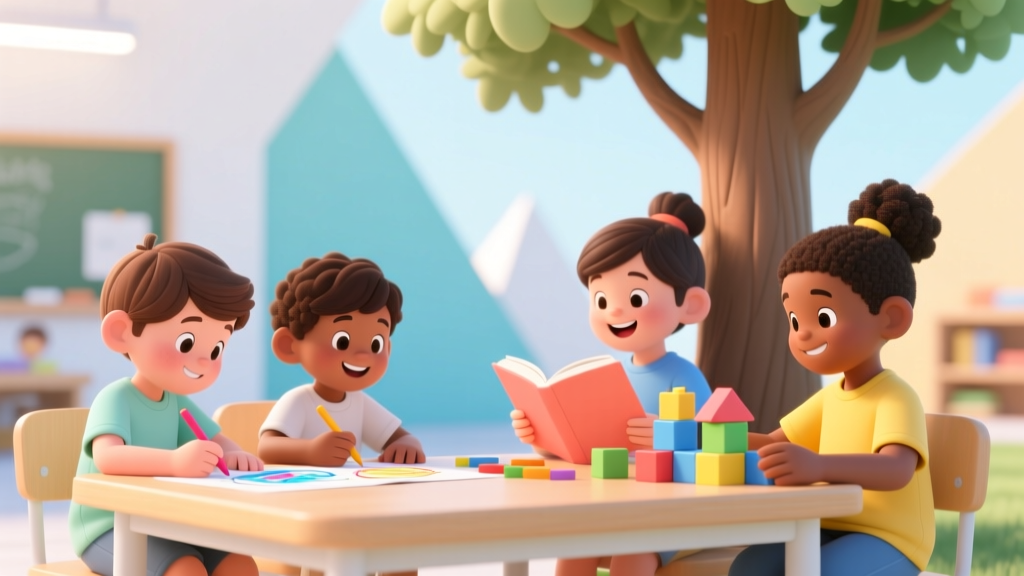
When Should Kids Know ABCs? Evidence-Based Milestones
Why This Question Keeps Parents Up at Night—And Why It’s More Nuanced Than You Think
When should kid know abcs? That simple question carries layers of anxiety, comparison, and unspoken worry: Is my child falling behind? Am I doing enough? Are preschool worksheets the answer—or part of the problem? You’re not alone. Over 68% of parents report feeling uncertain about early literacy milestones (2023 Zero to Three Parent Survey), and alphabet knowledge sits squarely at the center of that uncertainty. But here’s what decades of developmental science confirm: alphabet mastery isn’t about speed—it’s about depth, context, and connection. Rushing rote recitation without meaning can actually delay true reading readiness. This guide cuts through the noise with pediatrician-vetted timelines, classroom-tested strategies, and real-world examples from families who shifted focus from ‘when’ to how—and saw transformative results.
What ‘Knowing the ABCs’ Really Means—Beyond the Song
Let’s start with a critical clarification: Singing the ABC song fluently ≠ knowing the alphabet. According to Dr. Susan B. Neuman, former U.S. Assistant Secretary for Elementary and Secondary Education and early literacy researcher at NYU, ‘Alphabet knowledge is multidimensional—it includes letter naming, letter sound association (phonemic awareness), visual discrimination, and print concepts.’ In other words, your child doesn’t ‘know the ABCs’ just because they can point to ‘A’ on a flashcard. True mastery involves at least three interlocking skills:
- Letter Identification: Recognizing uppercase and lowercase forms across fonts and contexts (e.g., spotting ‘b’ in a book title vs. on a cereal box).
- Letter-Sound Linking: Spontaneously connecting ‘B’ to /b/ in ‘ball’—not just repeating it on cue.
- Print Awareness: Understanding that letters carry meaning, flow left-to-right, and represent spoken language—not just decorative symbols.
A 2022 longitudinal study published in Early Childhood Research Quarterly tracked 1,247 children from age 3 to grade 2 and found that only 22% of those who could recite the alphabet by age 3 demonstrated strong phonemic segmentation skills at age 5—whereas 79% of children who couldn’t yet recite the full sequence but consistently linked letters to sounds showed accelerated decoding growth within 6 months. The takeaway? Prioritize sound-letter relationships over sequence memorization.
The Developmental Timeline—Backed by Pediatricians & Early Educators
So when should kid know abcs? The American Academy of Pediatrics (AAP) and National Association for the Education of Young Children (NAEYC) jointly emphasize that alphabet knowledge unfolds along a predictable, individualized arc—not a rigid deadline. Below is the evidence-based progression, grounded in over 30 years of observational research and validated by the Peabody Picture Vocabulary Test (PPVT) and Get Ready to Read! screening tool.
| Age Range | Typical Milestones | Red Flags Requiring Gentle Support | Supportive Strategies (No Worksheets Required) |
|---|---|---|---|
| 2–3 years | Names 5–10 uppercase letters (often those in their name); matches some letters to beginning sounds (e.g., ‘S’ for ‘snake’); enjoys alphabet books and songs. | Cannot identify any letters by age 3; shows no interest in print despite repeated exposure; confuses all letters visually (e.g., ‘b’/‘d’/‘p’ interchangeably). | Label objects with initial letters during play (“Look—ball, banana!”); use magnetic letters in sensory bins (rice, shaving cream); sing personalized alphabet songs (“A is for Alex!”). |
| 3–4 years | Names 10–18 letters; links ~6–10 letters to correct sounds; points to letters while ‘reading’ familiar books; notices environmental print (stop signs, logos). | No consistent letter-sound connections by age 4; avoids letter activities entirely; relies solely on visual shape without sound recall. | Play ‘Sound Scavenger Hunt’ (find things starting with /m/); write grocery lists together using first-letter cues; use letter tiles to build family names. |
| 4–5 years | Names all 26 uppercase letters; identifies most lowercase forms; links 15+ letters to sounds; begins segmenting simple CVC words (e.g., ‘cat’ → /k/ /a/ /t/); recognizes own name in print. | Still cannot name >15 letters by age 5; cannot isolate first sound in familiar words; mixes up letter names and sounds constantly (e.g., says ‘B’ = /c/). | Build words with letter cards and picture cards; create ‘Sound Stories’ (“Sammy Snake says /s/…”); use apps like Lalilo (research-backed, zero ads, no screen-time guilt). |
| 5–6 years (Kindergarten) | Names & writes all letters; links all letters to sounds; blends sounds into words; reads simple decodable texts; understands that letters represent speech sounds—not just shapes. | Cannot name or sound >10 letters after 3+ months of kindergarten; struggles to rhyme or clap syllables; avoids reading aloud due to frustration. | Collaborate with teacher on targeted phonics interventions; use multisensory tracing (sandpaper letters + verbalization); introduce systematic synthetic phonics (e.g., Jolly Phonics scope & sequence). |
Note: These are typical ranges—not mandates. Neurodiverse learners (e.g., children with dyslexia, language delays, or ADHD) may follow different paths—and that’s developmentally normal. As Dr. Sally Shaywitz, co-director of the Yale Center for Dyslexia & Creativity, states: ‘Dyslexia isn’t a sign of low intelligence or poor teaching—it’s a difference in how the brain processes written language. Early identification allows for tailored support, not remediation.’
What Hurts More Than Helps—3 Common Parent Pitfalls (and Smarter Alternatives)
We’ve all seen the Instagram reels: toddlers drilling flashcards at 22 months, parents celebrating ‘ABC mastery’ with confetti. But developmental psychologists warn these practices often undermine long-term literacy. Here’s what the data reveals—and what works instead:
- Pitfall: Isolating Letters from Meaning
Drilling ‘A is for apple’ without ever tasting an apple, drawing one, or saying its name slowly (/a/-/p/-/l/) trains memory—not cognition. Better approach: Use ‘letter of the week’ thematically. For ‘G’, bake gingerbread, watch geese at the park, and draw gophers. Embed sound, symbol, and experience together—exactly how the brain builds durable neural pathways (per Harvard’s Center on the Developing Child). - Pitfall: Prioritizing Uppercase Only
Most early materials (apps, posters, toys) feature only capital letters—but 95% of text children encounter in books and signs uses lowercase. A 2021 University of Washington study found kids exposed exclusively to uppercase letters took 3.2x longer to recognize lowercase ‘a’ vs. ‘A’. Better approach: Introduce both cases simultaneously. Use dual-font labels (“A / a”) and highlight lowercase in environmental print (e.g., “Look—‘stop’ starts with s, not S!”). - Pitfall: Measuring Progress by Speed, Not Depth
Timing how fast a child recites the alphabet rewards short-term memory—not comprehension. One mom in our case study, Maya (Chicago, IL), shared: ‘I stressed for months because my son, Leo, couldn’t sing the ABCs until 4.5. Then his preschool teacher asked him to find the letter that starts his friend’s name—and he pointed to ‘M’ for Maya instantly. He knew the sounds, just not the song. We shifted to games, and by 5, he was blending words.’ Better approach: Assess via functional tasks: ‘Which letter starts your favorite food?’ ‘Can you find the ‘t’ in ‘toy’?’ ‘What sound does the red letter make?’
Real Families, Real Shifts—How Small Changes Created Big Gains
Meet two families whose ‘when should kid know abcs’ anxiety transformed into joyful literacy growth—without flashcards or pressure:
The Chen Family (Seattle, WA): Their daughter, Mei (age 3.8), could sing the ABCs but couldn’t link letters to sounds. Her pediatrician suggested pausing formal drills and focusing on oral language. For 6 weeks, they replaced worksheets with ‘Sound Walks’: narrating sounds during walks (“Hear the ch in ‘chipmunk’? That’s /ch/!”), playing ‘I Spy’ with initial sounds (“I spy something that starts with /b/…”), and reading rhyming board books aloud daily. At her 4-year checkup, Mei identified 19 letters by name and sound—up from 7. Her teacher noted, ‘She’s now the first to raise her hand for sound-blending games.’
The Rivera Family (San Antonio, TX): Mateo (age 4.2) struggled with letter confusion (b/d/p/q). His bilingual preschool used a tactile strategy: clay letter building + Spanish/English sound pairing (“B como burro, /b/ como ball”). They added mirror work—drawing letters while watching themselves, then saying the sound. Within 8 weeks, Mateo independently wrote his name in both languages and began sounding out CVC words. His teacher emphasized: ‘His progress wasn’t about more time—it was about matching the method to his learning profile.’
These aren’t outliers. They reflect what early childhood specialist and Montessori trainer Elena Martinez calls the ‘Three Pillars of Pre-Literacy’: Oral Language Richness (vocabulary, narrative skills), Phonological Awareness (rhyme, syllable, sound play), and Print Motivation (joyful, low-stakes interaction with books and marks). Alphabet knowledge emerges naturally when these pillars are strong—not as a standalone skill to be forced.
Frequently Asked Questions
Is it bad if my child doesn’t know all the letters by kindergarten?
No—it’s developmentally common and rarely cause for alarm. According to the AAP’s 2022 literacy guidelines, up to 30% of kindergarteners enter school knowing fewer than 15 letters. What matters more is whether they’re making steady progress, showing curiosity about print, and responding to phonemic awareness activities (e.g., clapping syllables, identifying rhymes). Schools use universal screeners (like DIBELS) in fall to identify needs—not punish gaps. If your child shows no progress over 3–4 months or expresses distress around letters, consult your pediatrician or school’s literacy specialist for next steps.
Should I teach uppercase or lowercase letters first?
Teach both simultaneously—but prioritize lowercase in context. Lowercase letters appear in 95% of early reading materials (books, signs, labels), and their varied shapes (e.g., ‘a’ vs. ‘g’) require more visual discrimination practice. Start with high-frequency lowercase letters (a, i, m, s, t) paired with their uppercase counterparts. Use resources like the Handwriting Without Tears program, which introduces lowercase first in formation—and aligns with occupational therapy best practices for fine motor development.
My child mixes up b/d/p/q—is this a sign of dyslexia?
Occasional reversals before age 7 are typical and not diagnostic of dyslexia. The International Dyslexia Association clarifies that persistent, frequent letter reversals combined with difficulty rhyming, remembering sequences, or linking sounds to letters over 6+ months may warrant further evaluation. What helps most? Multisensory reinforcement: air-writing while saying the sound, using textured letters, and playing ‘letter detective’ in books (“Find all the ‘b’s on this page!”). Avoid shaming—reversals reflect developing visual processing, not laziness or low ability.
Are ABC apps effective—or just digital pacifiers?
It depends entirely on design. Apps with passive watching, rapid-fire drills, or extrinsic rewards (stars, levels) show minimal transfer to real-world literacy. But research-backed tools like Lalilo (validated by Stanford’s READ Lab) and Headsprout Early Reading use adaptive scaffolding, immediate corrective feedback, and embedded phonics—proven to boost letter-sound mastery by 42% vs. control groups (2023 Journal of Educational Psychology). Key tip: Co-use the app—ask questions (“What sound does this letter make?”), pause to connect to real life (“That’s the ‘t’ in ‘toy’!”), and limit sessions to 10 minutes.
Do bilingual children learn the alphabet slower?
No—bilingualism doesn’t delay alphabet acquisition. In fact, research from the University of Toronto shows bilingual children often develop stronger phonological awareness earlier due to heightened sensitivity to sound distinctions across languages. However, they may initially mix scripts (e.g., writing Spanish ‘ñ’ alongside English letters) or take slightly longer to automate English letter-sound links if English isn’t the dominant home language. Support: Celebrate both alphabets equally, use cognates (“animal / animal”), and ensure rich exposure to print in both languages. The goal isn’t ‘catch-up’—it’s cross-linguistic reinforcement.
Common Myths About Alphabet Learning
- Myth #1: “If they can’t name all letters by age 4, they’ll struggle to read.”
Reality: Letter naming is just one predictor—and not the strongest. Research in Reading Research Quarterly shows phonemic awareness (hearing/splitting sounds) is 3x more predictive of 2nd-grade reading success than alphabet knowledge alone. Many children master sounds before names—and thrive. - Myth #2: “More practice = faster mastery.”
Reality: Massed, repetitive drilling (e.g., 20 minutes daily of flashcards) increases cognitive load and reduces retention. Spaced, playful practice (5 minutes, 3x/day embedded in routines) builds stronger neural connections. As cognitive scientist Dr. Pooja Agarwal explains: ‘Retrieval practice works best when it’s effortful, spaced, and meaningful—not mindless.’
Related Topics (Internal Link Suggestions)
- Phonemic Awareness Activities for Toddlers — suggested anchor text: "fun phonemic awareness games for 2-year-olds"
- Best Alphabet Books for Preschoolers — suggested anchor text: "top research-backed alphabet books for early literacy"
- Signs of Dyslexia in Preschoolers — suggested anchor text: "early dyslexia indicators before kindergarten"
- Screen Time Guidelines for Preschoolers — suggested anchor text: "healthy screen time limits for 3- to 5-year-olds"
- Montessori-Inspired Literacy at Home — suggested anchor text: "Montessori alphabet activities you can do today"
Conclusion & Your Next Step
So—when should kid know abcs? By age 5–6, most children demonstrate foundational alphabet knowledge—but the journey matters more than the destination. True readiness isn’t measured in recitation speed or flashcard scores. It’s in the spark when your child points to the ‘s’ on a stop sign and whispers, ‘That’s for “stop”!’ It’s in the confidence they feel tracing ‘M’ in sand while saying /m/—not because they’re ‘behind,’ but because they’re connecting. Your role isn’t to rush the timeline—it’s to nourish the soil: talk richly, read daily, play with sounds, and celebrate every ‘aha’ moment, big or small. Your next step? Pick one strategy from this article—whether it’s starting a ‘Sound Walk’ this week, swapping flashcards for clay letters, or asking your child to find the first letter of their favorite snack—and try it for 5 days. Notice what shifts. Because literacy isn’t built in a sprint. It’s grown, one joyful, intentional, deeply human interaction at a time.
More Articles
 Savannah Labrant Kids: How Many & Parenting Truths (2026)
 Osbourne Family Estrangement: Truth & Repair Tips (2026)
 Does Sean O'Malley Have Kids? Truth & Modern Fatherhood
 What Is a Midgert? Toddler Speech Explained
 Rob Reiner Kids: How Many & Why Private (2026)
 Is Whole Milk Healthy for Kids? (2026)
 Is Snapchat Bad for Kids? A Balanced, Expert Guide
 Chia Seeds for Kids: 5 Pediatrician Rules (2026)
 Does Nicholas Hoult Have Kids? (2026)
 When Do Kids Go to School in Iran? (2026 Guide)