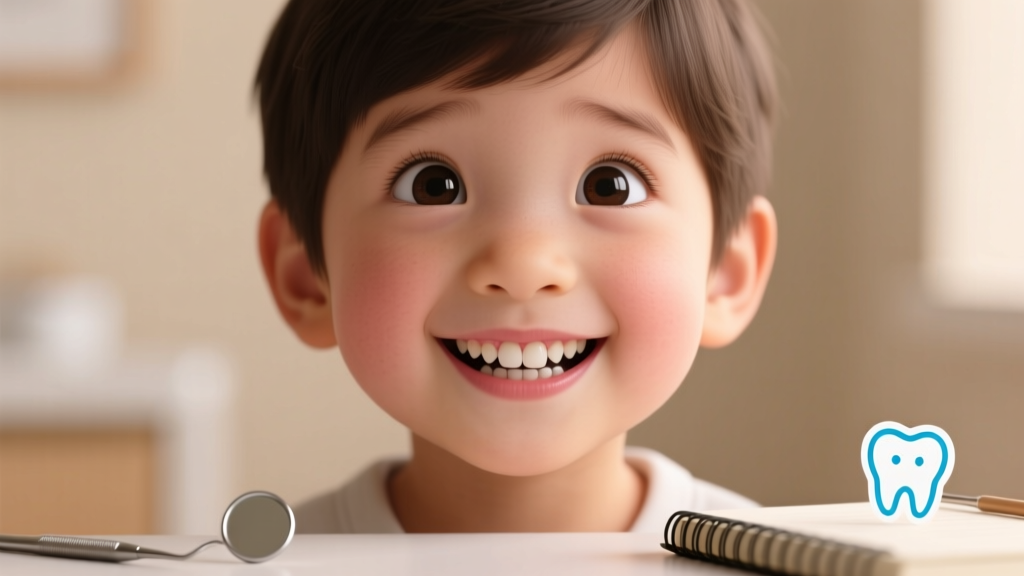
When Do Kids Lose Teeth? A Parent’s Guide (2026)
Why This Question Matters More Than Ever Right Now
When do kids lose teeth is one of the most frequently searched dental development questions among parents of children aged 4–8 — and for good reason. Unlike milestones like first steps or first words, tooth loss unfolds over years, varies widely between siblings, and carries unspoken worries: Is my child falling behind? Is that wiggly tooth infected? Why is their permanent tooth coming in crooked? In an era where social media amplifies comparison and misinformation spreads faster than dental plaque, parents deserve clarity grounded in pediatric dentistry — not viral myths or outdated folklore. This isn’t just about counting lost teeth; it’s about understanding jaw development, nutritional support, oral hygiene transitions, and emotional readiness — all of which shape lifelong dental health.
What the Science Says: The Real Timeline (and Why 'Average' Can Be Misleading)
The American Academy of Pediatric Dentistry (AAPD) confirms that most children begin losing their primary (baby) teeth between ages 5½ and 7 — but that’s only the starting point. What matters more is sequence, not strict chronology. Children typically lose teeth in the same order they erupted: lower central incisors first (around age 6), followed by upper central incisors, then lateral incisors, first molars, canines, and finally second molars — often concluding by age 12 or 13. However, research published in the Journal of Clinical Pediatric Dentistry (2022) tracked 1,247 children and found that 18% began losing teeth before age 5 — and 12% didn’t start until after age 7.5 — all within normal developmental variation.
Crucially, gender plays a subtle role: girls tend to lose teeth 3–6 months earlier than boys on average, likely linked to earlier skeletal maturation. Genetics also strongly influence timing — if a parent lost teeth early or late, their child is significantly more likely to follow suit. Dr. Lena Chen, board-certified pediatric dentist and clinical instructor at UCLA School of Dentistry, emphasizes: 'We don’t diagnose delay based on calendar age alone. We assess dental age via radiographs, root resorption patterns, and space maintenance — because a child with delayed exfoliation may simply have thicker root structure or denser bone, not pathology.'
Red Flags vs. Reassuring Signs: When to Celebrate — and When to Call the Dentist
Most tooth loss is quiet, painless, and barely noticed — until it’s not. Here’s how to distinguish typical progression from genuine concerns:
- Normal & Reassuring: A loose tooth that wiggles freely for 1–3 weeks before falling out; slight gum pinkness or minor bleeding when the tooth exits; mild sensitivity to cold or pressure; adjacent teeth shifting slightly as space opens.
- Potential Red Flag (Schedule Dental Visit Within 2 Weeks): Persistent pain lasting >48 hours without improvement; swelling or pus around the gum line; fever accompanying tooth mobility; a permanent tooth erupting behind or beside a still-firm baby tooth (not above it); loss of a primary molar before age 9 without orthodontic planning.
- Urgent Concern (Call Dentist Same Day): Traumatic loss of a baby tooth before age 3.5 (especially due to injury); spontaneous loss of multiple teeth without wiggliness; gray/black discoloration of a primary tooth that hasn’t been injured; signs of infection (bad breath, swollen lymph nodes, refusal to eat).
A real-world example: Eight-year-old Mateo lost his lower front teeth at 5 years 10 months — early but perfectly healthy. At age 7, however, his upper left canine remained immobile while the permanent canine was visibly erupting high in the gum. His pediatric dentist discovered mild crowding and recommended a space maintainer — catching a subtle orthodontic need before braces would be required. This illustrates why observation + professional evaluation beats rigid timelines.
Nourishing the Transition: Diet, Oral Hygiene, and Emotional Support
Tooth loss isn’t passive biology — it’s an active physiological process requiring optimal nutrition, microbial balance, and psychological safety. Calcium and vitamin D remain essential, but emerging research highlights three under-discussed nutrients:
- Vitamin K2 (MK-7): Directs calcium into teeth and bones instead of soft tissues. Found in natto, fermented cheeses, and egg yolks — or via supplement (dosage: 45–90 mcg/day for ages 4–12, per NIH guidelines).
- Zinc: Supports collagen synthesis for healthy periodontal ligaments. Deficiency correlates with delayed root resorption in animal models (Journal of Nutrition, 2021). Oysters, pumpkin seeds, and lentils are excellent sources.
- Probiotic Strains L. reuteri and S. salivarius: Clinically shown to reduce S. mutans colonization and gingival inflammation during eruption/loss phases (International Journal of Paediatric Dentistry, 2023).
Oral hygiene shifts dramatically during this phase. Parents should transition from brushing-for-their-child to supervised brushing-with-their-child — using a soft-bristled brush and fluoride toothpaste (pea-sized amount). Encourage gentle ‘wiggle brushing’ around loose teeth: circular motions for 2 minutes, avoiding aggressive scrubbing that could traumatize gums. And emotionally? Normalize feelings. One parent we interviewed, Sarah (mom of twins), created a ‘Tooth Tracker’ chart with stickers — not for rewards, but to celebrate body literacy: ‘We talked about how their jaws were growing stronger, how their teeth were making room for bigger ones — it turned anxiety into awe.’
Care Timeline Table: What to Expect, When, and How to Respond
| Age Range | Typical Tooth Loss Pattern | Parent Action Steps | Professional Recommendation |
|---|---|---|---|
| 4.5–5.5 years | Rare, but possible early loss of lower central incisors (often genetic or due to trauma) | Monitor for infection; avoid forcing wiggling; offer soft foods if chewing discomfort occurs | First dental visit if not already established; radiograph only if trauma occurred or asymmetry noted |
| 5.5–7 years | Lower & upper central incisors; occasional lateral incisors | Introduce floss threaders for new gaps; reinforce no-pulling rule unless tooth is >75% loose; celebrate with non-food traditions (e.g., ‘Tooth Journal’) | Routine check-up every 6 months; fluoride varnish application if caries risk elevated |
| 7–9 years | First molars, lateral incisors, canines; increased variability | Watch for ‘shark teeth’ (permanent incisors behind baby teeth); encourage gentle wiggling; introduce interdental brushes for cleaning behind erupting teeth | Orthodontic screening recommended by age 7 (AAPD guideline); panoramic X-ray if crowding suspected |
| 9–12 years | Second molars, remaining canines; final primary teeth usually gone by 12.5 years | Support independent brushing/flossing; discuss permanent tooth care habits; address any lingering self-consciousness about gaps | Comprehensive orthodontic evaluation if spacing, crowding, or bite issues observed; sealants for permanent molars |
Frequently Asked Questions
Do girls really lose teeth earlier than boys?
Yes — consistently. Multiple longitudinal studies show girls begin losing primary teeth an average of 4–6 months earlier than boys. This aligns with broader trends in skeletal and dental maturation, where girls reach dental maturity approximately 12–18 months ahead of boys. It’s not a health advantage or disadvantage — just biological timing. As Dr. Chen notes: ‘We see the same pattern in puberty onset and growth spurts — it’s part of integrated development, not isolated dental timing.’
My child’s permanent tooth is coming in behind the baby tooth — should I pull the baby tooth?
No — never pull a baby tooth yourself. ‘Shark teeth’ (permanent incisors erupting lingually while baby teeth remain) occur in ~10% of children and resolve spontaneously in 80% of cases within 2–3 months as the baby tooth root dissolves. Only a pediatric dentist should extract if the baby tooth shows no mobility after 3 months, or if crowding threatens alignment. Forced extraction risks gum injury, nerve damage, or premature space loss — potentially worsening orthodontic outcomes.
Is it okay to use numbing gel on a wiggly tooth?
Not routinely — and avoid benzocaine-containing gels entirely for children under 2 (FDA warning). For mild discomfort, chilled (not frozen) cucumber sticks or clean damp washcloths provide safe, soothing pressure. If pain persists beyond 48 hours, consult your pediatric dentist: it may signal underlying infection, cyst formation, or ectopic eruption — not simple exfoliation. Topical anesthetics mask symptoms without addressing cause and can delay necessary care.
How many baby teeth should be lost by age 7?
There’s no fixed number — but most children have lost 4–8 teeth by age 7. The lower and upper front four incisors (8 total) are typically first, though many lose only the lower two initially. Losing zero teeth by age 7.5 warrants evaluation, but losing 12 teeth by age 6.5 is also within normal range. Focus on sequence and symmetry: Are both sides progressing similarly? Are permanent teeth visible beneath gums? Those indicators matter far more than count.
Can diet really affect when kids lose teeth?
Absolutely — but indirectly. Severe malnutrition delays overall development, including dental maturation. Conversely, chronic high-sugar diets accelerate decay in primary teeth, sometimes leading to premature extractions (not natural exfoliation) — which disrupts spacing and timing. Emerging evidence links gut microbiome diversity to systemic inflammation levels, which modulate osteoclast activity (the cells that dissolve tooth roots). So yes — whole-food diets rich in prebiotics (onions, garlic, bananas) and probiotics support the biological environment where natural tooth loss occurs.
Common Myths
Myth #1: “Losing teeth early means adult teeth will be weak.”
False. Primary tooth root resorption is hormonally and genetically regulated — not a reflection of enamel quality or future dental health. Early loss often correlates with robust jaw growth and efficient remodeling. In fact, children who lose teeth earlier tend to have fewer orthodontic issues later, per a 2020 cohort study in Pediatric Dentistry.
Myth #2: “Wiggling a loose tooth will make it fall out faster — and that’s better.”
Not necessarily. Gentle wiggling is fine and can relieve pressure, but aggressive twisting or yanking increases risk of gum laceration, infection, or damaging the developing permanent tooth bud. Let nature guide the pace — root resorption completes when biologically ready. Rushing it offers no benefit and introduces preventable risk.
Related Topics (Internal Link Suggestions)
- How to soothe teething pain in babies — suggested anchor text: "soothing teething pain naturally"
- Best toothbrushes for kids ages 4–8 — suggested anchor text: "pediatric dentist-recommended kids' toothbrushes"
- When to start orthodontic evaluation — suggested anchor text: "first orthodontist visit age guidelines"
- Fluoride safety for children — suggested anchor text: "fluoride toothpaste dosage by age"
- Healthy snacks for strong teeth — suggested anchor text: "tooth-strengthening snacks for kids"
Your Next Step: Observe, Document, and Celebrate — Not Compare
When do kids lose teeth isn’t a race — it’s a personalized symphony of genetics, nutrition, oral health, and growth. Instead of checking off a calendar, try this: Take a photo of your child’s smile each month during this phase. Note wiggliness, gum appearance, and any discomfort. Share observations calmly with your pediatric dentist — not as a report card, but as collaborative data. Most importantly, name what’s happening: ‘Your jaw is getting bigger. Your grown-up teeth are waiting. Your body knows exactly what to do.’ That language builds agency, reduces fear, and transforms a biological process into a foundational lesson in self-trust. Ready to take action? Download our free Child’s Dental Milestone Tracker — a printable, AAPD-aligned guide with space for photos, notes, and dentist conversation prompts.
More Articles
 Booster Seat Age, Weight, Height: 2026 Checklist
 Sour Patch Kids Gluten Free? Truth & Safer Swaps (2026)
 Why Claire Was Replaced on My Wife and Kids
 Fernando Mendoza Kids: Privacy, Fatherhood & Media Literacy
 When Do Kids Move to Booster Seat? (2026)
 Does Karol G Have a Kid? The Cultural Truth (2026)
 Paxlovid for Kids: Age Limits & Dosing (2026)
 When Should Kids Tie Shoes? Evidence-Based Milestones (2026)
 Did Maduro Have Kids? Facts, Privacy & Ethics
 Super Bowl Kids: Sensory Safety & Prep Tips (2026)