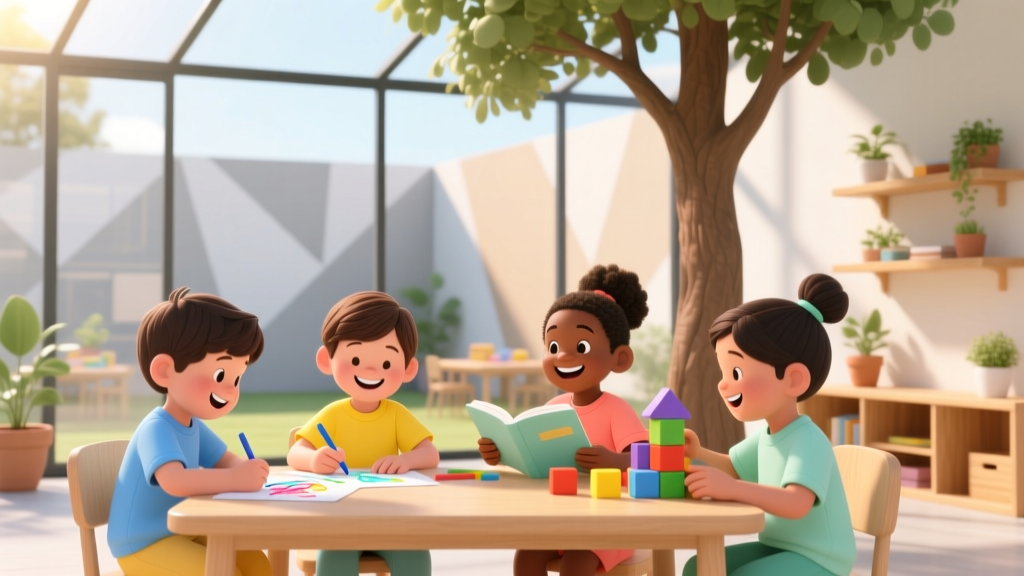
When Do Kids Read? Science-Backed Milestones (2026)
Why 'When Do Kids Read?' Isn’t a One-Size-Fits-All Question—And Why That’s Good News
The question when do kids read echoes in pediatric waiting rooms, preschool parent-teacher conferences, and late-night scrolling sessions—often laced with quiet worry. But here’s what leading child development experts want you to know first: reading isn’t a switch that flips on a birthday. It’s a layered, neurologically complex skill built across years, not months—and the timeline varies widely among typically developing children. According to the American Academy of Pediatrics (AAP), only 17% of children read fluently by age 5, while nearly 68% achieve consistent, independent reading between ages 6 and 7. Yet social media feeds overflow with ‘early reader’ milestones that misrepresent normal development—making many parents feel behind before their child has even held a board book. This article cuts through the noise with evidence-based benchmarks, red-flag indicators (not just green-light ones), and actionable, low-pressure strategies rooted in how children’s brains actually learn to decode language.
What ‘Reading’ Really Means at Each Stage (Spoiler: It’s Not Just Sounding Out Words)
Before we map timelines, let’s redefine ‘reading’—because conflating recognition, memorization, and true decoding is where most anxiety begins. Dr. Susan B. Neuman, former U.S. Assistant Secretary for Elementary and Secondary Education and literacy researcher at NYU, emphasizes that reading is not one skill—it’s five interlocking systems: phonological awareness, phonics, fluency, vocabulary, and comprehension. A 4-year-old who recites The Very Hungry Caterpillar from memory is demonstrating strong oral language and memory—not necessarily reading. True reading emerges when a child can apply knowledge of letter-sound relationships to *decode unfamiliar words*, not just recall familiar text.
Here’s how those five systems develop in tandem—and why early ‘reading’ behaviors often look nothing like schoolroom expectations:
- Phonological awareness (ages 2–4): Hearing and manipulating sounds in spoken words—rhyming, clapping syllables, identifying beginning sounds (“What sound does ‘ball’ start with?”). This is the strongest predictor of later reading success—more reliable than IQ or socioeconomic status, per a landmark 2019 longitudinal study in Child Development.
- Print concepts (ages 3–5): Understanding that print carries meaning, books are read left-to-right, letters form words, and punctuation guides voice. Observed during shared reading: pointing to words, turning pages correctly, noticing logos on cereal boxes.
- Phonics & decoding (ages 5–7): Mapping letters to sounds and blending them to read new words. Begins with consonant-vowel-consonant (CVC) words like “cat” and expands to digraphs (“sh,” “th”) and vowel teams (“ea,” “ai”).
- Fluency & expression (ages 6–8): Reading with speed, accuracy, and prosody (natural rhythm and intonation)—which signals automatic word recognition freeing up cognitive space for comprehension.
- Comprehension & inference (ages 6+): Going beyond literal understanding to predict, infer motives, connect text to personal experience, and analyze themes. This deepens significantly after age 8 but begins emerging as early as age 4 with picture-book discussions.
Crucially, these systems don’t unfold in rigid sequence—they overlap, reinforce each other, and mature at individual paces. A child might excel at phonological awareness but need more time to consolidate phonics—especially if they’re bilingual, have auditory processing differences, or simply process information more deliberately. As Dr. Sally Shaywitz, neuroscientist and author of Overcoming Dyslexia, notes: “The brain doesn’t care about calendars. It cares about exposure, repetition, and meaningful engagement.”
The Realistic Reading Timeline: What to Expect (and When to Gently Dig Deeper)
Forget arbitrary grade-level benchmarks. Below is a research-grounded, clinically validated progression—not a checklist, but a compass. These ranges reflect the middle 50% of typically developing children (per AAP, NAEYC, and NIH-funded Early Childhood Longitudinal Study data). Children outside these windows aren’t ‘behind’—they may be on a different, equally valid path—or signal a need for responsive support.
| Age Range | Typical Literacy Behaviors | What Supports Healthy Development | When to Consider Gentle Inquiry |
|---|---|---|---|
| 12–24 months | Points to pictures on request; responds to rhymes/songs; imitates animal sounds; shows interest in books by holding, turning pages (even upside down); names 2–5 familiar objects in books. | Daily shared reading (5–10 min); labeling objects in daily routines (“That’s your red shoe!”); singing nursery rhymes with exaggerated rhythm; limiting screen time (AAP recommends zero screens under 18 months). | No response to name or familiar words by 24 months; avoids eye contact during book sharing; no babbling or gesture use by 18 months (consult pediatrician for speech-language screening). |
| 2–3 years | Names some letters (especially those in own name); enjoys rhyming games; repeats refrains (“…and they all fall down!”); points to characters and asks “What’s that?”; scribbles with intent (not random marks). | Letter-focused play (magnetic letters in bath, sand trays); describing pictures *without* reading text (“What’s happening here?”); asking open-ended questions (“What do you think will happen next?”); modeling writing (grocery lists, notes to family). | No attempt to imitate sounds or words; inability to follow simple 1-step directions (“Give me the ball”); no pretend play by age 3 (e.g., feeding a doll, driving a toy car). |
| 4–5 years | Counts syllables in words; identifies beginning sounds; matches letters to sounds (“B says /b/”); writes name and some letters; retells simple stories with sequence (first, then, last); recognizes environmental print (STOP sign, McDonald’s logo). | Sound-sorting games (e.g., “Which words start with /m/? Moon, sun, mouse?”); tracing letters in sand or shaving cream; playing ‘I Spy’ with sounds (“I spy something that starts with /t/”); co-writing stories (“You tell it, I’ll write it down”). | No awareness of rhyming by age 4.5; cannot identify any letter sounds by age 5; reverses letters *consistently* (e.g., writes ‘b’ for ‘d’ *and* ‘p’ for ‘q’ in multiple contexts); extreme frustration or avoidance during literacy-rich play. |
| 6–7 years | Reads CVC words independently; decodes unfamiliar words using phonics; reads simple chapter books aloud with expression; self-corrects errors (“That says ‘dog,’ not ‘dig’”); answers ‘why’ and ‘how’ questions about text. | Guided reading with leveled books (just-right challenge, not frustration level); rereading favorite books for fluency; discussing character feelings and motivations; connecting stories to real life (“Has something like this ever happened to you?”). | Relies solely on memorization or picture clues to ‘read’; guesses every word instead of sounding out; omits or substitutes >30% of words; expresses persistent shame or anger around reading tasks after 6 months of consistent support. |
Note: These are developmental norms—not diagnostic thresholds. As pediatric neuropsychologist Dr. Erika L. Manczak explains, “A delay isn’t a deficit until it’s paired with distress, avoidance, or lack of progress despite targeted, joyful intervention.” If concerns arise, seek evaluation from a licensed speech-language pathologist (SLP) or educational psychologist—not a tutor promising ‘quick fixes.’
What Actually Works (and What Wastes Time, Money, and Joy)
Every year, parents spend over $1.2 billion on early-reading apps, flashcards, and ‘genius baby’ programs—many of which contradict how the brain learns to read. Let’s separate evidence from hype.
High-Impact, Low-Cost Strategies:
- Dialogic Reading (Proven 2x Vocabulary Gain): Instead of reading *to* your child, read *with* them. Pause to ask open questions (“What’s the bear feeling?”), expand their answers (“Yes—he looks worried because his honey is gone!”), and rephrase (“So he’s sad AND hungry!”). A 2022 meta-analysis in Early Childhood Research Quarterly found this method boosted expressive vocabulary by 22% more than passive reading alone.
- Phonemic Awareness Play (No Worksheets Required): Clap syllables in family names (“Ma-ma,” “Ja-cob”), blend sounds orally (“/c/ /a/ /t/ — what word?”), delete sounds (“Say ‘smile’ without /s/”). Done during car rides or bath time, it builds neural pathways for decoding—without a single pencil.
- Environmental Print Immersion: Label cabinets (“forks,” “spoons”), create a ‘word wall’ with photos + labels of pets, foods, or toys, and point out letters in natural contexts (“Look—your name starts with ‘J’ like ‘jump’!”). This grounds abstract symbols in concrete meaning.
Strategies With Little to No Evidence (or Active Harm):
- Flashcard Drills: Rote memorization of sight words without phonics foundation creates fragile, context-dependent knowledge. Children taught this way often stall at ~100 words and struggle with new text.
- Early Chapter Books Before Decoding Skills Exist: Pushing ‘level 2’ readers on a 4-year-old undermines confidence. As Montessori literacy expert Angeline Lillard warns: “Forcing abstraction before concrete understanding is like teaching calculus before counting.”
- Screen-Based ‘Reading’ Apps: Most lack the responsive feedback and joint attention critical for language development. A 2023 JAMA Pediatrics study linked >30 mins/day of non-interactive literacy apps before age 3 with weaker expressive language at age 5.
Real-world example: Maya, a mom in Portland, spent $299 on an ‘early reader’ tablet program for her son Leo (age 4). After 3 months, he could ‘read’ 15 words—but only when the app spoke them first. When she swapped screens for sidewalk chalk letter-tracing and rhyming scavenger hunts, Leo began segmenting sounds in his own name within 6 weeks. His kindergarten teacher noted his phonemic awareness was in the top 10% of his class—despite zero formal instruction.
When ‘Late’ Reading Is Actually a Strength (and How to Nurture It)
Meet Sam, age 8. He didn’t read independently until second grade. His parents worried—until his third-grade teacher observed him building intricate Lego cities with written blueprints he’d designed himself, explaining gear ratios and structural load distribution. Sam’s brain prioritized spatial reasoning and systems thinking over linear symbol decoding—a common profile among gifted children with asynchronous development.
Research from the Yale Center for Dyslexia & Creativity shows that late readers often possess exceptional strengths in big-picture thinking, problem-solving, and narrative imagination. Dr. Shaywitz’s fMRI studies reveal that dyslexic readers activate broader, more integrative neural networks—making them disproportionately represented among entrepreneurs, engineers, and artists.
How to support these learners:
- Audiobooks + Shared Reading: Let them absorb rich vocabulary and complex syntax *orally* while their decoding catches up. Libby and Epic! offer free library access.
- Strength-Based Literacy: If they love dinosaurs, use paleontology field guides with labeled diagrams. If they build robots, read coding manuals together. Connect reading to their passion, not a curriculum.
- Alternative Output: Allow oral storytelling, stop-motion animation, or illustrated comics instead of written responses. Assessment should measure understanding—not transcription ability.
As occupational therapist and sensory integration specialist Christy Isbell reminds parents: “Your child’s reading journey isn’t a race against peers. It’s a personalized expedition—with its own terrain, pace, and breathtaking views you won’t see from the ‘fast lane.’”
Frequently Asked Questions
Can a child be ‘too young’ to start reading instruction?
Yes—if instruction is formal, worksheet-based, or pressure-filled. However, literacy-rich experiences (rhyming, storytelling, print exposure) are beneficial from birth. The AAP states that structured phonics instruction before age 5–6 is unnecessary and potentially counterproductive for most children. Focus on joyful, playful language—not drills.
My child reads well but doesn’t understand what they’ve read. What’s going on?
This is called ‘hyperlexia’—strong decoding with weak comprehension—and it’s more common than many realize. It often signals a gap in vocabulary, background knowledge, or inference skills. Try ‘think-alouds’ (“I wonder why she hid the key… maybe she didn’t trust him?”) and pause every few sentences to ask, “What’s confusing? What do you picture?” A speech-language pathologist can help build these higher-level skills.
Does bilingualism delay reading?
No—bilingual children reach reading milestones at the same rate as monolingual peers *in their dominant language*. In fact, research shows bilingualism strengthens executive function and metalinguistic awareness (understanding how language works), giving long-term literacy advantages. Support both languages equally; mixing languages in one sentence is normal code-switching—not confusion.
Should I be concerned if my child reverses letters (b/d, p/q)?
Mild reversals are typical until age 7. The brain’s visual processing system matures gradually. Concern arises only if reversals persist *beyond* age 7–8 *and* occur alongside other signs: poor phonemic awareness, trouble copying from the board, or inconsistent letter formation. Never shame reversals—instead, use multi-sensory reinforcement (air-writing, sandpaper letters, clay molding).
How much time should we spend on reading practice daily?
Quality trumps quantity. For preschoolers: 5–10 minutes of engaged, joyful interaction. For early readers: 15–20 minutes of guided practice (including rereading familiar texts for fluency) plus 10 minutes of independent ‘just-right’ book choice. Forced drills beyond this erode motivation—the #1 predictor of lifelong reading habits, per Scholastic’s 2023 Kids & Family Reading Report.
Common Myths About When Kids Read
Myth 1: “If they’re not reading by kindergarten, they’ll fall behind forever.”
Reality: Many strong readers emerge between ages 6–7. A landmark 2015 study tracked 2,800 children and found zero long-term academic difference at age 14 between those who read at 5 vs. 7—*as long as they received responsive, pressure-free support*. What mattered most was home literacy environment, not calendar age.
Myth 2: “More practice = faster reading.”
Reality: Over-practice triggers avoidance. Neuroscientist Dr. Maryanne Wolf’s research shows that stress hormones inhibit the brain’s reading circuitry. Ten minutes of joyful, connected reading builds stronger neural pathways than 30 minutes of tearful drilling.
Related Topics (Internal Link Suggestions)
- Phonemic Awareness Activities for Toddlers — suggested anchor text: "play-based phonemic awareness games"
- Best Picture Books for Early Literacy Development — suggested anchor text: "research-backed picture books for language growth"
- Signs Your Child May Need Reading Support — suggested anchor text: "when to seek literacy evaluation"
- How to Choose Leveled Readers Without Pressure — suggested anchor text: "finding just-right books for emerging readers"
- Bilingual Literacy Development Timeline — suggested anchor text: "reading milestones in dual-language households"
Final Thought: Reading Is a Relationship—Not a Race
When do kids read? They read when they feel safe enough to stumble, curious enough to wonder, and valued enough to try—even if their first ‘sentence’ is drawn in crayon beside a story they dictated to you. Your role isn’t to manufacture a reader. It’s to be the calm, delighted witness to their unfolding literacy identity. So put down the progress charts. Pick up a book with funny voices. Ask, “What part made you laugh?” And remember: the most powerful predictor of whether a child reads well isn’t when they start—it’s whether someone showed up, consistently, to celebrate the messy, magical, deeply human work of learning to make meaning from marks on a page. Ready to take your next step? Download our free 7-Day Playful Literacy Calendar—with zero worksheets, zero pressure, and 100% joy-built-in.
More Articles
 Blended Family Acceptance: 3 Research-Backed Steps (2026)
 Did Jane Goodall Have Kids? Rethinking Motherhood (2026)
 Charlie Kirk’s Wife and Kids’ Ages: The Truth (2026)
 SpongeBob Movie 2026: Kid-Appropriate? Pediatrician Review
 PBS Kids Shutdown? No—Here’s What Changed (2026)
 Where Did Trump’s Kids Go to College? (2026)
 How to Get Your Child’s Birth Certificate Fast
 What Size Is a 7.5 Women’s in Kids? (2026)
 Stomach Bug in Kids: Pediatrician-Approved Treatment
 Nosebleeds in Kids: Causes, Fixes & When to Worry