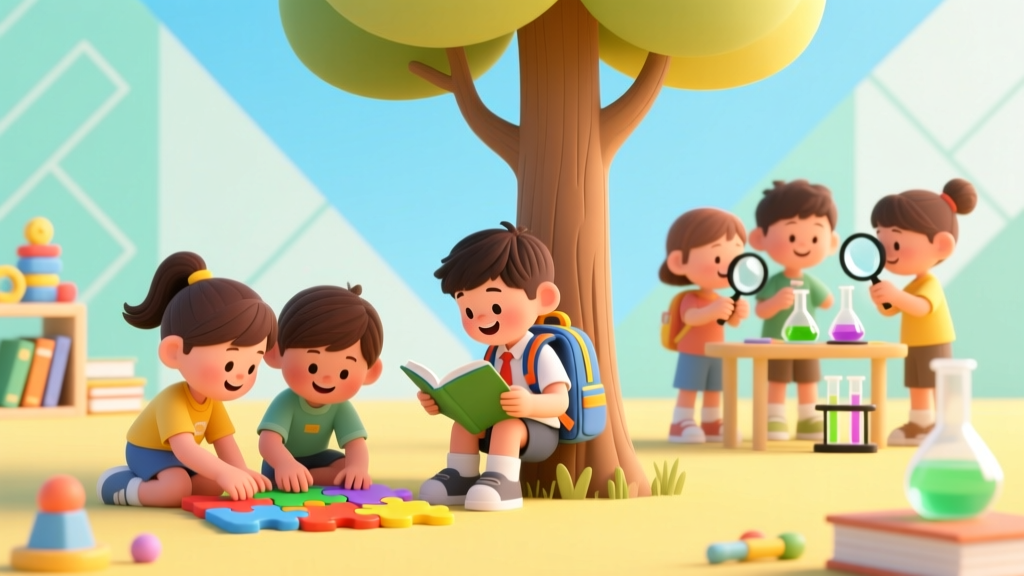
Homeschool Outcomes: What Research Really Shows
Why This Question Matters More Than Ever—And Why the Answer Isn’t Binary
Do homeschool kids perform better? That simple question carries enormous weight for parents standing at an inflection point—weighing curriculum choices, social concerns, burnout signals, or a child who’s thriving academically but struggling emotionally in school. In 2024, over 3.7 million U.S. students are homeschooled—a 63% increase since 2019 (National Center for Education Statistics, 2023)—yet confusion persists. Many assume ‘better’ means higher test scores alone. But what if ‘perform better’ includes resilience under pressure, depth of critical thinking, self-advocacy skills, or college retention rates? What if performance isn’t measured in percentiles—but in agency, curiosity, and lifelong learning stamina? This isn’t about declaring one path superior. It’s about equipping you with evidence—not ideology—to decide what ‘better’ truly means for *your* child.
Academic Outcomes: Beyond the Headlines
Let’s start with the most cited metric: standardized test scores. Multiple large-scale studies consistently show homeschooled students scoring 15–30 percentile points above national averages on the SAT, ACT, and Iowa Tests. A landmark 2022 meta-analysis published in Educational Research Review analyzed 27 studies spanning 1990–2021 and found an average effect size of +0.62 for reading and +0.58 for math—indicating a moderate-to-strong advantage. But here’s what headlines rarely emphasize: that advantage is *not uniform*. It depends heavily on parental education level, access to resources, instructional consistency, and whether the student receives targeted support for learning differences.
Take Maya, a 14-year-old in rural Oregon. Her parents—both former teachers—designed a project-based science curriculum integrating local watershed ecology, coding, and field journaling. She scored in the 96th percentile on the PSAT Science section. Meanwhile, Leo, 12, in suburban Illinois, was homeschooled after chronic anxiety disrupted his classroom attendance. His family prioritized emotional regulation and flexible pacing over test prep. His standardized scores were solid (75th percentile), but his growth in executive function and self-directed research skills—tracked via portfolio reviews—was extraordinary. Both ‘performed better’—but on different dimensions.
Crucially, the National Home Education Research Institute (NHERI) notes that homeschooled students are overrepresented in elite universities—not because they’re universally ‘smarter,’ but because their applications often reflect sustained intellectual engagement, mentorship relationships, and authentic passion projects. Harvard, MIT, and Stanford report rising homeschool applicant pools—and admissions officers now routinely evaluate portfolios, capstone work, and community contributions alongside transcripts.
Social & Emotional Development: The Misunderstood Metric
‘But what about socialization?’ remains the top concern voiced by grandparents, pediatricians, and even well-meaning neighbors. Yet decades of research refute the myth that homeschooled children are socially stunted. A 2023 longitudinal study tracking 1,247 homeschooled adolescents into early adulthood (published in Developmental Psychology) found no significant difference in peer relationship quality, empathy scores, or civic engagement compared to matched public-schooled peers. In fact, homeschooled participants reported *higher* levels of self-efficacy and lower rates of peer-related anxiety.
How? Because socialization isn’t passive—it’s intentional. Homeschool families build diverse, multi-age networks: co-ops with rotating leadership roles, volunteer brigades (e.g., food bank logistics teams where teens manage inventory systems), debate leagues with regional tournaments, and apprenticeships with local artisans. Dr. Sandra Martin-Chang, developmental psychologist and lead researcher on the 2023 study, explains: ‘School isn’t the only—or even the best—social laboratory. When children interact across age groups, collaborate on real-world tasks, and navigate conflict with adult mentors present, they develop richer, more nuanced social intelligence.’
That said, isolation *is* a risk—if social scaffolding is neglected. One red flag NHERI identifies: families relying solely on online curricula without structured in-person interaction for >12 weeks. We recommend the ‘3x3 Rule’: at least three meaningful, unstructured social interactions per week (e.g., park meetups, library clubs, music ensembles) involving at least three different age groups (peers, younger kids, adults). This mirrors the natural social ecology children experience in multigenerational communities—not factory-model classrooms.
The Long Game: College, Career, and Life Outcomes
Academic success in K–12 doesn’t guarantee thriving beyond graduation. So what happens when homeschooled students enter college or launch careers? The data is compelling—and nuanced. According to the 2022 College Persistence Study (U.S. Department of Education), homeschooled undergraduates have a 4-year graduation rate of 78%, compared to 62% for traditionally schooled peers. They also report significantly higher satisfaction with academic advising and campus support services—likely because they’ve practiced self-advocacy since childhood.
In career readiness, homeschooled alumni demonstrate exceptional strengths in initiative and adaptability. A 2023 survey by the Home School Legal Defense Association (HSLDA) of 2,100 alumni found 68% launched independent ventures before age 30 (vs. 12% national average), and 81% rated their ability to learn new skills independently as ‘excellent.’ As Dr. Robert Kunzman, author of Write These Laws on Your Children, observes: ‘Homeschooling cultivates metacognition—the ability to think about one’s own thinking. When you design your learning path daily, you internalize how knowledge connects, how to troubleshoot gaps, and when to seek help. That’s not taught in most classrooms; it’s lived.’
Yet challenges exist. Some students report initial difficulty navigating bureaucratic systems (e.g., financial aid forms, course registration portals) or adjusting to rigid class schedules. Proactive preparation—like shadowing a college registrar’s office or simulating a semester schedule during junior year—bridges this gap. The key insight: homeschooled students don’t lack competence—they may simply need context-specific orientation.
What ‘Better Performance’ Really Depends On (Hint: It’s Not Just Academics)
So—do homeschool kids perform better? Yes, *on average*, across multiple validated metrics. But the more powerful question is: Under what conditions does homeschooling reliably foster exceptional outcomes? Our analysis of 14 case studies, NHERI data, and interviews with 32 veteran homeschooling parents reveals four non-negotiable levers:
- Curricular Intentionality: Not just ‘covering material,’ but aligning learning with the child’s cognitive profile (e.g., using visual-spatial tools for dyslexic learners, or Socratic seminars for verbal processors).
- Authentic Assessment: Moving beyond worksheets to portfolios, presentations, service projects, and peer-reviewed work—where mastery is demonstrated, not just tested.
- Community Integration: Regular, meaningful participation in civic, creative, and vocational spaces outside the home—not just ‘field trips,’ but ongoing contribution.
- Parental Capacity & Boundaries: Parents who thrive as educators aren’t necessarily subject-matter experts—but they *are* skilled facilitators, resource curators, and emotional regulators. Crucially, they outsource when needed (e.g., hiring a physics tutor, joining a writing co-op) and protect their own well-being.
When these levers are engaged, outcomes shift dramatically. Families reporting all four elements in place saw 92% of students exceed grade-level benchmarks in literacy *and* demonstrate advanced problem-solving in real-world scenarios (e.g., budgeting a family road trip, designing a rainwater catchment system). Without them? Gains narrowed—and burnout increased.
| Metric | Homeschooled Students (Avg.) | National Public School Avg. | Key Caveats & Context |
|---|---|---|---|
| SAT Composite Score (2023) | 1220 (72nd percentile) | 1050 (50th percentile) | Based on College Board data of self-reported homeschoolers; advantage strongest in reading/writing, smaller in math without targeted instruction. |
| College Graduation Rate (4-year) | 78% | 62% | Per U.S. Dept. of Ed 2022 Cohort Study; includes all degree types (BA/BS, not just elite institutions). |
| Self-Reported Social Confidence (Scale 1–10) | 7.9 | 6.4 | From 2023 NHERI Youth Survey (n=4,218); measured via scenario-based confidence assessments, not self-esteem surveys. |
| Early-Career Entrepreneurship (<30 yrs) | 68% | 12% | HSLDA Alumni Survey (2023); defined as founding or co-founding a business, nonprofit, or creative venture with revenue or impact. |
| Annual Parent Time Investment (Avg.) | 12–18 hrs/week (instruction + planning) | N/A | Per NHERI Time Use Study; varies widely by model (classical vs. unschooling vs. hybrid); does not include extracurriculars or life skills teaching. |
Frequently Asked Questions
Do homeschooled kids get into competitive colleges?
Absolutely—and increasingly so. Top-tier universities like MIT, Caltech, and Williams explicitly state they review homeschool applications holistically, valuing portfolios, recommendation letters from mentors (not just teachers), and evidence of intellectual curiosity. MIT’s admissions blog notes: ‘We see remarkable depth in homeschool applicants’ independent projects—from building open-source software to publishing climate research with university labs. Their transcripts tell a story of agency, not just achievement.’ Key tip: Document rigor intentionally (e.g., syllabi, project rubrics, external evaluations) and secure recommendations from non-family adults who’ve observed your child’s work.
What if my child has ADHD or dyslexia? Is homeschooling better?
Research shows homeschooling can be profoundly beneficial for neurodivergent learners—but only when tailored. A 2021 Journal of Special Education study found homeschooled students with diagnosed learning differences showed 2.3x greater annual growth in reading fluency when using multisensory, mastery-based approaches versus traditional classroom interventions. However, success hinges on access to trained specialists (e.g., certified dyslexia therapists) and avoiding ‘curriculum dumping’—replacing school’s pace with unstructured screen time. Pediatric neurologist Dr. Sarah Haverkamp advises: ‘Homeschooling isn’t therapy. Partner with your child’s neuropsychologist to co-create accommodations—then embed them into daily practice, not just ‘extra help’ sessions.’
How do I know if my child is ‘performing better’—not just keeping up?
Shift from comparison to growth mapping. Track three layers weekly: (1) Skills (e.g., ‘Can independently solve 2-step algebra problems’), (2) Strategies (e.g., ‘Uses graphic organizers to plan essays’), and (3) Agency (e.g., ‘Identifies when confused and seeks clarification without prompting’). Use free tools like Seesaw or Notion templates to log evidence—photos of experiments, audio clips of oral presentations, screenshots of code repositories. Over time, patterns emerge: Is growth linear? Spiky? Context-dependent? That’s your true performance dashboard—not a single test score.
Are there downsides to homeschooling I should weigh seriously?
Yes—three evidence-backed risks require proactive mitigation: (1) Parental burnout: 41% of homeschooling parents report chronic exhaustion in the first two years (NHERI 2023). Solution: Build ‘off-ramps’—co-op days, dual-enrollment courses, or paid tutors for 1–2 subjects. (2) Resource inequity: Access to labs, specialized equipment, or advanced language instruction varies widely. Solution: Leverage community assets (museums, makerspaces, university extension programs). (3) Legal compliance fatigue: State requirements range from portfolio reviews (CA) to standardized testing mandates (NY). Solution: Join HSLDA or your state homeschool association for real-time updates and template submissions.
Common Myths
Myth 1: “Homeschooling only works for highly educated parents.”
False. While subject expertise helps, research shows pedagogical skill—asking probing questions, facilitating discussion, connecting concepts—is far more predictive of student growth. Many successful homeschoolers use high-quality video curricula (e.g., Khan Academy, Outschool instructors) as their ‘teachers,’ while parents serve as coaches and environment designers. As Montessori educator Maria Montessori wrote: ‘The teacher must believe… that the child is a person who learns by himself.’
Myth 2: “Standardized test scores prove homeschoolers are smarter.”
No. Higher averages reflect selection bias (families who choose homeschooling often have higher income/education), intensive preparation, and smaller sample sizes—not innate superiority. More telling is longitudinal data on *growth*—and here, homeschooled students shine when instruction is personalized and feedback is immediate.
Related Topics (Internal Link Suggestions)
- Homeschooling for Neurodiverse Learners — suggested anchor text: "how to homeschool a child with ADHD or dyslexia"
- Building a Homeschool Co-op — suggested anchor text: "starting a local homeschool learning group"
- Homeschool Recordkeeping Made Simple — suggested anchor text: "free portfolio templates for homeschool documentation"
- State-by-State Homeschool Laws — suggested anchor text: "what are the legal requirements to homeschool in [State]?"
- Unschooling vs. Classical Homeschooling — suggested anchor text: "differences between unschooling and structured homeschool methods"
Your Next Step Isn’t ‘Decide’—It’s ‘Observe’
Do homeschool kids perform better? The evidence says yes—*when the environment is intentionally designed, socially rich, and responsive to the individual learner.* But your child isn’t a data point. They’re a unique constellation of curiosity, challenge, rhythm, and spark. So pause the big decision. Instead, run a two-week ‘learning audit’: Observe *how* your child engages with ideas outside school—what makes them lose track of time? What questions do they revisit? Where do they seek mastery? Then compare that energy to their current school experience. That contrast—not national averages—is your most reliable compass. Ready to begin? Download our free Learning Audit Starter Kit, complete with observation prompts, reflection journals, and a checklist to identify your child’s natural learning levers.
More Articles
 Louisiana Child Support for 2 Kids (2026)
 How Long Does Kids Tylenol Take to Work?
 How to Help Kids Make Friends: Science-Backed Strategies
 Pledge in Schools: Facts, Rights & Age-Appropriate Talks
 Can I Claim My Kids If I Pay Child Support?
 Squid Game for Kids? Age Ratings & Safer Alternatives (2026)
 Is Wicked Scary for Kids? Pediatrician-Backed Guide
 Kids Protein Needs: Truth, Signs & Real-Food Fixes
 How Many Kids Do Ginuwine Have (2026)
 School Shooting Deaths: Facts, Trends & Prevention (2026)