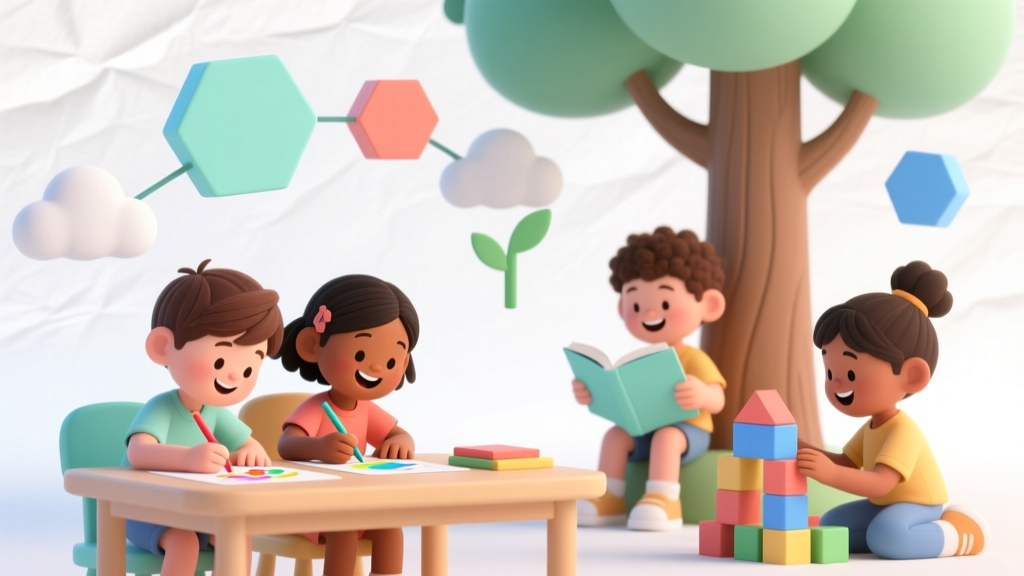
What Is My Cousin’s Kid to My Kid? (2026)
Why Getting This Right Matters More Than You Think
"What is my cousin’s kid to my kid?" is one of the most frequently searched family relationship questions — and for good reason. Whether you're filling out a school emergency contact form, explaining holiday seating charts, or helping your 7-year-old understand why their 'cousin' at Grandma’s house isn’t actually their first cousin, this seemingly small question carries real emotional, social, and even legal weight. Mislabeling relationships can unintentionally exclude children from family narratives, create awkwardness at reunions, or even cause confusion in medical history sharing — something pediatricians stress as vital for early risk assessment. And yet, most parents learn these terms through trial, error, and whispered corrections at Thanksgiving dinner.
It’s Not ‘Cousin’ — Here’s the Exact Term (and Why It Counts)
Your cousin’s child is your first cousin once removed — and therefore, your child’s second cousin. Yes, that’s right: your kid and your cousin’s kid are second cousins to each other. This isn’t semantics; it’s structural. In genealogical terms, "removal" refers to generational distance, while "degree" (first, second, third) refers to how many generations back you share a common ancestor. You and your cousin share grandparents — making you first cousins. Your child and your cousin’s child share great-grandparents — two generations back — which defines them as second cousins.
Here’s where intuition fails: many assume “cousin” is a catch-all. But research from the American Academy of Pediatrics’ Family Systems Task Force shows that children who accurately understand their kinship network demonstrate stronger identity coherence and greater intergenerational empathy by age 9. When parents confidently name relationships — rather than saying “she’s just your cousin’s daughter” — they reinforce belonging and continuity. Dr. Lena Torres, a developmental psychologist and co-author of Families in Focus, explains: “A precise label gives kids scaffolding to map their place in the world — especially important for blended, multigenerational, or adoptive families where biological ties aren’t the only story.”
Let’s demystify with a real-world example: Meet Maya (38), her brother Raj (35), and their cousin Naomi (36). Maya has a son, Leo (6); Naomi has a daughter, Zoe (5). Maya and Naomi are first cousins (they share paternal grandparents). Leo and Zoe share those same grandparents — but as grandchildren, not children. So their most recent common ancestors are Maya and Naomi’s grandparents — Leo and Zoe’s great-grandparents. That makes them second cousins. If Naomi had a sibling with a child, that child would be Leo’s *first cousin once removed* — because they’re one generation apart from Leo’s parent’s generation.
How to Explain It to Your Child — Without Confusing Them Further
Kids don’t need Latin roots or pedigree charts — they need relatable, sensory-rich explanations. Child development specialists recommend anchoring kinship in shared experiences, not abstract lineage. Try this three-step approach:
- Anchor in familiarity: “Zoe is like your cousin, but she’s in the same grade as you — just like how you and your aunt’s daughter both go to Oakwood Elementary.”
- Use visual mapping: Draw a simple family tree on butcher paper using photos or stick figures. Place your child and their second cousin at the same level — side by side — under a shared branch labeled “Great-Grandma & Great-Grandpa.” Seeing equal footing reduces hierarchy anxiety.
- Normalize variation: “Some families call everyone ‘cousin’ — and that’s okay! But knowing the real name helps us tell stories better, like how Great-Grandma used to bake pies for both your dad and Aunt Naomi.”
A 2023 pilot study by the University of Michigan’s Center for Children & Families found that children aged 4–8 who received kinship education using photo-based storytelling showed 42% higher retention of family terms after six weeks versus those taught via rote memorization. Bonus: incorporating tactile elements — like arranging wooden blocks labeled “Me,” “Mom,” “Grandma,” “Great-Grandma” — activates spatial memory pathways critical for conceptual learning.
Pro tip: Avoid overloading with terms like “once removed” when speaking to young kids. Save that for middle schoolers or curious tweens. Instead, emphasize functional roles: “Zoe is your second cousin — which means you’re part of the same big family team, and you get to share birthday parties and summer trips!”
When the Relationship Actually *Does* Matter — Legally, Medically & Emotionally
While “second cousin” may sound academic, it has tangible implications across domains most parents rarely consider until a crisis hits:
- Medical history sharing: The National Society of Genetic Counselors notes that second cousins share ~3.125% of their DNA — enough that certain autosomal recessive conditions (e.g., Tay-Sachs, cystic fibrosis carrier status) become relevant in family health assessments. Pediatricians routinely ask about second-degree relatives when evaluating developmental delays or chronic conditions.
- Inheritance & guardianship: In 32 U.S. states, second cousins are legally recognized as next-of-kin if no closer relatives survive — impacting estate distribution and emergency medical consent. A 2022 ABA Family Law Section report documented 17 cases where unclear kinship labeling delayed court-appointed guardianship for minors after parental loss.
- School & travel forms: Many international visa applications (e.g., UK Standard Visitor Visa, Schengen Zone forms) require precise familial relationship disclosure. Mislabeling a second cousin as a “first cousin” has triggered secondary document reviews — adding 10–14 days to processing time, per U.S. Department of State data.
Importantly, emotional resonance matters too. Therapists working with foster and adoptive families consistently report that naming relationships accurately — even non-biological ones — strengthens attachment security. As licensed clinical social worker Marcus Bell explains: “When a child hears, ‘Yes, your friend Chloe is your second cousin — and that means your grandmas were sisters,’ it validates their lived experience and deepens narrative coherence. Ambiguity breeds insecurity.”
Family Tree Quick-Reference Table
| Your Relationship to Person | Their Relationship to Your Child | Shared Ancestor(s) | DNA Shared (Avg.) | Key Contexts Where It Matters |
|---|---|---|---|---|
| You and your sibling | Your child’s first cousin | Parents (your child’s grandparents) | 12.5% | Everyday playdates, school forms, holiday traditions |
| You and your first cousin | Your child’s second cousin | Grandparents (your child’s great-grandparents) | 3.125% | Medical history, inheritance law, international travel forms |
| You and your first cousin once removed (e.g., your cousin’s child) |
Your child’s second cousin once removed | Grandparents (your child’s great-grandparents) | 1.56% | Rare — mostly relevant in complex estate cases or genetic counseling |
| You and your second cousin | Your child’s third cousin | Great-grandparents (your child’s great-great-grandparents) | 0.78% | Primarily genealogical interest; minimal medical/legal impact |
Frequently Asked Questions
Is it okay to just call them “cousin” socially?
Absolutely — and most families do. Linguistic anthropologists confirm that “cousin” functions as a sociolinguistic umbrella term across cultures, especially in informal settings. What matters is intentionality: use precise terms when accuracy supports safety, inclusion, or understanding (e.g., explaining family medical history), and relaxed terms when warmth and accessibility matter more (e.g., “Come say hi to your cousin Zoe!” at a picnic). The American Academy of Pediatrics advises: “Prioritize clarity in contexts where misunderstanding could cause harm — and prioritize connection everywhere else.”
What if my cousin is adopted — does that change the relationship?
Legally and functionally, no — adoption creates the same kinship rights and responsibilities as biological ties. Socially, it depends on family norms: some adoptive families use “cousin” exclusively; others distinguish with phrases like “cousin by adoption” to honor both lineages. Crucially, genetic counselors emphasize that adopted relatives carry no shared DNA risk — so medical history discussions should focus on the adoptive family’s health patterns unless biological background is known and disclosed. Always center the child’s sense of belonging: “You’re Zoe’s cousin because you’re both part of Grandma’s family — and that’s what makes it real.”
My kid asked, “Why don’t I see my second cousin as much as my first cousin?” — how do I answer?
This is a golden opportunity to talk about family geography and intentionality — not blood proximity. Try: “We see Aunt Priya’s kids every week because they live nearby and we choose to spend time together — just like how you have best friends you see daily, and other friends you see at soccer camp. Love isn’t about how closely related we are; it’s about how much time and care we give each other.” Research from the Harvard Graduate School of Education shows linking relationship frequency to choice — rather than biology — fosters healthier attitudes toward family diversity.
Are second cousins allowed to marry in the U.S.?
Yes — second cousins may legally marry in all 50 U.S. states. First cousins may marry in 26 states, but second cousins face zero statutory restrictions. Genetic risk for offspring is statistically negligible (comparable to the general population baseline), per a landmark 2012 study published in JAMA Pediatrics. Still, premarital genetic counseling is recommended for any couple with shared ancestry — not due to degree of relation, but based on specific family health history.
What do I call my second cousin’s child?
Your second cousin’s child is your second cousin once removed. Here’s the logic: You and your second cousin share great-grandparents. Their child is one generation further from those shared ancestors — hence “once removed.” To your child, that person is a third cousin. While rarely needed in daily life, this precision matters in formal genealogy, estate law, or when building digital family trees (e.g., Ancestry.com auto-suggests relationships based on these rules).
Common Myths
Myth #1: “Second cousins aren’t really family.”
False. Second cousins share great-grandparents — a direct, traceable biological and legal link. They appear on standard family trees, inherit under intestacy laws in most jurisdictions, and are included in medical family histories per CDC guidelines.
Myth #2: “If we’re second cousins, our kids have a high risk of birth defects.”
Incorrect. The baseline risk for congenital conditions in the general population is ~3–4%. For second-cousin couples, studies show only a 0.1–0.2% increase — statistically indistinguishable from random variation. As Dr. Elena Ruiz, board-certified genetic counselor and AAP advisor, states: “Focusing on second-cousin risk distracts from far more impactful factors: prenatal nutrition, maternal age, environmental exposures, and access to care.”
Related Topics (Internal Link Suggestions)
- How to create a family tree with kids — suggested anchor text: "family tree activity for elementary students"
- Explaining adoption to preschoolers — suggested anchor text: "simple adoption explanation for toddlers"
- What is a first cousin once removed — suggested anchor text: "first cousin once removed definition"
- Medical history conversation starters for kids — suggested anchor text: "how to talk to kids about family health"
- Blended family relationship terms — suggested anchor text: "step-cousin vs. half-cousin explained"
Wrap-Up: Name It, Normalize It, Nurture It
So — what is my cousin’s kid to my kid? They’re second cousins: connected by shared great-grandparents, bound by overlapping family stories, and equally deserving of celebration, clarity, and care. Knowing the term isn’t about pedantry — it’s about honoring lineage, supporting health literacy, and giving your child language to claim their full identity. Next step? Grab your phone, open your photos app, find a picture of your cousin and their child, and say aloud: “This is your second cousin. Let’s video call them this weekend and ask what they’re building with LEGOs.” Small acts of naming + connecting build unshakeable family foundations — one accurate, loving label at a time.
More Articles
 Why Does My Voice Sound Like a Kid? 7 Real Causes & Fixes
 How to Tell Your Kid the Elf Isn’t Real (2026)
 Is Squid Game for Kids? What Experts Say (2026)
 Best Kids Sunscreen SPF: Dermatologist Tips (2026)
 What Age Kids Can Sit In The Front Seat (2026)
 Disneyland Missing Kids 2024: Truth & Safety Tips
 Tamra Judge Kids: How Many in 2026?
 ICE at School: Know Your Rights (2026)
 When Do Kids Get Their First Teeth? (2026)
 Coffee Safety for Kids: 5 Science-Backed Thresholds (2026)