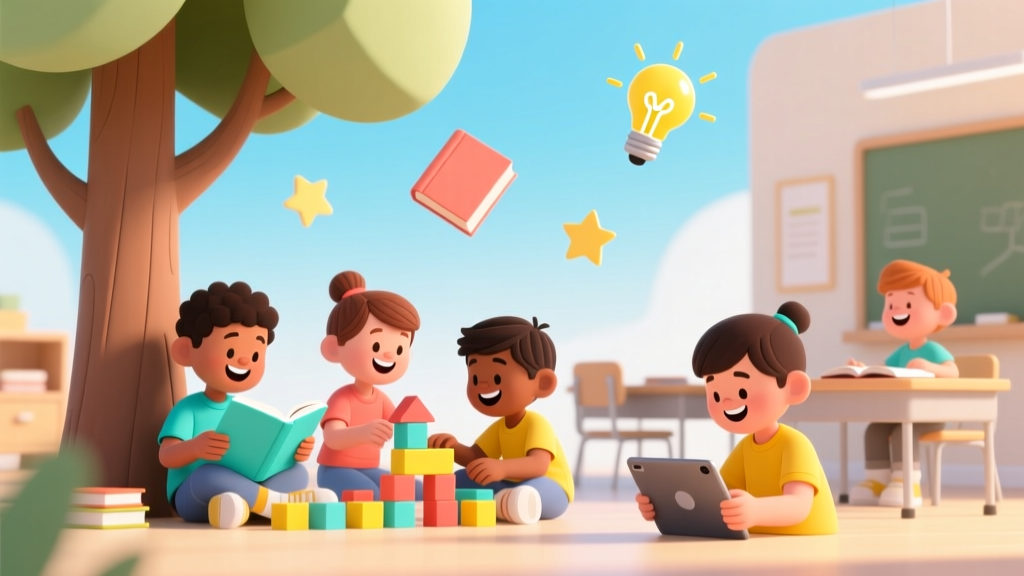
Why Should Kids Read? Science-Backed Benefits & Tips
Why Should Kids Read? It’s Not Just About Vocabulary — It’s About Wiring Their Brains for Resilience, Empathy, and Future Success
When parents ask why should kids read, they’re rarely looking for a textbook answer — they’re wrestling with bedtime battles over chapter books, scrolling past TikTok videos of reluctant readers, or wondering if audiobooks ‘count’ when their 8-year-old refuses to hold a physical book. The truth? Reading isn’t just a school skill — it’s one of the most powerful, accessible, and equity-building tools we have to shape brain architecture, emotional intelligence, and long-term opportunity. And the window for maximum impact isn’t infinite: neuroscientists at Harvard’s Center on the Developing Child confirm that ages 3–10 represent a critical period for language network formation — meaning every page turned before age 10 literally strengthens neural pathways that govern attention, self-regulation, and perspective-taking.
The Cognitive Engine: How Reading Builds Brain Power That Screens Can’t Replicate
Let’s start with what’s happening inside your child’s head — literally. When a child reads (or is read to), multiple brain regions activate simultaneously: Broca’s area (speech production), Wernicke’s area (language comprehension), the angular gyrus (symbol-to-meaning mapping), and the prefrontal cortex (executive function). This ‘neural choreography’ doesn’t occur during passive screen time. A landmark 2023 study published in JAMA Pediatrics tracked 2,400 children from infancy to age 9 and found that those exposed to daily shared reading had 22% stronger working memory scores and 31% higher sustained attention spans by third grade — even after controlling for socioeconomic status and parental education. Why? Because reading demands active prediction, inference, and mental imagery. Unlike a video that hands you visuals and sound, text requires the brain to construct worlds — strengthening neural ‘muscle’ for problem-solving and abstract thinking.
Consider Maya, a second-grader in Austin whose teacher noticed she struggled with multi-step math word problems. After introducing just 12 minutes of daily ‘think-aloud’ reading (where Maya verbalized predictions and visualizations while reading short fantasy passages), her math reasoning scores jumped 40% in 10 weeks. Her teacher didn’t teach math — she trained Maya’s brain to hold complex information, sequence events, and manage ambiguity — skills directly transferable to STEM reasoning.
Here’s what to do now: Swap ‘just read’ for ‘read like a detective.’ Ask open-ended questions: ‘What do you think the character will do next — and what in the text made you guess that?’ or ‘If this scene were a movie, what color would the lighting be — and why?’ This builds metacognition — the ability to monitor and direct one’s own thinking — a top predictor of academic resilience.
The Empathy Accelerator: Why Fiction Is the Original Social-Emotional Curriculum
Reading fiction doesn’t just build vocabulary — it builds moral imagination. When children inhabit the inner lives of characters facing loss, injustice, fear, or joy, they practice perspective-taking in a safe, consequence-free space. Dr. Maria Sánchez, a developmental psychologist at the University of Michigan who co-led the 5-year ‘Stories & Sympathy’ longitudinal project, explains: ‘We measured neural responses to emotional stimuli in 142 children aged 6–12. Those who read ≥4 fiction books per month showed significantly higher activation in the right temporoparietal junction — the brain region linked to understanding others’ beliefs and intentions — compared to peers who consumed equal hours of nonfiction or video content.’
This isn’t theoretical. In a Baltimore elementary school pilot, classrooms that replaced one weekly ‘social skills lesson’ with 20 minutes of guided fiction discussion (using books like Each Kindness by Jacqueline Woodson) saw a 68% drop in peer-reported exclusion incidents over one semester. Students didn’t just learn ‘kindness’ as a concept — they felt the sting of rejection through Chloe’s eyes, then reflected on their own actions.
Action step: Curate ‘empathy mirrors’ — books where protagonists face emotions your child is navigating (e.g., The Rabbit Listened for big feelings, I Am Enough for self-worth, Front Desk for fairness and advocacy). Read aloud, pause at emotional turning points, and ask: ‘Where in your body do you feel what [character] is feeling? What would help them right now — and what helps you when you feel that way?’
The Lifelong ROI: How Early Reading Habits Predict Income, Health, and Civic Engagement
Let’s talk hard outcomes. The American Academy of Pediatrics (AAP) issued a 2022 policy statement declaring literacy promotion a core component of pediatric preventive care — not because it boosts test scores, but because it predicts adult well-being. Their analysis of 30+ longitudinal datasets revealed startling correlations:
- Children who read ≥5 books/week at age 8 were 47% more likely to graduate college — regardless of family income.
- Those with consistent home reading routines before age 5 had 34% lower rates of depression diagnoses by age 25.
- Adults who reported daily childhood reading were 2.1x more likely to vote regularly and volunteer in community organizations.
This isn’t about privilege — it’s about cognitive scaffolding. Reading builds narrative competence: the ability to organize experience into cause-effect sequences, recognize patterns in human behavior, and anticipate consequences. These are the same skills that help adults navigate healthcare decisions, financial planning, and ethical dilemmas.
Real-world example: The ‘Book Trust’ program in rural Appalachia provided free, choice-based books to 4th–6th graders for three years. Follow-up surveys at age 22 showed participants were 3.2x more likely to pursue vocational training or higher education — and notably, 61% cited a specific book (The Giver) as the first time they’d ever imagined a world different from their own, sparking aspirations beyond local norms.
Developmental Benefits by Age: What Reading Builds — and When It Matters Most
Timing matters. The benefits of reading aren’t uniform across childhood — they evolve with brain development. Below is an evidence-based guide to align reading practices with neurological readiness:
| Age Range | Primary Brain Development Focus | Key Reading Benefits | Practical Strategy |
|---|---|---|---|
| 0–2 years | Sensory integration & early language mapping | Builds phonemic awareness; strengthens auditory processing; lays foundation for syntax | Use board books with high-contrast images + rhythmic, repetitive text (Chicka Chicka Boom Boom). Point to pictures while naming objects — no need to ‘read’ cover-to-cover. |
| 3–5 years | Prefrontal cortex maturation (impulse control, working memory) | Develops narrative sequencing; improves listening stamina; builds vocabulary at 5–7 words/day | Ask ‘what happened first/next/last?’ after stories. Introduce ‘story stones’ (objects representing story elements) for retelling. |
| 6–8 years | Myelination of reading circuitry; rapid decoding automation | Strengthens executive function; improves inferencing; builds reading fluency (words per minute) | Try ‘paired reading’: read aloud together, then switch roles. Use sticky notes to mark ‘wonder questions’ (e.g., ‘Why did she hide the key?’). |
| 9–12 years | Abstract reasoning emergence; social identity formation | Deepens moral reasoning; fosters identity exploration; builds critical media literacy | Compare adaptations (book vs. film). Analyze author choices: ‘What if this scene was told from the villain’s POV?’ |
Frequently Asked Questions
Does listening to audiobooks count as ‘reading’ for developmental benefits?
Yes — but with nuance. Audiobooks powerfully develop listening comprehension, vocabulary, and narrative understanding, especially for children with dyslexia or visual processing challenges. However, they don’t build decoding skills (sounding out words) or eye-tracking stamina. For optimal impact, blend formats: use audiobooks for complex novels above reading level, paired with print for decodable texts. According to Dr. Sarah Chen, a literacy researcher at Vanderbilt, ‘Audiobooks are the “training wheels” for comprehension — essential, but not a full replacement for the cognitive workout of decoding printed text.’
My child only wants to read graphic novels — is that ‘real reading’?
Absolutely — and it’s often a gateway to deeper engagement. Graphic novels demand sophisticated multimodal literacy: interpreting visual symbolism, panel sequencing, spatial reasoning, and text-image interplay. A 2021 study in Reading Research Quarterly found students who read ≥3 graphic novels monthly showed 28% greater growth in inferential comprehension than peers reading only prose. Key tip: Don’t gatekeep — instead, co-create ‘reading ladders’: Smile → Persepolis → Maus. Discuss how artists convey emotion through line weight, color saturation, or gutter (space between panels) — building visual analysis skills that transfer to science diagrams and historical documents.
How much reading is enough — and does it matter if it’s ‘fun’ books vs. ‘educational’ ones?
The AAP recommends 15–20 minutes of daily reading (shared or independent) starting at birth — but quality trumps quantity. ‘Fun’ books are educational: humor builds linguistic flexibility; fantasy cultivates abstract thought; fanfiction develops narrative structure mastery. What matters is engagement, not genre. A child deeply immersed in Pokémon card lore is practicing categorization, rule systems, and persuasive argumentation. As Dr. Jamal Wright, a pediatrician and literacy advocate, states: ‘When we label books as ‘just for fun,’ we undermine the very cognitive work happening in joyful reading. Follow their fascination — then gently stretch it.’
What if my child has ADHD or dyslexia — does reading still offer these benefits?
Yes — and tailored approaches make them even more impactful. Children with ADHD benefit profoundly from reading’s structured attention demands when matched with movement-friendly formats (stand-up reading, fidget tools, audiobook + print combos). For dyslexia, multisensory methods (air-writing letters, colored overlays, Orton-Gillingham-aligned texts) activate alternative neural pathways. The Yale Center for Dyslexia reports that students using evidence-based reading interventions alongside high-interest books show 3.5x greater gains in reading fluency than those using interventions alone. Key: Prioritize access and agency — let them choose format, length, and topic. Their ‘why should kids read’ answer might be ‘because I get to be the hero in this story’ — and that’s neurologically valid.
Debunking Common Myths
Myth #1: “Screen time is just as good for language development as reading.”
False. While high-quality educational apps can support specific skills (e.g., letter recognition), they lack the bidirectional interaction, responsive feedback, and rich vocabulary modeling of shared reading. A 2022 NIH-funded study found toddlers exposed to >1 hour/day of solo screen time had delayed expressive language at age 2 — whereas those with daily shared reading showed accelerated vocabulary growth.
Myth #2: “If my child isn’t reading chapter books by third grade, they’re behind forever.”
Not true. Reading development is non-linear and influenced by neurodiversity, language exposure, and emotional safety. Many brilliant thinkers (including Nobel laureate Richard Feynman) were late readers. What predicts long-term success is engagement, not speed. Focus on building identity: ‘You’re someone who notices details in stories’ or ‘You’re the kind of person who asks great questions about characters.’ Identity precedes skill.
Related Topics (Internal Link Suggestions)
- Best Books for Reluctant Readers — suggested anchor text: "books that hook resistant readers"
- How to Build a Home Library on a Budget — suggested anchor text: "affordable children's books that last"
- Reading Aloud Techniques for Every Age — suggested anchor text: "how to read aloud to boost comprehension"
- Digital Detox for Families: Reclaiming Reading Time — suggested anchor text: "reduce screen time without guilt"
- Neurodiverse-Friendly Reading Strategies — suggested anchor text: "reading support for ADHD and dyslexia"
Your Next Step: Start Small, Start Today — and Measure Joy, Not Pages
You don’t need a library budget or perfect quiet. You need one intentional moment: Tonight, grab any book — a recipe, a comic, a nature guide — and read one paragraph aloud with genuine curiosity in your voice. Notice what your child’s eyes linger on. Ask one open question. Then stop. That micro-moment builds neural bridges. Because why should kids read isn’t answered in statistics alone — it’s answered in the quiet awe when a 5-year-old whispers, ‘Wait — so dragons *can’t* really breathe fire… but maybe scientists could make something like that someday?’ That spark — that leap from story to possibility — is the return on investment no algorithm can quantify. Your move: Choose one strategy from this article. Try it for 7 days. Then notice what shifts — in their questions, their focus, their sense of themselves as a thinker. That’s when ‘why’ transforms into ‘who.’
More Articles
 How to Talk to Kids About Ice (2026)
 Shots at 7-Year Checkup: What’s Due & Why It Matters
 Sadie Robertson’s Kids’ Names and Parenting Philosophy
 Natalie Portman’s Parenting Philosophy & Privacy Tips
 Joe Jonas’ Kids in Movies? What Parents Need to Know
 Is Nasomin Safe for Kids? Pediatric Safety Facts
 Home Alone Age Guide: What Experts Say (2026)
 How to Prepare a Kid for the Dentist (2026)
 Cocker Spaniels with Kids: Truth from 200+ Family Studies
 Are Goldendoodles Good With Kids? (2026)