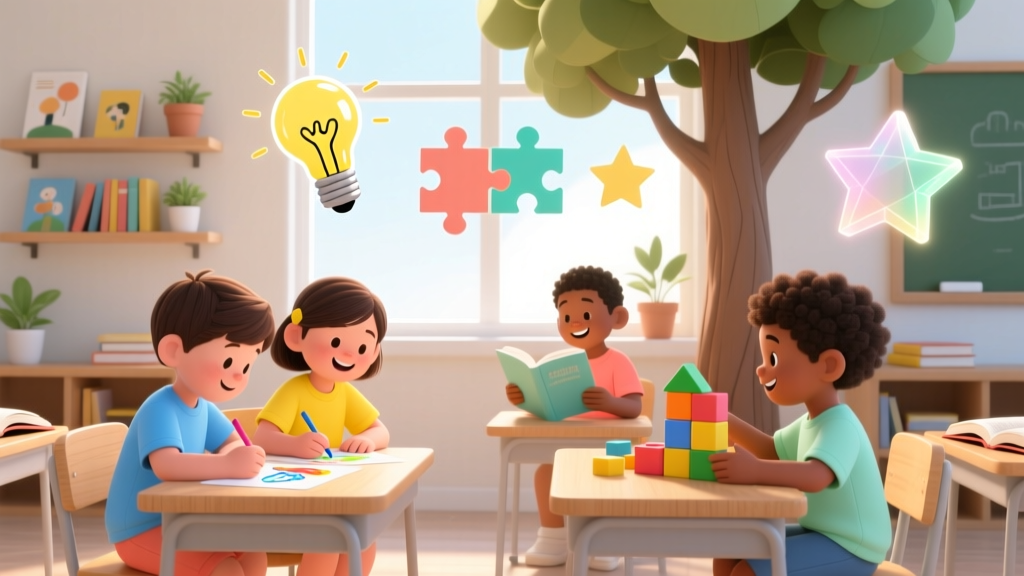
What Is Mental Health for Kids? A Parent’s Guide
Why 'What Is Mental Health for Kids?' Isn’t Just a Definition — It’s Your Child’s Lifeline
When parents search what is mental health for kids, they’re often not asking for textbook definitions — they’re quietly wondering: Is my child’s big emotion normal? Why does my 6-year-old cry before school but seem fine at home? Is it just 'a phase' — or something I should name, understand, and nurture? Mental health for kids isn’t the absence of tantrums or anxiety; it’s the dynamic capacity to feel, regulate, connect, cope, and grow — even amid stress, change, or uncertainty. And right now, it matters more than ever: according to the CDC, 1 in 6 U.S. children aged 2–8 has a diagnosed mental, behavioral, or developmental disorder — yet fewer than 20% receive consistent, developmentally appropriate support. This isn’t about pathologizing childhood. It’s about equipping caregivers with clarity, compassion, and concrete tools — starting with what mental health *actually* means for developing brains and hearts.
It’s Not ‘Adult Anxiety in Miniature’ — It’s Developmentally Unique
Mental health for kids doesn’t mirror adult mental health — not in presentation, triggers, or treatment pathways. A 4-year-old who clings tightly, avoids new people, and melts down over sock seams may be showing early signs of sensory processing differences and social anxiety — not ‘shyness’ or ‘bad behavior.’ A 10-year-old who suddenly stops doing homework, sleeps 12 hours nightly, and says ‘nothing matters’ isn’t being lazy; their brain’s reward circuitry may be dampened by emerging depression, which manifests differently in preteens than in adults (often as irritability, fatigue, or somatic complaints like stomachaches).
Dr. Sarah Lin, a clinical child psychologist and co-author of the AAP’s 2023 Mental Health Toolkit for Pediatricians, explains: ‘Children lack the metacognitive skills to label emotions or articulate internal states. So mental health struggles show up in behavior — sleep changes, appetite shifts, academic withdrawal, physical complaints, or sudden aggression. Interpreting those signals requires developmental literacy, not just empathy.’
Here’s what that looks like in practice:
- Ages 3–5: Mental health is rooted in secure attachment, emotional vocabulary (‘I feel mad’), and basic self-regulation (e.g., using a ‘calm-down corner’). Red flags include persistent fear of separation, extreme rigidity around routines, or inability to engage in parallel play.
- Ages 6–9: Focus shifts to peer relationships, academic confidence, and impulse control. Watch for chronic avoidance of group activities, disproportionate guilt over small mistakes, or recurring physical symptoms without medical cause.
- Ages 10–12: Identity formation, social comparison, and abstract thinking intensify. Mental health challenges may appear as perfectionism, social withdrawal, risk-taking, or unexplained anger — often misread as ‘attitude problems.’
This isn’t about diagnosing — it’s about noticing patterns. One off-day? Normal. Three weeks of declining engagement, sleep disruption, and emotional volatility? That’s your cue to pause, observe, and respond — not react.
5 Daily Micro-Practices That Build Resilience (No Therapy Required)
You don’t need a degree — or a diagnosis — to strengthen your child’s mental health foundation. Research from the Harvard Center on the Developing Child shows that consistent, attuned interactions literally shape neural architecture. These aren’t ‘quick fixes’ — they’re neuroprotective habits you can weave into ordinary moments:
- Emotion Labeling + Validation (2 minutes/day): When your child is upset, name the feeling *and* honor its validity: ‘You’re frustrated because the tower fell — that’s really disappointing. It’s okay to feel that.’ Avoid minimizing (‘It’s just blocks!’) or rushing to fix. A 2022 longitudinal study in Child Development found kids whose caregivers consistently labeled and validated emotions showed 37% greater emotional regulation skills by age 10.
- The ‘Connection Before Correction’ Pause (30 seconds): Before addressing behavior (e.g., yelling, hitting), make eye contact, kneel to their level, and say one grounding phrase: ‘I’m here. You’re safe.’ This activates the ventral vagal system — calming the nervous system before logic kicks in.
- Co-Regulation Through Rhythm (5 minutes/day): Walk together slowly while matching breaths, stir pancake batter side-by-side counting spoonfuls, or clap a steady beat while singing. Predictable, shared rhythm builds neural synchrony — proven to lower cortisol and strengthen attachment.
- ‘Small Win’ Spotlighting (1 minute at dinner): Ask: ‘What’s one thing you did today that felt hard — and you tried anyway?’ Not ‘What did you do well?’ — but ‘What did you *try*?’ This reinforces growth mindset and effort-based self-worth.
- Unstructured Outdoor Time (20+ minutes daily): Nature exposure reduces rumination (overthinking) and improves attention regulation. A University of Michigan meta-analysis linked 20+ minutes of green time to measurable decreases in cortisol and ADHD symptom severity.
These practices work because they target the root: safety, connection, and agency — the three pillars of childhood mental wellness. They’re not ‘extra’ — they’re essential infrastructure.
When to Seek Help: Decoding the Difference Between ‘Normal’ and ‘Needing Support’
Every child has tough days. But duration, intensity, and functional impact tell the real story. The American Academy of Pediatrics recommends professional evaluation when a behavior or mood pattern persists for **more than two weeks**, causes **significant distress**, or **interferes with daily life** — at home, school, or with peers.
Below is a clinically informed care timeline table designed for parents navigating uncertainty. It synthesizes AAP guidelines, CDC developmental benchmarks, and input from school-based mental health clinicians:
| Timeline | Key Signs to Notice | First-Line Actions | When to Consult a Professional |
|---|---|---|---|
| 0–7 days | New stressor (e.g., move, new sibling, school transition); temporary sleep/appetite shift; mild clinginess | Extra reassurance, predictable routines, limit screen time, increase physical comfort (hugs, back rubs) | Not required — monitor closely |
| 2–4 weeks | Persistent low mood, tearfulness, or irritability; withdrawal from favorite activities; frequent somatic complaints (headaches, stomachaches); difficulty concentrating | Document patterns (time, triggers, duration); initiate gentle conversations (‘I’ve noticed you’ve been quiet lately — want to draw how you’re feeling?’); connect with teacher for school observations | Consult pediatrician or school counselor for screening; request behavioral health referral if signs persist or worsen |
| 4+ weeks | Suicidal talk (even ‘I wish I wasn’t here’), self-harm (scratching, head-banging), panic attacks, refusal to attend school for >3 days, aggressive outbursts causing injury, hallucinations or paranoia | Ensure immediate safety (remove hazards, stay present); contact crisis line (988) or go to ER if imminent danger | Urgent referral to child psychiatrist or licensed clinical psychologist; same-week appointment recommended |
Note: There’s no ‘too young’ for support. Early intervention — especially before age 8 — yields the strongest long-term outcomes. As Dr. Lin emphasizes: ‘We wouldn’t wait for a broken bone to heal on its own. Why wait for a child’s emotional pain to resolve without skilled support?’
How Schools, Pediatricians, and Parents Can Partner Effectively
Mental health for kids isn’t solely a ‘home issue’ — it’s an ecosystem. Yet misalignment between settings creates gaps. A child may appear ‘fine’ at school but collapse at home — or vice versa. Here’s how to build bridges:
- With Your Pediatrician: Don’t wait for the ‘mental health question’ on the well-child form. Proactively ask: ‘Based on my child’s development, what emotional milestones should we watch for this year?’ Request standardized screenings (like the PHQ-9 modified for youth or SCARED for anxiety) — covered under ACA preventive care.
- With Teachers: Share *strengths* first (‘She loves storytelling and notices when friends are sad’), then concerns — framed behaviorally (‘He’s had 4 meltdowns during transitions this week’). Ask: ‘What supports does he access during the day? What helps him reset?’
- With Therapists: Prioritize providers trained in evidence-based modalities for children: CBT (for anxiety/depression), PCIT (Parent-Child Interaction Therapy for behavioral challenges), or TF-CBT (Trauma-Focused CBT). Ask: ‘How will you involve me in sessions? What skills will I learn to reinforce at home?’ Effective child therapy is deeply collaborative — not ‘drop-off and forget.’
A real-world example: Maya, a 7-year-old with selective mutism, made zero progress in solo speech therapy for 6 months. Her breakthrough came when her therapist trained Maya’s mom in ‘desensitization scripts’ and her teacher in nonverbal participation cues — turning every interaction into practice. Within 10 weeks, Maya whispered answers in class. The power wasn’t in the therapy room — it was in the consistency across contexts.
Frequently Asked Questions
Can mental health issues in kids go away on their own?
Some transient stress reactions resolve with support — but clinically significant conditions rarely ‘just pass.’ Untreated anxiety disorders in childhood have a 75% likelihood of persisting into adulthood (National Institute of Mental Health). Early, evidence-based intervention changes trajectories — not by erasing challenges, but by building lifelong coping architecture.
Is screen time ruining my child’s mental health?
Screen time itself isn’t inherently harmful — but *how* and *why* it’s used matters profoundly. Passive scrolling displaces sleep, movement, and face-to-face connection — all critical for mental health. However, video-calling grandparents, creating digital art, or playing cooperative online games can foster belonging and creativity. The AAP recommends co-viewing, consistent limits (1 hour/day for ages 2–5; consistent boundaries for older kids), and prioritizing ‘high-quality, interactive’ content over passive consumption.
My child seems ‘fine’ — should I still talk about mental health?
Absolutely. Normalizing mental health language *before* crisis builds emotional fluency. Try: ‘Our feelings are like weather — sometimes sunny, sometimes stormy, always changing. What’s your weather like today?’ Or read books like The Color Monster (ages 3–7) or What to Do When You Worry Too Much (ages 6–12). Prevention isn’t about expecting problems — it’s about giving kids the words, tools, and permission to navigate their inner world.
Are medications safe for kids with mental health challenges?
Medication is one tool — never the first or only option for most childhood conditions. For moderate-to-severe cases (e.g., debilitating OCD, major depression with suicidal ideation), SSRIs like fluoxetine (Prozac) have robust FDA approval and safety data for children. But they must be prescribed by a child psychiatrist, with close monitoring for activation (increased agitation) or behavioral shifts. Always combine with therapy — medication manages symptoms; therapy builds skills.
How do I explain therapy to my child without making them feel ‘broken’?
Frame it as strength-building, not fixing: ‘Just like you practice soccer to get better at kicking, we’ll practice noticing feelings and trying new ways to handle big emotions. It’s like having a coach for your heart and mind.’ Emphasize collaboration (‘We’ll go together, and you’ll decide what feels helpful’) and avoid labels (‘You have anxiety’ → ‘Sometimes your body feels super alert — let’s learn how to help it calm down’).
Common Myths
Myth 1: ‘Kids are too young to experience real mental health problems.’
False. Brain imaging studies confirm that neural circuits involved in emotion regulation, threat detection, and reward processing develop rapidly from birth through adolescence. Early-onset anxiety, depression, and ADHD are well-documented — and highly treatable when recognized early. The average age of onset for anxiety disorders is 6 years old.
Myth 2: ‘If I talk about feelings, I’ll make my child more anxious or depressed.’
The opposite is true. Suppressing emotions amplifies them. Children whose caregivers model healthy emotional expression and validation show lower cortisol levels and greater resilience. Naming feelings doesn’t create them — it gives children agency to understand and manage them.
Related Topics (Internal Link Suggestions)
- Signs of anxiety in children — suggested anchor text: "early signs of anxiety in kids"
- How to talk to kids about emotions — suggested anchor text: "age-appropriate emotion vocabulary"
- Best mindfulness activities for kids — suggested anchor text: "mindfulness exercises for elementary students"
- When to seek child therapy — suggested anchor text: "child therapist vs. school counselor"
- Building resilience in children — suggested anchor text: "resilience-building activities for tweens"
Your Next Step Starts With One Small Question
Now that you understand what is mental health for kids — not as a clinical label, but as the living, breathing foundation of their ability to learn, love, and belong — your power lies in observation, response, and partnership. You don’t need to have all the answers. You just need to notice the shift, name it with kindness, and reach for support when needed. Today, try one micro-practice: pause during your next stressful moment with your child, take one slow breath together, and say: ‘We’re okay. We’re figuring this out.’ That tiny act of co-regulation is where mental wellness begins. And if you’re carrying worry, exhaustion, or doubt — please extend that same grace to yourself. Your well-being is part of your child’s ecosystem too. Ready to go deeper? Download our free Parent’s Mental Health Observation Checklist — a printable, evidence-based tool to track patterns and prepare for meaningful conversations with your pediatrician or school team.
More Articles
 How Kids Get Hand Foot Mouth: 5 Real Transmission Routes
 How Many Kids Does Stephen D'Angelo Have? (2026)
 Trisha Paytas Kids’ Names: Luna & Luka Explained
 Jelly Roll’s Kids: How Many? | Parenting Truths (2026)
 Is There a Mucinex for Kids? Safe Alternatives (2026)
 How Old Are Larry the Cable Guy's Kids? (2026)
 Do Kids Get Shots at 9-Year Checkup? (2026)
 Adeline Watkins Kids? Her Private Parenting Choices (2026)
 AirTags for Kids: 7 Safety Truths Parents Must Know
 How to Get Kids Off Screens: Science-Backed Shifts