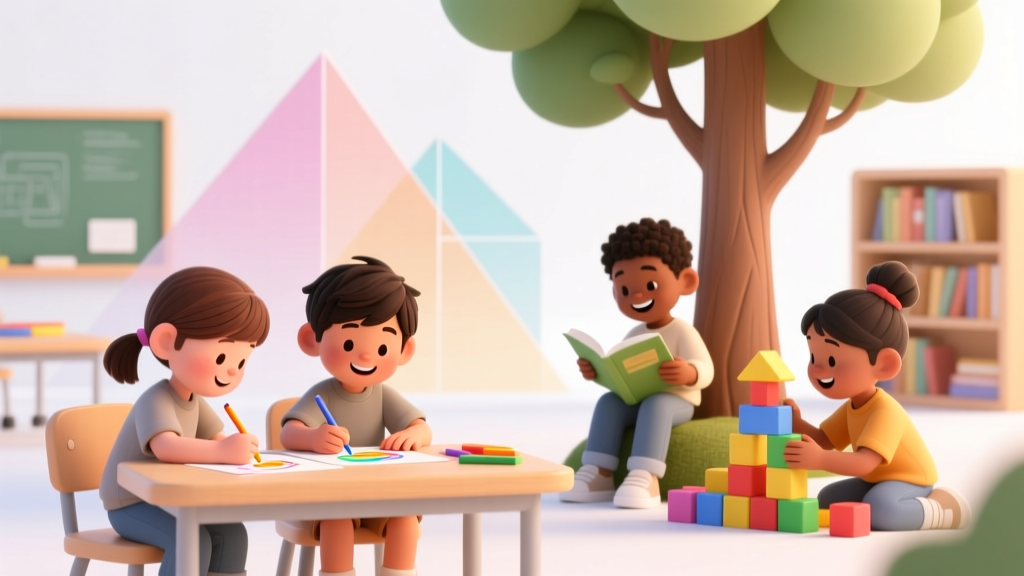
Empathy for Kids: A Pediatrician-Backed Guide (2026)
Why Understanding What Empathy for Kids Really Means Changes Everything
At its heart, what is empathy for kids isn’t about raising ‘polite’ children who say ‘I’m sorry’ on cue — it’s about cultivating the neural, emotional, and relational capacity to recognize another person’s feelings, imagine their perspective, and respond with care. In a world where screen time outpaces face-to-face connection and anxiety rates among children have tripled since 2016 (CDC, 2023), empathy isn’t a ‘nice-to-have’ soft skill — it’s the bedrock of resilience, conflict resolution, academic engagement, and lifelong mental health. Pediatric psychologists at the American Academy of Pediatrics now classify empathy development as a key developmental milestone alongside language acquisition and motor coordination — yet most parents receive zero formal guidance on how to support it. This article bridges that gap: no jargon, no guilt-tripping, just actionable, age-anchored strategies grounded in neuroscience, classroom observation, and clinical child development research.
Empathy Isn’t Magic — It’s a Skill That Grows in Stages
Contrary to popular belief, empathy doesn’t ‘just appear’ when a child turns 5 or starts kindergarten. Neuroscientist Dr. Daniel Siegel, co-author of The Whole-Brain Child, explains that empathy emerges from the integration of two brain systems: the ‘downstairs brain’ (limbic system, responsible for emotion) and the ‘upstairs brain’ (prefrontal cortex, responsible for reasoning and self-regulation). Because the prefrontal cortex isn’t fully wired until the mid-20s, empathy in kids isn’t binary — it’s layered, scaffolded, and deeply tied to their ability to first understand *their own* emotions before recognizing others’. Here’s how it unfolds:
- Toddler Years (18–36 months): ‘Contagious empathy’ — mirroring distress (e.g., crying when another child cries), but lacking self-other distinction. They feel *with*, not *for*.
- Preschool (3–5 years): Emergent perspective-taking — pointing to a friend’s tear and saying ‘She sad!’ but may offer their own comfort object (‘Here, take my blankie’) without realizing the other child needs something different.
- Early Elementary (6–9 years): Cognitive empathy begins — understanding that others may feel differently than they do, even in the same situation. This is when moral reasoning and fairness awareness deepen.
- Pre-Teen (10–12 years): Affective empathy matures — feeling concern *and* taking action (e.g., defending a classmate, writing a note to someone who’s sick). Hormonal shifts and social complexity make this stage both fragile and fertile for growth.
A landmark 2022 longitudinal study published in Child Development tracked 427 children from age 2 to 12 and found that consistent, responsive caregiving — especially naming emotions *in real time* during calm moments — predicted 3.2x higher empathy scores by age 10, regardless of socioeconomic background. The takeaway? Empathy isn’t inherited; it’s modeled, named, and practiced — daily.
How to Name, Not Fix: The Power of Emotion Coaching (Not Just Labeling)
Most parents know they ‘should’ label feelings — but labeling alone rarely builds empathy. What transforms labeling into coaching is the *sequence*: Notice → Name → Normalize → Navigate. Let’s break down each step with real examples:
- Notice: Pause and observe body language, tone, and context *before* speaking. Instead of jumping to ‘Are you mad?’, try ‘I see your fists are tight and your voice got loud.’
- Name: Use precise, non-judgmental words: ‘That looked frustrating,’ ‘You seem disappointed,’ ‘Your face says you’re overwhelmed.’ Avoid vague terms like ‘bad’ or ‘naughty.’
- Normalize: Connect the feeling to shared humanity: ‘It makes sense you’d feel that way — waiting is really hard when you’re excited,’ or ‘Lots of kids feel nervous before trying something new.’
- Navigate: Invite collaboration: ‘What helps your body feel calmer?’ or ‘Would you like space, a hug, or help figuring this out?’
This approach — validated by over 20 years of research from Dr. John Gottman’s ‘Emotion Coaching’ framework — doesn’t eliminate tantrums or conflicts. But it rewires neural pathways. Children who regularly experience emotion coaching show stronger activation in the anterior cingulate cortex (linked to empathy and error detection) during fMRI scans, according to a 2021 UCLA neuroimaging study. Crucially, this works *even when parents aren’t perfect*. One mom we interviewed, Maya (a teacher and mother of two), shared: ‘I used to say “Use your words!” during meltdowns — which felt like blaming her for not having the words she didn’t yet possess. When I switched to “I see how hard this is for you,” her whole body relaxed. Within three weeks, she started saying, “My body feels wiggly” instead of throwing toys.’
Play as Empathy Practice: Beyond Pretend — Building Real Neural Bridges
Play isn’t just fun — it’s the primary neurological gym for empathy development. When children engage in cooperative, unstructured, role-based play, they rehearse perspective-taking hundreds of times per hour. But not all play is equal. According to Dr. Laura Jana, pediatrician and author of The Toddler Brain, ‘Dramatic play with shifting roles (e.g., doctor/patient, parent/baby, shopkeeper/customer) activates mirror neuron systems more powerfully than passive screen-based ‘play’ or competitive games.’ Here’s how to intentionally leverage play:
- Introduce ‘Feeling Switches’ in Role-Play: During pretend tea parties or superhero missions, pause and ask: ‘What if the dragon feels scared of fire? How would you talk to him?’ or ‘If the baby doll is crying, what might she need — not what *you’d* want, but what *she* might need?’
- Use Storytelling with Gaps: Read picture books like Those Shoes or The Rabbit Listened, then stop before the resolution and ask: ‘What do you think the character feels *right now*? What might help them?’ Then compare predictions with the actual ending.
- Create Empathy Anchors: Assign simple, tactile cues to feelings — e.g., a blue stone for ‘calm,’ red scarf for ‘frustrated,’ green leaf for ‘hopeful.’ Let kids choose one to hold while describing how a story character might use it.
Classroom data from the Yale Center for Emotional Intelligence shows schools using structured empathy-through-play curricula saw a 27% reduction in peer conflicts and a 19% increase in inclusive behavior within one semester — with the strongest gains in children previously labeled ‘disruptive.’ Why? Because play lowers threat response, allowing the brain to safely experiment with emotional complexity.
When Empathy Feels Hard: Navigating Common Roadblocks (Without Shame)
Many parents hit walls — especially when their child seems ‘unmoved’ by others’ distress, withdraws during group settings, or responds to hurt with anger rather than care. These aren’t signs of failure — they’re signals of unmet needs or undeveloped skills. Consider these scenarios:
“My 7-year-old saw his friend fall off the swing and laughed. I was mortified.”
This isn’t cruelty — it’s often nervous laughter, sensory overload, or a lag between visual input and emotional processing. Instead of shaming (“How could you laugh?”), try: “I noticed you laughed when Sam fell. Sometimes our bodies do that when we’re surprised or unsure how to help. Next time, what’s one small thing you could do — like asking ‘Are you okay?’ or getting a teacher?”
“My daughter refuses to share her toys, even when her cousin is crying.”
Sharing isn’t empathy — it’s boundary-setting. Forcing sharing undermines autonomy and teaches children that their feelings don’t matter. Empathy grows when children feel *their* emotions are honored first. Try: “I see you really love this puzzle and want to finish it. Your cousin looks sad because she wanted a turn. What’s one way we could let her know you’ll share *after* you’re done?”
Dr. Becky Kennedy, clinical psychologist and founder of Good Inside, emphasizes: ‘Empathy isn’t about fixing others’ feelings — it’s about staying connected *while* feelings exist. Our job isn’t to manufacture empathy on demand. It’s to model staying present, curious, and kind — even when it’s messy.’
| Age Range | Developmental Capacity | Empathy-Building Strategy | What to Avoid | Real-World Example |
|---|---|---|---|---|
| 18–36 months | Limited self-other distinction; mirrors emotion but can’t yet separate ‘me’ from ‘you’ | Use ‘feeling faces’ cards during diaper changes; narrate *your* feelings aloud (“Mommy feels tired — my shoulders feel heavy”) | Asking “How do you think she feels?” — too abstract | When baby drops spoon, say: “You dropped it! That might feel surprising. My hand feels ready to help.” |
| 3–5 years | Emerging theory of mind; understands others have different thoughts/feelings — but inconsistently | Pause videos at emotional moments and ask: “What’s his face showing? What might help him?” Use puppets to act out conflicts | Saying “You should feel bad” — induces shame, not empathy | After sibling hits, say: “Your brother’s arm looks red and he’s crying. His body is telling us he hurts. What’s one gentle thing we can do?” |
| 6–9 years | Stronger cognitive empathy; connects cause-effect emotionally (“She cried because I took her turn”) | Co-create family ‘Empathy Agreements’ (e.g., “We pause before speaking when someone is upset”); use ‘feeling thermometers’ to rate intensity | Forcing apologies — teaches performance, not accountability | Child says “I don’t care” after breaking toy. Respond: “It’s okay to feel frustrated. Let’s figure out how to fix what happened — together.” |
| 10–12 years | Abstract thinking + social awareness; grasps systemic injustice, hypocrisy, and hidden motives | Discuss news stories or historical events through ‘multiple perspective’ lenses; volunteer *alongside* them (not for them) | Dismissing their moral outrage as ‘dramatic’ — shuts down critical thinking | When they say “That rule is unfair,” ask: “Who does it help? Who might it hurt? What would fairness look like here?” |
Frequently Asked Questions
Is empathy the same as sympathy or compassion?
No — and distinguishing them matters. Sympathy is feeling *for* someone (“I feel sorry for you”). Compassion is sympathy + desire to help. Empathy is the deeper foundation: feeling with — sensing and resonating with another’s emotional state *while maintaining your own boundaries. As Dr. Brené Brown clarifies in her research: ‘Empathy fuels connection; sympathy drives disconnection.’ For kids, teaching empathy first creates the internal resonance that later allows compassion to flow authentically — not out of obligation.
Can too much empathy be harmful for kids?
Yes — especially for highly sensitive children or those with underdeveloped emotional regulation. ‘Empathic distress’ occurs when a child absorbs others’ pain so intensely they become immobilized or anxious. Signs include stomachaches before school, excessive worry about friends’ problems, or shutting down during emotional scenes. Prevention? Teach ‘empathy boundaries’: “Your heart is big enough to care — and strong enough to rest.” Practice grounding techniques (5-4-3-2-1 sensory check-in) and affirm: “It’s kind to care — and kinder still to protect your own heart.”
Do screens and social media kill empathy?
Not inherently — but passive consumption and algorithm-driven content erode it. A 2023 Stanford study found teens who spent >3 hours/day on image-centric platforms showed 40% lower scores on facial emotion recognition tests. However, video-calling grandparents, co-watching documentaries with discussion pauses, or creating digital storybooks *about* feelings boosted empathy. The medium isn’t the problem — the lack of reciprocal, embodied, emotionally rich interaction is.
My child has ADHD/autism — how do I adapt empathy-building?
Neurodivergent children often have *different* empathy profiles — not deficient ones. Many autistic kids demonstrate deep affective empathy but struggle with cognitive empathy (reading subtle cues), while some with ADHD feel emotions intensely but have difficulty sustaining attention on others’ needs. Adaptations: Use explicit visual scripts (“When someone crosses arms and looks down → they might need space”), focus on concrete actions (“Hand them the tissue”), and celebrate effort over outcome. As occupational therapist and autism advocate Lauren Kaspar notes: ‘Empathy isn’t measured in eye contact — it’s measured in intention, consistency, and willingness to try.’
Should I reward empathetic behavior?
Research strongly advises against extrinsic rewards (stickers, praise like “Good job being kind!”). A 2020 meta-analysis in Developmental Psychology found rewards reduced intrinsic motivation for prosocial behavior by 31% over time. Instead, reflect impact: “When you held the door for Ms. Lee, she smiled and said ‘Thank you’ — her face lit up!” This helps children connect action → effect → meaning, building internalized values.
Common Myths About What Empathy for Kids Really Is
- Myth #1: “Empathetic kids never misbehave.” Truth: Empathy and behavior are regulated by different brain systems. A child can deeply feel another’s sadness *and* still hit when overwhelmed. Discipline should address the behavior (“Hands stay to yourself”) while honoring the feeling (“You were angry — let’s name it and find a safe way out.”).
- Myth #2: “Some kids are just born without empathy.” Truth: No child is born without the neurobiological capacity for empathy. What varies is opportunity, modeling, safety, and co-regulation. Even children with early trauma or attachment disruptions show measurable empathy growth when provided consistent, attuned relationships — as demonstrated in attachment-based interventions at the Child Trauma Academy.
Related Topics (Internal Link Suggestions)
- Emotion Coaching for Toddlers — suggested anchor text: "how to name feelings for toddlers"
- Best Books to Teach Empathy to Preschoolers — suggested anchor text: "picture books that build empathy"
- Handling Sibling Rivalry with Empathy — suggested anchor text: "sibling conflict resolution strategies"
- Screen Time Guidelines by Age (AAP-Approved) — suggested anchor text: "healthy screen time for kids"
- Building Resilience in Children — suggested anchor text: "how to raise resilient kids"
Final Thought: Empathy Begins With You — Not Them
Understanding what is empathy for kids ultimately leads us back to ourselves. Children don’t learn empathy from lectures or worksheets — they absorb it through the quality of our presence: how we listen without fixing, how we apologize when we mess up, how we hold space for discomfort without rushing to soothe. Start small. Today, pause once — truly pause — when your child shares something hard. Put your phone down. Make eye contact. Say: “Thank you for telling me. That sounds really tough.” That 10-second moment, repeated daily, is where empathy takes root. Ready to go deeper? Download our free Empathy in Action: 30-Day Family Challenge — with printable prompts, reflection cards, and age-differentiated scripts — designed with clinical child psychologists and classroom teachers.
More Articles
 Lily Allen and David Harbour Kids: Truth About Co-Parenting
 Where to Stay in Aruba With Kids: Pediatric Expert Guide
 Does Alex G Have a Kid? The Truth (2026)
 Island Boys Epstein Rumor: Truth & Parent Tips
 Is Neuro Gum Safe for Kids? (2026)
 How Many Kids Do the Walters Have? (2026)
 Trisha Paytas Kids: Surrogacy, Co-Parenting Truth (2026)
 Juliette’s Kids on Nashville: Truth & Parenting Lessons
 Whitney Decker’s Kids Facts and Privacy Tips
 Should Kids Vote? Developmental Science Says Not Yet