What Age Do Kids Learn ABCs? Evidence-Based Timeline
Why This Question Matters More Than Ever Right Now
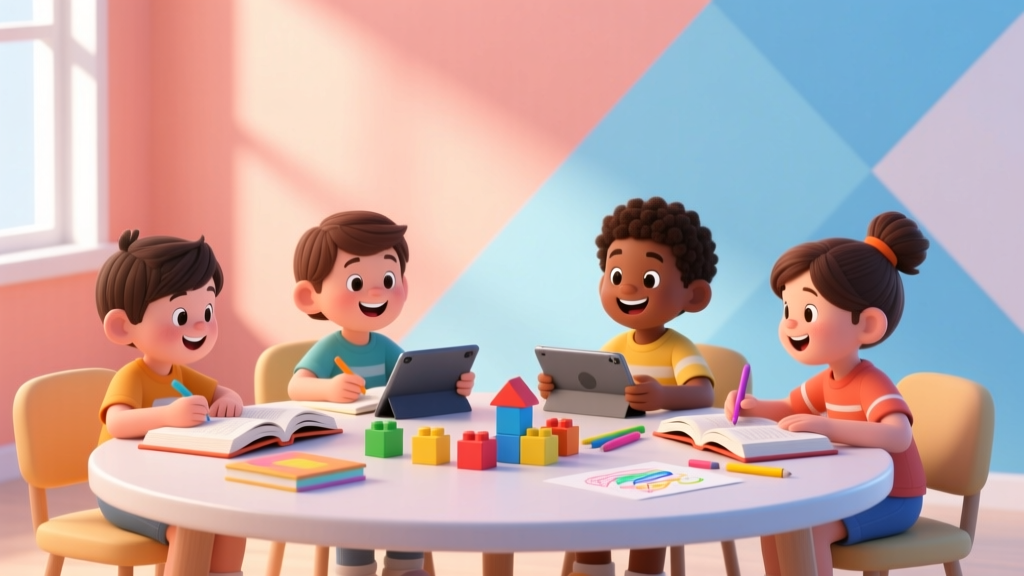
What age do kids learn their abcs is one of the most frequently searched parenting questions—and for good reason. In an era where preschool admissions hinge on early literacy benchmarks and social media feeds overflow with toddlers reciting the alphabet backward, many parents feel anxious, comparing their child’s progress to curated highlight reels. But here’s what developmental science confirms: alphabet acquisition isn’t a race—it’s a layered, sensory-rich process rooted in brain development, motor skills, language exposure, and joyful interaction. Getting this timeline right doesn’t just ease parental stress; it protects your child’s intrinsic motivation to learn, prevents early frustration that can snowball into reading resistance, and lays the true foundation for lifelong literacy—not just rote memorization.
What ‘Learning the ABCs’ Actually Means (Spoiler: It’s Not Just Singing)
Before we dive into ages, let’s clarify what ‘learning the ABCs’ truly entails—because most parents (and even some educators) conflate several distinct milestones. According to the American Academy of Pediatrics (AAP) and the National Institute for Literacy, mastering the alphabet involves four interlocking competencies, each developing at its own pace:
- Letter recognition: Identifying uppercase and lowercase letters visually (e.g., pointing to ‘B’ in a book).
- Letter naming: Saying the letter’s name aloud when shown (‘This is B’).
- Letter-sound association: Knowing the primary phoneme(s) a letter makes (‘B says /b/ like in “ball”’).
- Letter formation: Writing letters accurately and legibly (often emerging later, tied to fine motor development).
Crucially, research from the University of Michigan’s School of Education shows that children who master letter-sound links *before* kindergarten are 3x more likely to read at grade level by third grade—but only if those links are taught through play, not flashcards. That’s why age ranges below reflect *typical emergence*, not rigid deadlines—and why context matters more than chronology.
The Evidence-Based Age Timeline: What to Expect (and When to Pause & Observe)
Based on longitudinal studies from the Early Childhood Longitudinal Study (ECLS-K) and clinical observations by pediatric developmental specialists, here’s how alphabet mastery unfolds across early childhood—broken down by year and supported by real-world examples:
- Ages 2–3: Most children begin recognizing 2–5 uppercase letters—often those in their own name (e.g., a child named “Liam” may spot ‘L’ and ‘A’ first). They’ll often sing the ABC song with rhythm but not yet link sounds to symbols. At this stage, play-based exposure is key: magnetic letters in the bath, tracing letters in sand, singing while pointing to illustrated alphabet books. As Dr. Elena Torres, a pediatric psychologist specializing in early literacy, notes: “If your 28-month-old points to ‘M’ on a cereal box and says ‘Mmm!’—that’s not random. It’s neural scaffolding in action.”
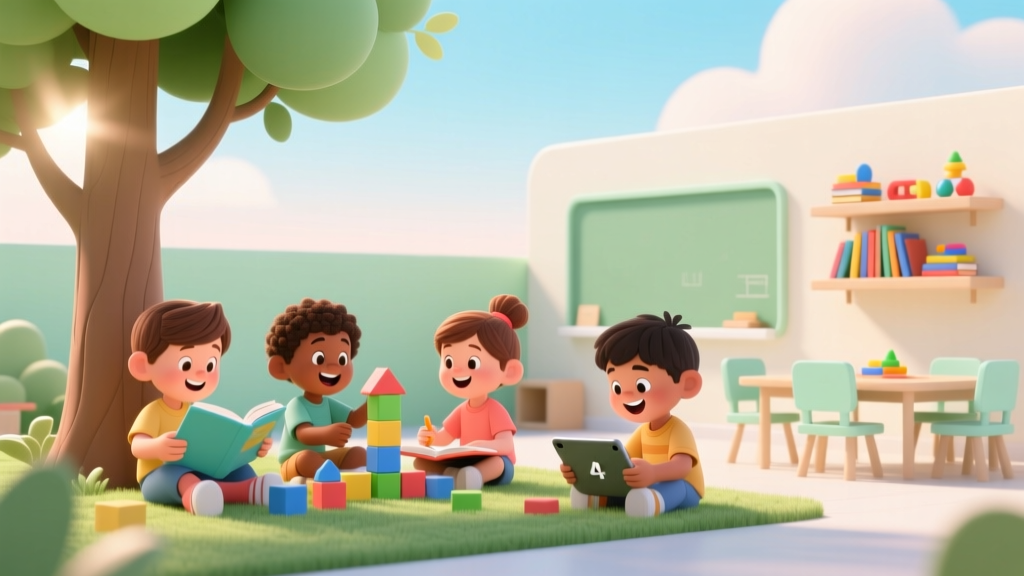
- Ages 3–4: Recognition expands to 10–15 letters (both cases), and naming accuracy improves dramatically—especially with high-frequency letters (A, B, C, S, T). Sound awareness begins tentatively: they might say “S says sss!” after hearing ‘snake’. This is the sweet spot for multi-sensory learning: shaving cream letters, letter-themed scavenger hunts, or building letters with pipe cleaners. A case study from Boston’s Playful Learning Lab tracked 42 preschoolers: those engaging in 10+ minutes daily of embodied letter play (jumping to ‘J’, wiggling like ‘W’) showed 40% faster letter-sound retention than peers using screen-based apps.
- Ages 4–5: Most children recognize all 26 uppercase letters and ~15–20 lowercase ones. They reliably name letters and connect ~15–20 letters to their most common sounds. Recitation becomes fluent—but crucially, fluency ≠ comprehension. A child who sings the ABCs flawlessly at 4 may still struggle to isolate ‘D’ from ‘dog’. This is where intentional, low-pressure practice shines: ‘I Spy’ games (“I spy something that starts with /k/…”), sorting objects by initial sound, or writing letters in response to dictated sounds (“What letter makes the /m/ sound?”).
By kindergarten entry (age 5–6), national benchmarks (like the DIBELS Initial Sound Fluency subtest) expect children to produce the sound for 15+ letters in under 1 minute—but again, these are population-level norms, not diagnostic thresholds. As the AAP cautions: “A single assessment point cannot capture a child’s full linguistic potential, especially for dual-language learners or neurodiverse children.”
Red Flags vs. Normal Variation: When to Lean In (and When to Consult)
Every child develops uniquely—but certain patterns warrant gentle attention. Below is a clear, clinically validated guide co-developed by speech-language pathologists and early intervention specialists. Note: These are *not* diagnostic criteria, but indicators that further observation or consultation may be helpful.
| Age Range | Expected Progress | Potential Concern (If Persistent Beyond 3 Months) | Recommended Next Step |
|---|---|---|---|
| 24–30 months | Recognizes 1–3 letters (often name letters); enjoys alphabet songs | No letter recognition; avoids looking at print; doesn’t respond to rhymes or sound games | Consult pediatrician about hearing screening and language development; increase shared book reading |
| 36–42 months | Names 8–12 letters; attempts to write scribbles resembling letters | Cannot name any letters despite consistent exposure; confuses all letters as ‘same’; no interest in environmental print (signs, logos) | Request free developmental screening through local Early Intervention (IDEA Part C); add tactile letter play (foam letters, textured cards) |
| 48–60 months | Names 18+ letters; links 10+ letters to sounds; writes some letters independently | Names <5 letters; cannot isolate beginning sounds in words (e.g., ‘cat’ starts with /k/); reverses letters consistently (b/d, p/q) beyond occasional slips | Seek evaluation from school district’s Child Find team or private SLP; rule out phonological processing differences |
Importantly, bilingual children often follow a slightly different trajectory—mastering letters in both languages simultaneously but potentially naming fewer letters in English initially. This is not a delay; it’s cognitive flexibility in action. As Dr. Maria Chen, a bilingual literacy researcher at UCLA, affirms: “Code-switching brains build stronger neural pathways for phonemic awareness—just on a different timetable.”
7 Play-Based, Research-Backed Strategies That Outperform Flashcards (Every Time)
Forget timed drills and reward charts. The most effective alphabet learning happens when children are fully engaged, emotionally safe, and physically involved. Here’s what the data—and thousands of real families—confirm works best:
- Name-Letter Immersion: Label your child’s world—not with stickers, but through narration. “Look—your backpack starts with /b/! And your boots! And breakfast!” This builds implicit phonemic awareness far more effectively than isolated letter drills (per 2023 Journal of Early Childhood Literacy meta-analysis).
- Sound Hunt Challenges: Turn walks into auditory adventures. “Let’s find three things that start with /t/… tree, truck, tomato!” Keep it light—celebrate near-misses (“Tent? Close—tent starts with /t/ too!”). This strengthens phoneme isolation, the #1 predictor of later decoding success.
- Letter Art Integration: Use art supplies to explore letter shapes: painting ‘S’ with snakes, cutting ‘O’ from orange paper, molding ‘C’ from clay. A 2022 study in Early Education and Development found children who created letters through art retained sound-symbol links 2.3x longer than peers using worksheets.
- Alphabet Story Chains: Co-create silly stories where each sentence starts with the next letter: “Alligator ate Bananas… Bananas bounced Crazy…” This embeds sequencing, memory, and sound practice organically.
- Movement-Based Mnemonics: Pair letters with whole-body actions: ‘W’ = wiggle fingers, ‘Z’ = zzz-ing like sleeping, ‘R’ = revving a racecar. Kinesthetic learning activates motor cortex pathways that reinforce memory—especially vital for active or neurodiverse learners.
- Environmental Print Scavenger Hunts: Give your child a laminated ‘A’ card and ask them to find ‘A’ on signs, packages, or clothing. Real-world print carries meaning—making letter recognition stickier than abstract symbols.
- “Letter of the Week” Done Right: Instead of passive posters, choose one letter weekly and infuse it into meals (apple slices), movement (arm circles for ‘O’), songs (‘Old MacDonald’ for ‘O’), and stories (Olivia). Depth > breadth every time.
Remember: Consistency trumps duration. Five minutes of joyful, focused interaction daily beats 30 minutes of stressed drilling. As Montessori educator and author Simone Davies reminds parents: “Children don’t learn letters—they learn through letters. The letter is the doorway, not the destination.”
Frequently Asked Questions
Can watching ABC videos help my child learn letters faster?
Passive screen time—even educational shows—shows minimal impact on alphabet acquisition. A landmark 2021 JAMA Pediatrics study tracking 2,400 toddlers found zero correlation between ABC video exposure and letter knowledge at age 4. However, co-viewing changes everything: pause the video, point to letters, ask “What sound does this make?”, then find something in your room that starts with that sound. The adult interaction—not the screen—is the engine of learning.
My child keeps mixing up ‘b’ and ‘d’. Is this a sign of dyslexia?
Reversals like b/d or p/q are extremely common and developmentally normal through age 7. The brain’s visual processing system is still refining spatial orientation. True dyslexia involves persistent difficulty with phoneme manipulation, decoding nonsense words (e.g., ‘blit’), and rapid automatic naming—not just letter reversals. If reversals persist alongside trouble rhyming, remembering sequences (days of week), or following multi-step directions, consult a specialist—but don’t panic over a 5-year-old’s ‘d’ that looks like ‘b’ on Tuesday.
Should I teach uppercase or lowercase letters first?
Start with uppercase—especially for children under 4. They’re simpler geometrically (fewer curves, less fine motor demand), appear more frequently in environmental print (store signs, logos), and align with most early alphabet songs and books. Introduce lowercase gradually starting around age 4, using side-by-side comparisons (“This is big B, this is little b”) and focusing on letters with distinct shapes (a, o, s) before trickier ones (g, q, y). By kindergarten, children should recognize both—but uppercase fluency comes first.
My 3-year-old knows all the letters but can’t connect them to sounds. Is that okay?
Absolutely—and very typical. Letter naming is a visual-memory task; letter-sound linking requires phonological processing, which matures later. Continue modeling sounds naturally: “This is ‘C’—/k/ like cat,” stretching the sound. Play ‘sound match’ games (hold up ‘C’ and ‘S’ cards—“Which one says /s/ like ‘sun’?”). Most children bridge this gap between ages 4 and 4.5 with consistent, playful exposure.
Does bilingualism delay alphabet learning?
No—bilingualism does not cause delays in alphabet acquisition. In fact, research shows bilingual children often develop stronger metalinguistic awareness (thinking about language itself), which supports literacy in both languages. They may name fewer English letters early on simply because they’re dividing attention across two sound systems—but their total letter knowledge across both languages is typically on par or ahead. Prioritize rich language exposure in both home languages; the alphabet will follow naturally.
Common Myths About Alphabet Learning
Myth 1: “If my child doesn’t know all letters by age 4, they’ll fall behind in reading.”
Reality: Kindergarten curricula are designed for wide variation. The National Center for Education Statistics reports that only 37% of U.S. kindergarteners enter knowing all letters—but 92% achieve full letter-sound mastery by end of first grade with appropriate instruction. Early pressure often backfires, triggering anxiety that impedes learning.
Myth 2: “Teaching letters earlier gives a permanent academic advantage.”
Reality: A 2020 longitudinal study published in Developmental Psychology followed children from age 3 to grade 3. Those pushed into formal letter instruction before age 4 showed no long-term literacy advantage—and were significantly more likely to report ‘disliking reading’ by age 8. Developmentally appropriate, play-based learning yields deeper, more durable results.
Related Topics (Internal Link Suggestions)
- When do kids start reading sight words? — suggested anchor text: "sight word timeline by age"
- Best alphabet learning toys for toddlers — suggested anchor text: "top 5 research-backed ABC toys"
- Signs of dyslexia in preschoolers — suggested anchor text: "early dyslexia indicators before kindergarten"
- How to teach phonics at home — suggested anchor text: "simple phonics activities for beginners"
- Free printable alphabet activities — suggested anchor text: "play-based ABC printables"
Final Thought: Trust the Process, Not the Pressure
What age do kids learn their abcs isn’t a question with a single-number answer—it’s an invitation to observe, engage, and celebrate the small, joyful moments where learning lives: the giggle when ‘G’ becomes ‘gorilla’, the intense concentration as fingers trace ‘S’ in rice, the proud whisper, “That’s my letter!” Your role isn’t to accelerate a timeline—it’s to be the calm, curious co-explorer in your child’s literacy journey. So put down the checklist. Pick up a favorite book. Point to letters. Make sounds. Laugh at mistakes. Because the strongest foundation for reading isn’t perfect recitation—it’s the unshakeable belief that words are magical, accessible, and deeply, wonderfully theirs. Ready to bring this to life? Download our free 7-Day Alphabet Play Kit—with daily game ideas, printable sound cards, and a developmental tracker designed by early childhood specialists.
More Articles
 LGBTQ+ Parenting Guide: Affirmation, Privacy & Support
 How Tall Will Our Kids Be? Evidence-Based Predictions
 Pedialyte Pops for Kids: Safe Dosage Guide (2026)
 Melatonin for Kids: Safe Dosage Guide (2026)
 Can Kids Eat Raw Sushi? Pediatrician-Approved Guide (2026)
 Minecraft for Kids: Pediatrician-Reviewed Safety & Benefits
 How Many Kids Does Ozzy Have? Family Truths (2026)
 Kindergarten Readiness Skills Parents Need to Know
 What Happened to the Kids in 28 Weeks Later?
 How Many Kids Does Jim Carrey Have? (2026)