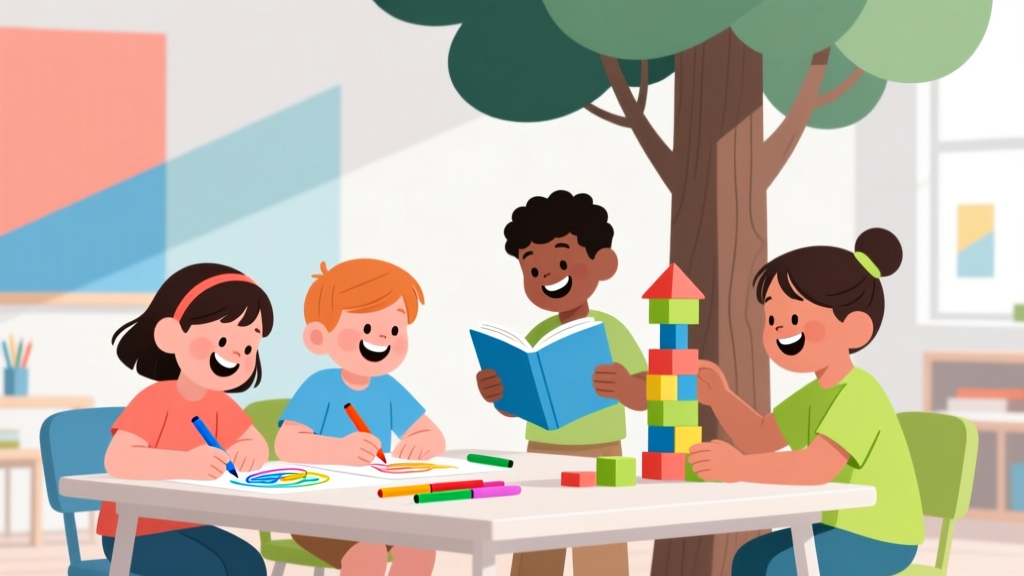
How Kids Learn to Read: Science-Backed Path (2026)
Why This Moment Matters More Than You Think
How do kids learn to read isn’t just a question—it’s a quiet source of anxiety for millions of parents watching their child struggle with letter names, skip lines, or avoid books altogether. And it’s urgent: research from the National Institute of Child Health and Human Development confirms that children who fall behind in reading by the end of first grade have only a 1 in 8 chance of ever catching up without intensive intervention. Yet most well-meaning adults still rely on outdated assumptions—like believing reading ‘just clicks’ after enough flashcards or that struggling readers are ‘not trying hard enough.’ The truth? Reading is a complex, biologically rooted skill built across five interdependent pillars—and every child develops them on their own neurodevelopmental timeline. What if you could spot early signs of strength *and* friction—not as red flags, but as data points guiding your next gentle, evidence-based move?
The Five Pillars of Reading: What Science Says (and Why Most Parents Miss #3)
Decades of brain imaging (fMRI) and longitudinal studies—including the landmark NICHD Early Childhood Longitudinal Study—reveal that reading isn’t one skill, but five tightly woven systems working in concert. When any pillar wobbles, the whole structure trembles—even if the child excels at the others.
- Phonemic Awareness: Hearing and manipulating individual sounds (e.g., recognizing that “cat” has /k/ /a/ /t/, not just knowing letters). This develops before formal instruction—often between ages 3–5—and predicts later decoding success more strongly than IQ or vocabulary size.
- Phonics & Decoding: Mapping sounds to letters (grapheme-phoneme correspondence) and blending them into words. Critical—but only effective when paired with strong phonemic awareness.
- Vocabulary & Language Comprehension: Often the most overlooked pillar. A child can decode ‘ephemeral’ perfectly—but if they’ve never heard the word, it’s meaningless. Oral language depth (syntax, semantics, narrative reasoning) directly fuels reading comprehension. As Dr. Hollis Scarborough, developer of the Reading Rope model, emphasizes: “Decoding without language comprehension is like having a key but no lock to open.”
- Fluency: Reading with speed, accuracy, and appropriate expression—freeing up cognitive space for meaning-making. Fluency emerges from repeated, supported practice—not drill-and-kill worksheets.
- Reading Comprehension & Motivation: The ultimate goal. But motivation isn’t ‘just attitude’—it’s fueled by self-efficacy (‘I can do this’), relevance (‘This matters to me’), and autonomy (‘I choose this book’). A 2023 University of Michigan study found that children who selected >70% of their own reading material showed 3.2x greater growth in inferential comprehension over one school year.
Here’s the pivot: You don’t ‘teach’ these pillars in isolation. You nurture them simultaneously through daily interactions—like pausing during storytime to ask, “What do you think she’ll do next?” (comprehension + prediction), stretching out the sounds in snack words (“b-b-banana!”), or describing textures while cooking (“This dough feels squishy—like a marshmallow!”) to build rich oral vocabulary.
Your Child’s Reading Journey: Age-by-Age Milestones (and What to Do When They Deviate)
Forget rigid grade-level expectations. Neurodiversity means timelines vary widely—and variation is normal. What matters is *progression*, not pace. Below is a clinically validated developmental framework used by pediatric speech-language pathologists and early literacy specialists, grounded in AAP guidelines and the International Dyslexia Association’s benchmarks:
| Age Range | Typical Emergent Literacy Behaviors | Gentle Support Strategies | When to Pause & Observe (Not Panic) |
|---|---|---|---|
| 12–24 months | Points to pictures when named; babbles with intonation; responds to rhymes/songs; brings books to caregiver | Label objects constantly (“That’s a red ball!”); sing nursery rhymes daily; let child turn board book pages; use exaggerated facial expressions during read-alouds | No response to familiar songs/rhymes by 24 months; avoids eye contact during shared book time; doesn’t point or gesture to communicate |
| 2–3 years | Names some letters (especially those in own name); enjoys rhyming games; retells simple stories with prompts; scribbles with intent | Play sound-matching games (“What starts with /m/? Milk! Moon! Mouse!”); write child’s name together; narrate daily routines (“First we wash hands, then we dry them!”) | Cannot identify any letters by age 3.5; shows extreme frustration or avoidance around books; confuses all consonant sounds (e.g., says “wabbit” for “rabbit” AND “gog” for “dog” consistently past age 3) |
| 4–5 years | Claps syllables in words; matches beginning sounds; writes some letters/numbers; predicts story endings; knows parts of a book (cover, title, author) | Use magnetic letters to build CVC words (cat, dog); play ‘I Spy’ with sounds (“I spy something that starts with /s/”); reread favorite books—ask “What happened first?” | No syllable clapping by age 5; cannot rhyme 3+ words (e.g., “cat, hat, bat”); reverses letters and numbers frequently (e.g., “b/d”, “6/9”) beyond occasional slips |
| Kindergarten–Grade 1 | Blends sounds into words; reads simple CVC words; recognizes common sight words; reads aloud with some fluency; asks “why” and “how” questions | Read aloud to them daily (even if they’re reading independently); use finger-tapping for sounding out; celebrate effort (“You tried three strategies—that’s brilliant!”); keep a ‘word wall’ of mastered sight words | Consistently guesses words from pictures instead of sounding out; skips entire lines or rereads same line; avoids reading aloud even with support; fatigue or tears during short reading tasks |
Note: These are guides—not gates. A child may master rhyming at 3 but not letter-sound matching until 4.5—and that’s neurotypically diverse. As Dr. Sally Shaywitz, co-director of the Yale Center for Dyslexia & Creativity, states: “Dyslexia isn’t a sign of low intelligence or laziness—it’s a different wiring pattern for language processing. Early identification allows for tailored strategies, not remediation.”
The Hidden Power of ‘Print-Rich Environments’ (and How to Build One Without Spending $1)
You don’t need a Montessori shelf or subscription box to create a print-rich environment—the kind shown in longitudinal studies to boost early literacy by up to 40%. It’s about intentionality, not inventory. A print-rich environment surrounds children with meaningful, interactive text—not passive decoration.
Consider Maya, a single mom in Portland, whose 4-year-old son Leo resisted alphabet charts. Instead, she transformed their kitchen: laminated recipe cards hung at his eye level (“Stir the batter—stir!”); labeled pantry bins (“Pasta,” “Rice,” “Cereal”) with photos + words; wrote grocery lists together using magnetic letters. Within 8 weeks, Leo was pointing to “Milk” on the list and sounding out “M-M-Milk!”
Key principles:
- Meaning First: Labels must connect to real-life function (e.g., “Light Switch” on the wall switch—not “L” on a flashcard).
- Child-Created Text: Display drawings with dictated captions (“Leo drew a rocket! It goes ZOOM!”). This teaches that print carries message.
- Interactive Print: Use chalkboard paint on a cabinet door for daily weather words (“Sunny,” “Rainy”); sticky notes with questions on mirrors (“What’s your name?”).
- Diverse Formats: Include environmental print (cereal boxes, street signs), functional print (menus, recipes), and literary print (books, poems)—all equally valid.
Avoid: Overcrowded walls, disconnected flashcards, or pressure to “read” labels before the child shows interest. As occupational therapist and early literacy consultant Elena Ruiz advises: “If the text feels like a test, it stops being literacy and becomes performance. Follow the child’s gaze, not the curriculum.”
When ‘Struggling’ Isn’t Delay—It’s a Signal for Differentiated Support
About 15–20% of children experience significant reading challenges—not due to lack of exposure, but because of how their brains process language. Early indicators aren’t always obvious: a bright, talkative 5-year-old who memorizes stories but can’t decode new words; a child who reads fluently aloud but can’t summarize what they just read; or one who spells phonetically but inconsistently (“frend” for “friend,” “enuff” for “enough”).
Three evidence-based, low-cost supports that yield measurable gains:
- Structured Literacy Intervention: Not “more phonics”—but explicit, systematic, cumulative instruction in phonology, sound-symbol association, syllables, morphology, syntax, and semantics. Programs like Orton-Gillingham (OG) or Wilson Fundations follow this model. Action step: Ask your school for their Tier 2 intervention plan—and request documentation of the approach’s alignment with IDA standards.
- Auditory Discrimination Games: Strengthen phonemic awareness through play: “Sound Sort” (group toys by initial sound), “Robot Talk” (say words in segmented sounds: /c/ /a/ /t/), or “Sound Swap” (“Change /c/ in ‘cat’ to /b/—what’s the new word?”). Do 5 minutes daily—no materials needed.
- Comprehension Scaffolding: Before reading: “Let’s look at the cover—what might happen?” During: “What’s happening right now?” After: “What was the problem? How was it solved?” Use hand gestures (thumbs up/down for “true/false”) to reduce verbal load.
Crucially: Screen time isn’t the villain—but passive consumption is. A 2022 JAMA Pediatrics meta-analysis found that co-viewing educational shows (e.g., “Super Why!”) with active questioning boosted vocabulary 2.7x more than solo viewing. The adult’s voice—not the screen—is the engine.
Frequently Asked Questions
Is it okay to teach my child to memorize sight words before they know phonics?
Yes—but strategically. High-frequency words like “the,” “and,” “was” don’t follow regular phonics rules, so rote learning helps early fluency. However, limit to 5–10 words at a time, pair each with a visual cue (e.g., “the” written in red), and always connect to phonics later (“Look—the ‘th’ makes /th/ sound, like in ‘think’”). Relying solely on memorization creates a fragile foundation; blending both approaches builds flexibility.
My child reads well aloud but doesn’t understand what they’ve read. What should I do?
This is called ‘hyperlexia’—strong decoding with weak comprehension—and it’s more common than many realize. Start small: after 2–3 sentences, pause and ask one concrete question (“Who did it?” or “Where did it happen?”). Use graphic organizers: draw a simple 3-box storyboard (Beginning/Middle/End) and fill it together. Most importantly: read to them daily from books 2–3 grade levels above their decoding level. Their listening comprehension is likely far stronger—and that’s the bridge to building internal understanding.
Does bilingualism delay reading development?
No—research consistently shows bilingual children reach reading milestones on par with monolingual peers, often with cognitive advantages in attention control and metalinguistic awareness. The key is consistency: designate one language for literacy instruction (e.g., English at school, Spanish at home) and ensure rich exposure in both. Avoid mixing languages within the same book or lesson. As Dr. Judith Kroll, bilingual cognition researcher at UC Riverside, states: “Two languages don’t compete—they collaborate in the brain’s language network.”
Should I correct every mistake when my child reads aloud?
Not in real time. Interrupting breaks fluency and undermines confidence. Instead, use the “3-Second Rule”: if they hesitate for 3+ seconds, offer the word. After the sentence, gently ask: “Could we try that word another way?” Then model the strategy (“Let’s look at the first two letters—‘ch’ says /ch/…”). Praise process, not perfection: “I love how you used the picture and the first letter to figure that out!”
Are reading apps worth it?
Some are—most aren’t. Look for apps grounded in the Science of Reading (e.g., GraphoGame, Nessy) that emphasize phonemic awareness and explicit phonics. Avoid apps heavy on rewards, animations, or guessing from pictures. The AAP recommends no digital literacy tools before age 2—and under age 5, limit to 15–20 minutes/day with adult co-engagement. Your voice, your questions, and your shared wonder remain the most powerful ‘app’ available.
Common Myths About How Kids Learn to Read
Myth 1: “If they’re smart, reading will come naturally.”
Reality: Reading is not innate—it’s a cultural invention requiring explicit instruction. Unlike spoken language (which emerges universally), reading must be taught. Brain scans show literate and illiterate adults use completely different neural pathways for language processing. Intelligence correlates with vocabulary and comprehension—but not with the biological mechanics of decoding.
Myth 2: “Letter names are the first step to reading.”
Reality: Letter sounds matter far more than names—especially early on. Knowing “B says /b/” lets a child blend “b-a-t”; knowing “B is for ball” does not. The National Reading Panel found teaching letter-sound associations before letter names accelerated decoding by 3–5 months on average.
Related Topics (Internal Link Suggestions)
- Best Phonics Programs for Home Use — suggested anchor text: "evidence-based phonics programs you can use at home"
- Early Signs of Dyslexia in Preschoolers — suggested anchor text: "subtle dyslexia warning signs before kindergarten"
- How to Choose Books That Match Your Child’s Reading Level — suggested anchor text: "the 5-finger rule and other reliable leveling tips"
- Screen Time Guidelines for Early Literacy — suggested anchor text: "what the research says about tablets and reading development"
- Building Vocabulary Through Everyday Conversations — suggested anchor text: "powerful ways to grow language without flashcards"
Conclusion & Your Next Step
How do kids learn to read isn’t a mystery to be solved—it’s a relationship to be nurtured. It happens in the lilt of your voice during bedtime stories, the patience you extend when they sound out ‘elephant’ for the fifth time, and the joy you share when they recognize ‘STOP’ on a street sign. You don’t need a degree in linguistics—just curiosity, consistency, and the courage to trust your child’s unique rhythm. So today, pick one small action: label one drawer with your child’s name and photo; reread their favorite book and ask one ‘what if’ question; or simply sit quietly while they flip through a comic—and notice where their eyes linger. Literacy begins not with mastery, but with moments of shared attention. Ready to go deeper? Download our free Reading Readiness Checklist—a printable, age-graded guide with observation prompts, red-flag thresholds, and 12 no-prep language games you can start tonight.
More Articles
 Why Kids Eat Boogers: Science & Gentle Fixes (2026)
 How to Measure Kids Feet at Home (2026)
 What Age Should Kids Learn To Tie Their Shoes (2026)
 How Many Kids Does Dr. Dre Have? (2026)
 How Many Kids Does Mahomes Have? (2026)
 How Many Kids Does Jen Hamilton Have? (2026)
 What Percentage of Kids Need Braces? (2026)
 When Do Kids Start Wearing Deodorant? (2026)
 Will Ferrell’s Kids in Jonas Brothers Movie? (2026)
 Parenting Repair Guide: Restore Boundaries & Safety