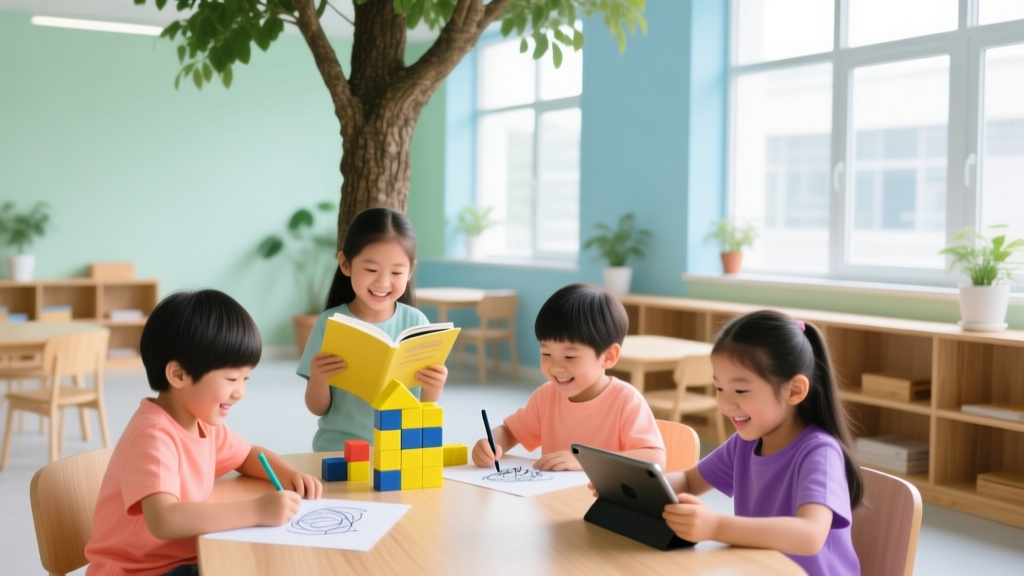
Is School Good for Kids? Evidence-Based Alternatives
Why This Question Matters More Than Ever
"Is school good for kids?" isn’t just rhetorical — it’s the quiet question echoing in kitchen conversations, pediatrician waiting rooms, and late-night scrolling sessions after another meltdown over homework, lunchroom isolation, or a teacher’s note about 'lack of engagement.' In an era where 1 in 5 U.S. children has a diagnosed learning or mental health condition (CDC, 2023), and standardized testing pressures have intensified while recess time has shrunk by 30% since 2001 (National Center for Education Statistics), this question demands more than tradition or assumption. It demands evidence, nuance, and personalized clarity. The truth? School *can* be profoundly beneficial — but only when aligned with a child’s neurodevelopmental profile, temperament, cultural context, and evolving sense of agency. And when it isn’t? The costs — academically, emotionally, and even neurologically — can compound silently for years.
The Three Pillars That Make School Work — Or Not
School isn’t a monolith. Its impact hinges on how well it delivers three interdependent pillars: cognitive scaffolding, social-emotional safety, and developmental pacing. When all three align, school becomes a launchpad. When one falters — especially for neurodivergent, gifted, trauma-affected, or culturally mismatched learners — it can become a source of chronic stress that rewires the brain’s threat response system (Harvard Center on the Developing Child, 2022). Let’s break down each pillar with real-world markers parents can observe — not just test scores.
Cognitive scaffolding means instruction meets the child where they are — not at grade-level benchmarks alone. A 2023 longitudinal study in Child Development followed 1,247 children across 18 school districts and found that students whose teachers used formative assessment + differentiated instruction showed 2.3x greater growth in executive function skills over two years — regardless of socioeconomic background. Look for signs: Does your child describe lessons as 'too easy' or 'too confusing' — not just 'boring'? Do they ask questions that go beyond the worksheet? Are assignments adaptable (e.g., choice in topics, formats, pacing)?
Social-emotional safety is non-negotiable. According to Dr. Mona Delahooke, clinical psychologist and author of Brain-Body Parenting, 'When a child’s nervous system perceives school as unsafe — due to rigid routines, punitive behavior systems, or lack of relational connection — learning literally shuts down. The amygdala hijacks the prefrontal cortex.' Red flags include persistent stomachaches before school, avoidance of peer interactions, or sudden shifts in sleep/appetite. Green flags? A trusted adult who knows their name, strengths, and stress triggers — and uses co-regulation, not compliance-first discipline.
Developmental pacing refers to honoring biological readiness — especially for foundational skills like handwriting, sustained attention, and abstract reasoning. The American Academy of Pediatrics (AAP) explicitly warns against academic acceleration before age 6–7, citing robust evidence that early formal instruction in reading/math does not yield long-term advantages and may increase anxiety (AAP Policy Statement, 2022). Yet many kindergarten curricula now demand 90-minute literacy blocks — triple the recommended duration for 5-year-olds’ attention spans.
When School Serves — And When It Doesn’t: A Developmental Decision Framework
Instead of asking 'Is school good for kids?' in the abstract, ask: 'Is this specific school, in this specific year, meeting my child’s current developmental needs?' Here’s a practical, milestone-informed framework — grounded in AAP, Zero to Three, and Montessori developmental research — to guide your evaluation:
- Ages 3–5: Prioritize play-based, sensory-rich environments with minimal whole-group instruction. Ask: 'Does my child come home energized — or exhausted? Do teachers describe them using words like 'curious,' 'persistent,' or 'collaborative' — not just 'compliant' or 'on-task'?
- Ages 6–9: Watch for emerging metacognition — can they explain *how* they solved a problem? Schools supporting this stage offer choice in learning pathways, reflection journals, and low-stakes revision opportunities. Avoid institutions where 'mistakes' are publicly corrected or graded harshly.
- Ages 10–13: Autonomy and identity formation peak here. Ideal settings provide authentic responsibilities (e.g., leading a project, mentoring younger peers), diverse role models, and space for intellectual risk-taking without grade penalties. If your child says, 'I only care about grades, not ideas,' that’s a systemic signal — not a personal failing.
- Ages 14–18: Purpose and relevance drive engagement. Schools thriving here connect coursework to real-world problems (e.g., climate data analysis in math, policy advocacy in English), offer dual-enrollment or apprenticeship options, and measure growth beyond GPA — like resilience, ethical reasoning, or creative output.
This isn’t about perfection — it’s about alignment. As Dr. Laura Jana, pediatrician and co-author of The Toddler Brain, reminds parents: 'School should amplify your child’s innate wiring, not sand down their edges to fit a mold.'
Beyond the Binary: What Alternatives Actually Deliver Evidence-Based Outcomes
Leaving school isn’t the only — or always best — solution. But when traditional models consistently fail a child, evidence supports several alternatives, each with distinct strengths and trade-offs. Crucially, outcomes depend less on the model itself and more on implementation fidelity, caregiver capacity, and community support.
Homeschooling shows strong academic results (NHERI 2022: homeschooled students score 15–30 percentile points above national averages), but its social-emotional impact varies widely. Success correlates strongly with structured social scaffolding: co-ops, mentorship programs, and interest-based clubs — not just park days. One mother in Portland shifted her twice-exceptional son to homeschooling after third grade; within 18 months, his anxiety symptoms decreased by 70% (per clinician assessment) and he launched a podcast interviewing local scientists — a passion ignited through self-directed learning.
Microschools (small, often tuition-based learning pods of 8–15 students) blend personalization with peer interaction. A 2023 RAND Corporation study found microschool students outperformed district peers in growth mindset metrics by 41% — attributed to consistent adult-child ratios (1:6 vs. national average of 1:16) and integrated social-emotional learning. Key due diligence: Verify staff credentials, curriculum transparency, and inclusion practices — some microschools unintentionally replicate exclusionary norms.
Hybrid models — like part-time enrollment + enrichment — offer flexibility. For example, a child attends core academics at school but pursues advanced STEM via online university partnerships (e.g., Stanford Online High School) or arts training at community conservatories. This requires strong coordination between adults — but avoids full withdrawal from institutional resources like counseling or special education services.
Whatever path you choose, prioritize continuity of relationship. Research from the University of Cambridge shows that children with at least one stable, attuned adult — whether teacher, tutor, or parent — demonstrate significantly higher academic persistence and emotional regulation, regardless of setting.
Key Indicators: Your Personalized School Assessment Table
| Indicator Category | Green Flag (Supportive) | Yellow Flag (Monitor Closely) | Red Flag (Action Needed) |
|---|---|---|---|
| Cognitive Engagement | Your child initiates learning questions, connects concepts across subjects, revises work voluntarily | They complete assignments but rarely extend thinking; express boredom or frustration with 'busywork' | Consistent avoidance, tearful resistance, or physical symptoms (headaches, nausea) before/during academic tasks |
| Social-Emotional Climate | Teacher names specific strengths in conferences; your child names 2+ trusted adults at school | Peer interactions are surface-level; your child describes school as 'fine' but offers no details | Frequent unexplained conflicts, withdrawal from friendships, or statements like 'No one gets me here' |
| Developmental Fit | Assignments honor multiple intelligences (art, movement, discussion); pacing allows for processing time | Homework exceeds recommended time (10 min/grade level); little choice in how to demonstrate learning | Regular requests to 'just tell me the answer'; inability to sustain focus for age-appropriate durations (e.g., 15+ min at age 7) |
| Adult Partnership | Teachers proactively share observations (not just grades); welcome collaborative problem-solving | Communication is transactional (e.g., only about missing work); meetings feel one-sided | Dismissal of concerns ('All kids struggle'); refusal to adjust strategies despite documented need |
Frequently Asked Questions
Does unschooling harm college admissions?
No — when documented intentionally. Top universities (including MIT, Brown, and UC Berkeley) explicitly state they review homeschooled and unschooled applicants holistically, valuing portfolios, projects, internships, and standardized test scores (SAT/ACT) equally with transcripts. The key is creating a rich, verifiable narrative: maintain logs of learning experiences, secure letters from mentors or employers, and pursue rigorous external assessments (e.g., AP exams, dual enrollment). A 2022 study in Journal of College Admission found unschooled applicants were admitted at rates 12% higher than national averages — attributed to exceptional self-direction and authentic intellectual curiosity.
My child hates school but tests 'above grade level' — should I ignore their feelings?
Absolutely not. Academic proficiency and emotional well-being are not interchangeable. High-achieving children often mask distress with perfectionism — a known risk factor for anxiety disorders and burnout (American Psychological Association, 2021). Their 'hate' may signal unmet needs: lack of intellectual challenge (leading to boredom-induced frustration), social exhaustion from masking neurodivergence, or moral distress from rigid rules conflicting with developing ethics. Listen first, then investigate: Is the curriculum too narrow? Are relationships transactional? Does the environment suppress autonomy? Addressing the root cause — not the grade — builds lifelong resilience.
Can public schools accommodate neurodivergent kids effectively?
Yes — but inconsistently. Federal law (IDEA) mandates Free Appropriate Public Education (FAPE), yet implementation varies wildly by district, school culture, and staff training. Effective inclusion requires more than an IEP: trained paraprofessionals, universal design for learning (UDL) integration, sensory-friendly spaces, and staff who understand neurodiversity as variation — not deficit. Ask concrete questions: 'How many staff have Level 2+ training in autism or ADHD? What % of students with IEPs participate fully in general ed classes? Can you show me your UDL lesson plan samples?' Don’t settle for promises — request evidence.
What if I can’t afford private alternatives?
Many high-impact supports cost little or nothing. Start with advocacy: Request a functional behavioral assessment (FBA) or educational evaluation — free under IDEA. Explore charter networks with specialized models (e.g., Summit Public Schools’ personalized learning platform). Leverage free community resources: library STEAM labs, museum teen programs, university outreach courses. Most powerfully, deepen home learning: cooking teaches fractions and chemistry; budgeting a family outing builds financial literacy; debating current events sharpens critical thinking. As Dr. Roberta Michnick Golinkoff, child development expert, states: 'The most powerful classroom is wherever curiosity is honored — and that’s always within your reach.'
Will pulling my child out damage their social skills?
Not if intentional. Traditional school isn’t the only — or best — place to develop social competence. Real-world social skills emerge through meaningful, reciprocal interactions: volunteering, team sports, theater troupes, coding clubs, or intergenerational projects (e.g., interviewing elders). A 2020 study in Social Development found homeschooled teens reported higher empathy scores and more diverse friendship networks than peers in large schools — likely because their interactions weren’t constrained by age-based cohorts or cafeteria hierarchies. Focus on quality, not quantity: one deep friendship nurtured over years beats 20 superficial connections.
Common Myths About School and Child Development
- Myth #1: 'Socialization happens automatically in school.' Reality: Passive proximity ≠ social skill development. Structured, guided practice in perspective-taking, conflict resolution, and collaborative problem-solving is required — and often absent in overcrowded classrooms. Intentional social learning yields better outcomes than incidental exposure.
- Myth #2: 'If a child struggles, it’s their learning style — not the system’s failure.' Reality: Learning styles (e.g., 'visual learner') are a neuromyth debunked by cognitive science (Pashler et al., 2008). What matters is instructional design — multimodal delivery, spaced repetition, retrieval practice — not matching content to imagined sensory preferences. Blaming the child distracts from fixing pedagogy.
Related Topics (Internal Link Suggestions)
- How to request a school evaluation for learning differences — suggested anchor text: "free school evaluation process"
- Signs of anxiety in elementary school children — suggested anchor text: "child school anxiety symptoms"
- Montessori vs. Waldorf vs. Reggio Emilia preschools — suggested anchor text: "alternative preschool approaches compared"
- Building executive function at home — suggested anchor text: "executive function activities by age"
- When to consider homeschooling for gifted children — suggested anchor text: "homeschooling for gifted kids guide"
Your Next Step Isn’t a Decision — It’s a Dialogue
"Is school good for kids?" has no universal answer — because children aren’t data points. They’re dynamic, evolving human beings whose needs shift with neural development, life experiences, and cultural context. Your power lies not in choosing 'school' or 'not-school,' but in becoming a skilled advocate, observer, and collaborator. Start small: This week, replace one 'How was school?' with 'What made you curious today?' Track patterns for two weeks — not just grades, but energy levels, questions asked, and moments of genuine pride. Then, schedule a 20-minute conversation with your child’s teacher focused solely on strengths: 'What’s something you’ve seen [child] do that surprised or delighted you?' That single question often reveals more about fit than any report card. You don’t need certainty to begin — you need curiosity, compassion, and the courage to ask better questions. Your child’s learning journey isn’t a standardized test. It’s a living, breathing story — and you hold the pen.
More Articles
 Tom Petty’s Fatherhood Lessons (2026)
 How Many Kids Does Michael Jackson Have? (2026)
 Why Do Kids Eat Paper? Causes & When to Worry
 Protecting Kids’ Privacy at Family Events (2026)
 Why Kids Eat Boogers: Science & Gentle Solutions
 Rudi Johnson Kids: Fatherhood Lessons from an NFL Star
 How to Get in a Movie as a Kid (2026)
 How Many Kids Does Rob Riener Have? (2026)
 Kyrie Irving Kids: Truth, Co-Parenting & Privacy (2026)
 Djokovic Kids: How Many? | Parenting & Grand Slam Balance