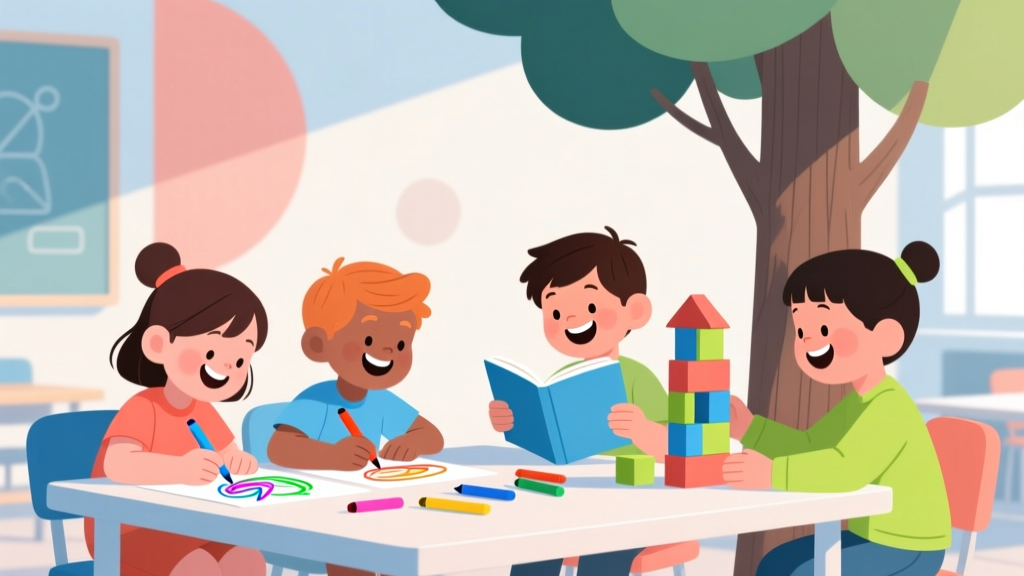
Playdate Readiness: Signs & Red Flags (2026)
Why 'Is Playdate Appropriate for Kids?' Isn’t Just a Yes-or-No Question
Whether you're wondering is playdate appropriate for kids in your toddler’s second year—or weighing whether your kindergartener needs more structured social time versus solo imaginative play—you’re asking one of the most developmentally nuanced questions in modern parenting. It’s not about calendar age alone; it’s about emotional regulation, communication readiness, sensory tolerance, and even your family’s cultural values around independence and peer interaction. With rising parental anxiety about social development post-pandemic—and growing pressure to 'optimize' early childhood experiences—the answer demands more than intuition. It requires understanding neurodevelopmental milestones, recognizing subtle stress signals, and knowing how to scaffold social learning without overloading young nervous systems.
What Developmental Science Says About Playdate Readiness
According to the American Academy of Pediatrics (AAP), unstructured peer play isn’t just ‘fun’—it’s foundational neural infrastructure. Between ages 2 and 5, children undergo rapid growth in the prefrontal cortex, the brain region governing impulse control, perspective-taking, and emotional self-regulation. But here’s what many parents don’t realize: readiness for playdates isn’t linear. A 3-year-old who thrives at a Montessori preschool may meltdown during a backyard playdate—not because they’re ‘not ready,’ but because the context lacks scaffolding (e.g., predictable routines, adult co-regulation cues, or familiar objects).
Dr. Elena Torres, a clinical child psychologist and co-author of Social Beginnings: Nurturing Connection in Early Childhood, emphasizes: “We’ve conflated exposure with readiness. Seeing other kids doesn’t equal readiness to interact with them. True social competence emerges from secure attachment first, then parallel play, then cooperative play—and each stage has observable behavioral markers.”
Here’s how to assess readiness across four key domains:
- Emotional Regulation: Can your child transition between activities with minimal distress? Do they use simple words (“mad,” “tired”) or gestures to express feelings instead of only tantrums or withdrawal?
- Communication Skills: Do they initiate interactions (e.g., handing a toy, making eye contact, saying “look!”) or respond consistently to others’ bids for attention—even nonverbally?
- Sensory Processing: Are they overwhelmed by loud voices, sudden movements, or crowded spaces? Children with auditory or tactile sensitivities often misinterpret peer behavior as threatening.
- Play Complexity: Do they engage in symbolic play (pretending a block is a phone) or sustained parallel play (building next to, not with, another child)? These are stronger predictors of successful peer interaction than vocabulary size.
The Hidden Risks: When Playdates Backfire (And How to Prevent It)
Not all playdates build social skills—some erode confidence. In a 2023 longitudinal study published in Early Childhood Research Quarterly, researchers observed 127 families over 18 months and found that 34% of toddlers experienced increased separation anxiety after poorly matched playdates—especially when paired with highly assertive peers or in overstimulating environments (e.g., bounce houses, large group settings before age 4).
Real-world example: Maya, a parent in Portland, shared how her 2.8-year-old son began refusing diaper changes after repeated playdates with a peer who used aggressive physical play (“grabbing toys, climbing on him”). Only after consulting a pediatric occupational therapist did she realize his freeze response wasn’t shyness—it was sensory overload manifesting as compliance avoidance.
Prevention starts with intentionality—not invitation frequency. Key safeguards include:
- Match, don’t mix: Pair children with similar temperaments and communication styles—not just same age. A slow-to-warm-up child paired with a high-energy peer rarely benefits.
- Control the environment: Host at home first (familiar space, access to calming tools like weighted blankets or quiet corners), limit duration (30–45 minutes max for under-4s), and avoid concurrent adult gatherings.
- Script & model: Pre-teach 2–3 phrases (“Can I have a turn?” “I need space”) and role-play with stuffed animals. Narrate interactions aloud: “I see Leo handing Sam the blue car. That’s sharing!”
- Exit strategy: Build in a clear ‘transition signal’ (e.g., singing a 30-second clean-up song) so children anticipate ending—not experience abrupt separation.
Age-by-Age Playdate Guidelines: Beyond the Calendar
Age ranges provide useful frameworks—but developmental variation means some 3-year-olds need more scaffolding than others. The table below synthesizes AAP recommendations, Erikson’s psychosocial stages, and observational data from over 200 early childhood educators:
| Age Range | Typical Social Milestones | Recommended Playdate Structure | Supervision Level & Key Focus | Risk Mitigation Tips |
|---|---|---|---|---|
| 18–24 months | Parallel play dominates; limited turn-taking; may watch peers intently but not interact | “Side-by-side” setup: identical toys, separate play zones, shared activity (e.g., water table) | 1:1 adult-to-child ratio; focus on emotional safety & sensory regulation | Avoid forced interaction; keep sessions under 20 mins; have exit plan ready |
| 2.5–3.5 years | Emerging cooperative play; uses 2–3 word requests; may protest sharing but understands basic rules | Small groups (2–3 children); themed activity (baking, nature walk); built-in transitions | 1 adult per 2–3 children; focus on modeling language & repairing ruptures | Pre-teach “break cards”; label emotions during play (“You look frustrated—let’s take 3 breaths”) |
| 4–5 years | Collaborative storytelling; negotiates roles (“You be doctor, I’ll be patient”); resolves minor conflicts with adult support | Child-led themes (superheroes, pretend restaurant); 45–60 min duration; includes collaborative cleanup | 1 adult per 4–5 children; focus on autonomy & conflict mediation | Introduce simple peer mediation scripts (“What do you both need?”); normalize mistakes (“Oops—we all learn how to share”) |
| 6+ years | Negotiates complex rules; forms reciprocal friendships; self-advocates (“I don’t want to play that game”) | Flexible duration; mixed-age pairings possible; independent planning encouraged | Adult as background support; focus on accountability & empathy extension | Co-create house rules beforehand; debrief afterward (“What worked? What felt hard?”) |
When Playdates Aren’t the Answer: 3 Healthier Alternatives
For children with developmental delays, autism spectrum traits, selective mutism, or trauma histories, traditional playdates can feel like social exams—not joyful connection. Pediatric occupational therapist Dr. Arjun Mehta notes: “Forcing peer immersion before foundational self-regulation is in place is like teaching calculus before mastering addition. It creates learned helplessness.”
Instead, consider these research-supported alternatives:
- Family-Integrated Social Learning: Invite another family for a shared activity where adults model interaction (e.g., cooking together, gardening side-by-side). Children absorb social scripts without performance pressure.
- Structured Play Groups Led by Specialists: Therapist-facilitated groups (offered through early intervention programs or clinics) use evidence-based curricula like SCERTS or PEERS® to teach reciprocity in low-stakes settings.
- Animal-Assisted Interaction: Guided time with certified therapy dogs builds confidence, reduces social anxiety, and provides non-judgmental connection—particularly effective for children with language delays (per a 2022 University of Lincoln study).
One mother in Austin reported transformative results after shifting from weekly playdates to biweekly “dog park mornings” with a neighbor and her certified therapy Labrador. Her 4-year-old son, previously nonverbal in peer settings, began initiating “high five” gestures and naming dog actions (“Biscuit sits!”) within six weeks.
Frequently Asked Questions
Can playdates help with speech delay?
Yes—but only when carefully designed. Passive observation won’t accelerate language; active, responsive interaction does. Prioritize 1:1 playdates with talkative, patient peers and embed language goals: narrate play (“You’re stacking red blocks!”), wait 5 seconds for response, and expand utterances (“Block… yes! Red block!”). Avoid large groups or noisy environments, which reduce intelligible input. According to ASHA (American Speech-Language-Hearing Association), consistent, high-quality adult-child interaction remains the strongest predictor of progress—even more than peer exposure.
My child always hides during playdates—is that normal?
It’s common—and often adaptive. Hiding is frequently a self-regulation strategy, not rejection. Observe: Does your child peek, smile, or return to play after brief retreats? That signals engagement. If hiding lasts >10 minutes, involves distress (crying, shaking), or persists across settings, consult a pediatrician or developmental specialist. A 2021 study in JAMA Pediatrics found that 68% of toddlers labeled “shy” showed no long-term social deficits when parents respected their observation phase and avoided labeling (“Don’t be shy!”) or coercion.
How many playdates per week is too many?
There’s no universal number—but fatigue signals matter more than frequency. Watch for: increased meltdowns 24–48 hours post-playdate, sleep disruption, or regression in self-care skills (e.g., toileting accidents). For most preschoolers, 1–2 well-matched, short-duration playdates weekly is sustainable. More than three often leads to “social burnout,” especially for sensitive or introverted children. As Dr. Lisa Chen, child development researcher at Harvard’s Center on the Developing Child, states: “Rest is not idle time—it’s when the brain consolidates social learning. Over-scheduling steals that critical processing window.”
Should I intervene when kids argue during a playdate?
Yes—but with precision. Intervene immediately for safety (hitting, biting, throwing objects) or emotional harm (name-calling, exclusion). For negotiation conflicts (“I had it first!”), pause and name feelings (“You both want the truck and feel frustrated”), then guide problem-solving: “What’s one idea to solve this?” Let children propose solutions first. Research shows children who practice resolving small conflicts with adult scaffolding develop stronger executive function than those whose disputes are always solved for them.
Are virtual playdates beneficial for young kids?
For children under 5, evidence is limited and caution is warranted. The AAP advises against digital media for children under 18 months (except video-chatting with family) due to poor transfer of learning from screens to real-world interaction. Virtual playdates lack crucial nonverbal cues (body proximity, shared physical space, tactile feedback) essential for early social development. Occasional video calls with grandparents or cousins can maintain bonds—but shouldn’t replace embodied, multisensory peer play.
Common Myths
Myth #1: “More playdates = better social skills.”
Reality: Quality trumps quantity. One 45-minute playdate with intentional scaffolding builds more neural pathways than three chaotic, unsupervised hours. Overexposure without reflection causes social fatigue—not fluency.
Myth #2: “If my child doesn’t initiate play, they’re behind.”
Reality: Many neurodiverse children and temperamentally cautious kids engage socially through observation, parallel play, or object-mediated interaction (e.g., rolling a ball back and forth without eye contact). These are valid, developmentally appropriate strategies—not deficits.
Related Topics (Internal Link Suggestions)
- Signs of Sensory Processing Disorder in Toddlers — suggested anchor text: "sensory red flags to watch for before playdates"
- How to Teach Sharing Without Forcing It — suggested anchor text: "gentle, developmentally-aligned sharing strategies"
- Best Toys for Cooperative Play Ages 2–5 — suggested anchor text: "toys that naturally encourage turn-taking and joint attention"
- When to Worry About Speech Delay — suggested anchor text: "red flags vs. typical variation in early language"
- Montessori-Inspired Playdate Ideas — suggested anchor text: "structured yet child-led social activities"
Your Next Step: Start Small, Stay Curious
So—is playdate appropriate for kids? The answer isn’t binary. It’s contextual, dynamic, and deeply personal to your child’s nervous system, your family’s rhythms, and your own capacity to be present. Rather than asking “Is this appropriate?”, try reframing: “What does my child need *right now* to feel safe, seen, and capable in connection?” Begin with one 20-minute, adult-supported session using the age-specific guidance above. Observe closely—not for ‘success,’ but for micro-signals of engagement: a shared glance, a mirrored gesture, a relaxed exhale. Document what works (and what doesn’t) in a simple journal. Then, adjust. Because the most powerful playdate isn’t the one with the most toys or longest duration—it’s the one where your child feels, for the first time, “I belong here.” Ready to create your first intentional playdate plan? Download our free, printable Playdate Prep Checklist (with age-specific prompts and emotion-labeling cards)—designed by pediatric OTs and early childhood educators.
More Articles
 Does K Camp Have Kids? Yes — 2 Sons & Modern Fatherhood
 Does Chris Kattan Have Kids? The Privacy Truth
 Is Dimetapp Safe for Kids? Pediatrician Advice (2026)
 Does Max Holloway Have a Kid? Fatherhood Truths (2026)
 When Do Kids Start Walking? Truth & Red Flags
 When Do Kids Turn Front Facing? (2026 Guidelines)
 Palestine Kids: What Parents Need to Know (2026)
 Memory Foam Mattresses for Kids: Safety & Risks (2026)
 NBA YoungBoy Kids: Truth About His Children (2026)
 Why Do Kids Repeat Themselves? 7 Science-Backed Reasons