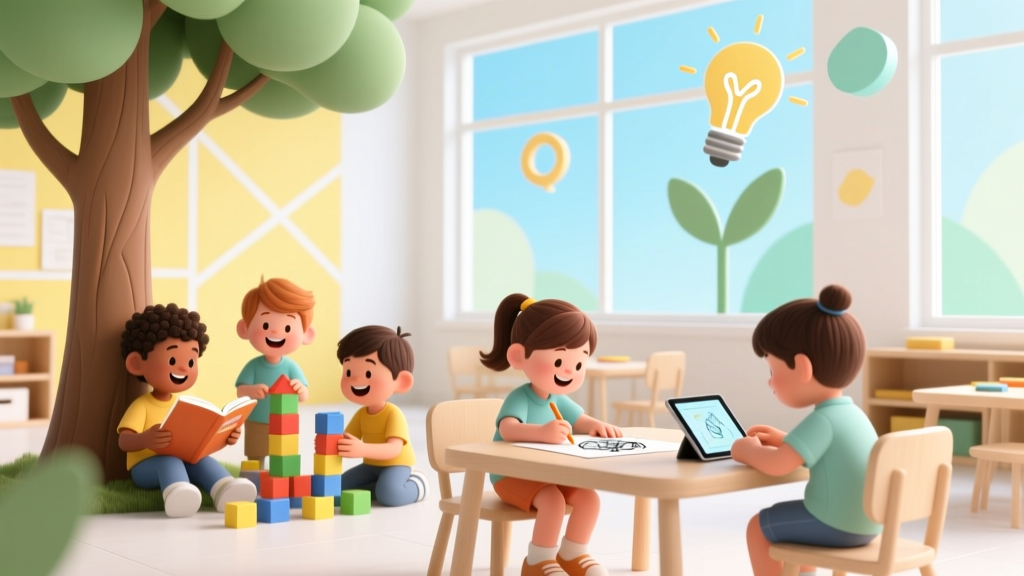
How to Treat Anxiety in Kids: Gentle, Proven Strategies
Why This Moment Matters More Than Ever
If you're searching for how to treat anxiety in kids, you're not alone — and you're already doing something profoundly important: noticing, caring, and seeking help. Childhood anxiety isn’t just ‘shyness’ or ‘phase’ — it’s the most common mental health challenge among children aged 3–17, affecting nearly 1 in 4 U.S. kids (National Institute of Mental Health, 2023). Left unaddressed, it can erode academic confidence, strain friendships, and increase risk for depression and school avoidance. But here’s the hopeful truth: early, relationship-based intervention changes trajectories. With consistent, compassionate support — often without medication — most children build lasting resilience. This guide distills what works, what doesn’t, and exactly how to begin today.
Start With Co-Regulation — Not Correction
When your child freezes before a class presentation, hyperventilates before sleep, or refuses to leave your side at drop-off, your instinct may be to reassure (“You’ll be fine!”), reason (“There’s nothing to be scared of”), or redirect (“Just take a deep breath”). But neuroscience shows these well-meaning responses often backfire. Why? Because anxiety lives in the amygdala — the brain’s alarm system — which shuts down higher-order thinking (like logic or reassurance) during activation. What calms the nervous system first isn’t words — it’s safety cues from a regulated adult.
Co-regulation means modeling calm *while staying emotionally present*, not fixing the feeling. Try this 3-step sequence, backed by Dr. Dan Siegel’s interpersonal neurobiology research:
- Pause & Ground Yourself: Take two slow breaths — inhale 4 sec, hold 4, exhale 6 — before speaking. Your nervous system literally signals safety to theirs via voice tone, facial expression, and posture.
- Name & Normalize: Say, “I see your body feels jumpy right now — that’s your worry trying to protect you. Lots of kids feel this way before new things.” Naming emotions reduces amygdala reactivity (UCLA Semel Institute, 2022).
- Offer Anchoring Touch (if welcome): A hand on their back, holding hands, or sitting shoulder-to-shoulder activates the vagus nerve, slowing heart rate. Never force touch — ask: “Would a squeeze help right now?”
Real-world example: Maya, age 8, began vomiting before math tests. Her parents stopped saying “You’re smart — just relax!” and instead sat quietly beside her while she traced her fingers over a smooth worry stone. Within three weeks, her nausea decreased by 70%, per her school counselor’s tracking log.
Build Anxiety Literacy — Make the Invisible Visible
Kids can’t manage what they don’t understand. Teaching them *how* anxiety works — in age-appropriate, non-shaming language — transforms fear from a mysterious monster into a manageable signal. The American Academy of Pediatrics (AAP) recommends using metaphors and visuals starting as young as age 5.
Try the “Worry Weather” framework:
- Sunny Days: Calm, curious, ready to learn.
- Storm Clouds: Butterflies, racing heart, sweaty palms — your body’s “alert system” turning on.
- Lightning Strikes: Panic moments — dizziness, crying, wanting to hide.
- Rainbow After Rain: What helps you return to Sunny Days (e.g., drawing, walking outside, hugging a pet).
Create a “Worry Weather Journal” together: draw weather symbols daily, then note one small thing that helped shift the forecast. This builds metacognition — the ability to observe thoughts without being ruled by them — a core predictor of long-term anxiety reduction (Journal of Child Psychology and Psychiatry, 2021).
Crucially: avoid labeling your child as “an anxious kid.” Instead, say “you’re having an anxious moment” — separating identity from experience. This subtle language shift fosters self-efficacy.
The 5-Minute Exposure Ladder: Small Steps, Big Shifts
Exposure therapy is the gold-standard treatment for childhood anxiety — but traditional clinical exposure can feel overwhelming. The key is micro-exposures woven into daily life, led by the child’s pace. Think of it as building a ladder where each rung is a tiny, voluntary step toward discomfort.
Here’s how to co-create one (with your child’s input):
- Identify the Fear: “What feels scary about lunchtime?” (e.g., “Sitting alone at the cafeteria table.”)
- Break It Down: What’s the *smallest possible version* of that fear? (e.g., “Walk past the cafeteria door with Mom.”)
- Rate the Scares: Use a 0–5 scale (0 = totally calm, 5 = can’t breathe). Aim for steps at 2–3 intensity — challenging but doable.
- Practice & Celebrate: Do it once daily for 3 days. Celebrate effort — not outcome. “You walked past the door! That took courage.”
- Climb Slowly: Only advance when the current step feels consistently manageable (not perfect!).
Dr. Eli Lebowitz, Yale Child Study Center director and author of Treatment of Childhood Anxiety, emphasizes: “Success isn’t absence of fear — it’s willingness to move forward *with* fear. Every micro-step wires new neural pathways.”
Sample ladder for school refusal:
| Step | Action | Target Intensity (0–5) | Duration/Repetition | Child’s Coping Tool |
|---|---|---|---|---|
| 1 | Drive past school gate, wave at entrance | 2 | 3x/day for 2 days | Hold favorite stuffed animal |
| 2 | Park & walk to front steps (no entering) | 3 | Once daily × 3 days | Count 5 things they see |
| 3 | Enter lobby, sit on bench for 1 minute | 4 | Twice daily × 2 days | Breathe with “box breathing” app |
| 4 | Walk to classroom door, knock, return home | 4 | Once daily × 3 days | Repeat calming phrase: “My feet are strong.” |
| 5 | Attend first 15 minutes of class | 5 | Gradually increase time | Teacher check-in + fidget tool |
Partner With School — Without Over-Advocating
Teachers see your child’s anxiety in real-time — during transitions, group work, or unstructured time. Yet many parents hesitate to “label” their child or fear accommodations will enable avoidance. The reality? Strategic, temporary supports *reduce* long-term avoidance. AAP guidelines stress collaboration — not confrontation — with educators.
Start with a low-stakes meeting using this framework:
- Share Observations (Not Diagnoses): “We’ve noticed Liam takes longer to join circle time and sometimes hides behind his coat. We’re practicing calm-down tools at home.”
- Ask for Their Lens: “What does this look like in your classroom? When does it peak?”
- Propose 1–2 Concrete, Time-Bound Supports: Examples: a designated ‘reset corner’ with noise-canceling headphones; permission to use a ‘break card’ for 2-minute walks; pre-teaching vocabulary before new units to reduce uncertainty.
- Define Success Metrics: “Let’s check in weekly: Is he initiating 1 peer interaction? Using his break card appropriately?”
Avoid requesting blanket exemptions (e.g., “He shouldn’t present”) — instead, co-design scaffolds (e.g., “He’ll present to teacher + 1 friend first, then whole class”). Research from the University of California, Berkeley’s School Mental Health Initiative shows schools implementing such tiered supports saw 42% fewer anxiety-related absences within one semester.
Pro tip: Share a 1-page “Anxiety Support Snapshot” with teachers — including your child’s calming phrases, triggers, and go-to tools. Keep it visual and positive (e.g., “Maya’s Superpower: She notices her feelings and asks for help!”).
Frequently Asked Questions
Can anxiety in kids go away on its own?
Some mild, situational anxiety (e.g., starting a new school) may ease as routines solidify. But persistent anxiety — lasting >6 months, interfering with daily life (sleep, friendships, learning), or causing physical symptoms (stomachaches, headaches) — rarely resolves without support. According to the American Academy of Child & Adolescent Psychiatry, untreated childhood anxiety increases risk for adult anxiety disorders by 300%. Early intervention isn’t overreacting — it’s preventative care.
When should I consider medication for my child’s anxiety?
Medication (typically SSRIs like sertraline) is considered only when anxiety severely impairs functioning *and* evidence-based therapy (like CBT) hasn’t led to meaningful progress after 3–6 months. The AAP and AACAP emphasize medication should *always* accompany therapy — never replace it. A pediatric psychiatrist will assess risks/benefits thoroughly, especially regarding rare side effects like increased agitation in youth. Less than 15% of clinically anxious children require medication; most respond robustly to behavioral strategies.
Is my parenting causing my child’s anxiety?
No — and this guilt is incredibly common (and unhelpful). Anxiety arises from complex interactions of genetics, neurobiology, temperament, and environment. While overly protective or anxious parenting *can* reinforce avoidance, it doesn’t cause clinical anxiety. Focus energy on responsive support, not self-blame. As Dr. John Walkup, former AACAP president, states: “Parenting isn’t the source — it’s the most powerful solution.”
What’s the difference between normal worry and anxiety disorder in kids?
Normal worry is fleeting, tied to specific events (e.g., “Will I make a friend at camp?”), and eases with reassurance or distraction. Clinical anxiety is persistent (>6 months), disproportionate to the situation, causes significant distress or impairment, and includes physical symptoms (fatigue, restlessness, muscle tension) or cognitive patterns (catastrophizing, perfectionism, excessive reassurance-seeking). If your child avoids activities they once enjoyed, has frequent somatic complaints without medical cause, or expresses hopelessness, consult a child mental health professional.
Are there apps or tools proven to help kids with anxiety?
Yes — but choose wisely. Evidence-backed options include: Breathe, Think, Do with Sesame (free, ages 2–5, teaches problem-solving); MindShift CBT (free, teens/adults, based on clinical CBT principles); and Smiling Mind (free, guided meditations for ages 7+). Avoid apps promising “instant cures” or using gamified rewards for emotional suppression. Always co-use apps with your child — discuss what they learned, not just completion.
Common Myths
Myth 1: “Kids will outgrow anxiety if we ignore it.”
Ignoring anxiety signals tells children their feelings aren’t valid or safe to express — often intensifying internalization or leading to somatic symptoms (headaches, stomachaches) or behavioral outbursts. Early, gentle engagement builds neural pathways for emotional regulation.
Myth 2: “Telling a child to ‘just relax’ or ‘stop worrying’ helps.”
This invalidates their physiological experience and implies they have full control over autonomic responses. It’s like telling someone with asthma to “just breathe normally.” Instead, teach them *how* to influence their nervous system — through breath, movement, or grounding — with compassion.
Related Topics
- Signs of anxiety in toddlers — suggested anchor text: "early anxiety signs in preschoolers"
- Best books to help kids with anxiety — suggested anchor text: "age-appropriate anxiety picture books"
- How to talk to your child’s teacher about anxiety — suggested anchor text: "collaborating with school on anxiety support"
- When to seek a child psychologist — suggested anchor text: "finding a qualified child anxiety therapist"
- Anxiety vs. ADHD in kids — suggested anchor text: "distinguishing anxiety and attention challenges"
Take Your First Step Today — Gently
You don’t need to solve everything at once. Choose *one* strategy from this guide — maybe co-regulating with your child tonight using the 4-4-6 breath, or sketching a Worry Weather chart together tomorrow morning. Consistency beats intensity: five minutes of attuned presence daily rebuilds safety faster than hours of well-intentioned advice. Remember, you’re not healing your child’s anxiety — you’re helping them discover their own inner strength, one calm, connected moment at a time. If you feel overwhelmed, reach out to your pediatrician or a child therapist certified in CBT or ACT — asking for help is the bravest, most loving act of all.
More Articles
 Does Paul Finebaum Have Kids? The Truth (2026)
 How to Homeschool My Kids: A Realistic 2026 Guide
 Marilyn Monroe Kids: Truth About Her Pregnancies (2026)
 Phil Collins’ Children: Truth, Careers & Parenting (2026)
 How Many Kids Does Zac Brown Have? (2026)
 Did Angie Stone Have Kids? The Truth About Her Son
 Is Kids Wish Network Legitimate? (2026)
 DC OSP Scholarships 2026: Limits, Eligibility & Tips
 Squid Kid 1111: Facts, Myths & Online Safety (2026)
 Is Having Kids Worth It? A Research-Backed Guide