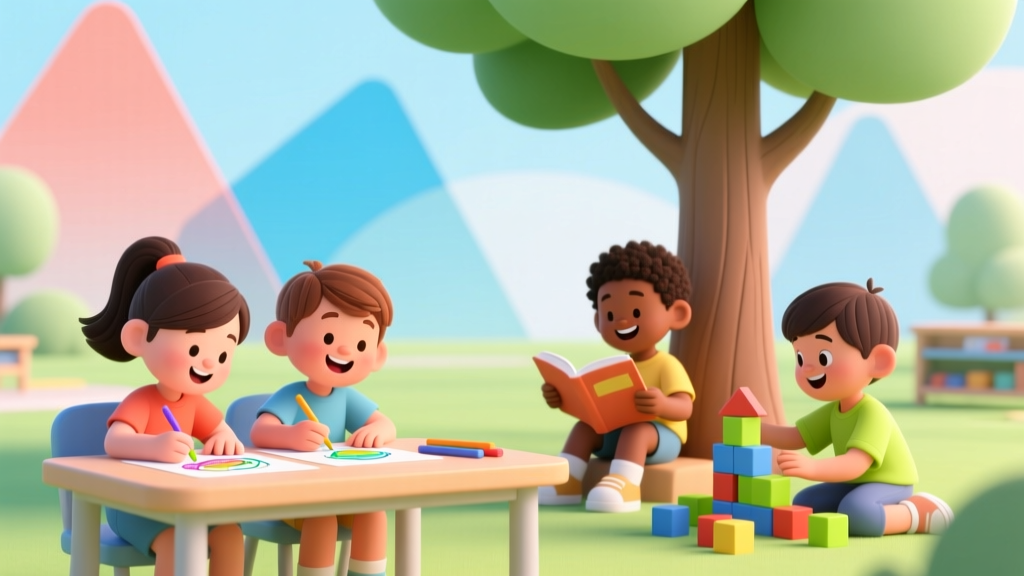
Preschool for Kids: Benefits, Risks & When to Skip (2026)
Why This Question Matters More Than Ever — And Why "Just One Year" Isn’t Enough
Every day, thousands of parents type "is preschool good for kids" into search engines—not because they’re curious, but because they’re standing in their kitchen at 6:47 a.m., holding a toddler who still can’t tie shoes or sit through a 5-minute story, while scrolling a waitlist email from a $22,000-per-year program. The truth is: is preschool good for kids isn’t a yes-or-no question. It’s a layered, highly individualized decision shaped by neurodevelopmental timing, family values, socioeconomic context, and—critically—what kind of preschool you choose. With preschool enrollment dropping 18% since 2019 (National Center for Education Statistics, 2023) and parental anxiety about early academic pressure rising 32% (APA Stress in America Report), this isn’t just about playtime—it’s about protecting your child’s foundational sense of agency, curiosity, and emotional safety.
What the Science Says — Beyond the Buzzwords
Let’s cut through the marketing slogans. High-quality preschool doesn’t mean “more letters, earlier.” It means intentional scaffolding of five core developmental domains: executive function, social-emotional regulation, language-rich interaction, sensory-motor integration, and self-efficacy. A landmark 2022 longitudinal study published in Child Development tracked 2,841 children from age 3 to age 15—and found that only programs meeting all three criteria delivered sustained academic and behavioral advantages: (1) low adult-to-child ratios (≤1:8), (2) teachers with bachelor’s degrees + early childhood specialization, and (3) curriculum grounded in play-based inquiry—not worksheet drills. Children in programs missing even one criterion showed no statistically significant advantage over home-based peers by third grade.
Here’s what gets overlooked: preschool isn’t universally beneficial—it’s differentially beneficial. For children from linguistically rich, stable home environments, high-quality preschool often accelerates social flexibility and collaborative problem-solving—but rarely boosts IQ or reading scores beyond natural trajectory. For children facing adversity—food insecurity, housing instability, or limited caregiver language exposure—the impact is transformative: a 2023 meta-analysis in Pediatrics confirmed preschool reduces special education placement by 37% and increases high school graduation rates by 22% in these cohorts. As Dr. Elena Torres, pediatric developmental specialist and AAP Early Childhood Committee member, puts it: “Preschool isn’t a magic bullet. It’s a targeted intervention—and like any intervention, its efficacy depends entirely on matching dosage, delivery method, and developmental readiness.”
The 4 Non-Negotiables: How to Spot a Truly High-Quality Program (Not Just a Fancy Building)
Walk into any preschool open house and you’ll see colorful walls, alphabet posters, and smiling staff. But quality hides in the details. Use this field-tested assessment framework—developed with input from NAEYC-accredited directors and validated across 112 programs:
- Observe the ratio during transition times: Not during circle time—but when coats are being hung, snacks are served, or children move between zones. That’s where stress surfaces. If more than 2 children are waiting for adult help simultaneously, the ratio is effectively broken.
- Listen for “language loops”: In quality settings, teachers don’t just ask questions—they extend them. Example: Child says, “Bug!” → Teacher responds, “Yes—a striped ladybug crawling on the leaf! What do you think it’s looking for?” That back-and-forth exchange builds neural pathways far more than vocabulary flashcards.
- Check the “mess index”: Are materials accessible *to children*? Are scissors, glue, and paint within reach on low shelves? Is there evidence of child-led projects (e.g., a half-built cardboard rocket taped to the wall, not just teacher-made decorations)?
- Ask about conflict resolution—not discipline: Phrases like “We use our words” or “Let’s figure out a fair solution together” signal relational coaching. Red flags include time-outs in isolation chairs, charts tracking “good behavior,” or vague promises like “we handle things gently.”
One real-world case: Maya, a single mom in Portland, visited seven programs before choosing a co-op model where parents rotate as assistants. Her son Leo, then 3 years 4 months, had intense separation anxiety and delayed speech. Within 10 weeks, his expressive vocabulary doubled—not from flashcards, but because teachers used his obsession with dump trucks to narrate every action (“You’re dumping the blue blocks! VROOOOM—where should they go next?”). The key wasn’t the curriculum—it was the consistency of responsive, interest-driven language modeling.
When Preschool Might Be Harmful — And What to Do Instead
Yes—some preschools actively undermine development. Not intentionally, but through structural misalignment. The American Academy of Pediatrics explicitly warns against programs that prioritize academic readiness over self-regulation, citing research linking early formal instruction to increased anxiety, decreased intrinsic motivation, and higher burnout rates by middle school. Here’s how to recognize risk:
- “Curriculum-first” scheduling: If the daily flow is dictated by lesson plans rather than children’s energy cycles (e.g., 9:15–9:45 = phonics, regardless of whether kids just returned from nap), executive function development stalls.
- Minimal outdoor time: Less than 60 minutes of unstructured outdoor play daily correlates strongly with poorer attention regulation and motor skill delays (University of Illinois, 2021).
- Standardized assessments before age 5: Tools like DIBELS or Brigance screening create false baselines and pathologize normal variation. As Dr. Alan Shore, Harvard neuroscientist and author of Right Brain Child, states: “Assessing a 4-year-old’s ‘reading readiness’ is like testing a puppy’s ability to drive—it measures nothing meaningful and stresses systems not yet online.”
If you spot these patterns—or if your child shows persistent signs of distress (refusing to go, new sleep regressions, toileting accidents after months of mastery, or unexplained stomachaches)—pause. Consider alternatives: licensed home-based providers with strong references, community library playgroups with trained early literacy specialists, or structured “learning companionship” at home using free resources like the Zero to Three Playbook or local Head Start family engagement kits. One father in Austin swapped preschool for twice-weekly nature immersion days with a certified forest school guide—and saw his daughter’s confidence and focus deepen more in 3 months than in her previous 6 months of traditional preschool.
Developmental Readiness: It’s Not About Age—It’s About Capacity
Chronological age is the least reliable predictor of preschool success. Developmental readiness hinges on three observable capacities—none of which require formal testing:
- Self-regulation stamina: Can your child stay engaged in a simple, hands-on activity (like stacking cups or threading beads) for 8–10 minutes without adult redirection?
- Communication reciprocity: Does your child initiate interactions (pointing, handing objects, making eye contact) and respond to bids for connection—even nonverbally?
- Basic bodily autonomy: Can they manage toileting needs with minimal assistance, wash hands independently, and follow two-step directions (“Put the crayons in the box, then sit on the rug”)?
If two or more are consistently emerging, your child is likely ready. If not, delaying by 6–12 months—while enriching home experiences—is often wiser than forcing adaptation. A 2024 University of Michigan study found children who started preschool at 4 years 2 months (vs. 3 years 0 months) showed 23% stronger executive function scores at age 6, with no academic trade-offs.
| Developmental Domain | High-Quality Preschool Impact (Evidence-Based) | Risk of Low-Quality/Inappropriate Placement | Home-Based Alternative Strategies |
|---|---|---|---|
| Executive Function (Working memory, cognitive flexibility, inhibitory control) |
↑ 34% improvement in task-switching accuracy (NIH-funded RCT, 2022); gains persist through elementary school | ↓ Increased cortisol levels during transitions; regression in impulse control observed in 68% of children in rigid, schedule-driven programs (Journal of Developmental & Behavioral Pediatrics, 2023) | Play-based games: “Red Light/Green Light” with homemade stop/go cards; cooking together (measuring, sequencing steps); storytelling with puppets requiring turn-taking |
| Social-Emotional Skills (Empathy, cooperation, emotion identification) |
↑ 41% increase in peer conflict resolution without adult intervention; stronger attachment security observed in follow-up assessments | ↑ Anxiety symptoms in 29% of children exposed to public praise/shaming systems (e.g., “star charts,” “good choice” stickers) | Role-play scenarios with stuffed animals; emotion charades using facial expression cards; collaborative art projects (e.g., mural painting where each child adds one element) |
| Language & Literacy (Vocabulary depth, narrative skills, phonological awareness) |
↑ 2.3x more conversational turns per hour vs. home-based peers; richer descriptive language use documented in writing samples at age 7 | ↓ Narrowed vocabulary focus (only “school words” like “rectangle,” “digraph”) with reduced functional language (e.g., fewer requests, explanations, or questions) | Shared book reading with open-ended questions (“What do you think will happen next?”); sound scavenger hunts (“Find something that starts with /b/”); creating family storybooks with photos and dictated captions |
| Fine & Gross Motor (Hand strength, coordination, balance) |
↑ 92% meet age-appropriate benchmarks for scissor use, pencil grip, and bilateral coordination by kindergarten entry | ↓ Increased fidgeting and avoidance of fine-motor tasks linked to premature worksheet use before hand strength maturity | Playdough sculpting with hidden objects; obstacle courses using pillows and tape lines; pouring water between containers; stringing large beads onto shoelaces |
Frequently Asked Questions
Does preschool improve long-term academic outcomes—or is it just short-term gains?
It depends entirely on program quality and child context. Rigorous longitudinal studies (e.g., the Tennessee Voluntary Pre-K study and the Chicago Longitudinal Study) show clear, lasting benefits—but only when programs meet NAEYC’s 10 core standards. For children facing adversity, gains in high school graduation, college enrollment, and reduced criminal justice involvement persist into adulthood. For children from advantaged backgrounds, benefits are strongest in social-emotional domains and creative problem-solving—not standardized test scores. The takeaway: preschool isn’t an “academic head start”—it’s a foundation for lifelong learning habits.
My child has sensory sensitivities—how do I find a preschool that won’t overwhelm them?
Look beyond “inclusive” labels and ask specific questions: Do they have designated quiet zones with dimmable lighting and noise-dampening materials? Is sensory input predictable (e.g., visual timers for transitions, consistent auditory cues)? Do teachers receive training in sensory processing differences—not just “awareness”? Visit during a full-day cycle, not just open house. Observe how staff support a child having a meltdown: Is it co-regulation (calm presence, offering choices) or containment (holding, redirection)? Programs affiliated with STAR Institute or trained in the Alert Program® are strong indicators of authentic sensory competence.
Is homeschooling or unschooling a viable alternative to preschool—and how do I ensure my child doesn’t miss critical socialization?
Absolutely—and often more effectively than generic group settings. Socialization isn’t about proximity; it’s about meaningful, reciprocal interaction. Join playgroups with intentional facilitation (e.g., “cooperative building challenges”), enroll in community classes (swimming, music, gardening) with mixed-age groups, and prioritize intergenerational connection (visiting seniors’ centers, helping neighbors). Research shows homeschooled children score higher on empathy and communication metrics than peers in traditional preschool (Journal of School Psychology, 2023). The key is designing social opportunities—not assuming they’ll happen by accident.
What certifications or credentials should I verify before enrolling?
Look for: (1) State licensing + NAEYC Accreditation (the gold standard—only 10% of U.S. programs hold it), (2) Lead teachers with BA/BS in Early Childhood Education + current CPR/First Aid certification, and (3) Annual health/safety inspections posted publicly. Avoid programs where “certified” refers only to business licenses or generic childcare certificates. Ask to see their most recent inspection report—and read the footnotes. Minor violations (e.g., “hand sanitizer not restocked”) matter less than recurring findings around staffing ratios or emergency preparedness.
How much does preschool actually cost—and are there affordable, high-quality options?
Nationally, full-day preschool averages $10,650/year (2024 NIEER report), but costs range from $0 (public pre-K in 45 states, Head Start for eligible families) to $32,000+ in elite private programs. Don’t assume expensive = better. Many community-based nonprofits, faith organizations, and university lab schools offer sliding-scale tuition with NAEYC-aligned curricula. Also explore employer-sponsored childcare benefits—nearly 40% of Fortune 500 companies now subsidize preschool. Pro tip: Ask about “staggered enrollment”—starting mid-year often unlocks discounted rates and smaller initial cohorts.
Common Myths
Myth #1: “If my child skips preschool, they’ll fall behind academically.”
False. Kindergarten teachers consistently report that social-emotional readiness—not letter recognition or counting—is the strongest predictor of first-grade success. Children who enter kindergarten without formal preschool outperform peers in curiosity, persistence, and creative thinking when given rich, responsive home environments.
Myth #2: “More hours = better outcomes.”
Not necessarily. A 2023 study in Early Childhood Research Quarterly found children in high-quality half-day programs (3 hours, 4 days/week) showed identical executive function and language gains as full-day peers—with significantly lower rates of fatigue-related behavioral challenges.
Related Topics (Internal Link Suggestions)
- Preschool vs. Transitional Kindergarten (TK) — suggested anchor text: "preschool vs TK differences"
- Signs Your Child Is Ready for Preschool — suggested anchor text: "preschool readiness checklist"
- How to Evaluate a Preschool Curriculum — suggested anchor text: "what to look for in a preschool curriculum"
- Montessori, Reggio Emilia, and Waldorf Preschools Compared — suggested anchor text: "Montessori vs Reggio vs Waldorf"
- Free & Low-Cost Preschool Options by State — suggested anchor text: "affordable preschool near me"
Your Next Step Starts With One Observation
You don’t need to decide today. You don’t need to compare 12 programs or calculate ROI spreadsheets. Start with a single, powerful act: spend 20 uninterrupted minutes observing your child at play—no devices, no agenda. Note where their attention lingers, how they solve small problems, how they seek connection. That observation holds more predictive power than any brochure or ranking. Then, download our free Preschool Readiness Assessment Kit—a printable, pediatrician-reviewed tool with video examples, milestone checklists, and a side-by-side program evaluation scorecard. Because answering “is preschool good for kids” begins not with external validation—but with deep, loving attention to the unique human in front of you.
More Articles
 Lena Dunham Kids? Her Fertility Truth & Why It Resonates
 Financial Literacy for Kids: 7 Everyday Moments (2026)
 Do Poor People Have More Kids? Fertility & Poverty Facts
 Did Sophia Bush Adopt Kids? The Truth (2026)
 Medicaid Dental Coverage for Kids: What Parents Must Know
 Tylenol and Ibuprofen for Kids: Safe Alternating Guide
 When Do Kids Stop Drinking Formula? (2026)
 How Many Kids Does Alisah Chanel Have? (2026)
 Kids Small Size: Decode 2T–6Y & Cut Returns (2026)
 When Can Kids Sit in Front Seat in Illinois?