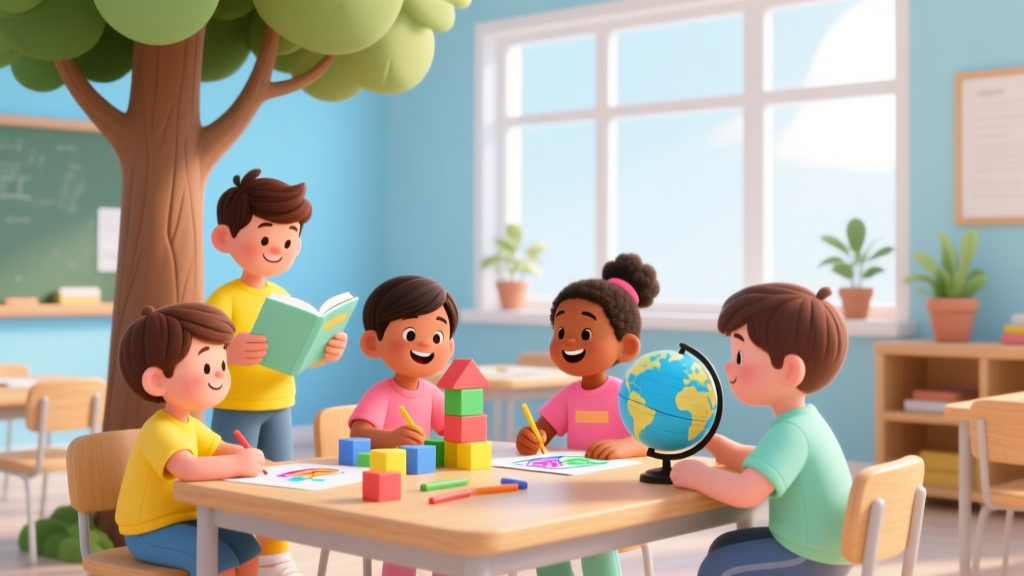
How to Teach Reading to Kids Without Pressure (2026)
Why 'How to Teach Reading to Kids' Isn’t About Flashcards—It’s About Building Trust in Language
If you’ve ever Googled how to teach reading to kids, you’ve likely scrolled past ads for $399 phonics kits, felt guilt over screen time instead of story time, or wondered why your bright, curious 5-year-old still can’t blend 'c-a-t'. You’re not behind—and your child isn’t broken. Modern literacy science confirms: reading isn’t ‘taught’ like math facts. It’s co-constructed through joyful interaction, predictable language patterns, and responsive adult attention. In fact, the American Academy of Pediatrics (AAP) emphasizes that the single strongest predictor of later reading success is daily shared book reading starting before age 2—not formal instruction. This guide cuts through the noise with actionable, neurodevelopmentally sound strategies used by speech-language pathologists, early childhood educators, and parents who’ve navigated every stage—from babbling babies to reluctant first graders.
Start Before ‘School Age’: The 0–3 Foundation Most Parents Miss
Forget worksheets. At this stage, ‘teaching reading’ means wiring the brain for sound awareness, print concepts, and narrative logic. Neuroimaging studies show infants as young as 6 months begin distinguishing phonemes—the tiny sound units that form words—when exposed to rich, rhythmic, face-to-face language (Kuhl, 2014, Nature Neuroscience). Here’s how to harness that window:
- Sound Play, Not Spelling: Sing nursery rhymes with exaggerated mouth movements. Pause before the last word (“Jack and Jill went up the…?”) and wait—your baby’s brain is predicting and rehearsing sound sequences.
- Print Awareness Through Touch: Run your finger under words as you read—even board books. Say, “We read from left to right, top to bottom.” Point to the title, author name, and pictures. This builds ‘book-handling’ intuition long before decoding.
- Label Everything—Then Wait: Instead of “That’s a dog,” try “Dog. W-o-o-f.” Then pause 3 seconds. Your toddler’s brain practices auditory segmentation—the skill needed to hear ‘c-a-t’ as three sounds, not one blob.
Dr. Susan Neuman, former U.S. Assistant Secretary of Education and literacy researcher, stresses: “Children don’t learn letters in isolation—they learn them embedded in meaningful contexts: their name, favorite foods, street signs they see daily. A child who points to ‘STOP’ on a sign and says ‘S!’ has already begun orthographic mapping—the neural process linking sounds to spellings.”
The Sweet Spot: Ages 4–6 (Pre-K to Kindergarten)
This is where many parents panic—especially when kindergarten expectations escalate. But research from the National Institute of Child Health and Human Development (NICHD) shows that explicit, systematic phonics instruction works best when paired with authentic reading experiences. Translation: Don’t drill letter sounds for 20 minutes then hand your child a decodable reader they hate. Blend both.
Try this real-world case study: Maya, a Montessori-trained teacher in Austin, worked with Leo (age 5), who could identify all letters but refused to attempt blending. She stopped using flashcards and instead created a ‘Name Detective’ game: Leo collected items starting with ‘L’ (lunchbox, leaf, Lego), wrote ‘L’ on sticky notes, and taped them to objects. One day, he pointed to his ‘L’ lunchbox and said, “L-l-lunch!”—then paused, grinned, and whispered, “L-u-n-ch.” He’d self-discovered blending. Why? Because it was anchored in *his* world, not abstract rules.
Key actions for this phase:
- Use ‘Sound Boxes’ (Elkonin Boxes): Draw 3 boxes. Say a word slowly (“s-u-n”). Tap each box as you say each sound. Then place a token (button, bean) in each box. This builds phonemic segmentation—a stronger predictor of reading success than IQ (Adams, 1990).
- Choose Decodables Wisely: Avoid books full of nonsense words or forced repetition. Opt for high-interest topics (dinosaurs, space, baking) with controlled vocabulary. Publishers like Flyleaf Publishing and Little Readers Press align with the Science of Reading and include comprehension questions.
- Embrace ‘Invented Spelling’: When your child writes “I lik piz” for “I like pizza,” celebrate the phonetic logic! This shows they’re applying sound-letter knowledge. Gently model the correct spelling *alongside* theirs: “You wrote ‘lik’—that’s smart! We write it ‘like.’ Let’s write it together.”
When Progress Stalls: Red Flags vs. Normal Variation
Every child develops at their own pace—but certain patterns warrant gentle professional input. According to the International Dyslexia Association, persistent difficulty with these *before age 7* may signal underlying needs:
- Consistently reversing letters (b/d, p/q) beyond age 7
- Inability to rhyme or clap syllables in familiar songs after age 4
- Guessing words based only on first letter or picture (e.g., saying “dog” for “pet” because the picture shows a dog)
- Avoiding reading aloud, even with favorite books
Crucially: These aren’t ‘laziness’ or ‘not trying hard enough.’ They often reflect differences in phonological processing—the brain’s ability to manipulate speech sounds. As Dr. Sally Shaywitz, co-director of the Yale Center for Dyslexia & Creativity, explains: “Dyslexia is not about seeing letters backward—it’s about a glitch in the neural circuitry for rapid sound-symbol association. Early intervention changes outcomes dramatically.”
If concerns arise, request a free evaluation through your public school (IDEA law guarantees this) or consult a certified speech-language pathologist (SLP) or educational psychologist. Do not wait—NICHD data shows children who receive targeted support before Grade 2 have a 90% chance of reaching grade-level reading; that drops to 30% if delayed until Grade 4.
What Works (and What Doesn’t) for Teaching Reading to Kids: Evidence-Based Comparison
| Approach | What It Is | What Research Says | Best For |
|---|---|---|---|
| Phonics-First (Systematic) | Explicit, sequential teaching of letter-sound relationships (e.g., ‘s’ = /s/, ‘sh’ = /ʃ/), blending, segmenting | Meta-analyses (National Reading Panel, 2000; Hattie, 2017) show effect size of +0.60—among highest for literacy interventions. Critical for decoding unfamiliar words. | Kids who struggle to sound out words, especially those with weak phonemic awareness |
| Whole Language | Focuses on meaning, context, and exposure to rich texts; minimal direct phonics instruction | Strong for vocabulary and comprehension *if* phonics is taught separately. Weak alone for struggling readers—leads to guessing and avoidance (Torgesen, 2004). | Advanced readers with strong oral language; should *never* be the sole method |
| Multi-Sensory Structured Language (MSL) | Orton-Gillingham-based: uses sight, sound, touch, movement (e.g., tracing letters in sand while saying sounds) | Gold standard for dyslexia intervention (IDA, 2022). Builds stronger neural pathways for sound-symbol mapping. | Kids with diagnosed dyslexia, ADHD, or persistent decoding difficulties |
| Shared Reading + Dialogic Reading | Adult reads aloud, pausing to ask open questions (“What do you think happens next?”), expand child’s answers, and encourage prediction | Boosts vocabulary growth by 30–50% vs. passive listening (Whitehurst et al., 1988). Builds comprehension and narrative skills. | All children—especially toddlers and preschoolers building oral language foundation |
Frequently Asked Questions
My child knows all their letters and sounds—but won’t blend them. What should I do?
This is extremely common and usually signals a gap in phonemic blending practice—not intelligence or effort. Try ‘Sound Sliding’: Write three letters (e.g., C-A-T) on index cards. Say each sound slowly (/k/…/a/…/t/), then gradually speed up the slide: /k/…/a/…/t/ → /ka/…/t/ → /kat/. Use a rubber band stretched between thumbs to physically ‘stretch’ and ‘snap’ the sounds together. Do this for just 2 minutes, 2x/day. Most kids blend within 2–3 weeks with consistent, playful practice.
Is it okay to use apps or tablets to teach reading?
Yes—if chosen carefully. Look for apps grounded in the Science of Reading: explicit phonics, immediate corrective feedback, and zero reliance on guessing. Avoid apps that reward speed over accuracy or use cartoon rewards that distract from sound-symbol work. Top-recommended: Headsprout Early Reading (validated by RCTs) and Teach Your Monster to Read (designed by literacy experts). Limit screen time to 15–20 mins/day, and always co-use: sit beside your child, point to letters, and discuss sounds aloud.
My kindergartener hates reading time. How do I make it fun again?
Stop calling it ‘reading time.’ Call it ‘story detective time,’ ‘word hunt,’ or ‘magic sound lab.’ Rotate formats: read comics (great for reluctant readers), cook together using a recipe, label drawers in their room, or create a ‘family newspaper’ with drawings and dictated captions. The goal isn’t pages per day—it’s positive associations with print. A 2023 study in Early Childhood Research Quarterly found that children who associated reading with choice, humor, and connection were 3x more likely to become engaged readers by Grade 3—even if they started late.
Should I correct every mistake when my child reads aloud?
No—over-correction kills fluency and confidence. Use the ‘3-Second Rule’: If your child hesitates for >3 seconds on a word, gently supply it. If they misread (e.g., ‘house’ for ‘home’), ask, “Does that make sense with the picture/story?” If they self-correct, praise the strategy (“You checked the meaning—that’s brilliant!”). Only correct errors that change meaning or prevent comprehension. Fluency and expression matter as much as accuracy.
Common Myths About Teaching Reading to Kids
- Myth #1: “Kids will learn to read naturally, just like they learn to talk.”
Talking is biologically wired; reading is a cultural invention requiring explicit instruction. Brain scans confirm reading circuits don’t develop without targeted exposure to print and sound relationships (Dehaene, 2009). Waiting for ‘natural’ reading often means missing critical windows for intervention.
- Myth #2: “If my child isn’t reading by 6, they’ll fall behind forever.”
While early support helps, many capable readers emerge at 7 or 8—especially boys and bilingual children. What matters is *how* they’re supported. A child who learns via rich storytelling, vocabulary expansion, and phonemic play at home builds stronger comprehension foundations than a stressed 5-year-old drilling flashcards.
Related Topics (Internal Link Suggestions)
- Phonemic Awareness Activities for Toddlers — suggested anchor text: "fun phonemic awareness games for toddlers"
- Best Decodable Books for Beginning Readers — suggested anchor text: "top science-of-reading decodable books"
- Signs of Dyslexia in Preschoolers — suggested anchor text: "early dyslexia indicators before kindergarten"
- How to Choose an Evidence-Based Reading Tutor — suggested anchor text: "what to look for in a reading tutor"
- Bilingual Kids and Learning to Read — suggested anchor text: "teaching reading to bilingual children"
Next Step: Pick One Tiny Action—Then Celebrate It
You don’t need to overhaul your routine. Today, choose *one* micro-action: trace letters in flour while naming sounds, pause mid-rhyme to let your child finish, or write their grocery list (‘milk,’ ‘bananas’) and read it together. These moments—small, joyful, and connected—are where reading lives. As literacy expert Dr. Nell Duke reminds us: “Children don’t fall in love with reading because of worksheets. They fall in love because someone read with them, laughed at the funny parts, and made them feel like the smartest person in the room.” So grab that worn-out copy of Where the Wild Things Are, snuggle in, and start—not with ‘how to teach reading to kids,’ but with ‘how to share wonder through words.’ Your next chapter starts now.
More Articles
 What Gloves Stop Kids Picking? (2026) — Real Solutions
 What Age Can Kids Have Popcorn? (2026)
 Charlie Kirk’s Wife and Kids: Privacy Truths (2026)
 How Many Kids Does Avery Woods Have? (2026)
 How Old Are Alec Baldwin's Kids? (2026)
 Teach Kids to Swallow Pills: Pediatrician-Backed Method
 How Long Can You Claim Your Kids on Taxes? (2026)
 How to Go to Sleep for Kids: Science-Backed Bedtime Fixes
 Kanye on Beyoncé’s Kids: Truth & Expert Insights
 How Long After Roundup Is It Safe for Kids? (2026)