
3-Year-Old Molars: Normal, Delayed, When to Call Dentist
Why This Timing Question Matters More Than You Think
Do kids get molars at 3? Yes — but not the kind most parents assume. At age 3, children are usually erupting their final set of primary molars — the second molars — which complete the baby tooth set. Confusingly, these are often mistaken for ‘adult molars’ or cause unnecessary alarm when they arrive late or with intense discomfort. Understanding this precise window isn’t just trivia: misidentifying eruption timing can lead to missed early cavity detection, inappropriate pain management, or delayed dental referrals. With 1 in 4 U.S. children experiencing untreated caries by age 5 (CDC, 2023), recognizing what’s typical — and what warrants expert evaluation — is foundational parenting literacy.
What Exactly Are ‘Molars’ at Age 3 — And Why the Confusion?
Let’s clarify the anatomy first. Children have two distinct sets of molars:
- Primary (baby) molars: Two per quadrant (first and second), totaling eight. These are not replacements — they’re the child’s first chewing teeth, designed to hold space and guide jaw development.
- Permanent (adult) molars: First molars erupt around age 6–7 — without replacing any baby teeth. They appear behind the primary second molars, making them easy to miss during routine checks.
So when a parent asks, “Do kids get molars at 3?”, they’re almost always referring to those painful, wide-backed primary second molars — the last baby teeth to emerge. According to the American Academy of Pediatric Dentistry (AAPD), these typically break through between 23–33 months, meaning yes — age 3 falls squarely within the normal range, though eruption can vary by up to 6 months without concern.
Dr. Lena Torres, a board-certified pediatric dentist and clinical instructor at NYU College of Dentistry, explains: “We see a huge misconception that ‘molars = adult teeth.’ That confusion leads parents to either overreact — scheduling urgent visits for perfectly normal 3-year-old teething — or underreact — dismissing severe swelling or asymmetry as ‘just teething’ when it could signal infection or ectopic eruption.”
Decoding the Timeline: When to Expect What (and When to Worry)
Teething isn’t random — it follows predictable sequences, but individual variation is wide. Below is the clinically validated eruption window for primary molars, based on longitudinal data from the National Institute of Dental and Craniofacial Research (NIDCR) and AAPD consensus guidelines:
| Tooth Type | Average Eruption Age | Normal Range | Key Clinical Notes |
|---|---|---|---|
| Primary First Molar | 14 months | 10–16 months | Often emerges silently; rarely causes systemic symptoms. |
| Primary Second Molar | 27 months | 23–33 months | Most common source of ‘late teething’ complaints; frequently bilateral and painful. |
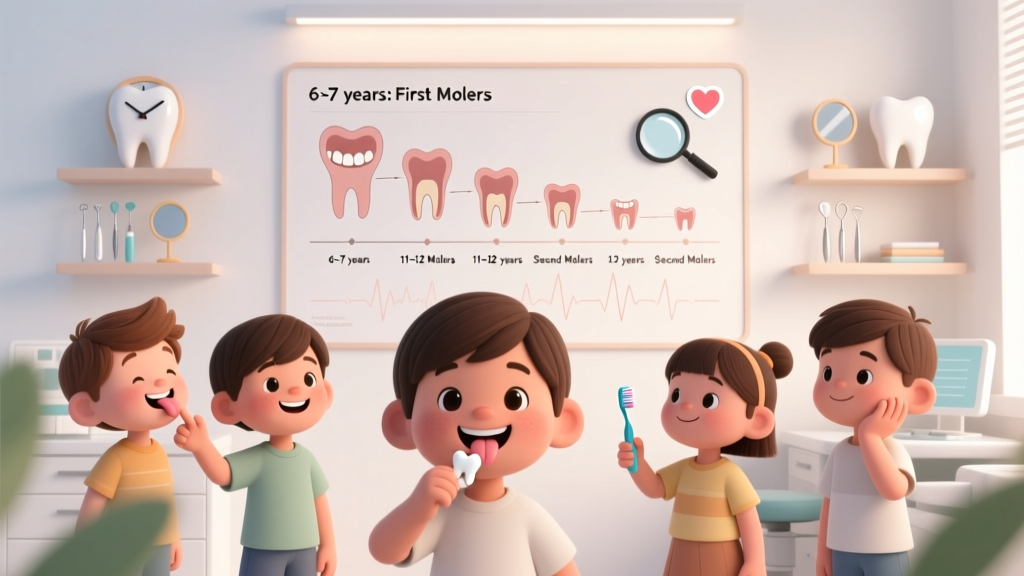
| Permanent First Molar | 6.3 years | 5.5–7.2 years | Erupts distal to primary second molar; no root resorption involved — it’s an ‘extra’ tooth. |
| Permanent Second Molar | 12.5 years | 11–13.5 years | Appears after the 12-year molars; often missed in school screenings due to location. |
Note: The 3-year mark sits at the upper edge of the primary second molar window — meaning if your child hasn’t erupted theirs by 36 months, it’s not yet abnormal, but merits documentation. A delay beyond 39 months warrants evaluation for potential causes like local obstruction (e.g., dense gingiva), systemic conditions (hypothyroidism, vitamin D-resistant rickets), or rare syndromes (e.g., cleidocranial dysplasia). But crucially — asymptomatic delay is far less concerning than sudden, painful swelling or fever.
Managing Molar Discomfort at Age 3: Evidence-Based Relief (Not Just Myths)
Primary second molars are notoriously uncomfortable. Their large surface area and thick gum tissue mean slow, forceful eruption — often accompanied by drooling, irritability, disrupted sleep, cheek rubbing, and even low-grade fever (<100.4°F). Here’s what actually works — and what doesn’t — according to Cochrane reviews and AAPD clinical recommendations:
- Cool, firm pressure: A chilled (not frozen) silicone toothbrush or damp washcloth rubbed gently along the gumline reduces inflammation via vasoconstriction. Avoid ice packs directly on skin — risk of frostbite in toddlers.
- NSAIDs (ibuprofen): For fever >100.4°F or clear pain behavior (refusing solids, crying on touch), ibuprofen dosed by weight is safe and effective for children ≥6 months. Acetaminophen is second-line; avoid aspirin entirely.
- Topical benzocaine gels: Strongly discouraged. The FDA warns against OTC teething gels containing benzocaine in children under 2 due to methemoglobinemia risk — and evidence shows minimal benefit even in older toddlers.
- Amber teething necklaces: No scientific support. A 2022 study in Pediatrics found zero analgesic effect and documented 3 infant strangulation cases linked to them.
Real-world example: Maya, a mom of twins in Portland, noticed her son Leo clenching his jaw and refusing crunchy foods at 32 months. She used a chilled spoon handle (gently pressed along gums) + weight-appropriate ibuprofen at bedtime. Within 48 hours, his eating improved and he slept through the night. His daughter Zoe erupted hers at 25 months with minimal fuss — illustrating how variable this process truly is.
When ‘Normal’ Isn’t Normal: Red Flags Requiring Dental Evaluation
While most 3-year-olds with emerging second molars need only supportive care, certain signs indicate pathology — not physiology. The American Academy of Pediatrics (AAP) emphasizes that teething does not cause high fever, diarrhea, rash, or prolonged inconsolability. If you observe any of these, consult your pediatrician or pediatric dentist promptly:
- Swelling extending beyond the gumline — especially if unilateral, warm, or fluctuant (suggesting abscess).
- Blue-gray discoloration of the gum over the erupting tooth — may indicate eruption cyst (usually benign but needs confirmation).
- Asymmetric eruption — one second molar present at 36+ months, the other absent with no sign of movement.
- Delayed eruption + other developmental delays — e.g., poor weight gain, hypotonia, or speech delays — may point to syndromic causes requiring multidisciplinary assessment.
Early intervention matters: A 2021 study in the Journal of Clinical Pediatric Dentistry found children with undiagnosed ectopic molar eruption (teeth coming in sideways) had 3.2× higher rates of enamel hypoplasia and malocclusion by age 7. Your pediatric dentist can perform a simple radiograph (low-dose digital X-ray) to assess root position and bone density — a quick, non-invasive step that prevents years of orthodontic complications.
Frequently Asked Questions
Can a 3-year-old get permanent molars?
No — permanent first molars erupt between ages 5.5 and 7.2 years, with the average being 6 years, 3 months. If you see a large, multi-cusped tooth appearing behind your child’s baby molars before age 5, it’s likely still a primary second molar — or possibly a supernumerary (extra) tooth, which occurs in ~1% of children and requires dental imaging to confirm.
My 3-year-old has no molars at all — is that a problem?
It depends. If no primary molars have erupted by 36 months — meaning both first and second molars are missing — this is outside normal variation and warrants evaluation. However, if only the second molars are delayed (which is common), and first molars erupted on time (by ~16 months), it’s likely just slower maturation. Track eruption using the AAPD’s free Digital Tooth Eruption Chart and discuss at your next well-child visit.
Are molars more painful than other teeth?
Yes — statistically and physiologically. Primary second molars have the largest crown surface area of any baby tooth (up to 2.5× larger than incisors) and erupt through thicker, denser gingival tissue. A 2020 observational study tracking salivary cortisol levels in 120 toddlers found peak stress biomarkers correlated strongly with second molar emergence — significantly higher than during incisor or first molar eruption.
Should I start brushing my child’s molars differently once they appear?
Absolutely. Those broad, grooved surfaces trap food and bacteria. Use a soft-bristled, age-appropriate toothbrush and a grain-of-rice-sized amount of fluoride toothpaste (1,000–1,500 ppm) twice daily — morning and before bed. Focus on the chewing surfaces with gentle, circular motions. The AAP and ADA jointly recommend establishing this habit as soon as the first tooth appears, but molar emergence is a critical inflection point: decay here spreads rapidly to adjacent teeth and can infect developing permanent teeth beneath.
Does late molar eruption mean my child will get braces later?
Not necessarily. While significant delays (>12 months beyond norms) can correlate with skeletal maturation differences, isolated molar timing has no proven link to future orthodontic need. What does predict orthodontic complexity is arch width, crowding, and oral habits (thumb-sucking, mouth breathing). A pediatric dentist can assess these factors during a ‘well-baby dental visit’ — recommended by age 1 or within 6 months of first tooth eruption.
Common Myths About Molars at Age 3
Myth #1: “If molars haven’t come in by age 3, something is wrong with my child’s nutrition.”
Reality: While severe malnutrition (e.g., chronic protein-energy deficiency) can delay tooth development, modern dietary deficiencies rarely cause isolated molar delay. More common culprits include genetic variation (family history of late eruption), mild hypothyroidism (screened at birth), or local factors like thick fibrous gingiva. Bloodwork isn’t indicated without other systemic signs.
Myth #2: “Molars always come in pairs — if one appears, the other must follow within days.”
Reality: Asymmetry is common and normal. One second molar may erupt at 29 months, the other at 34 months — a 5-month gap falls well within accepted variation. Radiographs show that root development often proceeds independently per tooth.
Related Topics (Internal Link Suggestions)
- When do kids lose baby molars? — suggested anchor text: "when do kids lose baby molars"
- Best toothbrush for 3-year-olds with molars — suggested anchor text: "best toothbrush for 3-year-olds"
- Fluoride toothpaste safety for toddlers — suggested anchor text: "is fluoride toothpaste safe for toddlers"
- Signs of toddler tooth decay — suggested anchor text: "early signs of toddler cavities"
- Pediatric dentist vs general dentist for kids — suggested anchor text: "pediatric dentist vs family dentist"
Your Next Step: Turn Knowledge Into Action
Now that you know do kids get molars at 3 — and understand that yes, it’s typical for primary second molars to emerge right around this age — you’re equipped to respond with confidence, not confusion. Don’t wait for pain to escalate: start daily fluoride brushing today, track eruption with our free printable chart, and schedule your child’s first dental visit if you haven’t already (the AAP recommends age 1 or within 6 months of first tooth). Most importantly, trust your instincts — if something feels off, seek a pediatric dentist who listens. Early, evidence-based care builds lifelong oral health, one molar at a time.
More Articles
 What Rapper Has 31 Kids? Fact-Checked (2026)
 How Old Are Eric Dane Kids? Privacy, Ethics & 2026
 What Kid Shoe Size Is a Women’s 7? (2026)
 Zac Brown’s Parenting Lessons: Presence Over Perfection
 When Do Kids Get Molars? Timeline, Pain Relief & Red Flags
 Magnesium Citrate for Kids: Pediatrician Advice & Safety
 Dwayne Johnson’s Kids: Family Truths & Co-Parenting Tips
 Is Five Nights at Freddy’s for Kids? Evidence-Based Guide
 Life Insurance Term Length With Kids (2026)
 What Is a Kid? Science-Backed Truths (2026)