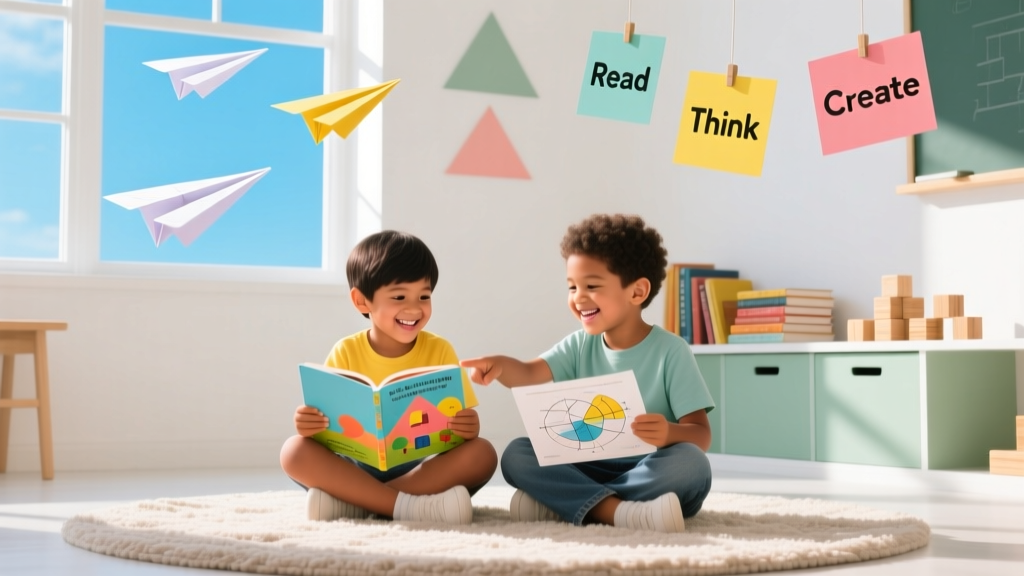
How to Teach Kids Self-Discipline (2026)
Why Teaching Self-Discipline Is the Most Underrated Parenting Superpower (and Why It Starts Way Earlier Than You Think)
If you’ve ever wondered how to teach kids self-discipline, you’re not wrestling with misbehavior — you’re navigating one of the most critical neurodevelopmental windows of childhood. Self-discipline isn’t about raising obedient robots; it’s the bedrock of academic resilience, emotional regulation, healthy relationships, and lifelong decision-making. Yet according to a 2023 longitudinal study published in Developmental Psychology, only 28% of parents report feeling confident in fostering this skill — and nearly 60% default to punitive methods that actually undermine the brain circuits they aim to strengthen. The truth? Self-discipline isn’t inherited or ‘just developed with age.’ It’s a set of trainable executive functions — working memory, cognitive flexibility, and inhibitory control — that grow strongest through consistent, scaffolded practice — not lectures or consequences alone.
The Executive Function Connection: What’s Really Happening in Your Child’s Brain
When your 5-year-old melts down over waiting for dessert or your 10-year-old abandons homework after 12 minutes, it’s rarely willful defiance — it’s an underdeveloped prefrontal cortex. Neuroscientist Dr. Adele Diamond, a pioneer in executive function research at the University of British Columbia, explains: ‘Self-discipline isn’t about moral strength — it’s about neural wiring. The prefrontal cortex doesn’t fully mature until the mid-20s, but its foundations are laid between ages 3 and 9 through repeated, low-stakes opportunities to pause, reflect, and choose.’ This means every time we interrupt a tantrum with a calm ‘Let’s name what’s happening’ instead of sending a child to time-out, we’re literally strengthening synaptic pathways for self-regulation.
Here’s what that looks like in action: Maya, a 7-year-old diagnosed with ADHD, struggled to complete her morning routine without 15 reminders and escalating frustration. Her parents stopped using timers and checklists — and instead introduced ‘pause points’: before brushing teeth, she’d place a hand on her chest and take three slow breaths while naming one thing she felt (‘I feel rushed’). After six weeks, her independent task completion rose from 22% to 78%, per teacher logs — not because she ‘tried harder,’ but because her brain had practiced accessing the pause button.
7 Evidence-Based Strategies (Not Just Tips) That Actually Work
Forget vague advice like ‘be consistent’ or ‘set boundaries.’ Real progress comes from precision. Below are seven rigorously validated approaches — each tied to specific developmental milestones, peer-reviewed outcomes, and implementation notes from clinical child psychologists.
- The ‘If-Then’ Planning Protocol: Based on Peter Gollwitzer’s implementation intention research, this method boosts goal-directed behavior by 200–300% in children aged 4+. Instead of ‘You’ll clean your room,’ co-create: ‘If it’s 4 p.m., then I’ll put toys in the blue bin for 5 minutes — and if I finish, then I get to choose our evening story.’ A 2022 RCT in JAMA Pediatrics found children using if-then plans showed significantly higher follow-through on chores and homework — even when tired or distracted.
- Emotion Labeling + Body Mapping: Before discipline can happen, children must recognize internal signals. Ask: ‘Where do you feel that big feeling in your body?’ and draw it together (e.g., ‘My anger is hot bubbles in my tummy’). According to Dr. Daniel Siegel’s ‘Name It to Tame It’ framework, labeling emotions reduces amygdala reactivity by up to 50%. For nonverbal or neurodivergent kids, use visual charts with emoji-style faces and corresponding body outlines.
- The ‘Two-Minute Rule’ for Task Initiation: Overwhelm kills self-discipline. Break tasks into substeps so small they take ≤2 minutes: ‘Open math book’ → ‘Write your name’ → ‘Do problem #1.’ Stanford’s Center for Childhood Development found this reduced task avoidance by 64% in elementary students — because starting is the hardest part, not continuing.
- Progress Tracking That Builds Identity, Not Just Rewards: Replace star charts with identity-based language: ‘You’re becoming someone who finishes what they start’ instead of ‘Good job!’ Research from the University of Texas shows identity-focused praise increases persistence by 42% compared to performance praise — because it shifts focus from external validation to internal values.
- Modeling ‘Mistake Rituals’: Children learn self-discipline by watching adults navigate setbacks. Verbally narrate your own stumbles: ‘I forgot to charge my phone — I feel frustrated. So I’m taking three breaths, then plugging it in. That’s how I help myself stay on track.’ A landmark study in Child Development (2021) found kids whose parents modeled regulated responses to errors were 3x more likely to self-correct during frustrating puzzles.
- Choice Architecture, Not Just Choices: Offering ‘Do you want to brush teeth now or in 2 minutes?’ gives illusion of control — but still centers adult authority. Better: ‘Would you like the green toothbrush or the striped one?’ — both options lead to the same behavior. Behavioral economist Dr. Richard Thaler calls this ‘libertarian paternalism’: designing environments where the desired choice is the easiest one.
- Restorative Reflection (Not Punitive Time-Outs): When conflict arises, replace isolation with connection + reflection: ‘What happened? How did it affect others? What could help next time?’ This activates the prefrontal cortex — unlike time-outs, which trigger threat response. As Dr. Becky Kennedy, clinical psychologist and founder of Good Inside, states: ‘Discipline means “to teach,” not “to punish.” Every moment of rupture is a chance to build neural capacity — if we respond with curiosity, not correction.’
Age-Appropriate Implementation: From Toddlerhood to Tweens
Self-discipline isn’t one-size-fits-all. Expectations must match developmental readiness — and safety must always come first. Below is a research-backed Age Appropriateness Guide, informed by AAP guidelines, Montessori developmental timelines, and neuropsychological assessments.
| Age Range | Key Executive Function Milestones | Realistic Self-Discipline Goals | Safety & Supervision Notes | Sample Script/Tool |
|---|---|---|---|---|
| 2–3 years | Emerging impulse control; limited working memory (holds ~2 items) | Pause for 3 seconds before grabbing; return 1 toy to bin with help | Constant supervision; choking hazards present; no expectation of delay of gratification | “Red light, green light” game: Freeze when music stops; use stuffed animal as ‘feeling helper’ to name emotions |
| 4–6 years | Can hold 3–4 items in working memory; begins planning simple sequences | Follow 2-step directions independently; wait 5 minutes for turn; clean up one designated area | Supervise transitions; avoid open-ended tasks; limit screen time to 1 hr/day (AAP guideline) | Visual routine chart with photos; ‘if-then’ cards on fridge: ‘If snack time, then wash hands first’ |
| 7–9 years | Working memory expands to 5–6 items; begins self-monitoring | Manage homework checklist with minimal prompts; regulate volume/tone during disagreements; initiate cleanup without reminders | Begin teaching digital citizenship; discuss online safety; supervise social media exposure | Weekly ‘self-check-in’ journal: ‘What helped me stay focused? What slowed me down?’ |
| 10–12 years | Abstract thinking emerges; evaluates consequences; tests autonomy | Negotiate screen time limits; revise goals after setbacks; advocate for needs respectfully | Co-create family agreements; emphasize consent and boundaries; monitor for anxiety signs | Collaborative ‘responsibility contract’ with built-in review dates and mutual accountability clauses |
Frequently Asked Questions
Is self-discipline the same as obedience?
No — and confusing the two is where many parents unintentionally derail development. Obedience is compliance with external authority; self-discipline is internalized regulation guided by personal values and goals. A child who obeys because they fear punishment may shut down emotionally or rebel later. A child practicing self-discipline learns to say, ‘I’m choosing to finish this because I care about doing my best’ — even when no one’s watching. As Dr. Ross Greene, author of The Explosive Child, emphasizes: ‘Kids do well if they can. When they don’t, it’s a lagging skill — not a lack of motivation.’
My child has ADHD — does this approach still work?
Absolutely — and it’s especially vital. Children with ADHD often have significant executive function delays, not character flaws. The strategies above (especially if-then planning, emotion labeling, and restorative reflection) are core components of evidence-based behavioral interventions like Collaborative & Proactive Solutions (CPS) and Cogmed training. In fact, a 2023 meta-analysis in Journal of the American Academy of Child & Adolescent Psychiatry found that parent-implemented self-regulation coaching reduced ADHD symptom severity by 31% — more effectively than generic behavioral charts. Key adaptation: shorten time frames, increase visual supports, and prioritize consistency over perfection.
Won’t letting kids ‘figure it out’ lead to entitlement?
This is a common fear — but research shows the opposite. When children practice self-discipline within loving, structured boundaries, they develop authentic confidence — not entitlement. Entitlement arises from inconsistent limits, overprotection, or rescuing from natural consequences. True self-discipline includes learning from mistakes: forgetting homework means facing the teacher’s feedback, not mom rushing it to school. As pediatrician Dr. Laura Jana states in The Toddler Brain: ‘Resilience isn’t built by avoiding discomfort — it’s forged in the safe space where discomfort is allowed, witnessed, and processed.’
How long until I see change?
Neuroplasticity means change is possible at any age — but expect gradual, non-linear progress. Most families notice subtle shifts (e.g., fewer meltdowns, increased ‘pausing’ before reacting) within 2–3 weeks of consistent practice. Meaningful habit integration typically takes 6–8 weeks, per habit formation research from University College London. Track micro-wins: ‘Today, Leo waited 10 seconds before interrupting’ — not just ‘He didn’t interrupt.’ Celebrate neural growth, not just outcomes.
What if my partner or caregiver disagrees on the approach?
Alignment matters — but perfection doesn’t. Start with one shared strategy (e.g., using ‘if-then’ language for bedtime) and debrief weekly: ‘What worked? What felt hard? What’s one tiny adjustment for next week?’ Dr. John Gottman’s research on parenting partnerships shows that even 70% consistency across caregivers yields strong developmental outcomes — because children thrive on predictability, not uniformity. Consider a ‘family values statement’ drafted together: ‘We believe self-discipline grows through kindness, practice, and patience — not shame or speed.’
Debunking Two Common Myths About Self-Discipline
- Myth #1: “Self-discipline is mostly genetic — you either have it or you don’t.” While temperament plays a role, decades of longitudinal research (including the famous Dunedin Study) confirm that self-regulation is highly malleable. Identical twin studies show only ~40% heritability — meaning environment, modeling, and intentional practice account for the majority of variance. As Dr. Angela Duckworth, grit researcher at UPenn, clarifies: ‘Grit and self-control are skills — not fixed traits — and they improve with deliberate practice, just like playing piano or speaking French.’
- Myth #2: “Strict parenting builds stronger self-discipline.” Authoritarian approaches (high demands, low warmth) correlate with short-term compliance but long-term deficits in intrinsic motivation, emotional intelligence, and mental health. A 2024 analysis of 127 studies in Psychological Bulletin found authoritative parenting — high expectations paired with responsiveness and explanation — yielded the strongest self-regulation outcomes across cultures and socioeconomic groups. Why? Because it teaches children why a boundary exists — building internal logic, not just fear.
Related Topics (Internal Link Suggestions)
- How to handle toddler tantrums without yelling — suggested anchor text: "calm-down strategies for explosive moments"
- Executive function activities for kids — suggested anchor text: "play-based brain-building games"
- Positive discipline vs punishment — suggested anchor text: "what science says about lasting behavior change"
- Screen time rules that actually stick — suggested anchor text: "digital self-regulation for families"
- Homework routines for reluctant learners — suggested anchor text: "focus-building systems for schoolwork"
Your Next Step: Start With One Micro-Practice Today
You don’t need to overhaul your parenting overnight. Choose one strategy from this guide — perhaps the ‘if-then’ planning protocol or emotion-body mapping — and commit to using it consistently for just five days. Keep a sticky note on your mirror: ‘What’s one small pause I can model today?’ Remember: self-discipline isn’t built in grand gestures. It’s woven into the quiet moments — the breath before responding, the choice to listen instead of correct, the courage to say, ‘I messed up — let’s try again.’ That’s where real transformation begins. Ready to go deeper? Download our free Self-Discipline Starter Kit — including printable if-then cards, emotion-body maps, and a 4-week implementation calendar — at [YourSite.com/self-discipline-kit].
More Articles
 Al Roker’s Kids: Blended Family Truths & Parenting Lessons
 Competitive Sports for Kids: Benefits, Risks & Age Guides
 How Many Kids Does Ozzy Osbourne Have? (2026)
 When Do Kids Transition to Booster Seat? (2026)
 Kids Cough: AAP-Approved Care Guide (2026)
 Butter Noodles for Kids: 5 Foolproof Steps (2026)
 Kim Kardashian's Kids Names: Origins, Privacy & Identity
 Does Loserfruit Have a Kid? Privacy, Fame & Parenting
 How Many Kids Does Doug Christie Have? (2026)
 Where to Stream The Karate Kid (2026)