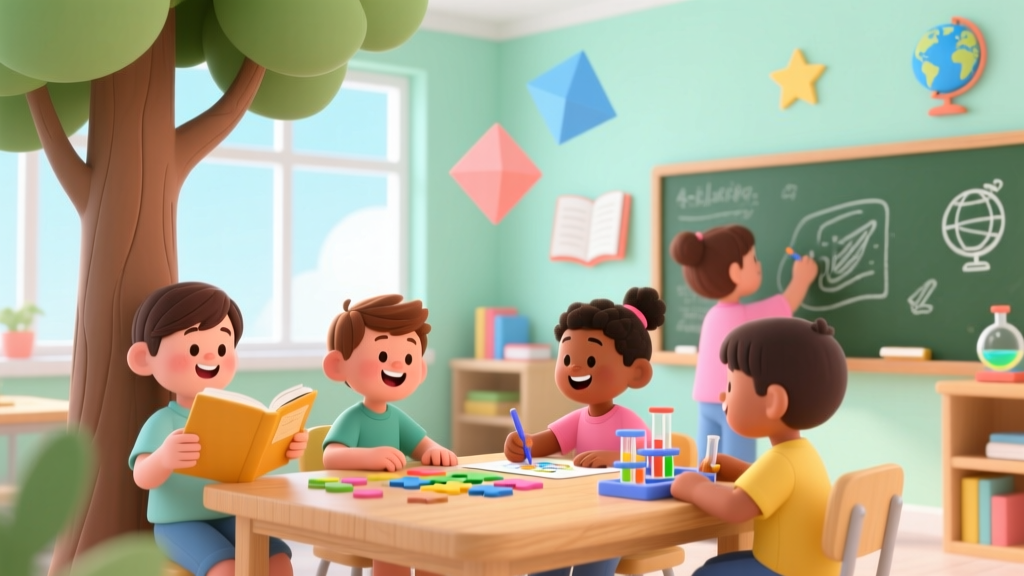
Teach Kids to Read: 7 Evidence-Backed Steps (2026)
Why This Isn’t Just Another 'Read-Aloud' Checklist — It’s Your Child’s Literacy Lifeline
If you’ve ever wondered how to teach a kid to read—not just recite letters or memorize flashcards, but truly decode, comprehend, and fall in love with stories—you’re not behind. You’re not failing. And you don’t need a teaching degree. What you *do* need is clarity amid the noise: no phonics fads, no screen-based ‘reading apps’ disguised as learning, and no pressure-cooker timelines that shame both parent and child. Today’s literacy landscape is more complex—and more hopeful—than ever. According to the American Academy of Pediatrics (AAP), 1 in 5 children experiences reading difficulty, yet over 90% of those challenges are preventable with early, responsive, relationship-based instruction. This isn’t about speed—it’s about scaffolding. It’s about turning shared moments into neural pathways. And it starts not with a textbook, but with your voice, your patience, and one surprisingly simple question: ‘What do you notice?’
The 3 Non-Negotiable Foundations (Before Letters Even Appear)
Most parents jump straight to ABCs—only to hit resistance by week three. Why? Because reading isn’t a linear skill; it’s a layered cognitive architecture. Neuroscientist Dr. Maryanne Wolf, author of Proust and the Squid, explains that fluent reading requires the brain to integrate auditory processing, visual recognition, language comprehension, and executive function—all built on earlier oral language foundations. Skip these, and you’re building on sand.
Foundation #1: Oral Language Richness
Children who hear 30 million more words by age 4 (per Hart & Risley’s landmark study) demonstrate significantly stronger vocabulary, syntax, and later decoding ability. But it’s not just *quantity*—it’s *quality*. Swap ‘Look at the dog!’ for ‘That brown dog is sprinting across the grass—his ears are flying back like wings!’ Use rich verbs, precise adjectives, and embedded questions: ‘Why do you think he’s running *so fast*?’
Foundation #2: Phonemic Awareness (Not Phonics!)
This is the ability to hear, identify, and manipulate individual sounds (phonemes) in spoken words—*before* connecting them to letters. A child who can clap syllables, rhyme ‘cat’/‘hat’, or say ‘stop’ without the /t/ sound is primed for reading. Try this: ‘Say “sun.” Now say it without the /s/.’ If they say ‘un,’ they’re ready. If they pause or say ‘moon,’ they need playful, low-stakes practice—not flashcards. The National Institute for Literacy recommends 5–10 minutes daily of games like ‘Sound Scavenger Hunt’ (find something that starts with /b/, /sh/, /th/) or ‘Silly Word Swap’ (‘bat’ → ‘cat’ → ‘rat’ → ‘mat’).
Foundation #3: Print Awareness & Environmental Literacy
Point out print *everywhere*: cereal boxes, street signs, recipe cards, text messages (with permission). Ask: ‘Where does this sentence start? Where does it end? Which way do we read?’ Let your child ‘read’ a familiar book from memory—not to test recall, but to internalize directionality, spacing, and punctuation as meaning-makers. As literacy researcher Dr. Timothy Shanahan emphasizes, ‘Print awareness is the silent scaffold—it doesn’t look like reading, but it’s the first brick in the wall.’
Phase-Based Instruction: Matching Strategy to Developmental Readiness (Not Age)
Forget rigid grade-level expectations. Reading development varies wildly—and that’s normal. The key is matching your approach to your child’s current stage, not their birthdate. Below is a research-backed progression used by certified reading specialists and validated in longitudinal studies like the NICHD Early Child Care Research Network.
| Stage | Typical Age Range | Key Indicators | Parent Action Plan | Risk Red Flags |
|---|---|---|---|---|
| Emergent Pre-Reader | 2–4 years | Recognizes own name in print; enjoys rhymes; points to pictures while ‘reading’; scribbles with intent | Read aloud daily with expressive voice + finger-tracking; play sound games; label objects in home; co-create simple ‘story stones’ (draw 3 items, tell a story using them) | Consistent avoidance of books; no response to rhyming games after 8+ weeks; inability to match spoken word to picture (e.g., ‘show me the apple’) |
| Early Decoder | 4.5–6.5 years | Knows most letter names & sounds; attempts to ‘sound out’ CVC words (cat, sun); recognizes 10–20 high-frequency words (the, and, is) | Use explicit, multisensory phonics: trace letters in sand while saying sounds; build words with magnetic letters; use decodable books (not leveled readers) with controlled vocabulary; celebrate ‘approximations’ (‘buh-ah-tuh’ for ‘bat’) | Guessing whole words from pictures only; inconsistent letter-sound knowledge after 12+ weeks of daily practice; frustration tears during short reading attempts |
| Transitional Reader | 6–8 years | Reads aloud with increasing fluency; self-corrects errors; asks ‘why’ and ‘what if’ questions; writes simple sentences with invented spelling | Focus on prosody (reading with expression); introduce ‘think-alouds’ (‘I wonder why she did that…’); use graphic organizers for story elements; encourage rereading favorite passages for joy—not correction | Reliance on memorization over decoding; slow, choppy reading with no phrasing; inability to retell a 3-sentence story orally |
| Fluent Comprehender | 8+ years | Reads silently with stamina; infers character motives; compares texts; reads across genres; uses context to define new words | Discuss themes, not just plots; connect books to real life (‘When have you felt like this character?’); introduce nonfiction with strong visuals; let them choose *all* their reading material—even comics and game manuals | Avoidance of reading outside school; inability to distinguish fact from opinion in age-appropriate texts; persistent spelling errors reflecting phonological gaps |
The ‘Silent Struggler’ Trap: What to Do When Your Child Resists—or Seems ‘Stuck’
Resistance isn’t defiance. It’s data. When a child shuts down, looks away, or says ‘I hate reading,’ their nervous system is signaling overwhelm—often because the task feels too hard, too abstract, or too disconnected from their world. Pediatric neuropsychologist Dr. Sally Shaywitz, co-founder of the Yale Center for Dyslexia & Creativity, notes that up to 20% of children have dyslexia, but many more experience ‘instructional mismatch’: methods that ignore their learning profile.
First, rule out vision or hearing issues—schedule a pediatric optometrist (not just school screening) and audiologist visit. Then, ask: Is the material too hard? Are expectations misaligned? Are we prioritizing accuracy over meaning? One parent, Maya R. (Chicago, IL), shared her breakthrough: ‘We’d spent months drilling ‘sight words’ until my son cried every night. Then his reading specialist asked, “What does he *love*?” He was obsessed with dinosaurs. So we switched to decodable dino-books—same phonics rules, but with T. rex and pterodactyls. In 3 weeks, he read his first full sentence: “The big T. rex ROARS!” He wasn’t ‘behind’—he was bored and unseen.’
Try these low-pressure pivots:
- The ‘One-Sentence Rule’: Read *one* sentence together. Then let them draw what happened. No quiz. No correction. Just connection.
- Audio + Visual Sync: Use audiobooks *with physical books*. Have them follow along—not to read, but to feel rhythm and see how speech maps to print.
- Role-Reversal Reading: Let them ‘teach’ you. They hold the book, point to words, and you ‘stumble’ on purpose: ‘Is this “dog” or “log”? Help me!’ This builds agency and reduces performance anxiety.
What Works (and What Doesn’t): Evidence-Based Tools vs. Popular Myths
Every year, new ‘miracle’ reading programs flood Amazon and Pinterest. But peer-reviewed research tells a different story. A 2023 meta-analysis in Reading Research Quarterly reviewed 127 interventions and found only three consistently effective across diverse learners: systematic phonics instruction, repeated oral reading with feedback, and interactive read-alouds with questioning. Everything else—alphabet apps, ‘whole-word’ flashcards, or speed-reading drills—showed negligible or even negative effects on long-term comprehension.
Frequently Asked Questions
Can I teach my child to read before kindergarten?
Absolutely—and many do successfully. But ‘teaching to read’ before age 4–5 should focus exclusively on oral language, phonemic play, and print awareness—not formal decoding. Pushing structured phonics too early can backfire: a 2022 University of Cambridge study found children forced into early reading instruction showed higher anxiety and lower motivation by Grade 2. Wait for readiness cues (e.g., curiosity about letters, ability to rhyme, sustained attention for 10+ minutes), not a calendar.
My child mixes up b/d/p/q. Is this dyslexia?
Mixing similar-looking letters is extremely common through age 7 and rarely indicates dyslexia alone. Dyslexia is a language-based learning difference affecting phonological processing—not visual perception. True red flags include persistent difficulty segmenting sounds (‘cat’ → /k/ /a/ /t/), trouble learning nursery rhymes, or family history of reading challenges. Consult a specialist if letter reversals persist *alongside* sound-blending struggles past age 7.
Should I correct every mistake when they read aloud?
No—over-correction kills fluency and confidence. Instead, use the ‘3-Second Pause Rule’: if they hesitate for 3+ seconds on a word, gently supply it. Then ask, ‘What makes sense here?’ or ‘Does that match the picture?’ Only correct errors that change meaning (e.g., reading ‘house’ for ‘horse’ in a sentence about animals). Research shows children self-correct 70% of errors when given space—and each self-correction strengthens neural pathways more than adult correction.
Are sight words helpful—or harmful?
High-frequency words like ‘the,’ ‘said,’ and ‘was’ are essential—but they must be taught *alongside* phonics, not instead of it. The best approach? ‘Phoneme-anchored sight words’: break ‘said’ into /s/ /e/ /d/, then explain the irregularity (“This one breaks the rule—let’s remember it together”). Avoid rote memorization. Use multisensory tricks: write ‘said’ in shaving cream, tap syllables on knees, or act out ‘they said hello!’
What if English isn’t our home language?
Bilingual children often outperform monolingual peers in metalinguistic awareness—the very skill that predicts reading success. Prioritize rich oral language in *both* languages. Read bilingual books, sing songs in both, and explicitly compare sounds (‘In Spanish, “casa” starts with /k/, like “cat” in English’). The AAP affirms: maintaining home language strengthens English literacy—not hinders it.
Common Myths Debunked
Myth #1: “If they’re smart, they’ll just pick up reading naturally.”
Reading is not biologically hardwired like speaking. It’s a cultural invention requiring explicit instruction. As Dr. Stanislas Dehaene, cognitive neuroscientist, states: ‘The brain repurposes circuits for reading—it doesn’t come pre-installed.’ Even gifted children need guided practice.
Myth #2: “More worksheets = faster progress.”
Worksheets isolate skills from meaning. Research shows children retain phonics concepts 3x longer when learned through movement (clapping syllables), art (drawing sound snakes), or storytelling (creating a ‘/sh/’ monster who whispers) versus paper drills.
Related Topics (Internal Link Suggestions)
- Best Decodable Books for Beginning Readers — suggested anchor text: "top decodable readers for early readers"
- Signs of Dyslexia in Preschoolers — suggested anchor text: "early dyslexia indicators before kindergarten"
- How to Choose Age-Appropriate Chapter Books — suggested anchor text: "best chapter books for emerging readers"
- Screen Time Guidelines for Literacy Development — suggested anchor text: "educational screen time limits for preschoolers"
- Montessori-Inspired Literacy Activities at Home — suggested anchor text: "hands-on Montessori reading materials"
Your Next Step Starts With One Minute Today
You now hold not just strategies—but perspective. How to teach a kid to read isn’t about perfection. It’s about presence. It’s noticing how their eyes light up at the word ‘dragon,’ how they whisper ‘/b/ /a/ /t/’ like a secret spell, how they trace the curve of a ‘c’ with their fingertip and say, ‘This one hugs the word.’ That’s where literacy lives—not in scores or benchmarks, but in those quiet, sacred collisions between sound, symbol, and self. So tonight, skip the flashcards. Pick one book you loved as a child. Sit close. Point to the first word. Say, ‘Let’s figure this out together.’ And watch what happens—not just on the page, but in their heart. Ready to go deeper? Download our free Reading Readiness Tracker—a printable, stage-based checklist with weekly prompts, milestone celebrations, and gentle reminders that you’re doing better than you think.
More Articles
 Where Are the 4 Youngest Franke Kids? Privacy Truths
 Does Chad Michael Murray Have Kids? (2026)
 How Many Kids Does Meghan Markle Have? (2026)
 Home Improvement Kids’ Lives After TV (2026)
 How Many Kids Does Kylie Jenner Have? (2026)
 Kombucha for Kids: Age Limits, Sugar & Alcohol Risks (2026)
 Is the New Superman Movie for Kids? (2026)
 Francesca’s Co-Parenting Journey: Truth & Tips (2026)
 Is Judith Ricks a Kid? Identity Check
 Did the Menendez Brothers Have Kids? (2026)