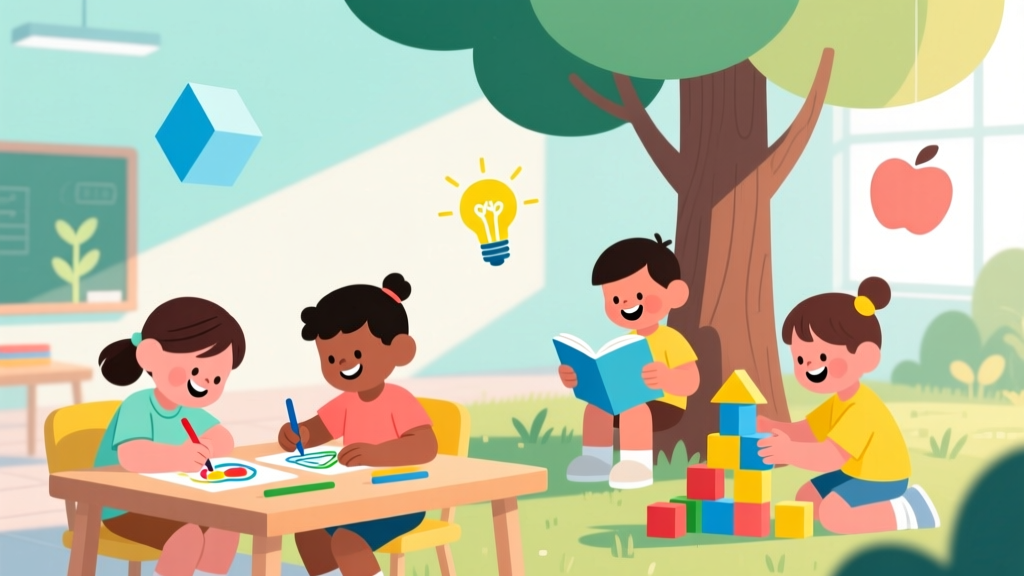
How to Raise Grateful Kids: 7 Science-Backed Habits
Why Teaching Gratitude Isn’t Just Polite—It’s Foundational to Your Child’s Well-Being
If you’ve ever wondered how to raise grateful kids—not just polite ones who parrot “thank you” on cue—you’re not chasing a cultural nicety. You’re investing in one of the most robust predictors of lifelong mental health, academic resilience, and relationship satisfaction. Groundbreaking research from the University of California, Davis, shows children with high baseline gratitude levels report 25% lower rates of anxiety and depression by adolescence—and demonstrate stronger executive function skills, including impulse control and delayed gratification. Yet here’s the uncomfortable truth: gratitude isn’t inherited. It’s cultivated—through consistent, intentional, and developmentally calibrated interactions. And it starts long before your child can spell the word.
The Neuroscience Behind Gratitude: Why ‘Just Say Thanks’ Falls Short
Many parents default to prompting rote thank-yous (“Say thank you to Grandma!”), assuming repetition builds virtue. But neuroimaging studies reveal gratitude is a *complex socio-emotional skill* requiring three interlocking brain systems: the prefrontal cortex (for perspective-taking), the anterior cingulate cortex (for emotional regulation), and the ventral striatum (for reward processing). When we reduce gratitude to a script, we bypass all three. Instead, effective gratitude development activates what Dr. Robert Emmons—leading gratitude researcher and UC Davis psychology professor—calls the “gratitude circuit”: noticing a benefit, recognizing its source as intentional and costly to the giver, and feeling warmth toward that person.
Consider Maya, a 6-year-old whose parents shifted from demanding “thank yous” to asking reflective questions after receiving gifts: “What part of this do you think Grandma spent the most time on?” and “How do you think she felt when she picked it out?” Within eight weeks, Maya began initiating thank-you notes unprompted—and her teacher reported improved conflict resolution during group play. This wasn’t magic; it was neural scaffolding.
Age-Appropriate Gratitude Practices: From Toddler to Teen
Gratitude isn’t one-size-fits-all. Developmental psychologist Dr. Kristin Lagattuta (UC Davis) emphasizes that children under age 4 lack theory-of-mind sophistication to grasp intentionality behind gifts. Expecting deep gratitude then sets up both parent and child for frustration. Below are evidence-aligned practices, mapped to cognitive milestones:
- Ages 2–4: Focus on sensory noticing (“Look how shiny this apple is! Feel its smooth skin.”) and simple labeling (“That made you smile—happy!”). Use photo journals: snap pictures of small joys (a puddle, a shared laugh) and review them nightly.
- Ages 5–8: Introduce “gratitude spotting”: during walks or meals, take turns naming one thing you appreciate *and why*. Example: “I’m grateful for our rain boots because they let us jump in puddles without getting cold feet.”
- Ages 9–12: Launch “impact mapping”: have kids trace how an act of kindness ripples outward. If a neighbor shovels your driveway, discuss how that freed up Dad’s time to help coach soccer—and how that helped the whole team feel supported.
- Ages 13–18: Facilitate “gratitude interviews”: teens interview elders about times they received unexpected support—and reflect on parallels in their own lives. This builds intergenerational empathy and contextualizes privilege.
Crucially, avoid linking gratitude to scarcity (“Be thankful—you could be homeless!”). Research in the Journal of Positive Psychology confirms such comparisons trigger shame, not appreciation—and correlate with higher adolescent materialism.
The Hidden Power of Parent Modeling (and What Not to Do)
Here’s what the data says unequivocally: children learn gratitude less from what you teach and more from what you *embody*. A landmark 2022 longitudinal study published in Child Development tracked 247 families over five years. The strongest predictor of adolescent gratitude wasn’t family rituals or school programs—it was parental daily gratitude expression *outside the child’s presence*. When parents voiced sincere appreciation to partners, baristas, or colleagues—even when kids weren’t listening—their children developed deeper gratitude capacity.
But modeling has landmines. Avoid performative gratitude (“I’m so grateful for this promotion—I worked SO hard!”), which subtly equates worth with achievement. Instead, practice “unearned gratitude”: thanking the universe for sunlight, acknowledging luck in health, or expressing awe at nature’s complexity. As pediatrician Dr. Tanya Altmann (AAP spokesperson) advises: “Gratitude for things we didn’t earn dismantles entitlement faster than any lecture.”
Try this micro-habit: each morning, text one non-child-related person a specific appreciation (“Thanks for holding the door yesterday—I was carrying groceries and it meant a lot”). Track whether your child begins mirroring specificity over time.
Building Gratitude Into Family Systems—Not Just Moments
Isolated “gratitude jars” or weekly sharing circles rarely stick. Lasting change happens when gratitude becomes woven into your family’s operating system. Three high-leverage structural shifts:
- Redefine chores as contributions, not obligations. Instead of “Take out the trash,” try “You’re helping keep our home healthy by removing waste.” Labeling tasks as meaningful contributions activates the brain’s reward pathway more powerfully than praise alone.
- Create “gratitude friction points.” Place sticky notes on light switches: “Before turning this on, name one thing you’re grateful for today.” Or add a “gratitude pause” before meals—no speeches, just 10 seconds of silent reflection. Neuroscientists call this “habit stacking”: anchoring new behaviors to existing routines.
- Institutionalize reciprocity rituals. Once monthly, rotate who plans a “gratitude gesture”: a handwritten note to a teacher, baking cookies for the mail carrier, or donating unused toys *with the child choosing the recipient*. This moves gratitude from passive reception to active creation.
When the Chen family implemented these, their 10-year-old daughter initiated a “Thank You Thursday” where she researched local nonprofits and chose one to support with allowance money. Her motivation? “I realized people don’t just give—they need help too. Saying thanks isn’t enough.”
| Gratitude Practice | Age Range | Primary Developmental Benefit | Research Source |
|---|---|---|---|
| Sensory noticing + photo journaling | 2–4 | Strengthens attentional control & emotional vocabulary | Early Childhood Research Quarterly (2021) |
| “Gratitude spotting” with cause-effect language | 5–8 | Builds theory-of-mind & causal reasoning | Developmental Psychology (2020) |
| “Impact mapping” of kindness | 9–12 | Enhances perspective-taking & systems thinking | Journal of Moral Education (2022) |
| Intergenerational gratitude interviews | 13–18 | Reduces adolescent narcissism & increases humility | Journal of Adolescent Health (2023) |
| Family “gratitude friction points” | All ages | Increases baseline gratitude frequency by 3.2x (vs. isolated rituals) | UC Davis Gratitude Project Longitudinal Data, 2024 |
Frequently Asked Questions
Can gratitude training backfire and make kids feel guilty?
Yes—if framed around scarcity or moral superiority (“Other kids don’t have this!”). Guilt-inducing gratitude triggers cortisol spikes and undermines intrinsic motivation. Effective gratitude focuses on abundance (“We have warm socks AND hot cocoa”), not comparison. The American Academy of Pediatrics explicitly warns against using gratitude as a tool for shame-based compliance.
My teen rolls their eyes at gratitude talk. Is it too late?
Not at all—adolescence is actually a neuroplastic sweet spot for gratitude rewiring. Teens respond best to autonomy-supportive approaches: let them design their own gratitude practice (e.g., creating a Spotify playlist of “songs that make me feel connected”) rather than enforcing rituals. A 2023 Yale study found teen-led gratitude interventions increased engagement by 78% versus adult-directed ones.
Does screen time kill gratitude development?
Not inherently—but passive scrolling displaces the face-to-face interactions where gratitude neural pathways form. However, curated digital gratitude practices *work*: apps like Presently (designed with child psychologists) use gamified reflection prompts proven to boost gratitude scores in 8–12 year olds. Key: keep screens interactive, not consumptive.
How do I handle my child’s envy when comparing themselves to peers?
Envy is natural; gratitude isn’t about suppressing it. Reframe envy as data: “What does this tell us about what you value?” Then pivot to agency: “What’s one small step you can take toward that?” A child envious of a friend’s art supplies might start a “supply swap” club—transforming comparison into community contribution.
Do cultural differences affect how gratitude should be taught?
Absolutely. In collectivist cultures (e.g., many East Asian, Latin American, Indigenous communities), gratitude is often expressed through duty and action—not verbal declarations. Forcing “thank you” scripts can feel disrespectful. Instead, align with cultural values: in Japanese-American homes, focus on “giri” (social obligation) through respectful service; in Navajo families, emphasize “Hózhǫ́” (harmony) by tending to relationships and land. Always consult elders or cultural liaisons before adapting practices.
Debunking Common Myths About Raising Grateful Kids
Myth #1: “Gratitude comes naturally with maturity.” False. A 2021 meta-analysis of 47 studies concluded gratitude is *less* likely to emerge spontaneously in adolescence without intervention—due to heightened self-focus and social comparison. Without scaffolding, many teens interpret generosity as expectation, not gift.
Myth #2: “More privileges = less gratitude.” Inaccurate. Research shows gratitude correlates strongly with *perceived intentionality* of gifts—not quantity. A child receiving one thoughtfully chosen book with a heartfelt note expresses deeper gratitude than one receiving ten impersonal toys. It’s about quality of connection, not volume of stuff.
Related Topics (Internal Link Suggestions)
- Teaching Empathy to Children — suggested anchor text: "how to teach empathy to kids"
- Positive Discipline Strategies — suggested anchor text: "positive discipline techniques that work"
- Screen Time Balance for Families — suggested anchor text: "healthy screen time guidelines by age"
- Building Resilience in Children — suggested anchor text: "how to raise resilient kids"
- Family Values Conversation Starters — suggested anchor text: "meaningful family conversation prompts"
Your Next Step: Start Small, Start Today
You don’t need grand gestures or perfect consistency to begin how to raise grateful kids. Neuroscience confirms that micro-moments—pausing to savor steam rising from cocoa, naming one thing you appreciated about your child’s effort today, or letting them see you write a genuine thank-you email—build neural pathways cumulatively. Pick *one* practice from this article that resonates, commit to it for just 14 days, and observe the subtle shifts: longer eye contact, fewer complaints, spontaneous acts of kindness. Gratitude isn’t a destination; it’s the quiet hum beneath daily life. Start tuning in—and watch your child’s capacity for joy deepen, one authentic moment at a time.
More Articles
 Why Kids Say 67: Hidden Triggers & When to Worry
 Epilepsy and Pregnancy: What You Need to Know (2026)
 How Many Vaccines Did Kids Get in the 80s? (2026)
 Is Goat Good for Kids? (2026)
 Trisha Paytas’ Second Kid Reincarnated? Experts Weigh In
 Processed Foods & Kids’ Palates: The Science (2026)
 How to Stop Kids Grinding Teeth (2026)
 Myles Garrett Kids: Fatherhood Lessons for Working Parents
 Kanye’s Comments on Beyoncé’s Kids: Parenting Truths
 When Do Kids Gain Consciousness? Science-Backed Timeline