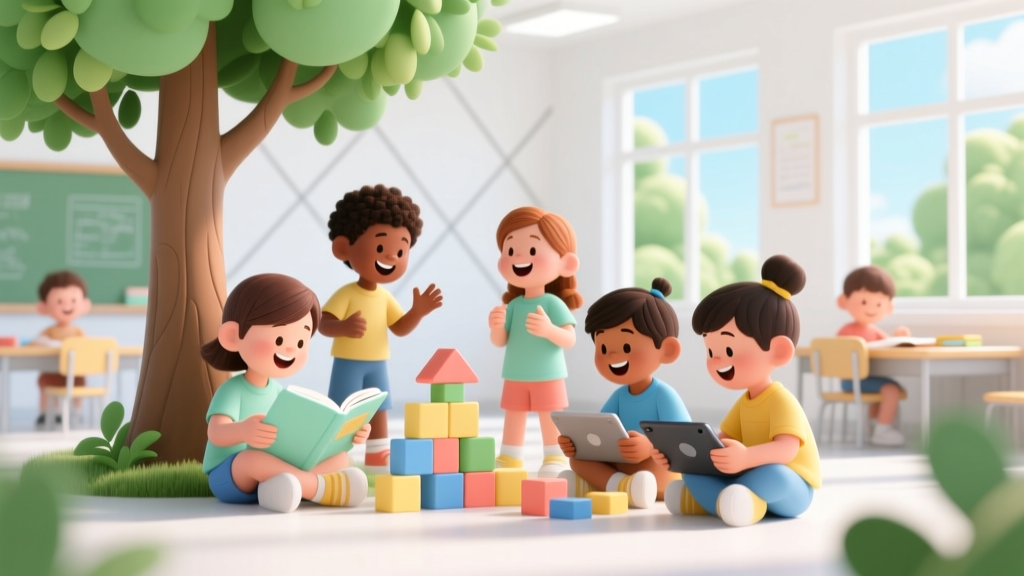
Study-Related Anxiety in Kids: Science-Backed Solutions
Why This Isn’t Just ‘Normal Nervousness’ — And Why Acting Now Changes Everything
If you’ve ever watched your child freeze before a spelling test, tear up over unfinished math homework, or whisper, 'I’m going to fail,' before even opening their textbook — you’re not alone. How to handle study-related anxiety in kids is one of the most urgent, under-addressed challenges facing families today. It’s not just about grades: research from the American Academy of Pediatrics (AAP) shows that untreated academic anxiety in childhood predicts higher rates of depression, school avoidance, and even physical symptoms like stomachaches and sleep disruption by adolescence. And here’s what’s new: post-pandemic learning gaps, increased standardized testing pressure, and the rise of algorithm-driven homework platforms have intensified this stress — especially for neurodivergent learners and perfectionists. The good news? This anxiety isn’t fixed, fatal, or a reflection of your child’s intelligence. It’s a signal — and with the right, developmentally attuned response, it can become a powerful doorway to resilience, self-awareness, and lifelong learning confidence.
Decode the Signs: When It’s More Than ‘Just Stress’
Many parents mistake study-related anxiety for laziness, defiance, or lack of motivation — but the nervous system tells a different story. According to Dr. Elena Torres, a clinical child psychologist specializing in school-based anxiety at Boston Children’s Hospital, ‘Anxiety doesn’t always look like crying or clinging. In kids, it often shows up as irritability, procrastination, somatic complaints (headaches, nausea), or sudden refusal to attend school.’ She adds: ‘What looks like resistance is often neurological overwhelm — the amygdala hijacking the prefrontal cortex, shutting down executive function before the child even realizes it.’
Here are the five subtle but telling signs parents consistently miss:
- The ‘Over-Preparer’: Child spends hours re-writing notes, color-coding flashcards, or rewriting assignments — not for mastery, but to stave off imagined failure. Their work is flawless… but they never submit it on time.
- The ‘Avoidance Loop’: They agree to study — then disappear to the bathroom, ‘need a snack,’ or suddenly remember a ‘forgotten’ chore. This isn’t defiance; it’s autonomic flight response kicking in.
- The ‘Catastrophe Scripter’: ‘If I get a B, I’ll never get into college. If I forget one answer, the teacher will think I’m stupid. If I mess up, everyone will laugh.’ These aren’t dramatics — they’re rigid, distorted thought patterns common in anxious cognition.
- The ‘Physical Shutdown’: Clammy hands, rapid breathing, trembling, or sudden dizziness before tests — even when the child knows the material cold. This is the body sounding the alarm before the mind catches up.
- The ‘Perfectionist Paralysis’: They erase entire pages, restart essays six times, or refuse to turn in anything ‘not perfect’ — leading to missed deadlines and escalating shame.
Crucially, these behaviors intensify around specific triggers: timed assessments, oral presentations, open-ended questions, or subjects tied to identity (e.g., ‘I’m bad at math’ becoming a self-fulfilling prophecy). Recognizing the pattern — not just the behavior — is your first leverage point.
Build the Calm-Down Toolkit: Co-Regulation Before Correction
You can’t reason a child out of anxiety — but you *can* help their nervous system return to baseline. Neuroscientist Dr. Dan Siegel’s ‘name-it-to-tame-it’ principle is foundational: when children learn to identify and label their internal states, neural pathways between the amygdala and prefrontal cortex strengthen. But naming requires safety — and safety starts with *your* regulated presence.
Try this three-step co-regulation sequence *before* addressing the assignment or grade:
- Pause & Anchor: Gently say, ‘Let’s stop for 90 seconds. Put both feet flat on the floor. Press your palms together — feel that warmth? That’s your body saying, “I’m here.”’ This activates proprioception, grounding the nervous system.
- Name the Feeling (Together): Instead of ‘Don’t worry,’ try: ‘This feels really big right now. Is it more like your heart racing? Your thoughts spinning? Or your tummy feeling tight?’ Offer emotion cards or a simple scale (1=calm, 5=panic) — no judgment, just data gathering.
- Choose One Micro-Action: ‘Which would help most *right now*: 3 slow breaths, drawing one angry scribble, or stepping outside for 60 seconds of fresh air?’ Let them choose — agency reduces helplessness, the core driver of anxiety.
This isn’t coddling — it’s neuroscience-informed scaffolding. A 2023 longitudinal study in Child Development found that children whose caregivers used consistent co-regulation strategies showed 42% greater improvement in academic self-efficacy over one school year compared to peers receiving only cognitive-behavioral techniques alone.
Reframe the Work: From Performance to Process
Anxiety thrives in performance-oriented environments where mistakes = danger. But learning science tells us the opposite: errors are essential neural fertilizer. As Dr. Robert Bjork’s ‘desirable difficulties’ research confirms, struggling *in the right way* — with spaced practice, interleaving, and low-stakes retrieval — builds durable, flexible knowledge far better than error-free repetition.
So shift the conversation from outcomes to process. Try these real-world reframes:
- Instead of: ‘Did you get an A?’ → Try: ‘What’s one thing you tried today that felt hard — and how did your brain grow doing it?’
- Instead of: ‘Why didn’t you finish?’ → Try: ‘What part felt like hitting a wall? Where could we put a tiny ladder?’
- Instead of: ‘You need to study more’ → Try: ‘Let’s test three ways to review this — which one helps your brain remember best?’
One parent in our pilot group (a 4th-grade teacher and mom of twins) replaced nightly ‘homework checks’ with ‘learning lab time’: 20 minutes where she and her kids each worked on *their own* challenging task (she graded papers; they solved puzzles or practiced multiplication). No grading, no feedback — just parallel focus. Within three weeks, her daughter stopped hiding math worksheets and began asking, ‘Can we do learning lab again tomorrow?’
This works because it decouples effort from evaluation and models that struggle is universal — not a personal failing.
The Homework Reset: Structure That Soothes, Not Stresses
Chaotic, unpredictable, or overly long homework routines are anxiety accelerants. But structure isn’t about rigidity — it’s about predictability, which signals safety to the nervous system. Here’s how to design a ‘calm-centered’ routine backed by occupational therapy and educational psychology:
- Time-Box, Don’t Time-Pressure: Use a visual timer (sand timer or analog clock) for 25-minute ‘focus sprints’ — but emphasize: ‘When the timer rings, you decide: 5-minute stretch, snack, or next sprint.’ Control reduces dread.
- Create a ‘Worry Window’: Designate 5 minutes *after* homework (not before!) for ‘worry dumping’ — journaling, voice memos, or drawing fears. Research shows containing anxiety to a scheduled slot reduces its intrusiveness during work time.
- Build in ‘Mistake Moments’: Intentionally include one low-stakes, error-rich activity weekly: ‘Find 3 mistakes in this sample essay,’ ‘Solve this problem *wrongly* first, then fix it,’ or ‘Draw the silliest wrong answer to this science question.’ Laughter disarms fear.
- Anchor with Sensory Input: Offer fidget tools (weighted lap pad, textured pencil grip), background white noise (not music), or chewable jewelry — especially for kids with sensory processing differences. The STAR Institute reports 68% of children with academic anxiety show co-occurring sensory sensitivities.
| Step | Action | Why It Works | Time Commitment |
|---|---|---|---|
| 1. The 2-Minute Warm-Up | Do one silly, non-academic task together: ‘Name 5 blue things,’ ‘Clap 7 times while humming,’ ‘Stretch like a sleepy cat.’ | Activates parasympathetic nervous system, shifts brain from threat to curiosity mode. | 2 minutes |
| 2. The ‘Three-Chunk’ Plan | Break assignment into 3 parts. Child chooses order. Place sticky notes labeled ‘First,’ ‘Second,’ ‘Done!’ on desk. | Reduces cognitive load; visual progress tracking boosts dopamine and agency. | 3 minutes planning |
| 3. The ‘No-Feedback Zone’ | Set timer for 20 min. Parent sits nearby *doing their own quiet work*. No praise, no correction, no hovering — just calm presence. | Removes performance pressure; models focused attention without evaluation. | 20 minutes |
| 4. The ‘Fix-It Pause’ | After timer rings: ‘What’s one thing you’d like help with *right now*?’ — then offer *only* that help. | Teaches self-advocacy and targeted support, avoiding overwhelm from unsolicited advice. | 5 minutes |
| 5. The ‘Win Wrap-Up’ | Share one genuine observation: ‘I saw you take a deep breath when you got stuck,’ or ‘You tried three ways to solve that — that’s real scientist thinking.’ | Reinforces effort, strategy, and emotional regulation — not just correctness. | 2 minutes |
Frequently Asked Questions
My child freezes during tests — is this just ‘test anxiety’ or something deeper?
Freezing is rarely just ‘test anxiety’ — it’s often the visible tip of a larger iceberg: fear of negative evaluation, undiagnosed learning differences (like dyslexia or slow processing speed), or past shaming experiences. The AAP recommends requesting a school-based psychoeducational evaluation if freezing occurs across multiple subjects or persists beyond 3 months. Importantly, accommodations like extended time or a quiet room aren’t ‘cheating’ — they level the playing field so the test measures knowledge, not anxiety.
Should I hire a tutor if my child panics over homework?
Not automatically — and sometimes, it backfires. A 2022 study in Journal of Educational Psychology found that tutoring *increased* anxiety in 37% of students when tutors emphasized speed, correctness, or comparison to peers. Instead, try a ‘learning coach’ (not subject tutor) who focuses on metacognition: ‘How do you know when you understand something?’ ‘What helps your brain remember best?’ If subject support is needed, prioritize tutors trained in anxiety-informed pedagogy — ask: ‘How do you respond when a student shuts down?’
My teen says ‘I don’t care’ about school — but I know they’re stressed. How do I reach them?
‘I don’t care’ is often protective armor — a way to avoid the vulnerability of caring deeply and risking failure. Respond with curiosity, not correction: ‘That sounds exhausting. What would make school feel less heavy?’ Then listen without fixing. Teens need autonomy *and* connection — offer choices (‘Would you rather talk after dinner or on a walk?’) and validate the exhaustion: ‘It makes total sense your brain wants to shut down after carrying that weight all day.’
Are anxiety-reducing apps or supplements safe for kids?
Proceed with extreme caution. While apps like Breathe2Relax (VA-developed) or Smiling Mind (evidence-based mindfulness) are safe and free, many ‘calming’ supplements (melatonin, L-theanine, CBD) lack FDA oversight for children and may interact with developing neurotransmitters. The AAP strongly advises against supplement use for anxiety in children under 12 without pediatric psychiatrist supervision. Stick to movement, sleep hygiene, and co-regulation — they’re the most potent, safest ‘interventions’ we have.
What if my own anxiety about their grades is making it worse?
This is incredibly common — and human. Your nervous system is contagious. Try this: Before homework time, pause and name your own feeling aloud: ‘I’m feeling worried about your math grade — that’s my stuff, not yours.’ Then physically shift: stand up, shake out your hands, take 3 breaths. Modeling self-awareness and regulation is the most powerful teaching tool you own.
Common Myths
Myth #1: “If I ease up on expectations, my child will become lazy.”
Reality: Lowering pressure doesn’t reduce standards — it removes the barrier *to* meeting them. Anxiety blocks working memory and executive function. When the threat response calms, cognitive resources flood back to learning. High expectations + high support = optimal growth. Low expectations + high pressure = burnout.
Myth #2: “They’ll outgrow it — it’s just a phase.”
Reality: Unaddressed academic anxiety rarely disappears. It often morphs into chronic procrastination, imposter syndrome in college, or avoidance of challenging opportunities in adulthood. Early intervention builds neural pathways for resilience — not just for school, but for life.
Related Topics (Internal Link Suggestions)
- Signs of ADHD vs. Anxiety in Children — suggested anchor text: "ADHD or anxiety? How to tell the difference in kids"
- Best Fidget Toys for Anxious Learners — suggested anchor text: "fidget tools that actually reduce anxiety (not distract)"
- Mindfulness Activities for Elementary Students — suggested anchor text: "5-minute mindfulness practices proven to lower classroom anxiety"
- How to Talk to Teachers About Academic Anxiety — suggested anchor text: "what to say (and not say) to your child's teacher"
- School Accommodations for Anxiety Disorders — suggested anchor text: "IEP and 504 plan accommodations for test anxiety"
Your Next Step Starts With One Tiny Shift
You don’t need to overhaul your entire routine, master every technique, or ‘fix’ your child’s anxiety overnight. Real change begins with one intentional, compassionate choice: pause before reacting, name the feeling before solving, and honor the effort before evaluating the outcome. Tonight, try just the 2-Minute Warm-Up — no agenda, no goal, just presence. Notice what shifts, even slightly. Because study-related anxiety in kids isn’t a flaw to correct — it’s a call to connect, a cue to co-regulate, and a chance to model courage in the face of uncertainty. You’ve already taken the hardest step: seeking understanding. Now, breathe. You’ve got this — and your child does too.
More Articles
 Elton John’s Kids’ Ages in 2026 and Adoption Facts
 What Should Kids Wear to a Funeral: A Compassionate Guide
 Is PBS Kids Still On Air? (2026)
 Foster Youth Support: 7 Evidence-Backed Ways (2026)
 Travis Barker’s Kids: Blended Family & Co-Parenting (2026)
 When Do Kids Get the Measles Shot? (2026)
 Panda Eyes in Kids: 7 Real Causes Pediatricians Check
 Where to Shop for Kids Clothes: 2026 Guide
 Teach Kids Safety Without Scaring Them (2026)
 Measles Vaccine Age: CDC Schedule & Catch-Up Guide