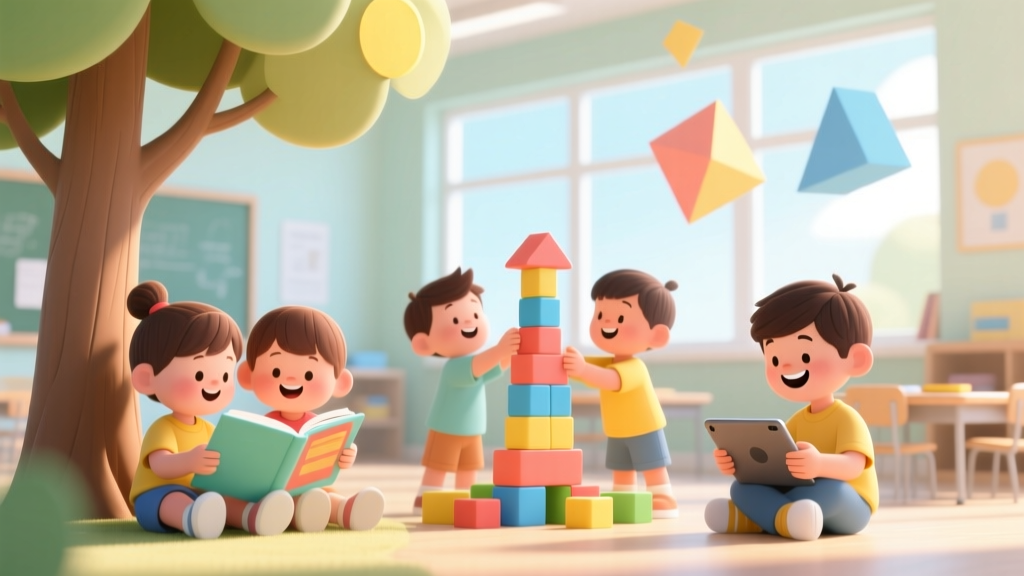
Teaching Citizenship to Kids: A Practical Guide
Why Teaching Citizenship Starts Long Before the Voting Booth
Learning how to be a good citizen for kids isn’t about memorizing civics textbooks or reciting the Pledge of Allegiance — it’s about cultivating empathy, responsibility, and community awareness through daily choices. In an era where digital interactions often replace face-to-face connection, and misinformation spreads faster than kindness, raising children who understand their role in a shared society has never been more urgent — or more doable. The good news? Citizenship isn’t taught in one lesson; it’s modeled, practiced, reflected upon, and reinforced across thousands of small moments — from returning a stray library book to standing up for a classmate at recess.
What ‘Good Citizenship’ Really Means for Children (Spoiler: It’s Not Just About Rules)
Many adults equate citizenship with obeying laws or voting — but for children, it’s fundamentally relational and developmental. According to Dr. Laura Jana, pediatrician and co-author of The Toddler Brain, “Citizenship begins when a child grasps that their actions affect others — and that they have agency to make those effects positive.” This understanding emerges gradually: toddlers start recognizing fairness around age 2–3; preschoolers begin internalizing shared norms (“We take turns”); and elementary-aged children develop moral reasoning that connects personal choices to group well-being.
Research from the Collaborative for Academic, Social, and Emotional Learning (CASEL) confirms that children who practice prosocial behaviors — like helping, sharing, and listening — show 11% higher academic achievement and 25% lower rates of behavioral referrals by fifth grade. Why? Because citizenship skills are executive function skills in disguise: self-regulation, perspective-taking, impulse control, and collaborative problem-solving.
So how do we translate theory into action? Not through abstract lectures — but through consistent, contextualized practice. Below are four evidence-backed pillars, each with concrete strategies you can start tomorrow.
Pillar 1: Model & Name the Micro-Actions of Citizenship
Children learn citizenship the same way they learn language — by hearing it spoken, seeing it enacted, and practicing it in safe environments. A landmark 2022 longitudinal study published in Child Development followed 1,247 families over six years and found that kids whose parents *verbally labeled* their own civic behaviors (“I’m calling my councilmember today because our park needs better lighting — that’s how we help keep our neighborhood safe”) were 3.2x more likely to initiate similar actions independently by age 10.
Try this: During routine activities, narrate your civic thinking aloud — without preaching:
- At the grocery store: “I’m choosing the locally grown apples because supporting nearby farmers helps our community stay strong.”
- While recycling: “This bottle goes in the blue bin so it can become something new — that’s how we care for Earth together.”
- After a neighbor helps: “Mrs. Chen brought soup when I was sick — now I’ll bake her cookies next week. That’s how neighbors look out for each other.”
Crucially, invite your child to name *their* actions too: “When you held the door for Mr. Lee, what kind of citizen were you being?” Let them claim the identity — not just the behavior.
Pillar 2: Turn Home Into a Mini-Democracy (With Real Stakes)
A household isn’t just a place to live — it’s a child’s first civic laboratory. When kids experience fair decision-making, shared responsibilities, and respectful disagreement at home, they internalize democratic norms far more deeply than any classroom simulation.
Start with a Family Constitution: Gather everyone for a 20-minute session to co-create 3–5 core values (“We listen without interrupting,” “We fix messes we make,” “We ask before borrowing”). Write them on poster paper, sign them, and post them near the kitchen table. Revisit quarterly — let kids propose amendments. This mirrors real constitutional processes while building ownership.
Then add low-stakes governance:
- Rotating “Civic Captain” role: Each week, a child chooses one family-wide improvement (e.g., “Add a ‘thank-you jar’ for compliments,” “Start a ‘lost-and-found’ basket by the door”) and leads implementation.
- Family Town Hall: Monthly 15-minute meetings where anyone can raise a concern (“Too much screen time before dinner”), brainstorm solutions, and vote on one trial change.
- Repair Rituals: When conflict arises, use restorative language: “What happened? How did it affect others? What can we do to make it right?” This teaches accountability — not shame.
According to Dr. Robert Selman, Harvard developmental psychologist, “Children who practice deliberative dialogue at home develop stronger perspective-taking abilities — the bedrock of ethical citizenship.”
Pillar 3: Connect Local Actions to Global Awareness (Without Overwhelming Them)
Kids often feel powerless when hearing about climate change, poverty, or injustice. But pairing local action with global context builds efficacy — not anxiety. The key is anchoring big ideas in tangible, age-appropriate contributions.
For ages 4–7: Focus on sensory, concrete connections.
→ Plant native flowers to support local bees → “Bees help grow the strawberries we eat!”
→ Donate gently used toys → “These will make another kid smile — just like your favorite stuffed animal makes you happy.”
For ages 8–12: Introduce systems thinking with guided questions.
→ When buying bananas, compare fair-trade vs. conventional labels → “Fair trade means farmers get paid enough to feed their families. What would happen if all banana pickers earned less?”
→ Map your water journey: faucet → treatment plant → river → ocean → rain → faucet → “Where does our water go when we waste it?”
A 2023 University of Michigan study found that children who participated in place-based service projects (e.g., cleaning a local creek, interviewing elders about neighborhood history) showed 40% greater retention of civic concepts than peers who only studied them abstractly.
Pillar 4: Teach Digital Citizenship as Core Citizenship — Not an Add-On
In 2024, 92% of U.S. children aged 8–12 have regular internet access (Pew Research). Yet most “digital citizenship” lessons focus narrowly on safety — missing the deeper opportunity: teaching online spaces as communities requiring the same respect, honesty, and care as physical ones.
Go beyond “don’t share passwords.” Practice these three habits weekly:
- The Pause-and-Purpose Check: Before posting, comment, or share: “Is this kind? Is it true? Does it add value to the conversation?” Use this as a family mantra.
- Algorithm Awareness: Show kids how YouTube/Instagram recommends content — then ask: “If the app only shows videos about unicorns, what might you stop noticing? How could that narrow your view of the world?”
- Amplification Practice: Once a month, find and share one piece of content created by someone different from your family (e.g., a Black teen’s poetry blog, a Deaf creator’s ASL storytelling video) — with credit and context.
As Common Sense Media’s Digital Citizenship Curriculum emphasizes: “Online behavior isn’t separate from character — it *is* character, visible to millions.”
Age-Appropriate Citizenship Habits: What to Expect & Encourage
Citizenship develops along predictable, research-backed trajectories. The table below outlines key milestones, realistic expectations, and practical ways to nurture growth — aligned with American Academy of Pediatrics (AAP) developmental guidelines and CASEL’s Social-Emotional Learning framework.
| Age Range | Emerging Skills | Realistic Daily Habits | Adult Support Strategies | Risk to Avoid |
|---|---|---|---|---|
| 4–6 years | Recognizes fairness/unfairness; begins to share; identifies community helpers (firefighters, librarians) | • Returns library books on time • Helps set the table • Says “please/thank you” consistently • Cares for a classroom pet or home plant |
• Use picture charts for routines • Read books featuring diverse helpers (e.g., Little Leaders, Ada Twist, Scientist) • Role-play “what if” scenarios (“What if someone drops their lunch tray?”) |
Over-praising compliance (“Good job listening!”) instead of naming values (“You helped us eat together — that’s being a caring member of our family.”) |
| 7–9 years | Understands rules serve group needs; notices inequality; expresses opinions respectfully | • Joins a school cleanup crew • Writes thank-you notes to service workers • Creates inclusive games at recess • Tracks family energy/water use |
• Co-create family “community impact goals” (e.g., “Reduce food waste by 20% this month”) • Watch local city council meetings (short clips) and discuss decisions • Invite kids to plan a donation drive |
Allowing passive consumption of news without processing (“Did you see that scary story?” without follow-up reflection) |
| 10–12 years | Questions authority; connects local issues to systemic causes; advocates for peers | • Interviews a local policymaker or nonprofit leader • Starts a “kindness challenge” at school • Designs accessible playground suggestions for the city • Volunteers 2+ hours/month with supervision |
• Facilitate youth-led service projects with adult mentors • Analyze ads/news for bias using simple checklists • Discuss historical figures’ civic courage (e.g., Claudette Colvin vs. Rosa Parks) |
Dismissing their concerns as “too idealistic” — instead, ask: “What’s one small step you could take?” |
Frequently Asked Questions
Can young children really understand complex topics like justice or equity?
Yes — but not through abstract definitions. Children grasp fairness concretely: “Is it fair that Sam gets two cookies and I get one?” or “Why does the new student sit alone?” Research from the University of Washington’s Institute for Learning & Brain Sciences shows kids as young as 3 detect racial bias in stories and prefer equitable outcomes. Frame equity as “giving everyone what they need to succeed” — e.g., “Liam uses glasses so he can see the board. Maya uses a ramp so she can enter the classroom. Both help everyone learn.”
My child says “Why should I care about people I don’t know?” How do I respond?
That’s a developmentally normal question — and a golden teaching moment. Instead of arguing, try curiosity: “What made you wonder that?” Then share a brief, relatable story: “When our street flooded last year, strangers brought sandbags and cooked meals. We didn’t know them — but they acted like neighbors. That’s how communities survive.” Follow up with micro-actions: “Let’s write a card to the firefighters who trained at our school — they protect all of us, even people they’ve never met.”
Is volunteering the best way to teach citizenship?
Volunteering is valuable — but not sufficient on its own. A 2021 Stanford study found that one-off service projects (e.g., a single food drive) had minimal long-term impact unless paired with reflection and sustained engagement. More powerful are *embedded practices*: composting at home, attending school board meetings, writing letters to local representatives about issues that matter to your child. As Dr. Deborah Meier, education reformer, reminds us: “Citizenship isn’t something you do *for* others — it’s how you live *with* others.”
How do I handle it when my child witnesses or experiences injustice?
First, validate their feelings: “It makes sense you felt angry/sad/confused.” Then, avoid vague reassurances (“Everything will be okay”). Instead, name the issue clearly (“That was unfair because…”), affirm their worth (“You deserve respect”), and identify agency (“What’s one thing we can do together?”). For younger kids: draw a “feelings map”; for older kids: research local advocacy groups or draft a letter. The AAP advises: “Children recover resilience not from avoiding hard truths — but from experiencing trusted adults who name injustice *and* model constructive response.”
Does screen time ruin citizenship development?
No — but *how* screens are used matters profoundly. Passive scrolling erodes attention and empathy; co-viewing documentaries and discussing them builds perspective. Playing cooperative online games (e.g., Minecraft Education Edition servers focused on sustainable city-building) fosters collaboration. The key is intentionality: ask “What skill is this strengthening?” before hitting play. As Common Sense Media reports, kids with media literacy training show 3x higher ability to identify misinformation and 2.5x greater likelihood to intervene against cyberbullying.
Debunking Two Common Citizenship Myths
- Myth #1: “Kids are too young to learn about politics or current events.” Reality: Children notice social dynamics long before adults discuss them. Ignoring politics doesn’t shield them — it leaves them vulnerable to misinformation. Age-appropriate framing matters: “Politics is how groups decide things together — like choosing our class pet or planning the school garden.”
- Myth #2: “Good citizenship means always following rules.” Reality: Critical citizenship includes questioning unjust rules — ethically and constructively. Rosa Parks didn’t break rules randomly; she challenged a law violating human dignity. Teach kids: “Rules exist to protect people. When a rule hurts people instead, we can work to change it — with respect, evidence, and community support.”
Related Topics (Internal Link Suggestions)
- Social-emotional learning activities for elementary students — suggested anchor text: "SEL activities that build empathy and cooperation"
- How to talk to kids about racism and fairness — suggested anchor text: "age-appropriate conversations about justice"
- Best children's books about community and kindness — suggested anchor text: "diverse picture books that model civic values"
- Digital citizenship curriculum for grades K–5 — suggested anchor text: "screen-time balance and online respect strategies"
- Family volunteer ideas that actually stick — suggested anchor text: "meaningful service projects for busy families"
Ready to Grow Citizens — Not Just Students or Children
Citizenship isn’t a subject to master — it’s an identity to inhabit, practiced daily in ordinary moments: holding the elevator, apologizing sincerely, asking thoughtful questions, listening fully. You don’t need a curriculum or a grant — just presence, patience, and the willingness to name the good you see. Start tonight: At dinner, ask one question — “What’s one way you helped someone today, or someone helped you?” Listen deeply. Then say: “That’s how we build a better world — one small, kind choice at a time.”
Your next step: Download our free “7-Day Citizenship Starter Kit” — including printable habit trackers, discussion prompts for every age, and a family constitution template — designed by early childhood educators and reviewed by the National Council for the Social Studies.
More Articles
 How Many Kids Does Francesca Have in Bridgerton?
 My Golden Kids Streaming: Safe, Ad-Free Platforms (2026)
 Ethan Slater Kids? Truth, Privacy & Modern Parenthood (2026)
 Kids Size 130 Fit Guide: Decode Euro Labels (2026)
 Should Kids Have Homework? Research-Backed Guide
 School Shooting Deaths Since 2000: Data & Parent Actions
 What Does 67 Mean? Gen Alpha Slang Guide (2026)
 A.B. Quintanilla’s Bilingual Parenting Lessons
 Is Roblox Safe for Kids? A Pediatrician-Reviewed Guide
 So Cozy Kids: Safety & Therapist-Approved Picks (2026)