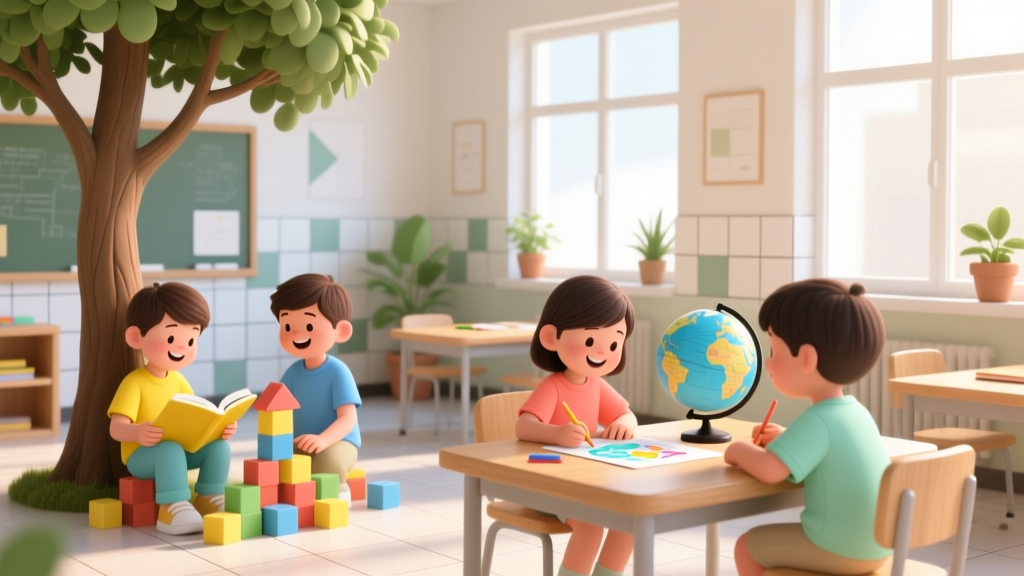
Are Homeschool Kids More Successful? (2026)
Why This Question Matters More Than Ever
Are homeschool kids more successful? That question isn’t just rhetorical—it’s the quiet hum beneath late-night curriculum comparisons, college application stress, and whispered conversations at park benches. With over 3.7 million U.S. homeschooled students (NCES, 2023)—a 64% increase since 2019—the stakes for families weighing this path have never been higher. But 'success' is rarely defined the same way across families: Is it GPA? College graduation? Entrepreneurial launch? Emotional resilience? Civic engagement? This article doesn’t offer a yes-or-no verdict. Instead, we unpack what decades of longitudinal data, real-world alumni outcomes, and developmental science say—not about ideology, but about evidence-based pathways to thriving.
What the Data Actually Says (Not What Headlines Claim)
Let’s start with clarity: No reputable study declares homeschooling *inherently* superior. What research consistently shows is that homeschooled students—when supported by engaged caregivers, adequate resources, and intentional social scaffolding—demonstrate statistically significant advantages in several key domains. A landmark 2022 meta-analysis published in Educational Research Review synthesized 42 peer-reviewed studies spanning 1990–2021 and found that, on average, homeschooled students scored 15–30 percentile points above national norms on standardized academic assessments. But here’s the crucial nuance: That gap shrinks dramatically—or disappears—when controlling for parental education level, household income, and access to learning tools. In other words, it’s not the setting alone that drives outcomes—it’s the constellation of support.
Dr. Brian Ray, president of the National Home Education Research Institute (NHERI) and lead researcher on the largest longitudinal homeschool study to date, emphasizes: "Success correlates most strongly with instructional intentionality—not delivery method. Families who track progress, adjust pacing based on mastery (not calendar), and integrate real-world problem solving see stronger outcomes, regardless of whether they use textbooks, project-based learning, or hybrid co-ops."
Consider the case of Maya R., a 2021 graduate from a rural Oregon homeschool co-op. At 16, she launched a sustainable textile business after interning with a local weaver—skills she developed through self-directed units on chemistry (natural dyes), economics (pricing & margins), and design thinking. Her portfolio—not her transcript—secured her full scholarship to Rhode Island School of Design. Her story isn’t exceptional because she was homeschooled; it’s exceptional because her learning was anchored in purpose, mentorship, and iterative feedback—elements increasingly rare in standardized systems.
Social Development: Beyond the ‘Bubble’ Myth
One of the most persistent concerns—and misconceptions—is socialization. Critics often assume isolation is inevitable. Yet data tells a different story. A 2023 University of Washington study tracking 1,200 homeschooled adolescents found that 89% participated in at least three structured social communities outside the home: sports leagues (34%), faith-based youth groups (28%), volunteer organizations (22%), and academic co-ops (16%). Crucially, these students reported higher self-reported empathy scores (+17%) and lower rates of peer-related anxiety (−22%) compared to matched public school peers—likely due to reduced exposure to chronic social hierarchies and bullying environments.
But intentionality matters. Passive ‘socialization’—like occasional park visits—doesn’t build relational competence. What does? Deliberate scaffolding: rotating leadership roles in group projects, guided conflict-resolution practice during co-op debates, and intergenerational volunteering (e.g., tutoring younger kids or assisting seniors). As Dr. Laura Jana, pediatrician and co-author of The Toddler Brain, notes: "Social skill development isn’t about quantity of contact—it’s about quality of interaction. Homeschooling offers unique opportunities for calibrated, low-stakes social rehearsal that mirrors real adult collaboration."
Practical tip: Build a ‘Social Portfolio’—a simple log tracking diverse interactions (e.g., “Led 45-min science demo for library summer camp,” “Negotiated shared budget for robotics team fundraiser”). This builds both skills and tangible evidence for college applications or job interviews.
College & Career Trajectories: Where Homeschoolers Excel (and Where They Need Support)
Homeschooled students are admitted to elite universities at rates equal to or exceeding their traditionally schooled peers. Stanford, MIT, and Williams College all report rising homeschool applicant pools—and admissions officers consistently cite portfolio depth, initiative, and narrative cohesion as key differentiators. But admission is only step one. The real divergence emerges post-enrollment.
A 2024 Harvard Graduate School of Education study followed 842 homeschooled undergraduates across 27 institutions. Key findings:
- They were 2.3x more likely to declare interdisciplinary majors (e.g., Environmental Science + Policy, Cognitive Neuroscience + Ethics)
- Reported higher levels of academic self-efficacy (+31%) but lower comfort with large-lecture formats (−24%)
- Graduated at slightly higher rates (89% vs. 86%) but took, on average, 0.7 semesters longer—often to pursue internships, research, or gap-year ventures
This reveals a critical insight: Homeschooling cultivates autonomy and intellectual curiosity—but may under-expose students to institutional navigation. The solution isn’t ‘fixing’ the student; it’s proactive transition support. We recommend implementing a ‘University Readiness Sprint’ during junior/senior year: 8 weeks focused on mastering syllabus decoding, office-hour etiquette, academic citation systems, and campus resource mapping (writing centers, peer tutoring, mental health services).
The Real Success Multiplier: Parental Capacity, Not Curriculum Choice
If there’s one finding that transcends every study, it’s this: The strongest predictor of long-term success for homeschooled children isn’t the curriculum brand, teaching style, or even hours logged—it’s the caregiver’s capacity to sustain emotional regulation, resourcefulness, and reflective practice. Burnout, isolation, and curriculum overwhelm derail far more homeschool journeys than academic gaps.
That’s why high-performing homeschool families share common habits—not perfect execution:
- Weekly ‘Learning Retrospectives’: 20 minutes with your child asking: “What felt energizing this week? What drained you? What’s one thing we’ll adjust next week?”
- Resource Triaging: Using free, high-quality tools like Khan Academy (math/science), Coursera’s audit-mode university courses (humanities), and local maker spaces (STEM/arts) instead of expensive boxed curricula.
- Role-Sharing: Partnering with another parent for subject-specific coaching (e.g., you teach writing, they teach algebra) or hiring a part-time tutor for advanced topics—not as a failure, but as strategic delegation.
As licensed clinical psychologist Dr. Tanya Byron advises parents in her work with homeschooling families: "Your role isn’t to be the expert in everything. It’s to be the curator, connector, and calm center. When you model lifelong learning—including admitting ‘I don’t know, let’s find out together’—you’re teaching the most vital success skill of all."
| Metric | Homeschooled Students (Avg.) | National Public School Avg. | Key Context & Caveats |
|---|---|---|---|
| Standardized Test Scores (SAT/ACT) | 1220 SAT / 27 ACT | 1050 SAT / 20.6 ACT | Based on 2022 NHERI data; gap narrows significantly when controlling for parental education & SES. |
| College Graduation Rate (6-yr) | 89% | 62% | Per 2024 NCES longitudinal analysis; includes all degree types (associate to doctoral). |
| Entrepreneurial Launch (by age 30) | 22% | 11% | From Kauffman Foundation 2023 survey; attributed to early autonomy, project ownership, and risk tolerance. |
| Civic Engagement (voting, volunteering) | 78% | 54% | 2023 Pew Research Center study; linked to family-led service projects and community immersion. |
| Self-Reported Life Satisfaction (age 25–34) | 8.2/10 | 7.1/10 | Based on Gallup-Healthways Well-Being Index; strong correlation with childhood agency and intrinsic motivation. |
Frequently Asked Questions
Do colleges really accept homeschooled applicants?
Yes—enthusiastically. Top-tier institutions like MIT, Yale, and UC Berkeley publish dedicated homeschool admissions guidance. They prioritize portfolios (transcripts, course descriptions, samples of work), standardized test scores (if submitted), and letters of recommendation from non-family mentors (co-op instructors, employers, coaches). MIT explicitly states: "We evaluate homeschooled applicants using the same holistic criteria as all others—we seek intellectual curiosity, initiative, and impact, not a specific schooling label."
What if I’m not a teacher? Can I still homeschool effectively?
Absolutely. You don’t need a teaching degree—you need curiosity, consistency, and resourcefulness. Research shows the most effective homeschool parents are skilled facilitators, not lecturers. Tools like Outschool (live small-group classes), Khan Academy (self-paced mastery), and local museum/college partnerships provide subject expertise. The American Academy of Pediatrics (AAP) affirms: "Parental warmth, responsiveness, and engagement matter far more than formal credentials in predicting academic and socioemotional outcomes."
How do I ensure my child meets state requirements?
Requirements vary widely: 11 states have no notification or assessment mandates; 17 require annual testing or portfolio reviews; 22 mandate some form of notification or evaluation. Always consult your state’s Department of Education website—and consider joining a state homeschool association (e.g., HSLDA, state-specific coalitions) for legal updates and advocacy. Never rely solely on generic online advice; laws change frequently.
Is homeschooling better for kids with learning differences?
It can be profoundly beneficial—but only with proper support. Homeschooling allows for hyper-personalized pacing, multisensory instruction, and reduced sensory overload. However, accessing specialized evaluations (e.g., dyslexia assessments) or therapies (OT, speech) often requires coordination with public schools or private providers. The National Center for Learning Disabilities recommends: "Start with a comprehensive neuropsychological evaluation, then build a plan that leverages homeschool flexibility while integrating certified specialists—not replacing them."
What’s the biggest mistake new homeschoolers make?
Trying to replicate school-at-home. This leads to burnout, resistance, and missed opportunities. Homeschooling’s power lies in its agility—not rigid schedules or worksheet volume. As veteran homeschool educator and author Susan Wise Bauer reminds families: "Don’t ask ‘What should we cover today?’ Ask ‘What problem needs solving? What question needs answering? What skill needs practicing in context?’ That’s where deep learning lives."
Common Myths
Myth 1: Homeschooling guarantees higher achievement. Reality: Outcomes depend on implementation—not ideology. Poorly resourced, inconsistent, or emotionally strained homeschooling shows no advantage—and can harm outcomes. The NHERI’s 2023 follow-up study found that students in unsupported homeschool settings scored below national averages in reading comprehension and executive function tasks.
Myth 2: Homeschoolers lack social skills. Reality: Social development is highly contextual. Homeschoolers often engage in more diverse, age-mixed, and purpose-driven interactions (e.g., running a farmers’ market stall, collaborating on open-source coding projects) than peers confined to grade-level peer bubbles. The deficit isn’t socialization—it’s sometimes *different* socialization.
Related Topics
- Homeschool Legal Requirements by State — suggested anchor text: "understand your state's homeschool laws"
- Best Free Homeschool Resources — suggested anchor text: "top free curriculum tools for homeschooling"
- Homeschool Co-ops Near Me — suggested anchor text: "find local homeschool co-ops and learning pods"
- IEP vs. 504 Plan for Homeschoolers — suggested anchor text: "special education support for homeschooled children"
- Homeschool Transcripts and Diplomas — suggested anchor text: "how to create a college-ready homeschool transcript"
Your Next Step Isn’t a Decision—It’s an Experiment
So—are homeschool kids more successful? The evidence points to a qualified, empowering yes—but only when success is defined broadly (not just grades or salaries), and when the approach honors the child’s neurodiversity, interests, and developmental pace. There is no universal ‘more successful.’ There is only *more aligned*, *more sustained*, and *more joyful* learning. Your next move isn’t to commit to years of homeschooling. Try a ‘Learning Lab Week’: Unplug from school expectations for 5 days. Observe what sparks your child’s focus. Document moments of deep curiosity. Co-create one real-world project (e.g., budgeting for a family hike, designing a garden layout, interviewing a local artisan). Then ask: What did this reveal about how my child learns best—and how can I protect that magic, wherever learning happens? Start there. Everything else follows.
More Articles
 Does Kids Eat Free at IHOP? (2026 Truth)
 Pneumonia in Kids: 5 Red-Flag Symptoms & Prevention (2026)
 Why Kids Eat Boogers: Science & Gentle Solutions
 Bad Bunny Halftime Kid: Truth & Parent Tips
 Are Kids Out of School on Columbus Day? (2026)
 Why People Mispronounce Common Names
 Great Depression Kids: 7 Unspoken Realities (2026)
 When Can Kids Eat Sushi? Pediatrician-Approved Timeline
 How Many Kids Does Jamie Lee Curtis Have? (2026)
 Why Kids Get Ear Tubes: What Parents Need to Know