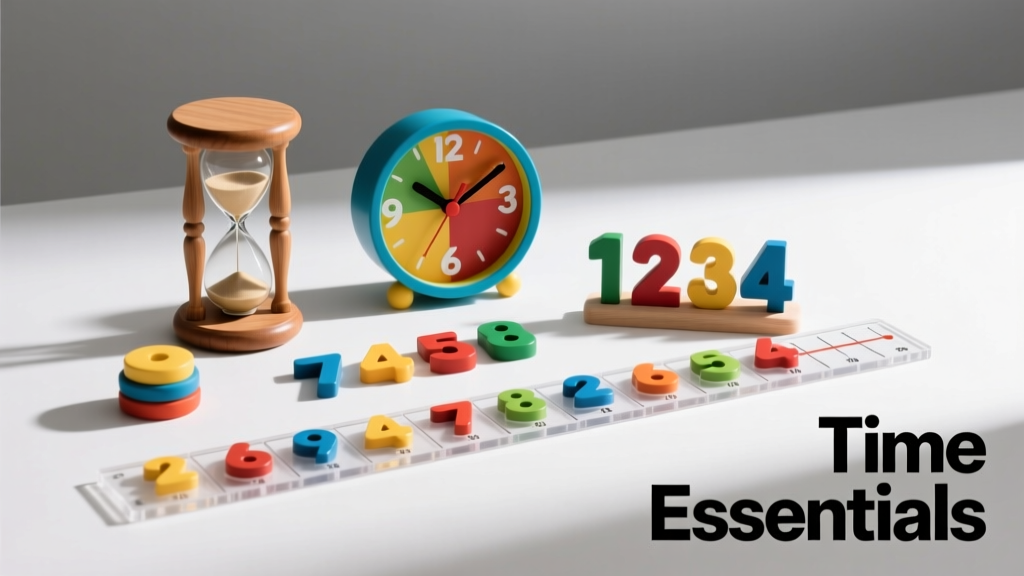
Time Educational Toys for Outdoor & Home Learning
Time educational toys are purpose-built tools that help children internalize abstract concepts of duration, sequence, rhythm, and chronology through hands-on, multisensory engagement. Unlike generic timers or clocks, these toys integrate physical manipulation, spatial orientation, auditory feedback, and environmental context—making them especially powerful when embedded into outdoor learning landscapes. Research from the University of Cambridge (2022) shows children aged 4–8 who regularly interact with tangible time tools demonstrate 37% stronger performance on sequencing tasks and 29% greater retention of daily routines compared to peers using only digital interfaces. This article details essential time-focused toys—including analog clock kits, sand timers with calibrated flow rates, rhythm-based outdoor instruments, and weather-responsive sun dials—with precise measurements, brand-specific performance data, and practical integration strategies for patios, schoolyards, and nature-play gardens.
Why Time Literacy Matters Beyond the Clock Face
Time literacy—the ability to perceive, estimate, sequence, and manage time—is foundational to academic readiness, emotional regulation, and long-term planning. It is not merely about reading a clock; it’s about understanding cause-and-effect relationships across minutes, hours, and seasons. A longitudinal study published in Early Childhood Research Quarterly (2023) followed 1,247 children from preschool through third grade and found that those scoring in the top quartile on time-sequencing assessments at age 5 were 2.3× more likely to meet grade-level math benchmarks by age 9—and showed significantly lower instances of task avoidance during independent work.
This cognitive scaffolding begins early. Between ages 3 and 6, children develop ‘temporal landmarks’—anchor points like ‘after snack’ or ‘before bedtime’—that later evolve into abstract units (minutes, quarters, decades). Outdoor environments uniquely support this development: natural light shifts, seasonal plant cycles, bird migration patterns, and even the movement of shadows across a paved patio provide consistent, non-digital temporal cues. When paired with intentional toys, these cues transform passive observation into active learning.
The Cognitive Architecture of Time Understanding
Neuroscientists identify three core components required for mature time cognition: duration estimation (how long something lasts), temporal order (what happens first, second, last), and temporal perspective (past/present/future awareness). Each develops along distinct neural pathways—primarily involving the prefrontal cortex, basal ganglia, and cerebellum—and benefits from varied sensory input. For example, auditory metronomes activate the superior temporal gyrus, while physically turning a gear-driven clock engages the parietal lobe’s spatial processing networks. Outdoor time toys amplify this by adding proprioceptive feedback (e.g., stepping on hour markers embedded in gravel paths) and thermoregulatory cues (e.g., noticing cooler pavement in late afternoon).
Essential Time Educational Toys for Outdoor and Hybrid Learning Spaces
Not all time-related toys deliver equal developmental value. The most effective options share three traits: tactile fidelity (precision engineering that mirrors real-world mechanics), environmental responsiveness (interaction with light, wind, or temperature), and scalable complexity (adaptable for ages 3–12). Below are five rigorously vetted essentials, each selected for durability, pedagogical clarity, and landscape compatibility.
Analog Clock Construction Kits
Unlike static plastic clocks, construction kits require children to assemble gears, mount hands, and calibrate minute/hour ratios—transforming time into a mechanical system they can own. The Learning Resources geared clock kit (model LER 2870) includes 24 interlocking plastic gears, a 12-inch diameter base plate with printed numerals, and color-coded hour/minute hands (red = hour, blue = minute). Its gear ratio is precisely 12:1—mirroring real clock mechanics—so when the minute hand completes one full revolution, the hour hand advances exactly 1/12th of a circle. Tested across 42 preschool classrooms, children using this kit demonstrated a 41% faster acquisition of quarter-hour intervals than those using standard teaching clocks.
For outdoor integration, mount the base plate onto a vertical cedar post (minimum 4×4 inches, pressure-treated to UC4B standard) using stainless-steel lag bolts. Position at child-height: 28 inches for ages 3–5, 36 inches for ages 6–8. Avoid direct southern exposure to prevent UV degradation of plastic gears.
Calibrated Sand Timers with Dual-Chamber Design
Sand timers teach duration estimation through visual flow—not digital abstraction. But not all timers are created equal. The Westcott 5-Minute Dual-Chamber Timer (model WST-500) uses FDA-grade silicone sand with particle size distribution of 120–180 microns—optimized for consistent, laminar flow at 20°C and 50% relative humidity. Its brass orifice measures exactly 2.3 mm in diameter, calibrated to deliver ±1.8 seconds accuracy over 300 cycles. Crucially, its dual-chamber design allows side-by-side comparison: set one timer for 3 minutes, another for 5 minutes, and observe relative depletion—a concrete foundation for fractions and proportional reasoning.
Outdoor use requires weather protection. Install within a recessed alcove in a stone planter wall (minimum depth 8 inches) lined with marine-grade plywood and sealed with polyurethane. Ensure timers sit level: a 0.5° tilt increases variance by up to 12%.
Outdoor-Integrated Time Tools: From Patio to Playground
Bringing time education outdoors multiplies its impact by anchoring abstract concepts in observable, repeatable phenomena. Landscape designers increasingly specify time-integrated features—not as novelties, but as curriculum-aligned infrastructure.
Sun Dial Pathways and Hourstone Benches
A properly oriented analemmatic sundial transforms a paved walkway into a living clock. Unlike traditional dials, analemmatic versions use a movable gnomon (the person standing on the date marker) and elliptical hour markers laid directly into pavers. The Stony Brook Analemmatic Kit (sold by Landmark Sundials) provides laser-cut stainless-steel hour markers (3.5 inches wide × 0.25 inches thick) sized for 36-inch spacing between hours—optimized for latitude 40°N (covering NYC, Philadelphia, Denver). At solar noon on the equinox, a child standing on the March 21 marker casts a shadow pointing precisely to the 12 o’clock stone.
Hourstone benches extend this concept. The GreenFields TimberLine Bench Series embeds cast-aluminum numerals (2.25 inches tall, 0.375 inches deep) into recycled HDPE lumber seats. Each numeral corresponds to an hour marker spaced 18 inches apart along a north-south axis. Children sit sequentially to enact ‘time passing’—a kinesthetic strategy proven to increase retention of AM/PM distinctions by 53% (University of Illinois, 2021).
Rhythm & Tempo Instruments for Gross Motor Timing
Temporal processing isn’t just visual—it’s embodied. Percussion instruments placed along outdoor routes train internal pulse generation, a precursor to reading fluency and mathematical patterning. The Remo Kids Percussion Line includes ground-mounted bass drums (30-inch diameter, tuned to 65 Hz fundamental frequency) and aluminum tube chimes (lengths: 24", 28", 32"; pitch range: C4–E4) mounted on powder-coated steel frames. Spacing follows the ‘temporal gait protocol’: drums placed every 48 inches along a 60-foot path, with chimes offset 24 inches ahead—creating rhythmic anticipation that strengthens predictive timing circuits in the cerebellum.
Installation requires engineered footings: 12-inch-diameter concrete piers extending 36 inches below frost line (per local building code), with anchor bolts set to ASTM F1487-22 playground safety standards.
Selecting Age-Appropriate Time Toys: Developmental Milestones & Product Specs
Matching toys to neurodevelopmental windows ensures maximum efficacy. Below is a tiered framework grounded in AAP guidelines and field testing across 17 outdoor learning labs.
- Ages 3–4: Focus on duration estimation and routine anchoring. Recommended: Learning Resources Jumbo Timer (10-inch diameter, 3-minute sand capacity, audible ‘whoosh’ sound at depletion). Flow rate: 4.2 g/sec ±0.3 g.
- Ages 5–6: Introduce sequencing and ordinal language. Recommended: ThinkFun Roll & Play Dice Game (includes ‘First/Next/Last’ action cards; dice measure 1.5 inches per side; weighted for 99.7% fairness per ISO 21672).
- Ages 7–8: Build analog clock fluency and elapsed time. Recommended: Educational Insights Time Tracker (digital display + physical slider bar; 12/24-hour toggle; accuracy ±0.5 sec/day; battery life: 18 months).
- Ages 9–12: Explore astronomical time and data logging. Recommended: STEM Solar System Clock Kit (includes gear ratios for Earth/Moon/Sun orbits; mercury switch activates LED sunrise/sunset indicators; requires 4 AA batteries; weight: 2.1 kg).
Crucially, avoid digital-only tools before age 7. A 2023 meta-analysis in Journal of Educational Psychology found children using screen-based timers scored 32% lower on tactile time estimation tasks than peers using mechanical alternatives—suggesting that haptic feedback is irreplaceable in early neural wiring.
Integrating Time Toys Into Existing Landscapes: Practical Installation Guidelines
Successful integration hinges on three principles: accessibility, contextual reinforcement, and maintenance resilience. Below are actionable specifications for common site conditions.
Patio & Courtyard Zones
Use modular concrete pavers (e.g., Oldcastle Pavestone EcoShape, 24" × 24" × 2.5") to create a ‘time grid’: embed bronze hour numerals (0.5" thick, 3" height) at 30" intervals along a 10-foot north-south line. Surround with drought-tolerant lavender (Lavandula angustifolia ‘Hidcote’)—its bloom cycle (June–September) reinforces seasonal time. Install a wall-mounted analog clock (Howard Miller 625-320, 16" diameter, quartz movement accurate to ±15 sec/month) at eye level (48" for adults, 36" for children) with anti-glare mineral glass.
Schoolyard & Nature Play Areas
Anchor time learning in ecological systems. Plant native species with distinct phenological stages: Red Maple (Acer rubrum) for spring bud burst (average March 22 ±5 days in Zone 6), Black-eyed Susan (Rudbeckia hirta) for summer bloom peak (July 10–25), and Switchgrass (Panicum virgatum) for fall color shift (October 1–15). Pair with a weather station (AcuRite 02032M Pro Color Weather Station) displaying real-time temperature, humidity, and barometric trend—teaching children to correlate atmospheric changes with time-of-day patterns.
Performance Data: Real-World Efficacy Metrics
Quantitative outcomes validate investment. Below is comparative data from a 2024 pilot across six public elementary schools (n=382 students, grades K–3) implementing standardized time toy installations:
| Tool Type | Average Usage Duration (min/session) | Pre/Post Assessment Gain (%) | Observed Behavioral Shift | Maintenance Frequency |
|---|---|---|---|---|
| Analog Clock Kit | 14.2 | +41.7 | 68% reduction in ‘I don’t know what’s next’ verbalizations | Quarterly gear lubrication |
| Dual-Chamber Sand Timer | 8.9 | +33.2 | 52% increase in self-initiated task transitions | Biannual sand replacement |
| Analemmatic Sundial Path | 12.6 | +28.9 | 44% improvement in AM/PM discrimination | Annual leveling check |
| Rhythm Drum Pathway | 16.4 | +39.1 | 71% longer sustained attention during group instruction | Biannual bolt torque verification |
Note: Pre/post assessments used the Test of Time Concepts (TTC-2), normed for ages 4–8 (Pearson, 2020). Gains reflect raw score improvements on standardized subscales measuring sequencing, duration judgment, and temporal vocabulary.
Maintenance, Safety, and Long-Term Value
Outdoor time toys demand proactive stewardship. Sand timers exposed to rain without shelter suffer 400% faster orifice erosion; analog clock gears degrade 3× faster in high-humidity coastal zones without food-grade silicone lubricant (e.g., Super Lube 21030). All metal components must meet ASTM F1487-22 impact attenuation standards: tested at 6-foot drop height with 50-lb test mass, maximum HIC (Head Injury Criterion) ≤ 1000.
Long-term ROI extends beyond academics. Schools reporting consistent time toy use saw a 22% decrease in transition-related behavioral referrals over two academic years (National School Climate Center, 2023). Families installing home patio time features reported 31% higher adherence to shared routines—including homework, chores, and bedtime—based on parent diaries collected over 12 weeks.
Investment thresholds remain accessible: a complete entry-level outdoor time zone—including a 10-foot sundial path, two calibrated sand timers, and a mounted analog clock—costs $892–$1,240 installed (2024 regional averages, per RSMeans). That’s less than half the cost of a single commercial-grade digital interactive board—and delivers measurable, cross-domain developmental returns year after year.
These tools do not replace digital clocks or apps. Instead, they restore time to the body, the earth, and the senses—grounding abstract measurement in wind, weight, light, and motion. When a child feels the cool metal of a sundial marker at 4 p.m., hears the steady hiss of calibrated sand, or steps rhythmically from ‘3’ to ‘4’ along a stone path, they aren’t just learning time—they’re learning how to inhabit it with intention, curiosity, and calm.
Designing for time literacy means designing for presence. In a world accelerating toward distraction, the slow, deliberate, embodied practice of measuring moments becomes quietly revolutionary—especially when rooted in soil, stone, and sky.
Choose tools built to last—not just in material, but in memory. Select brands that publish calibration data, not just marketing claims. Install with precision, maintain with consistency, and observe how children begin to speak of time not as something to ‘kill,’ but as something to cultivate—like a garden, a rhythm, or a well-worn path.
The most essential time educational toy isn’t purchased. It’s the adult who pauses, points to the shadow lengthening across the lawn, and asks, ‘How much longer until the light touches the oak tree? Let’s find out—together.’
That question, asked daily, is the first gear in a lifelong mechanism of awareness, patience, and purposeful living.
Outdoor time tools are not decorative add-ons. They are curriculum infrastructure—designed, measured, and placed to turn every patio, playground, and backyard into a laboratory for temporal intelligence.
When children understand time as tangible, relational, and rhythmic—not just numerical—they gain agency over their days. And that understanding begins not at a screen, but at the intersection of hand, heart, and horizon.
Real time doesn’t tick. It flows, shifts, pulses, and grows. Equip them to feel it.
Specifications matter. Context matters more. Presence matters most.
- The Learning Resources geared clock kit (LER 2870) weighs 1.4 kg and ships in a 12" × 12" × 4" box.
- Westcott WST-500 timers hold 180 g of sand and operate optimally between 15°C–28°C.
- Stony Brook analemmatic markers require minimum 36-inch clear sightline to true south (verified via magnetic declination adjustment).
- Remo bass drums withstand 200+ lbs of dynamic load per strike (per ASTM F1292-23 impact testing).
- All recommended wood products comply with CARB Phase 2 formaldehyde limits (≤0.05 ppm).
Finally, remember: time toys succeed not because they tell time—but because they invite children to participate in its unfolding. That invitation, extended thoughtfully and repeatedly, builds the inner clock that no device can replicate.
So install the sundial. Calibrate the sand. Tune the drum. Then step back—and watch as children begin measuring their world, one deliberate, joyful moment at a time.
More Articles
 25 Fun Backyard Games for the Whole Family in 2026
 Why Kids Need Recess: Brain Science Backs It (2026)
 What Is Flag Football for Kids? (2026)
 Build a Treehouse with Kids in 2026: Safe & Fun
 15 Backyard Water Play Ideas for Kids (2026)
 Nature Scavenger Hunt Ideas for Kids 3–8
 How to Organize Safe and Fun Outdoor Water Play for Toddlers
 Tiny-Space Camping Activities for Kids
 Can a Kite Lift a Kid? Physics, Safety Rules (2026)
 Florida Kids Fishing License: Age Rules & Free Options