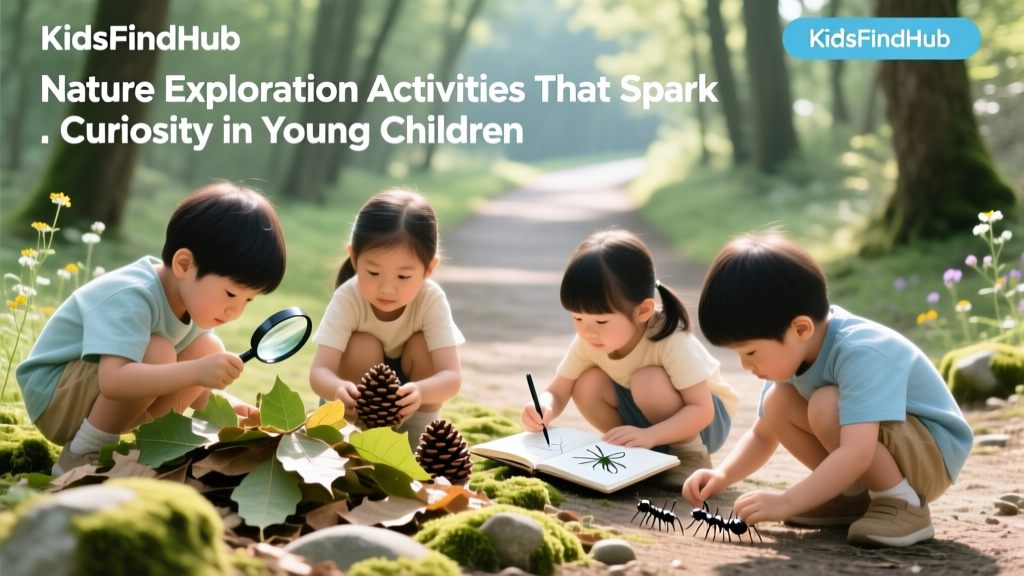
Nature Exploration Activities for Young Kids
The Magic of Nature-Based Learning
Children are natural explorers, and the outdoors provides an infinite classroom full of wonders to discover. Nature exploration activities combine physical activity with cognitive development, sensory stimulation, and emotional well-being. Here are proven activities that will spark lasting curiosity in your children.
1. Bug Safari Expedition
Equip your child with a magnifying glass, a small container, and a field guide. Explore your garden, a local park, or even sidewalk cracks to find insects. Teach children to observe without harming — look at colors, count legs, watch behaviors. Release all creatures after observation.
2. Weather Journal
Have your child keep a daily weather journal with drawings and observations. Track temperature, cloud types, wind direction, and precipitation. Over time, they'll notice patterns and develop scientific thinking skills while spending time outdoors every day.
3. Leaf Collection and Identification
Collect leaves from different trees in your neighborhood. Press them in heavy books, then create a leaf identification chart. Learn about leaf shapes, edges, and vein patterns. This activity teaches careful observation and classification skills.
4. Bird Watching for Beginners
Set up a bird feeder and create a simple bird-watching station with binoculars and a local bird guide. Children can sketch birds they see, note behaviors, and even record bird songs. This develops patience and attention to detail.
5. Nature Art Studio
Collect natural materials — sticks, stones, flowers, leaves, pinecones — and create temporary art installations outdoors. Make mandalas, fairy houses, or nature sculptures. Photograph your creations before they return to nature.
Seasonal Exploration Calendar
- Spring: Watch for buds, baby animals, and migrating birds returning
- Summer: Study pollinators, grow a garden, explore water ecosystems
- Fall: Collect seeds, watch leaf changes, prepare for migration
- Winter: Track animal prints in snow, study evergreens, observe hibernation signs
Building a Nature Exploration Kit
Assemble a portable kit that your child can grab anytime: magnifying glass, small notebook, colored pencils, collection containers, tweezers, a small ruler, and a camera. Having tools ready removes barriers to spontaneous exploration.
Connecting Indoor and Outdoor Learning
Bring nature indoors with a dedicated display shelf for found treasures, a terrarium for small creatures, or pressed flower art. Read library books about what you've observed outside. This reinforces learning and keeps curiosity alive between outdoor adventures.
More Articles
 Cheap vs Premium Outdoor Play: What Educators Really Pay For
 How to Build a Kid-Friendly Treehouse
 Can-Am Kids Ride-On Safety Guide (2026)
Outdoor Sensory Activities for Preschoolers
Can-Am Kids Ride-On Safety Guide (2026)
Outdoor Sensory Activities for Preschoolers
 Geocaching With Kids: A Family Starter Guide
 Best Scooters for Toddlers (2026 Picks)
 Kids Outdoor Play Temperature Thresholds (2026)
Outdoor Water Play Activities for Hot Summer Days
Kids Outdoor Play Temperature Thresholds (2026)
Outdoor Water Play Activities for Hot Summer Days
 Best Sandbox Accessories for Creative Play: Top 15 Picks
 Rainy Day Outdoor Games Kids Will Love