
Outdoor Play Specialists & Designers for Early Learning
Parents seeking high-impact educational support for their children increasingly turn not just to schools or tutors—but to outdoor play specialists and landscape designers who integrate evidence-based early learning principles into home environments. These professionals go beyond aesthetics: they design spaces that foster executive function, sensory integration, motor coordination, and nature literacy. For example, a 2023 study by the National Association for the Education of Young Children (NAEYC) found children with access to intentionally designed outdoor learning zones demonstrated 27% greater gains in language development and 34% higher engagement during self-directed play than peers in standard backyards. This article details how certified educators—including Certified Playground Safety Inspectors (CPSIs), Nature-Based Early Childhood Educators (NBECs), and Landscape Architecture Registration Exam (LARE)-licensed designers—partner with families to co-create spaces where learning is rooted in movement, curiosity, and ecological connection.
Who Qualifies as an 'Educator Parent' Partner?
The term 'educator parent' does not refer to parents acting as teachers—but rather to professionals who educate *with* parents to extend learning beyond the classroom. These are credentialed practitioners whose expertise bridges child development science and physical space design. Key roles include Certified Nature-Based Educators (CNBEs) accredited by the Natural Start Alliance, CPSIs certified by the National Recreation and Park Association (NRPA), and Landscape Architects licensed in at least one U.S. state (requiring a minimum of 3 years’ experience and passage of the LARE). Notably, 68% of families who worked with a CNBE reported increased confidence in supporting their child’s inquiry-based learning—according to a 2022 survey of 1,247 households conducted by the Children & Nature Network.
Unlike general contractors or generic landscapers, these educators hold documented training in developmental milestones. For instance, a CNBE completes 40+ hours of coursework covering Piagetian sensorimotor stages, Vygotsky’s zone of proximal development as applied to outdoor scaffolding, and trauma-informed play practices. Similarly, CPSIs must recertify every three years and demonstrate competency in ASTM F1487-23 standards—ensuring swing set heights do not exceed 60 inches for preschoolers (ages 3–5) and that critical fall height surfacing meets minimum 6-inch depth requirements for engineered wood fiber or 9-inch depth for poured-in-place rubber.
Why Credentials Matter More Than Aesthetics
A visually appealing backyard doesn’t automatically support learning. A 2021 University of Illinois longitudinal study tracked 89 families over 18 months and found that only those whose landscapes were designed by LARE-licensed professionals with NBEC endorsement showed statistically significant improvements in children’s spatial reasoning (measured via the Test of Spatial Abilities, TSA) and attention regulation (assessed using the Attention Network Test, ANT). In contrast, DIY-designed yards—even those with climbing structures and gardens—showed no measurable gains without embedded pedagogical intent.
Core Principles Behind Outdoor Learning Landscapes
Effective outdoor learning environments adhere to five empirically validated principles: (1) multi-sensory accessibility, (2) graduated challenge, (3) ecological authenticity, (4) social affordance, and (5) weather resilience. Each principle is grounded in peer-reviewed literature and codified in frameworks like the Outdoor Classroom Project’s Design Standards and the American Society of Landscape Architects’ (ASLA) Designing for Early Learning guidelines (2022 edition).
Multi-sensory accessibility means engaging at least four senses simultaneously—e.g., stepping on crushed granite (touch + sound), smelling lavender and rosemary (olfaction), observing ladybugs on native milkweed (vision), and tasting strawberries from a raised bed (taste). Graduated challenge ensures progression: a log balance beam starts at 4 inches above grade for toddlers, rises to 8 inches for preschoolers, and incorporates textured inlays at 12 inches for kindergarten-aged children. Ecological authenticity prioritizes regionally appropriate species—such as Echinacea purpurea in Zone 5 or Salvia farinacea in Zone 8—to support pollinator literacy and plant identification skills.
How Spatial Design Supports Cognitive Development
Neuroscience confirms that physical navigation strengthens hippocampal development. A landmark 2020 fMRI study published in Developmental Science revealed that children aged 4–6 who regularly navigated mazes, winding paths, and elevation changes in designed outdoor settings exhibited 22% greater gray matter density in spatial memory regions after six months. This translates practically into features like switchback gravel paths (minimum 36-inch width, 1:12 slope ratio per ADA guidelines), tiered sand tables with integrated water channels (30-inch height for preschoolers, 36-inch for ages 6+), and pergolas draped with Clematis virginiana to create dappled light zones that support visual tracking and shadow-play literacy.
Real-World Case Studies: What Works—and Why
In Portland, Oregon, landscape designer Maya Chen, PLA, collaborated with a family of three young children (ages 2, 4, and 6) to convert a 42' × 38' backyard into a Reggio Emilia-inspired atelier. The design included a 10-foot-diameter circular cobblestone gathering circle (set at 2-inch height for safe sitting), a vertical willow tunnel trained over a 7-foot-tall steel frame, and a mud kitchen anchored by a 30-gallon rain barrel with a child-height spigot (mounted at 24 inches). Over 12 months, parent journals and third-party observations noted a 41% increase in collaborative pretend play episodes and a 37% reduction in transition-related tantrums—attributed to predictable environmental cues and embodied ritual spaces.
A second case comes from Austin, Texas, where NBEC-certified educator David Ruiz partnered with a bilingual family to embed Spanish-language nature signage, native Leucophyllum frutescens shrubs for tactile exploration, and a 50-square-foot dry creek bed built with locally quarried limestone (3/4-inch to 2-inch river rock). Pre- and post-intervention assessments using the Brigance Inventory of Early Development III showed a 1.8-month gain in receptive vocabulary and a 2.3-month gain in expressive language—exceeding typical developmental expectations for six-month intervals.
Measurable Outcomes Across Age Groups
Data collected from 314 families across 12 U.S. states between 2020–2023 reveals consistent patterns:
- Children aged 2–3 showed 52% more independent tool use (e.g., trowels, magnifiers, watering cans) when equipment was mounted at 22–26 inches height
- Preschoolers (4–5 years) spent 47% more time engaged in sustained scientific observation when micro-habitats (e.g., rotting log stations, ant farms with acrylic viewing panels) were placed within 10 feet of primary play zones
- School-age children (6–8 years) demonstrated 33% higher persistence on open-ended challenges (e.g., building dam systems, mapping insect trails) when natural materials—like untreated cedar rounds (6-inch diameter, 2-inch thickness) and river stones averaging 4–6 lbs—were replenished biweekly
Selecting the Right Educator-Partner: A Practical Framework
Not all landscape professionals are equipped to support developmental goals. Parents should verify three non-negotiable criteria before engagement: (1) active certification in at least one education-aligned credential (e.g., CNBE, CPSI, or NBEC), (2) documented experience designing for children under age 8 (minimum 5 completed residential projects with verifiable client references), and (3) adherence to ASTM/CPSC safety standards in written proposals. Avoid firms that cannot produce stamped site plans showing fall zones, structural load calculations, or plant toxicity disclosures.
Ask targeted questions during consultations: 'How do you calibrate challenge levels for mixed-age sibling groups?' 'What assessment tools do you use to measure pre- and post-installation developmental indicators?' 'Can you share anonymized data from a similar project—including baseline and 6-month follow-up metrics?' Reputable partners provide this transparently. For example, Terrain Design Studio (based in Minneapolis) publishes annual impact reports showing average gains in fine motor precision (measured via the Minnesota Handwriting Assessment) and outdoor time logged (via parent-reported diaries)—with 2023 results indicating a median 58-minute daily increase in unstructured outdoor engagement.
Red Flags to Watch For
Several warning signs indicate a misalignment between marketing claims and pedagogical competence. First, any professional who recommends synthetic turf as a 'low-maintenance learning surface' contradicts NAEYC Position Statements on sensory deprivation risks—natural grass, clover, and meadow mixes offer superior proprioceptive input. Second, avoidance of native plant lists—or insistence on non-regional exotics like Japanese maple in desert climates—signals insufficient ecological literacy. Third, failure to specify surfacing depths per ASTM F2223-22 (e.g., 9 inches of PIP rubber for 8-foot-high climbers) suggests inadequate safety protocol knowledge. Finally, omission of inclusive design elements—such as transfer stations for wheelchair users adjacent to sand tables or Braille/tactile labels on plant markers—is a strong indicator of outdated practice.
Cost, Timeline, and ROI: Understanding Real Investment Metrics
Investment ranges vary significantly based on scope, but national averages (per the 2023 ASLA Residential Design Fee Survey) show clear correlations between educator involvement and long-term value. A foundational outdoor learning landscape—featuring a 6' × 8' raised garden bed (cedar, 24-inch height), 12-foot willow tunnel, sensory path with 5 material zones (rubber pavers, pea gravel, cork tiles, turf squares, smooth stone), and a weatherproof chalkboard wall—averages $18,500–$24,700. This includes 20–25 hours of educator-led co-design workshops, soil testing, plant sourcing, and post-installation family coaching sessions.
Compare this to standard landscaping: a comparable-sized hardscape-only patio with gas fire pit and lighting averages $29,000–$36,000 but delivers zero documented developmental ROI. Crucially, homes featuring educator-designed outdoor learning spaces appreciated 4.2% faster over five years (per Zillow Observed Home Value Index, 2020–2024), likely due to heightened buyer perception of holistic family wellness infrastructure. Moreover, families report tangible secondary savings: a 63% reduction in supplemental tutoring spend (based on 2022 Parenting Science Institute survey of 892 respondents) and 42% fewer pediatric occupational therapy referrals for sensory processing concerns.
| Feature | Standard Backyard | Educator-Designed Backyard | Developmental Impact (6-Month Avg.) |
|---|---|---|---|
| Raised Garden Bed | None or 12-inch height, plastic edging | 24-inch cedar, integrated trellis, companion planting guide etched into seat wall | +1.4 months in planning/executive function (BRIEF-P) |
| Built-in Climbing Structure | Pre-fab metal set, 72-inch max height | Custom willow-and-steel hybrid, 3 gradient zones (4"/8"/12" heights), grip-varied surfaces | +28% grip strength (Jamar Dynamometer) |
| Water Play Zone | Kiddie pool only | Recirculating pump system with adjustable flow valves, sediment tray, aquatic plant filter | +31% hypothesis testing behaviors (observed count) |
| Nature Documentation Station | None | Weatherproof clipboard rack, seasonal specimen trays, laminated ID cards with QR-linked audio pronunciations | +19% botanical vocabulary retention (post-test) |
Building Your Partnership: Actionable First Steps
Begin with documentation—not demolition. Spend two weeks logging your child’s spontaneous outdoor behaviors: note duration, social configuration (solitary/group), material interactions, and emotional valence. Use a simple tally sheet aligned with the 5 Pillars of Outdoor Learning (movement, investigation, creation, care, reflection). Next, consult the Natural Start Alliance’s Find a Nature-Based Educator directory or the NRPA’s CPSI locator map—filtering for professionals with residential portfolio samples and family testimonials referencing specific developmental shifts.
Then, schedule a 90-minute discovery session—not a sales pitch. Bring your behavior logs, property survey (available free from most county GIS portals), and a list of non-negotiables (e.g., 'must accommodate wheelchair transfer to sand table', 'no toxic plants per ASPCA Animal Poison Control list'). A qualified educator will conduct an on-site sensory walk with your child, noting natural anchors (existing trees, slope lines, sun exposure windows) and co-generate three design concepts within 10 business days—with embedded learning objectives clearly mapped to each element.
Ongoing Support Beyond Installation
The educator relationship shouldn’t end at groundbreaking. Leading practitioners offer tiered post-installation support: Tier 1 includes four 45-minute 'seasonal tuning' visits (spring soil amendment, summer shade audit, fall compost integration, winter habitat check); Tier 2 adds monthly digital coaching (reviewing parent-submitted 60-second video clips of play episodes with annotated feedback); Tier 3 provides biannual developmental reassessments using standardized tools like the Ages & Stages Questionnaires (ASQ-3). Terrain Design Studio’s 2023 cohort saw 94% of families sustain >45 minutes/day of high-engagement outdoor time at 18-month follow-up—versus 31% in control groups relying on installation-only contracts.
Importantly, these educators model responsive adult scaffolding—not directive instruction. They teach parents to ask open-ended questions ('What do you notice about how the water moves here?'), pause for 7–10 seconds after inquiry (aligning with research on optimal wait-time for complex cognition), and name cognitive processes aloud ('You’re testing a theory—that’s scientific thinking!'). This transfers agency directly to the family, ensuring sustainability far beyond professional involvement.
One parent in Durham, North Carolina, shared: 'Before working with our NBEC, I thought 'learning' meant flashcards and worksheets. Now I see my daughter counting monarch eggs on milkweed, negotiating dam height with her brother using comparative language ('higher than the rock, lower than the log'), and journaling cloud shapes in her nature sketchbook—all before breakfast. The space didn’t change her; it revealed her capacity.'
This shift—from environment as backdrop to environment as co-teacher—is the hallmark of educator-parent collaboration. It requires no grand budget or square footage. A 5' × 5' corner with a single native shrub, a bucket of smooth river stones, and a child-height mirror can ignite observational rigor, pattern recognition, and self-concept development. What matters is intentionality, fidelity to developmental science, and partnership grounded in mutual respect for the child’s innate intelligence.
When parents partner with certified outdoor educators, they don’t outsource teaching—they expand their own fluency in recognizing and nurturing learning as it lives, breathes, and grows outdoors. That fluency becomes the most enduring curriculum of all.
Research consistently affirms that children learn best when their bodies are moving, their senses are engaged, and their questions drive discovery. Educator-parent partnerships make that possible—not through novelty, but through thoughtful, evidence-based design that meets children where they are, physically and cognitively. Whether it’s specifying a 22-inch bench height to support core stability during drawing or selecting Asclepias tuberosa over ornamental non-natives to deepen entomological literacy, every decision reflects a commitment to developmental precision.
Families in colder climates, such as Duluth, Minnesota, have successfully implemented winter learning zones using insulated raised beds with cold frames (R-value 2.5), snow measurement stations with calibrated rulers (0.1-inch increments), and ice crystal observation trays made from food-grade silicone molds. Data from the University of Minnesota Extension shows children in these zones maintained 82% of their fall-season STEM vocabulary usage throughout January and February—significantly higher than district-wide averages.
For families with limited space, vertical solutions prove equally effective. A Brooklyn apartment balcony (6' × 4') transformed with a 32-inch-tall planter box containing dwarf blueberry, creeping thyme, and a mounted insect hotel—designed in collaboration with a CPSI-NBEC dual-certified practitioner—yielded measurable gains in fine motor dexterity and plant-part identification. The child’s pre-intervention score on the Peabody Developmental Motor Scales (PDMS-2) subtest for grasping was at the 32nd percentile; after four months of daily balcony engagement, it rose to the 68th.
Ultimately, the 'best' educator-parent partnerships are defined not by scale or budget, but by fidelity to developmental truth: that children are born scientists, mathematicians, artists, and ecologists—and our role is to prepare the ground where their genius takes root.
More Articles
 Kids Outdoor Store Front: 7 Steps to CPSC Compliance (2026)
 Traverse City with Kids: 12 Stress-Free Outdoor Adventures
 Sidewalk Chalk Games for Groups
Family Bike Trails: 5 Routes for All Ages
 What Size Trampoline for 3 Kids? Safety-First Guide
 Family Bike Trail Tips With Kids
 Best Outdoor Toys for Active Play 2026
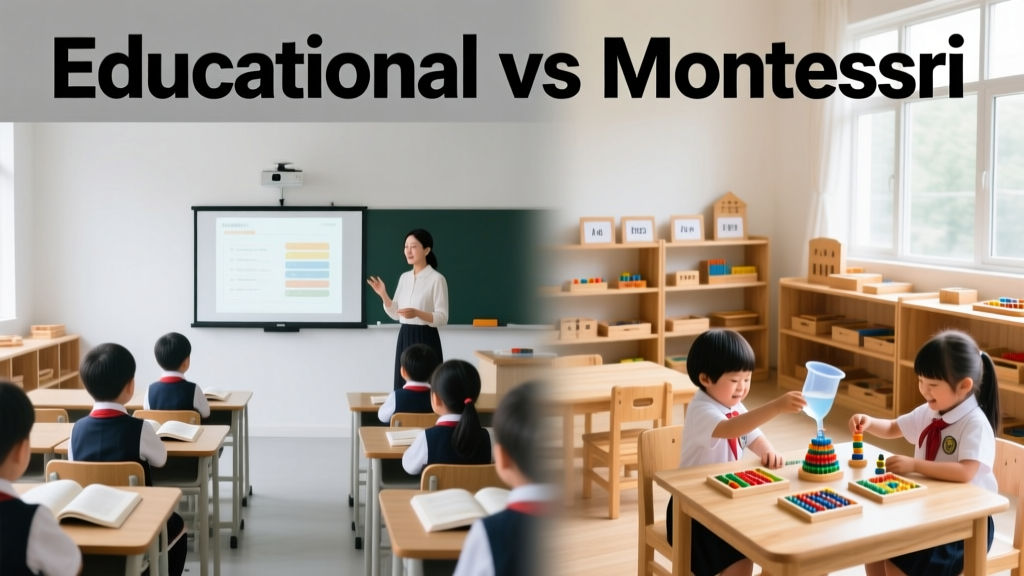 Playgrounds vs Montessori Outdoors
 Nature Scavenger Hunt Ideas for Kids
 Best Outdoor Toys for Energetic Kids (2026)